

How to Create Intro and Ending Sections for Jazz Standards
Learn a reliable method for creating introductions using the last eight bars of a tune. Discover a lush, chromatic ending technique using the #4 chord.

Unlocking 'The Girl from Ipanema': Upper Structure Triads & Superimposition
To advance as a jazz guitarist, you must break the habit of chasing roots. In complex tunes like The Girl from Ipanema, the key to fluid soloing isn't a new scale—it's Superimposition. Discover how to float simple "Upper Structure Triads" over complex chords to create that sophisticated, modern jazz sound without over-thinking.

The Only Cheat Sheet You Need for Rhythm Changes: Deep Listening & Playlists
"Rhythm Changes" is a rite of passage for intermediate jazz players. But if you are asking "what scales do I play over the bridge?", you might be missing the point. Discover why masters like Wes Montgomery didn't rely on scale charts, and how building a specific playlist can train your ears to navigate the fretboard instinctively.

Stops Chasing Roots: The Magic of Guide Tones and Voice Leading
One of the biggest struggles for jazz guitar beginners is that their solos sound disconnected. Do you find your hand jumping frantically from one end of the fretboard to the other? It feels like a game of "Whac-A-Mole." Discover why chasing roots is inefficient and how mastering "Guide Tones" will transform your playing into smooth, storytelling solos.
Breaking Through Your Improvisation Rut: A Practical Guide to Connecting Melody and Guide Tones
You know your scales and chord tones—but your improvisation still doesn’t sound musical.
The missing link isn’t more theory. It’s learning how to connect melody and harmony through guide tones, voice leading, and simple triadic movement inside a real song.

Can You Really Start Jazz Guitar Without Theory? The Secret of the Early Masters
Is it possible to play jazz guitar without learning music theory or reading notation?
Yes—but only if you’re willing to develop your ears through deep listening. This article explores how early jazz musicians learned and why theory still matters today.
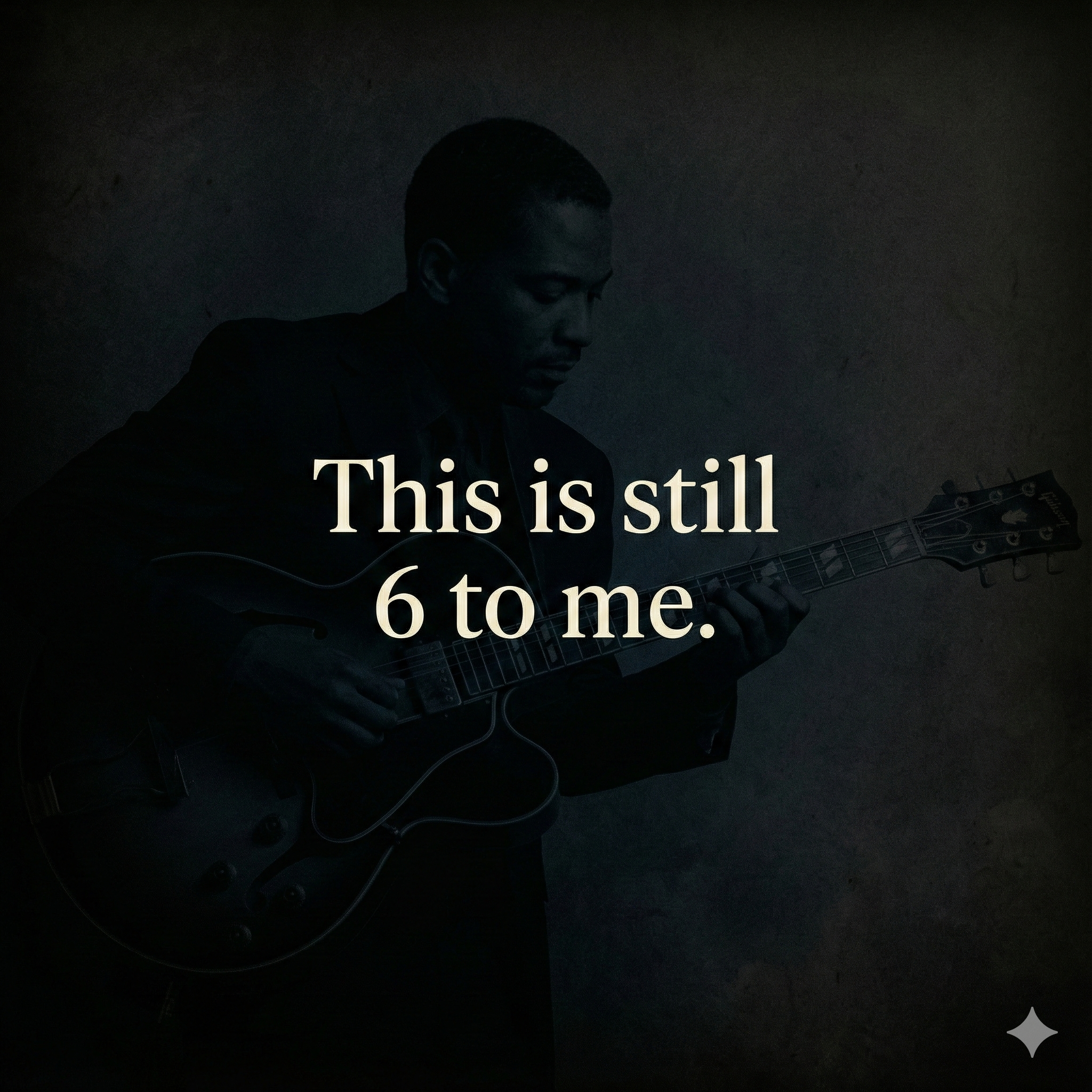
A Single Sentence from a Master: "It Still Sounds Like 6 to Me"
Sometimes a single sentence can change your entire relationship with music.
A brief comment from Peter Bernstein taught me that complexity is not progress—and that true growth begins with deeply understanding the essence of melody and rhythm.
Dissecting a George Benson Line: The Harmonic Secret of Playing Bbmaj7 Over C7
Some of the most exciting jazz guitar lines don’t come from scales at all.
George Benson’s “outside” sound often comes from superimposing upper structures—borrowing harmonic material from one chord to create modern, unexpected colors inside the changes.
The Secret to George Benson's Speed: A Complete Guide to Rest Stroke Picking
Playing fast doesn’t mean your lines will sound clear.
Many jazz guitarists struggle with muddy articulation at higher tempos—not because of the left hand, but because of inefficient right-hand technique. The rest stroke is the missing link behind powerful, clean, swinging lines.
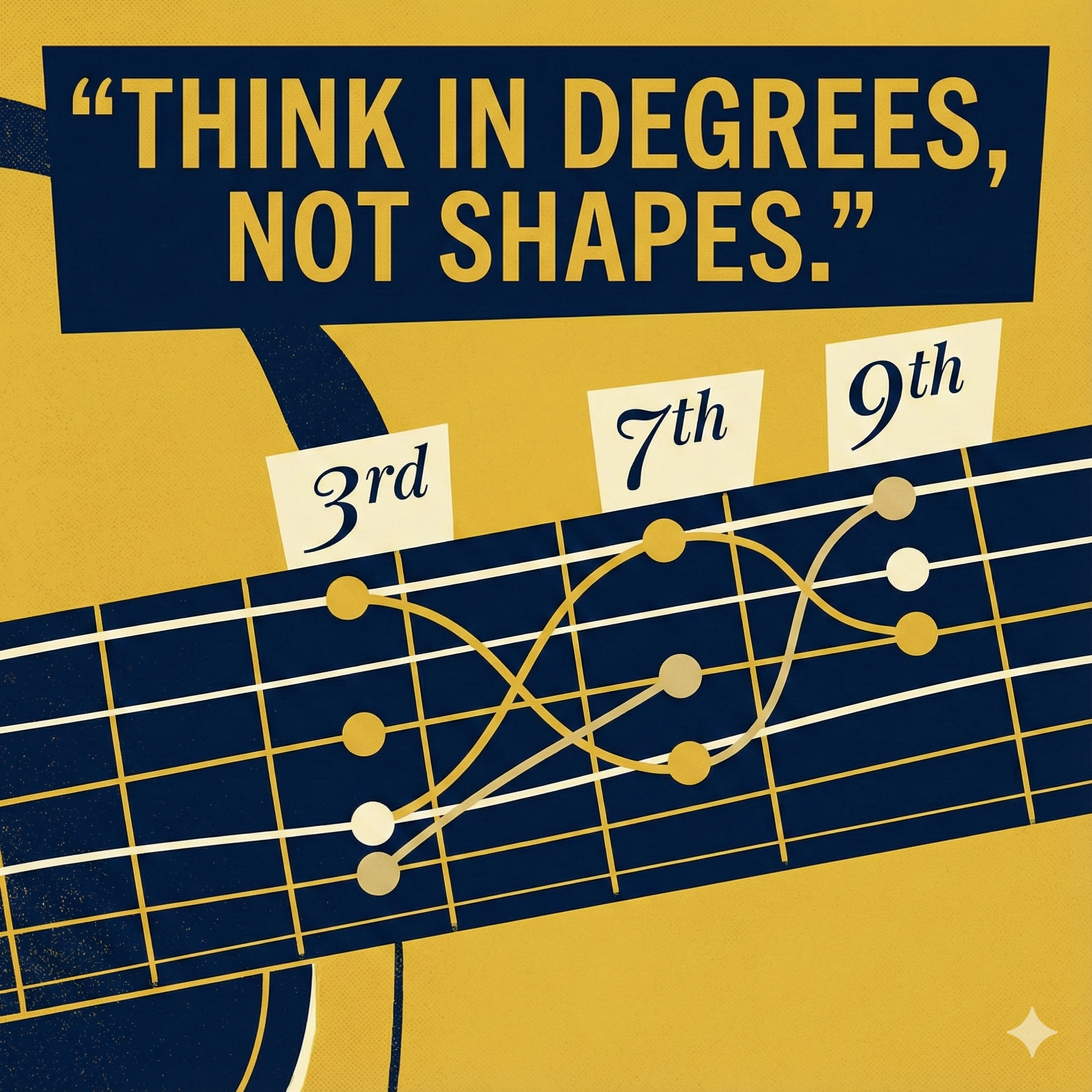
Are You Just Memorizing Shapes? How to Truly Understand the Fretboard with Chord Degrees
Jazz guitar doesn’t have to be an endless memorization game.
By learning to see chords as degrees and functions—rather than shapes—you can finally understand how harmony works across the fretboard and start playing with clarity and intention.
A Legend Reborn: What Pat Martino's Incredible Story Teaches Us About Music and Life
Pat Martino’s passing left the jazz world in deep mourning. His life—marked by unimaginable loss and miraculous rebirth—reminds us that music exists beyond memory, technique, and even identity. His journey embodies the resilience of the human spirit.
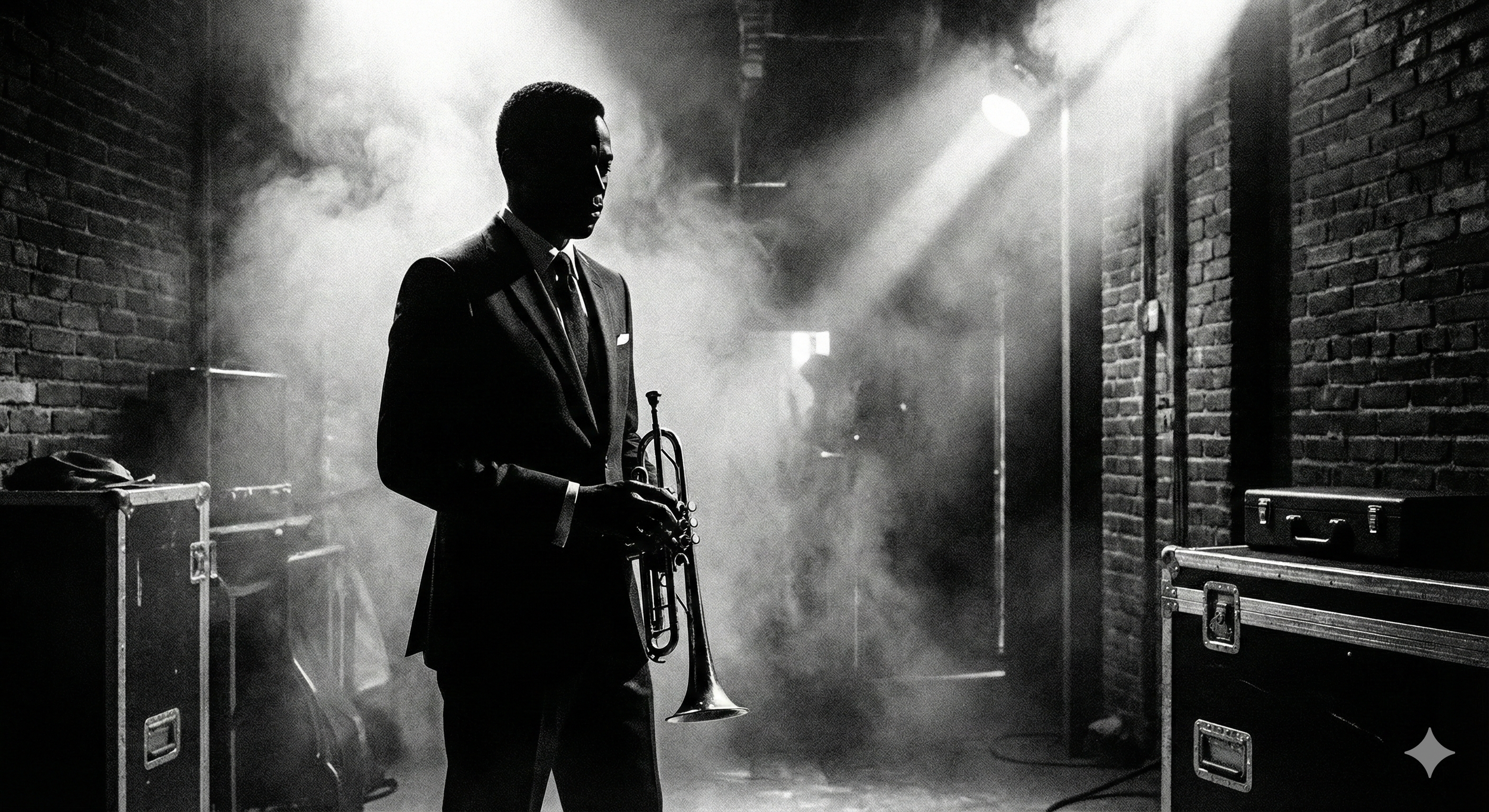
More Than a Dress Code: The Cultural History of the Jazz Musician's Suit
Why did jazz legends like Miles Davis, Coltrane, and Wes Montgomery always wear suits? Beyond fashion, the suit symbolized dignity, protest, diplomacy, and the elevation of jazz from club music to a global art form.
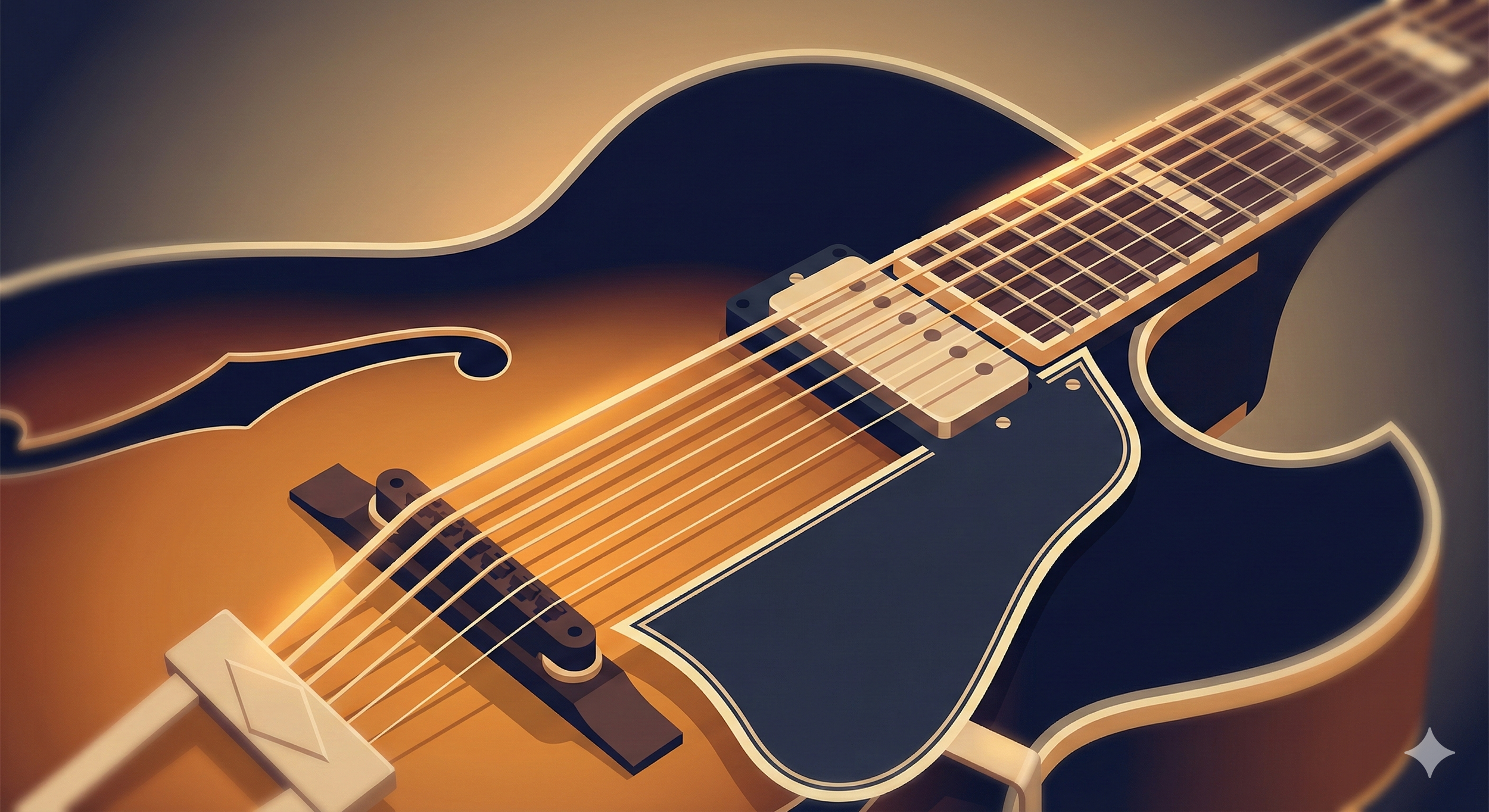
Unlocking the Authentic Jazz Tone: A Deep Dive into Flatwound Strings
Most players buy a hollowbody guitar expecting instant “jazz tone,” but the real secret lies not in the guitar—it's in the strings. Flatwound strings dramatically transform your sound, feel, and technique, unlocking the warm, mellow tone heard on classic jazz records.
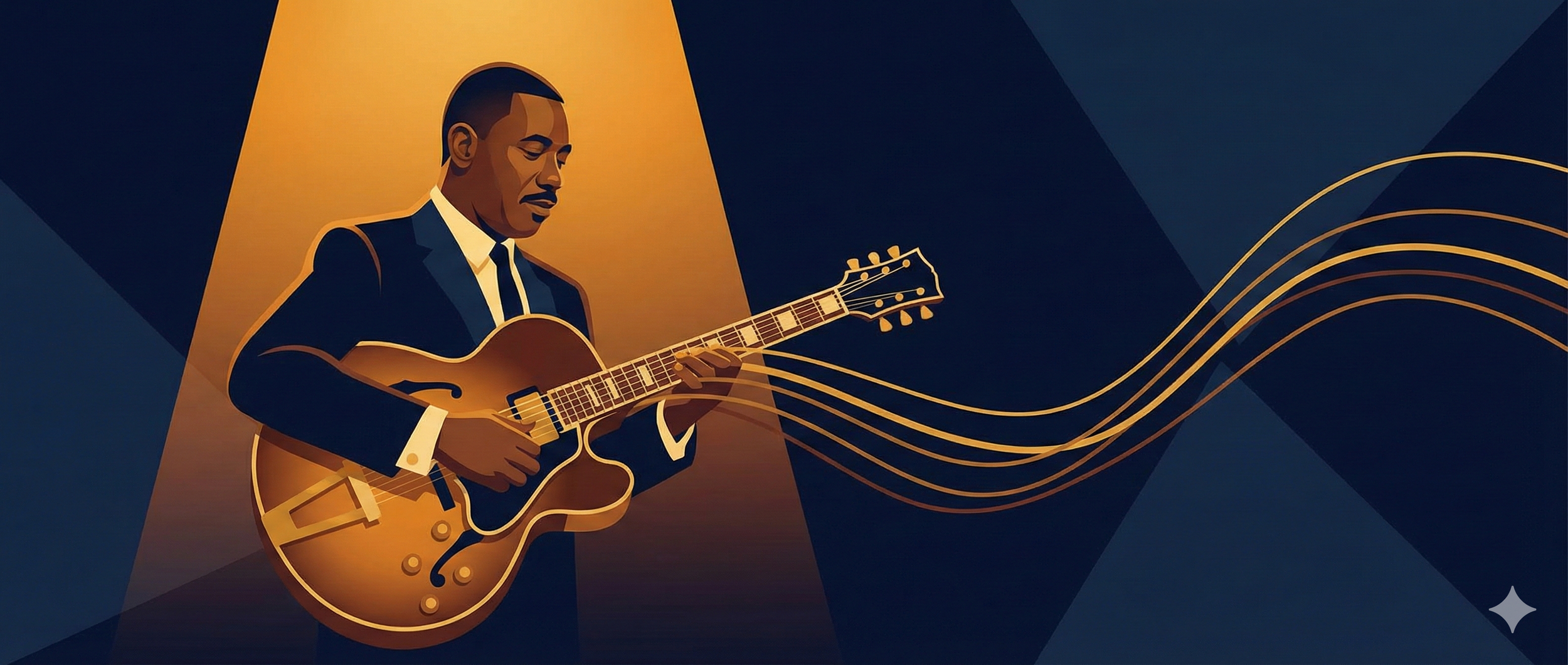
Starting Jazz Guitar? Here’s Who You Must Listen to First (Feat. Wes Montgomery)
Wes Montgomery is the clearest starting point for anyone entering jazz guitar. His melodic clarity, harmonic depth, and iconic octave style form the perfect foundation for understanding the entire lineage of jazz guitar masters.
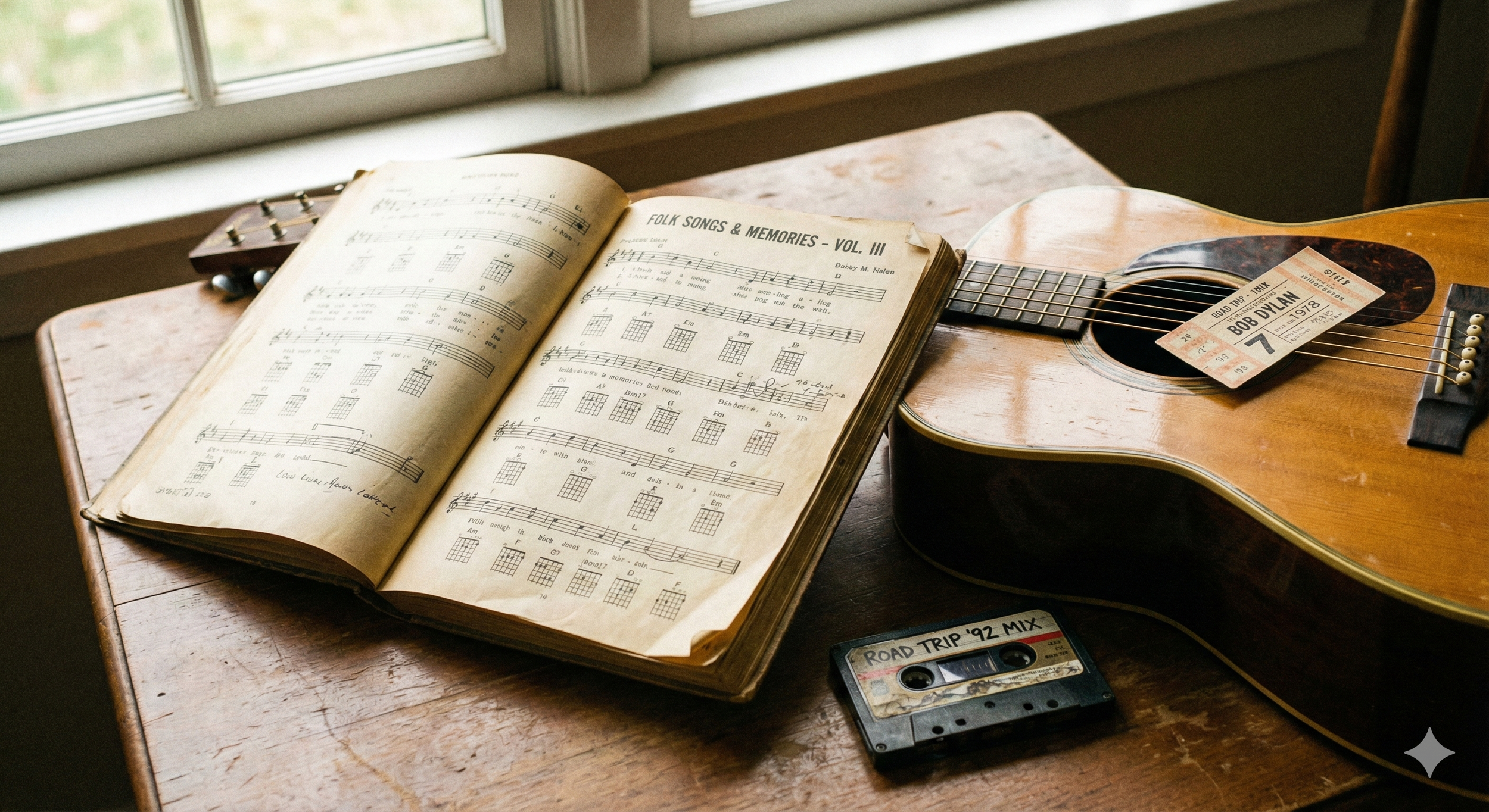
The Song Request That Unlocked a Memory: How Music Becomes Our Time Capsule
A late-night song request unexpectedly transported me back to my Michigan student days—reminding me how music can hold our most important memories. This essay explores how a single tune becomes a time capsule that shapes our emotional lives.
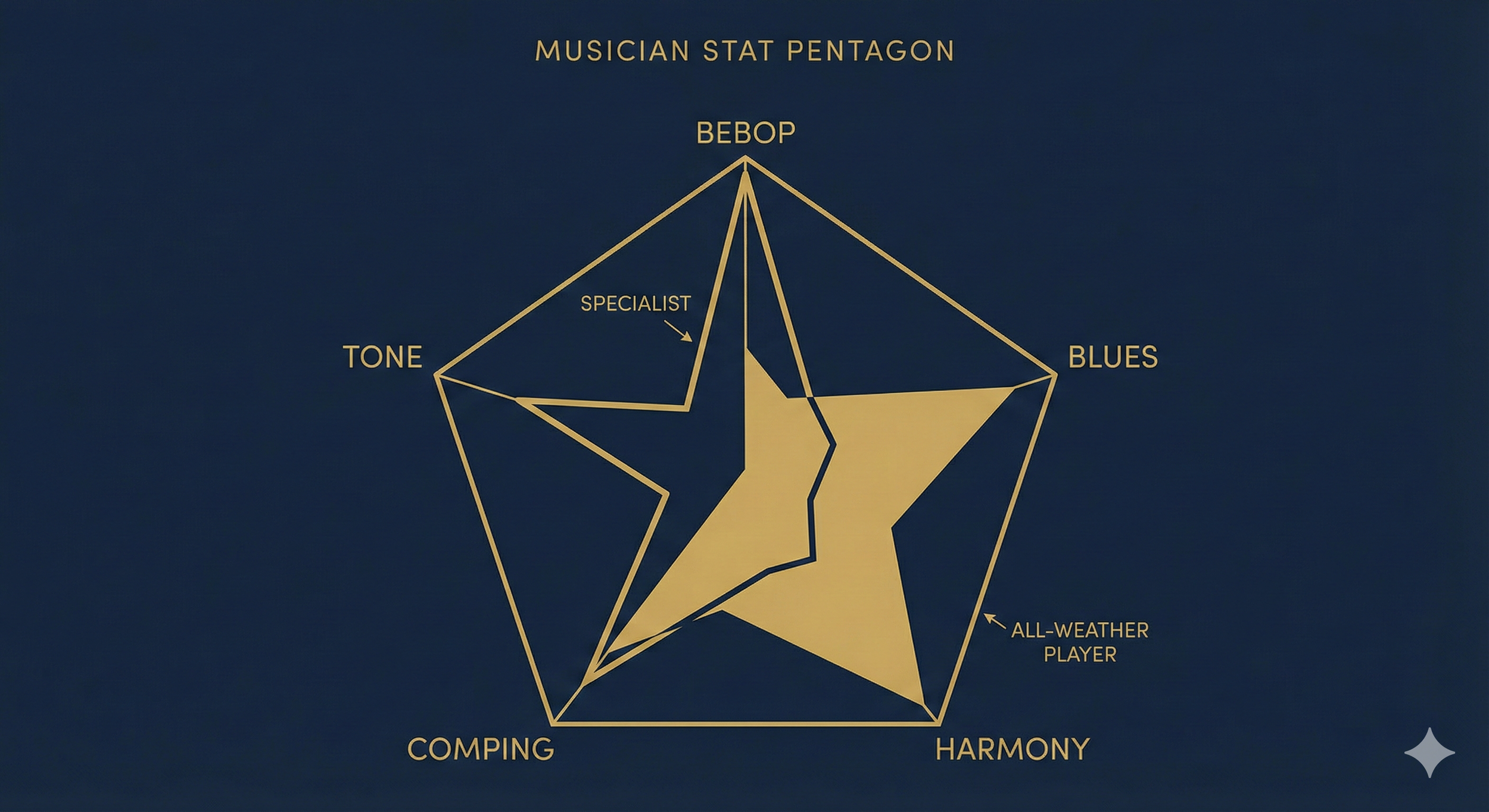
Beyond Lineage: The 'All-Weather Virtuoso' in Modern Jazz Guitar (A Jesse van Ruller Case Study)
Are you shaped more by the explosive bebop lineage of George Benson or the soulful, blues-driven school of Grant Green? This article explores how modern masters like Jesse van Ruller transcend lineage—becoming “all-weather” guitarists with fully developed musical spectrums.
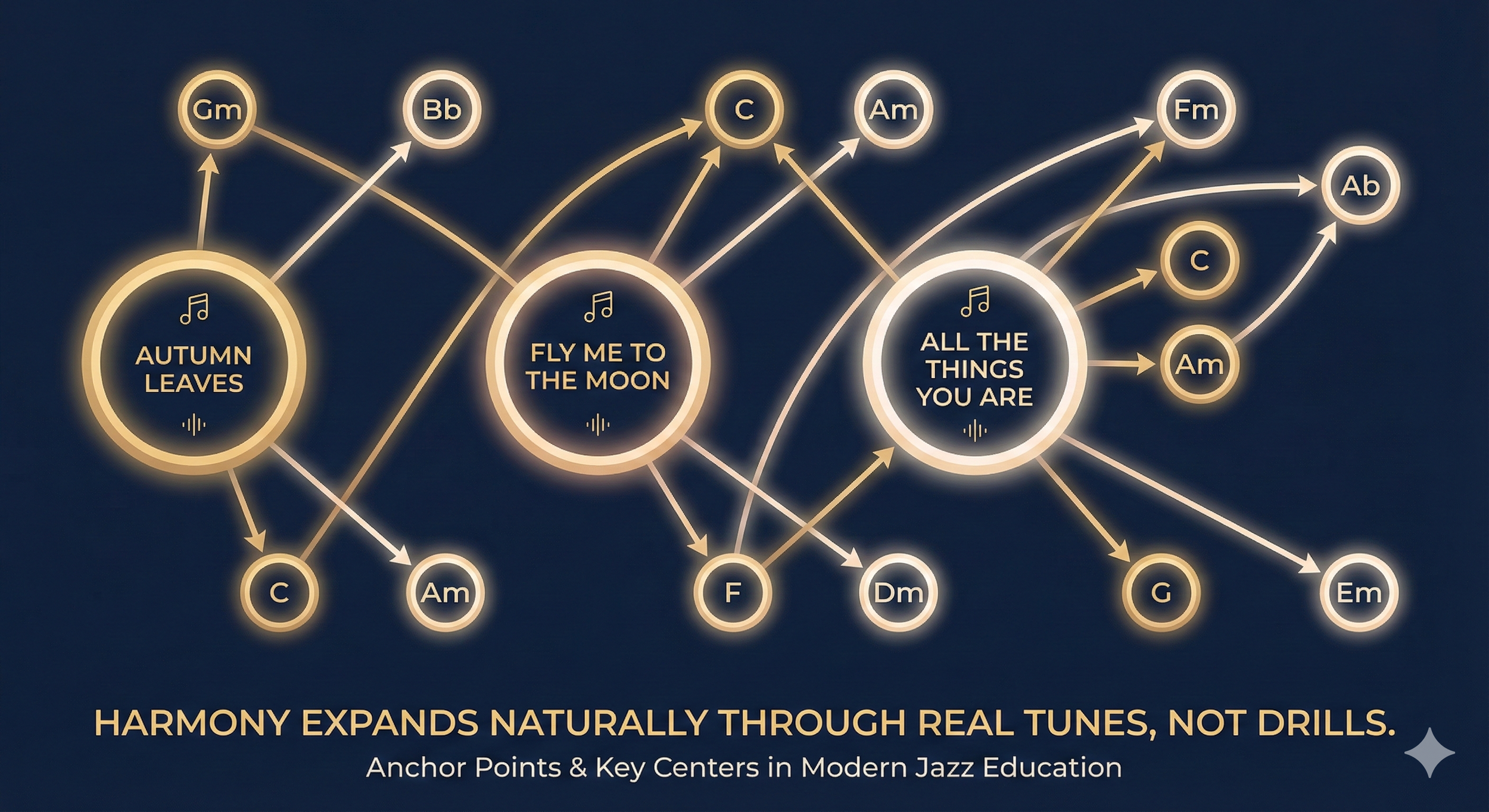
The 12-Key Trap: Why Trying to Conquer Every Key in Order Is Doomed to Fail
Many intermediate players try to master all 12 keys only to get stuck in a cycle of conquering one key and forgetting another. This article explains why isolated “12-key drills” fail—and how a song-based, top-down approach allows you to absorb harmony naturally and permanently through real tunes.
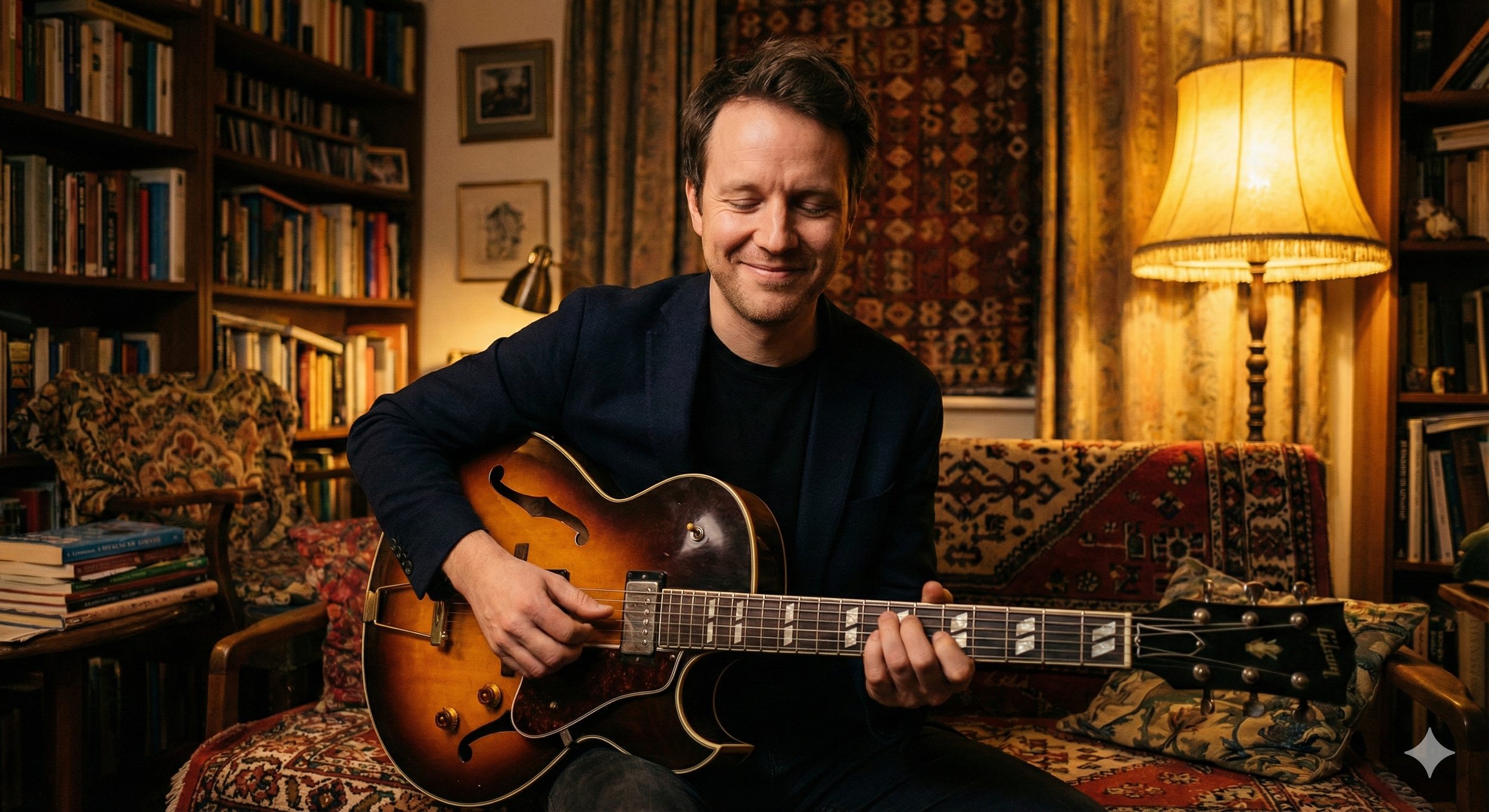
Stop 'Practicing' and Start 'Playing': The Most Important Mindset Shift for Jazz Guitar Growth
Many beginners fall into the trap of practicing drills endlessly—scales, chromatic exercises, arpeggios—without ever truly playing music. This article reframes your mindset: your practice room is not a gym, it’s a stage. Learn why playing full songs, even imperfectly, is the fastest and most joyful path to becoming a real musician.