

Ditch the Scales: Voicing-Centric Improvisation and Upper Structures
Still trying to calculate modes on the fly while soloing? It's time to stop over-analyzing. Discover why advanced jazz guitarists rely on functional voicing connections and Upper Structure Triads instead of rigid scale blocks to create fluid, spontaneous melodic lines.

How to Create Dominant Function Using Django and Wes Lines
Learn to move beyond standard diminished chords and use true dominant functions to push harmony forward. Discover how applying standard Django and Wes Montgomery lines creates powerful tension and resolution.
Breaking Free from Scale Blocks: A Beginner's Guide to Shell Voicings
If your mind goes blank the moment a jazz standard begins, it’s not a lack of talent—it’s how you are viewing the fretboard. Discover why abandoning linear scale blocks and embracing the structural clarity of "Shell Voicings" is the ultimate secret to fluent, confident jazz improvisation.

Decoding Rhythm Changes: Raw Blues Instinct and the Genius of Jim Hall
As you advance in jazz guitar, you realize the ultimate mastery lies in duality. It’s about knowing when to unleash a relentless, raw blues attack over blistering Rhythm Changes, and when to cool the room down with the intellectual, spacious comping pioneered by Jim Hall. Learn how to equip yourself with both fire and ice.

Turning Guide Tones and Upper Structures into Melodic Lines
Learn how to transform static guide tones into flowing melodic lines using upper structures. This lesson breaks down the exact fretboard logic used by Charlie Christian and Wes Montgomery.
Turning Static Scale Patterns into Dynamic Jazz Lines
Knowing your scales and arpeggios isn't enough if you run out of time. Learn to anchor your improvisational lines using guide tones and chord melody shapes.

Beyond Bebop: Why J.S. Bach is the Ultimate Jazz Teacher for Guitarists
From George Benson to modern players, the link between Baroque music and Jazz is undeniable. But it’s not just history—it’s practical application. Bach is the ultimate teacher of "Implied Harmony." Learn how studying his works can train you to make a single note carry the weight of an entire chord progression, turning your solo lines into a self-contained orchestra.
The Role of Singing and Chromaticism in Jazz Lines
Can you play chromatic lines that aren't strictly arpeggios? Yes, but only if you know where you are landing.
Wes Montgomery’s Secret to High-Register Arpeggios
Wes Montgomery didn't reinvent the wheel for high notes; he used diagonal displacement. Discover how to reuse shapes for octave lines.
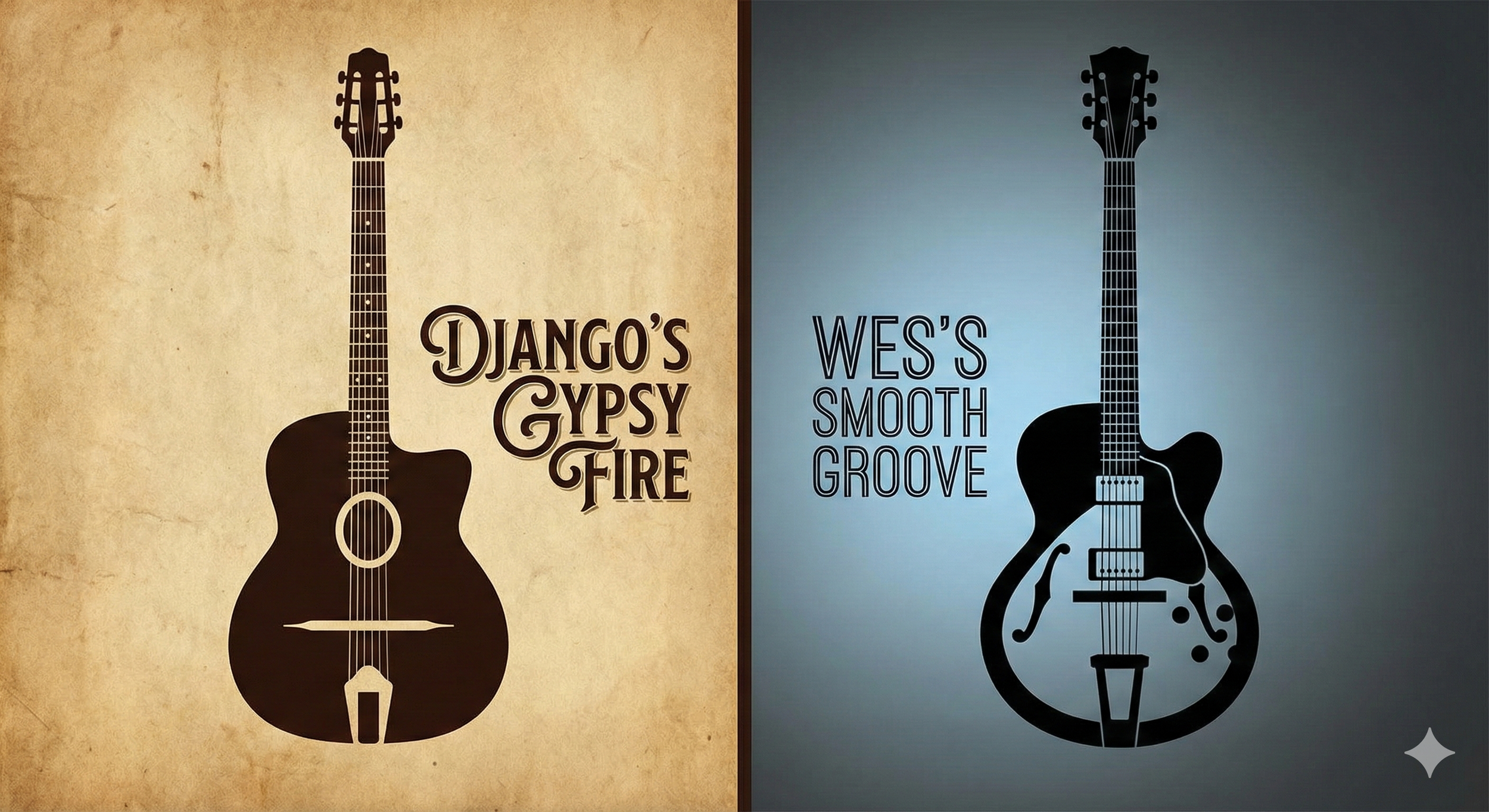
Django Line vs. Wes Line: Understanding the Difference
Ed asks if the Django Line and Wes Line are interchangeable. The answer lies in voice leading and understanding tonic vs. non-tonic function.
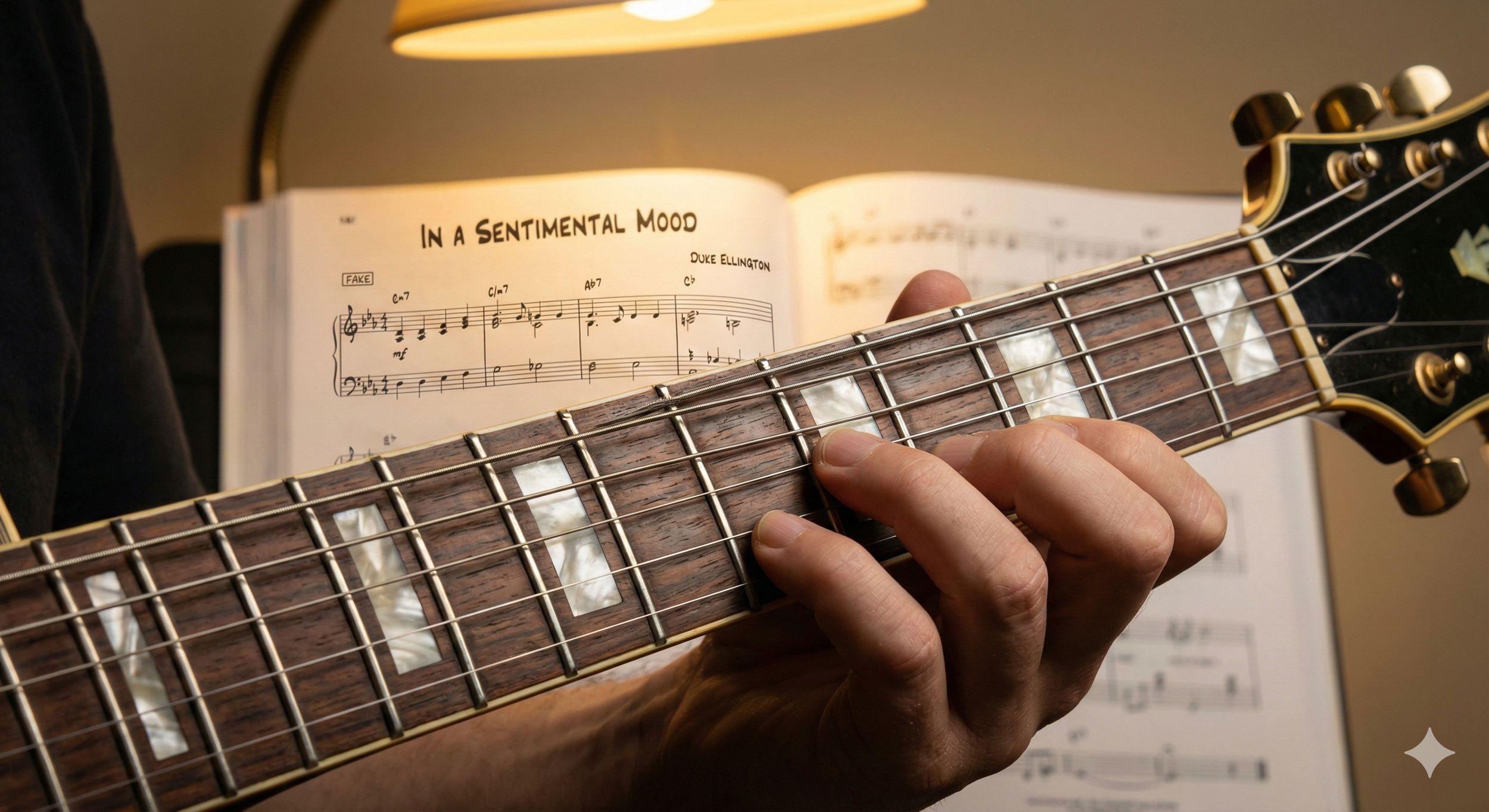
Beyond the Blues Scale: How to Structure Melodic Improvisation
Learn why playing the melody is more effective than relying on the blues scale for songs like 'In A Sentimental Mood'. Discover the three-step framework for developing your own phrasing.

How to Internalize Complex Tunes: A Case Study on "What Is This Thing Called Love"
Are your solos sounding like random scale exercises? Discover the "Fly Me to the Moon logic" applied to "Autumn Leaves." This step-by-step process helps you build a melodic skeleton using 3rds and 7ths, ensuring your lines resolve beautifully through the changes every time—before you even add the "fancy stuff."

Stop Chasing Upper Structures: The Tonic vs. Non-Tonic Approach
Are you mentally exhausted trying to chase every chord extension in a progression? It’s time to stop doing "abstract math" on the fretboard. Discover why categorizing chords into just two functions—Tonic and Non-Tonic—is the secret to playing smoother, more melodic jazz lines like the masters.
What Does "Following the Melody Direction" Actually Mean?
Does following the melody mean matching its pitch and register? No. It means understanding the magnetic pull of the Third.
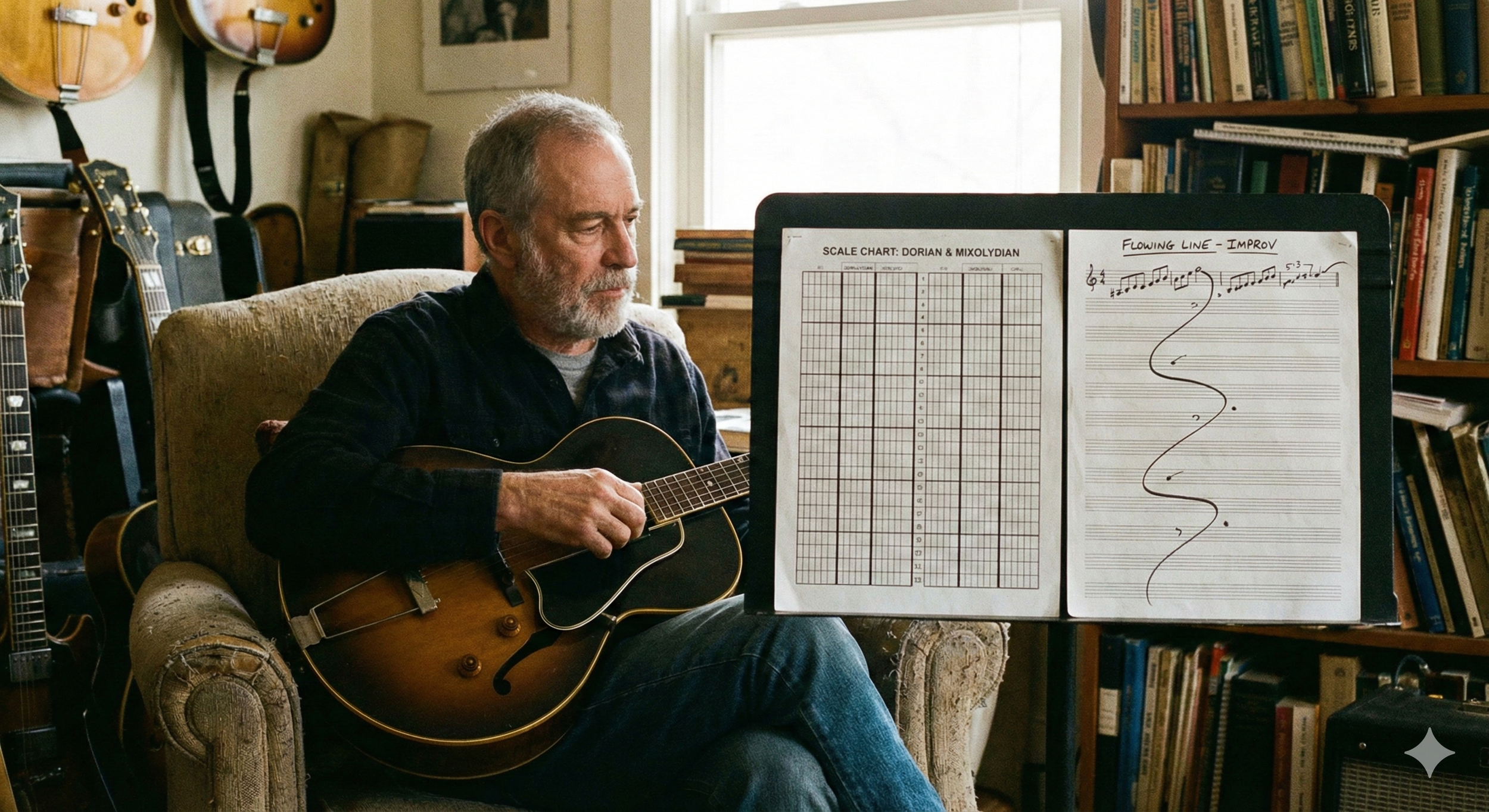
Do You Actually Use Scales When Improvising?
Intermediate players often wonder if pros really think about scales while soloing. The answer reveals the difference between sounding like a student and sounding like a pro.

How to Survive Fast Moving Chord Changes
Fast tempos and dense changes like 'Confirmation' can be intimidating. Learn the secret of targeting thirds to navigate speed with ease.
Barry Harris Method vs. Organic Fretboard Logic
Is the Barry Harris method necessary for improvisation? We explore why understanding 12 notes deeply is more important than collecting methods.
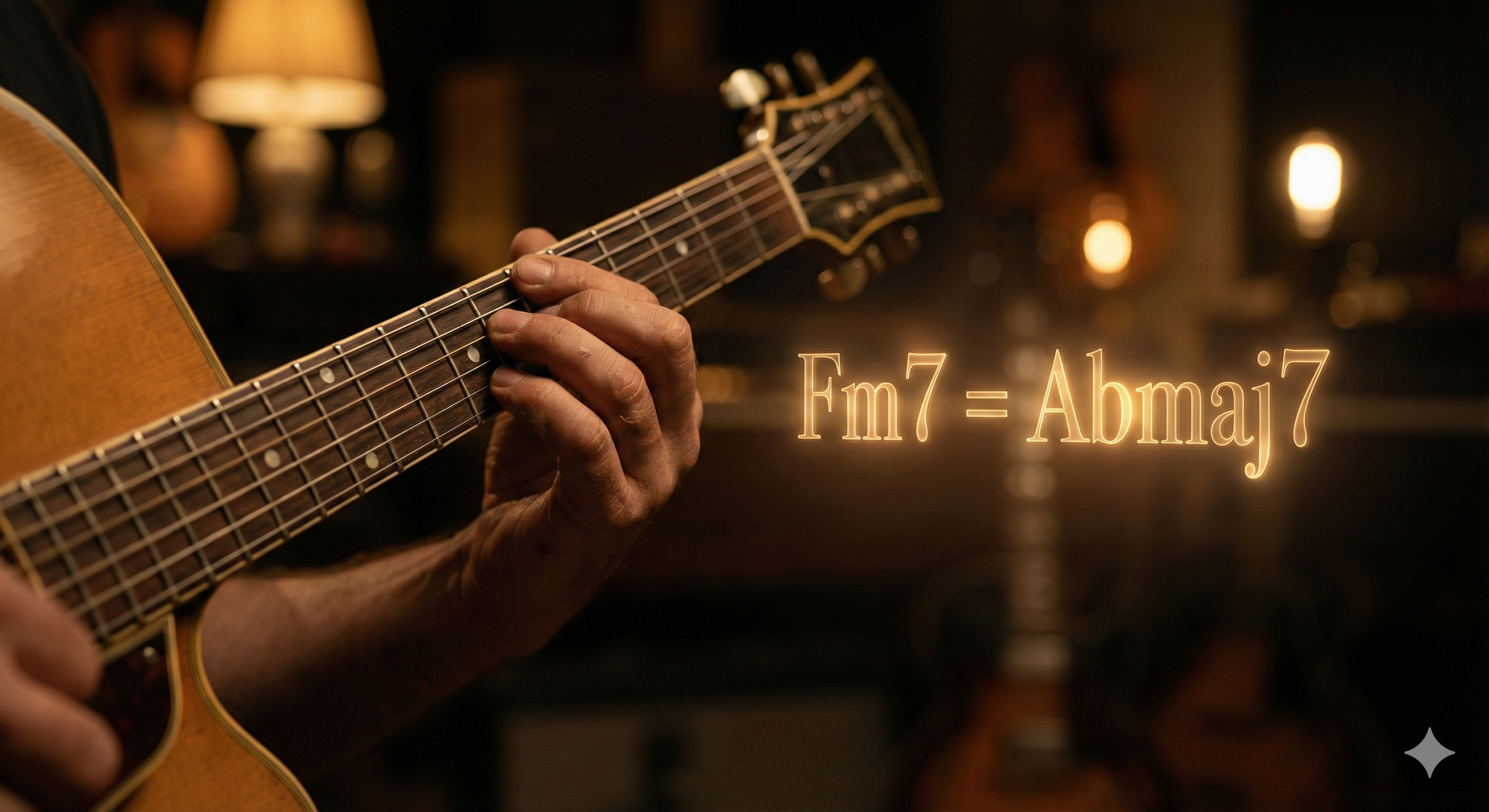
Decoding the "Wes Line": Upper Structures in Fly Me to the Moon
Beginners are often told to play root-based arpeggios, but this approach creates a mechanical, disconnected sound. The secret to that floating, professional jazz quality isn't playing the root—it's playing the Upper Structure. Discover how to transform a simple Fm7 into a lush Abmaj7 sound (the "Wes Line") and navigate the fretboard with the efficiency of a pro.

Connecting Thirds: Is It Okay to Use Bebop Vocabulary?
Does the 'connecting thirds' method mean you can't use famous licks? We discuss how to use vocabulary without losing the melody of the song.

Unlocking 'The Girl from Ipanema': Upper Structure Triads & Superimposition
To advance as a jazz guitarist, you must break the habit of chasing roots. In complex tunes like The Girl from Ipanema, the key to fluid soloing isn't a new scale—it's Superimposition. Discover how to float simple "Upper Structure Triads" over complex chords to create that sophisticated, modern jazz sound without over-thinking.