
Breaking Through Your Improvisation Rut: A Practical Guide to Connecting Melody and Guide Tones
"I know my chord tones, I've memorized my scales... so why doesn't my improvisation sound like music?" This is the wall that countless intermediate jazz guitar students hit. The theory is in your head, but when it's time to play a solo, you're paralyzed, unsure of which notes to play or how to connect them. It’s like knowing thousands of words but being unable to form a coherent sentence. The solution is surprisingly straightforward: shift your focus from dry, theoretical exercises to the practice of connecting sounds within the living, breathing context of an actual song.
If you want a structured way to apply this discipline, see How to Build a Jazz Guitar Practice Routine in 10-Minute Blocks.
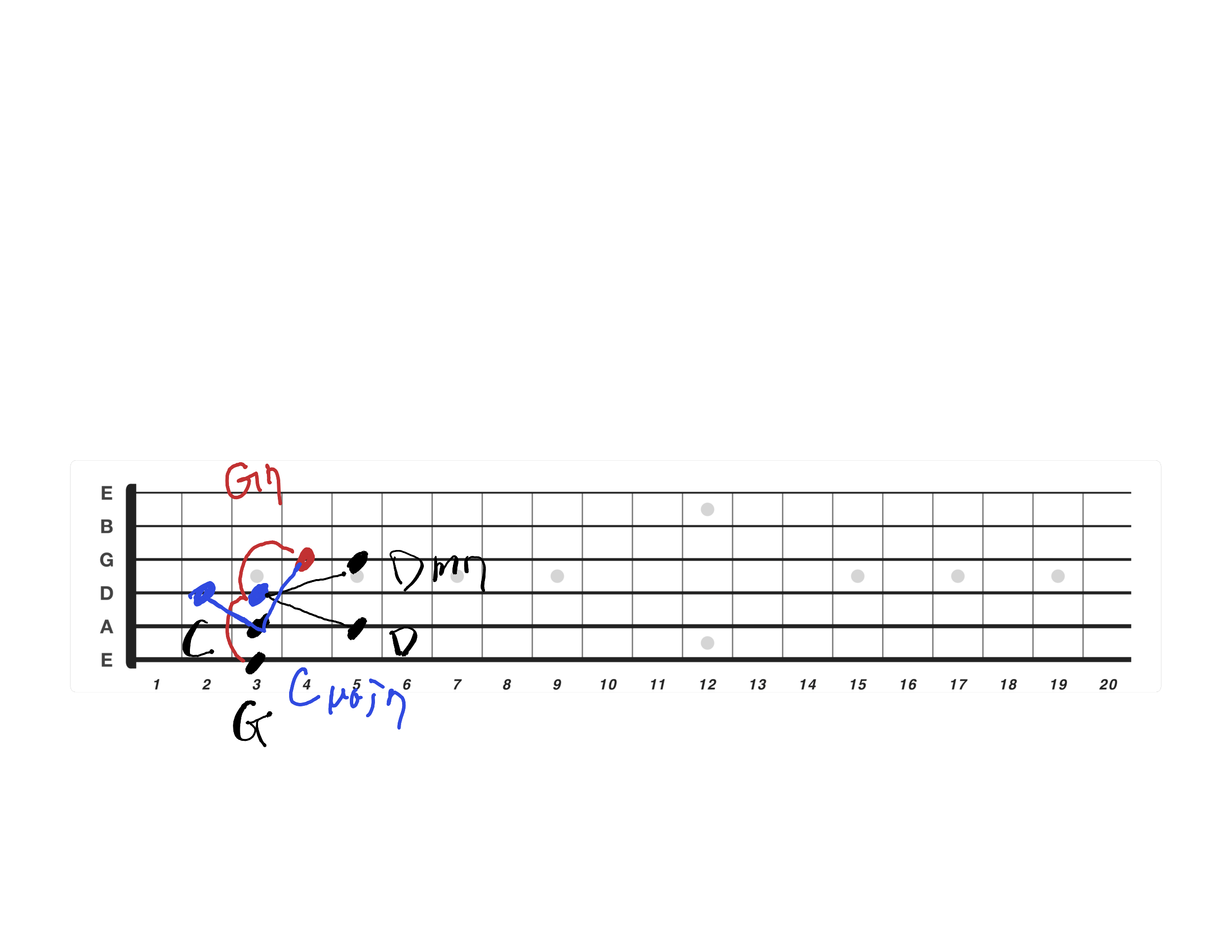
The Main Concept: Play Music, Not Theory Approaching improvisation with instructions like, "Use the Dorian mode here," can quickly lead to burnout. Instead, we need to anchor our playing in the two most vital elements of any tune: the melody and the core harmony (guide tones).
For a complete map of how guide tones function across chord types, the Bridge Theory Reference page lays it out clearly.
1. Your Starting Point is Always the Melody Improvisation isn't about creating something from nothing. It’s more akin to a conversation with the original song—embellishing its melody, paraphrasing its themes, and filling the spaces in between. If your solo lines are only dictated by the chord changes, the audience won't be able to tell what song you're even playing. For your improvisation to sound like an integral part of the performance, it must carry the "scent" of the original melody. Think of it as your thematic anchor.
2. The Harmonic Skeleton: Guide Tones In any given chord, the most important notes are the ones that define its quality (major, minor, dominant): the 3rd and the 7th. These two notes are called "guide tones." The root and 5th are harmonically less essential for a soloist. Take a standard II-V-I progression (e.g., Dm7 - G7 - Cmaj7) and try playing only the 3rd and 7th of each chord. ◦ Dm7: F (3rd), C (7th) ◦ G7: B (3rd), F (7th) ◦ Cmaj7: E (3rd), B (7th)You'll be amazed at how connecting just these notes smoothly creates a profoundly jazzy sound. This smooth connection is called voice leading. Notice the beautiful, efficient half-step movement: the C in Dm7 resolves down to B in G7, and the F in G7 resolves down to E in Cmaj7. That gravitational pull is the engine of functional harmony. Your solo lines should respect and reflect this movement.
3. Fleshing it Out: Using Triads to Connect the Dots Now that we have our harmonic skeleton, it's time to add some flesh. The most effective tool for filling the space between a melodic phrase and the next guide tone is the humble triad. Triads provide a clearer, more powerful melodic statement than a meandering scale run. They organically connect melody and harmony, providing strong, concise ideas that sound intentional and musical.
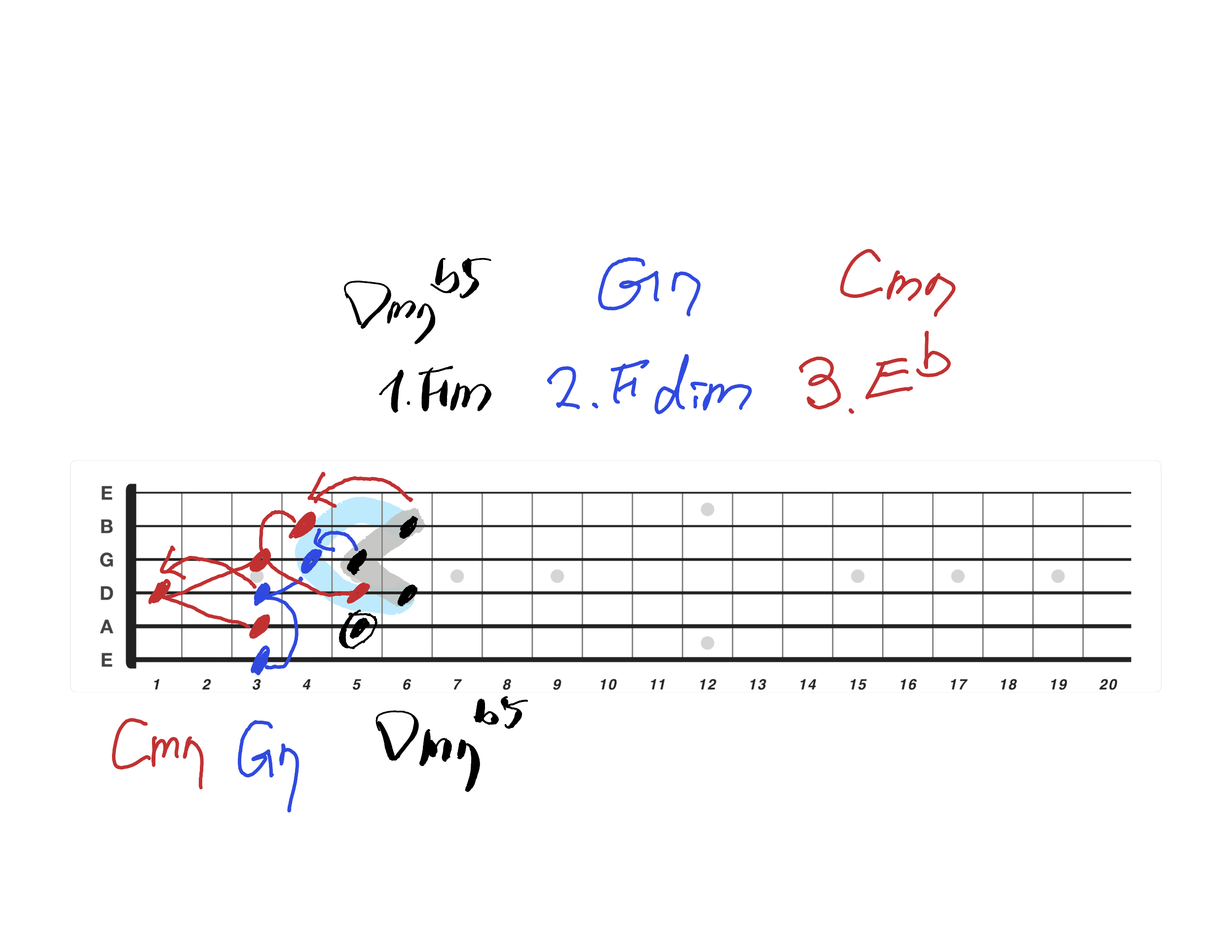
If you're feeling stuck in your improvisation journey, put the scale practice on hold for a day. Instead, choose a standard you love and apply these three steps: 1. Learn to play the melody perfectly and internalize its phrasing. 2. Map out and play only the guide tones (3rds and 7ths) through the chord changes. 3. Try to create small phrases that connect a piece of the melody to the nearest guide tone, using simple triad shapes or chord tones. When you start to see the fretboard not as a collection of patterns but as a map of harmonic function and flow, improvisation transforms from an act of memorization into a joyful, creative conversation. Discover more in-depth lessons on jazz improvisation and harmony at https://www.youtube.com/@voicelidjazzguitar.