
More Than a Dress Code: The Cultural History of the Jazz Musician's Suit
Why Were the Jazz Giants Always in a Suit? Miles Davis, John Coltrane, Wes Montgomery... When we look at the iconic black-and-white photographs from the golden age of jazz, the masters are almost invariably dressed in impeccably tailored suits. It's easy to dismiss this as simply proper stage etiquette or the fashion of the era. But for the jazz musician, a suit was never just clothing. It was a statement of musical identity, a symbol of social struggle, and a declaration of artistic dignity. Today, we'll use the suit as a key to unlock a deeper chapter in the history of jazz.
If you want a structured way to apply this discipline, see How to Build a Jazz Guitar Practice Routine in 10-Minute Blocks.
더 배우고 싶다면:
🎸 이 영상에서 실제 연주로 확인: Why Most Berklee Grads Can't Play Jazz (And How to Fix It)
📖 체계적으로 배우고 싶다면: Building Blocks — 무료 2시간 레슨
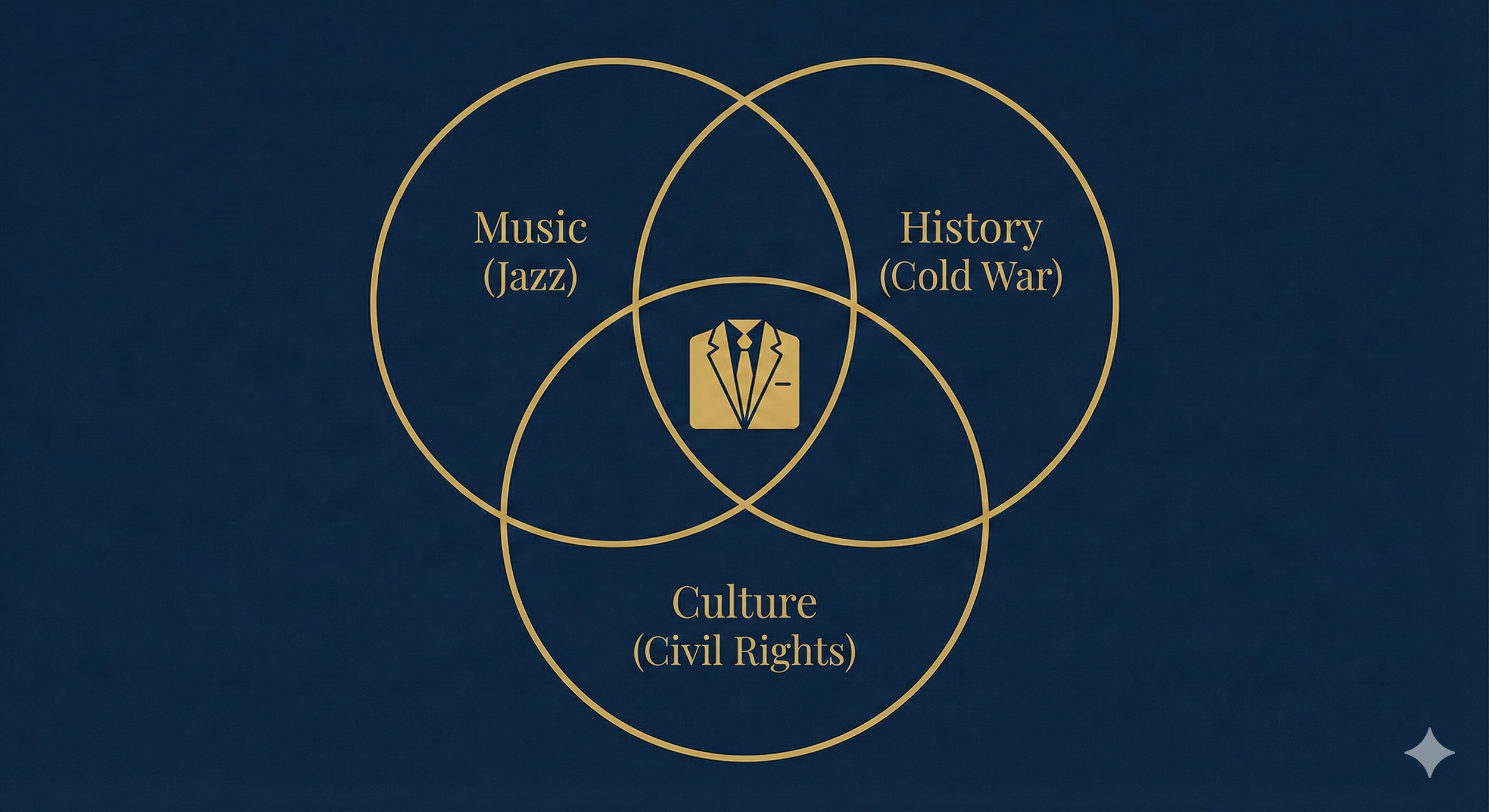
Jazz in the Society
rom Club Music to Concert Art—The Role of the Suit In its early days, jazz was often consumed as background music in clubs and restaurants, or as functional entertainment for dancing. It was a part of the nightlife, not the concert hall. However, in the post-World War II era, jazz entered a new phase, and the suit played a surprisingly critical role in its transformation.
1. Cultural Ambassadors of the Cold War: During the height of the Cold War, the United States needed a cultural symbol to promote the superiority of the "free world." Unlike classical music or ballet, which were dominated by Europe, jazz was a uniquely American art form. The U.S. government famously sponsored international tours for Black jazz musicians like Louis Armstrong and Dizzy Gillespie, positioning them as "cultural ambassadors." The image required for this role was one of a sophisticated, cultured representative of American art. The suit was the most powerful visual tool to project this message, both at home and abroad.
2. Civil Rights and Artistic Dignity: Within the United States, racial segregation and discrimination were rampant. In this climate, artists like Miles Davis intentionally took to the stage in the finest Italian suits. This was not mere vanity. It was a deliberate act of protest and self-respect. It was a statement that his music was not cheap entertainment for a back-alley club, but a serious art form deserving of a concert hall's solemn appreciation. The suit became a form of armor, a way to command respect in a white-dominated society that was predisposed to look down on them. It was a visual symbol of the pride and dignity of the Black artist.
3. Resisting the "Jazz" Label: As time went on, some Black musicians began to feel that the very word "jazz" had been co-opted and commercialized by the white-owned record industry, stripping the music of its authentic roots. Trumpeter Nicholas Payton, for instance, has famously argued that we should call the music "Black American Music" (BAM) instead of "jazz." From this perspective, the suits worn by the early masters can be seen as part of a larger, hard-fought battle to protect their music from prejudice and to demand its value be recognized on their own terms. Ultimately, the jazz musician's suit is far more than a fashion choice. It is a complex symbol, representing the music's ascent from the club to the concert hall and the struggle to establish an artistic identity in the face of profound racial prejudice.
If any of this resonates and you’re wondering where to start musically, Building Blocks is the entry point.
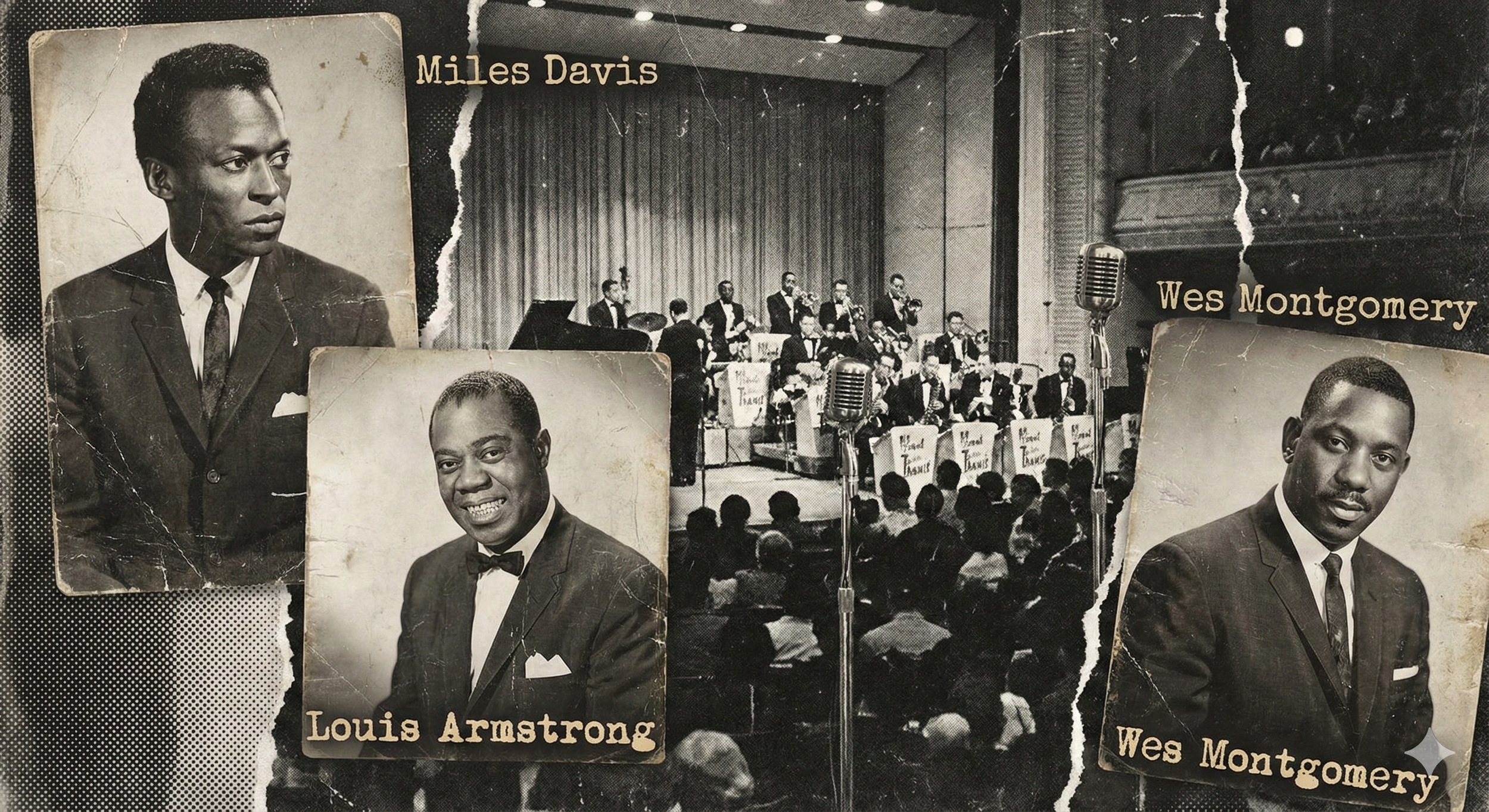
Jazz pioneers in the suits
Understanding the History Beyond the Music When we study and play jazz, we must go beyond analyzing notes and chords. Our playing deepens when we understand the social and historical soil from which the music grew, and the lives of the artists who created those sounds. The suit of a jazz musician contains all of these stories. It is a testament to the fact that jazz is not merely a genre, but a great art form that embodies the culture and history of an entire era. To explore more about the deep history and philosophy of jazz, visit us at VoiceLidJazzGuitar.com.