
Unlocking the Authentic Jazz Tone: A Deep Dive into Flatwound Strings
You Have the Hollowbody, But Why Doesn't It Sound "Right"? You finally did it. You invested in a beautiful hollowbody guitar, plugged it into a decent amp, and started practicing with renewed motivation. But something’s off. The tone feels a bit too bright, too harsh, and the screeching sound of your fingers sliding across the strings is driving you crazy. You wonder, "How do the legends get that warm, mellow, 'thumpy' sound from their records?" The answer might be simpler than you think, and it lies in your choice of strings. Today, we're taking a deep dive into the secret weapon of the classic jazz tone: flatwound strings.
The right-hand mechanics that make this tone possible are unpacked in The Anatomy of Thick Tone: Decoding the Right Hand of George Benson and Grant Green.
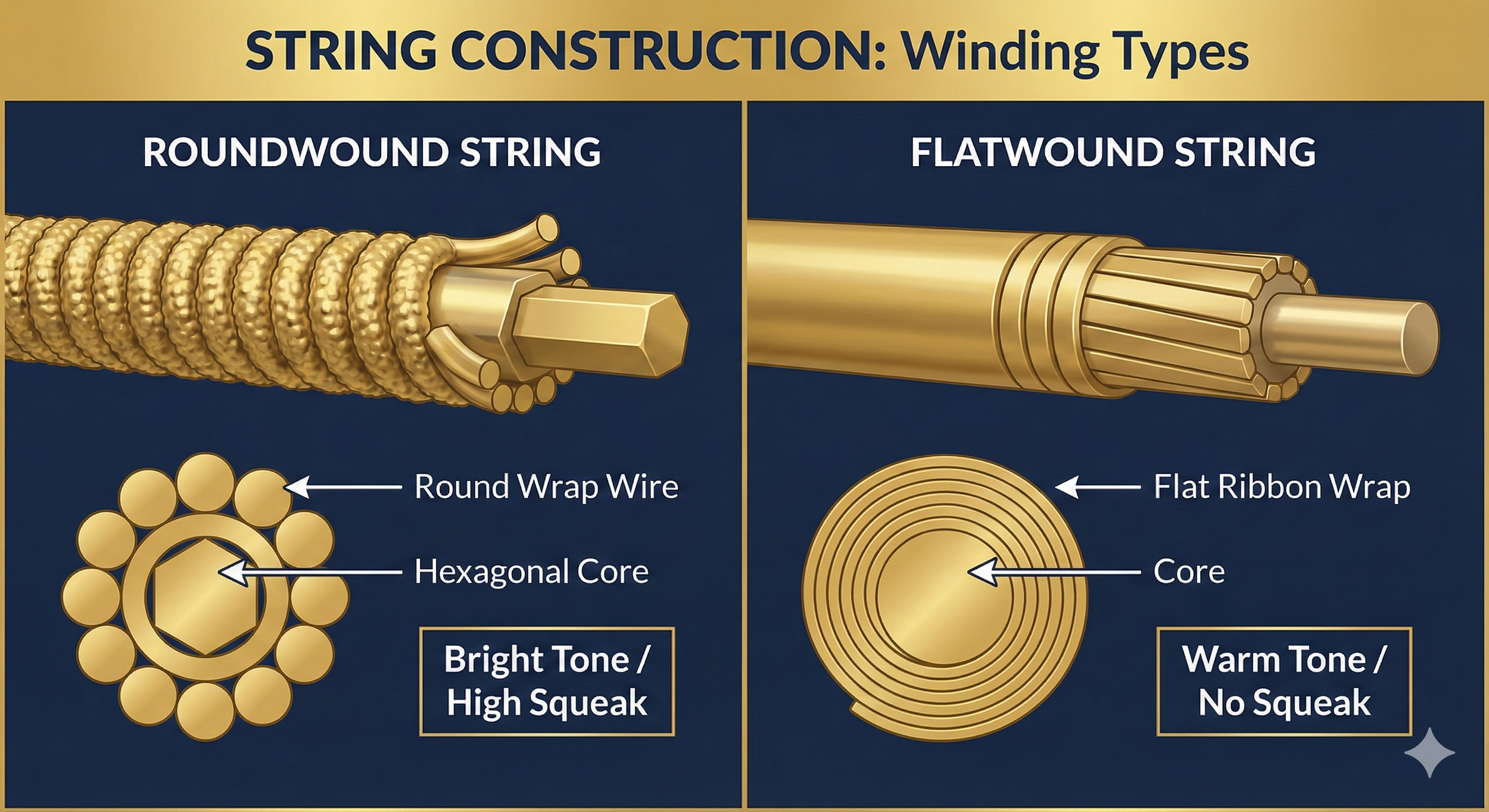
Roundwound vs Flatwound
What Are Flatwounds and Why Do They Matter? Most electric guitars come factory-equipped with "roundwound" strings. As the name implies, these are made by wrapping a round wire around a core, resulting in a textured, ribbed surface. This construction produces a bright tone with long sustain, which is perfect for rock, blues, and pop. However, it’s also the source of that infamous "squeak" when you slide your fingers. Flatwound strings, in contrast, are constructed using a flat, ribbon-like wire. This creates a completely smooth surface. The results are dramatic: finger noise is virtually eliminated, the tone is significantly darker and warmer, and the sustain is much shorter. This quick decay creates the percussive, "thud-like" attack that is the hallmark of the classic jazz guitar sound, beloved by everyone from Wes Montgomery to Joe Pass. However, making the switch to flatwounds involves more than just a simple string change. There are a few critical characteristics you must understand before you do.
1. Higher Tension: Even at the same gauge, flatwound strings have significantly higher tension than their roundwound counterparts. This means you’ll need more finger strength to fret notes, and string bending becomes nearly impossible. This reality can fundamentally alter your playing style. Instead of a fluid, "kneading" approach to the fretboard, you'll find yourself adopting a more deliberate, precise touch, almost like playing a piano.
2. A Different Feel: At first, the high tension can feel stiff and uncomfortable. However, once you acclimate to this firmness, it can provide a sense of stability and control. Certain brands, like the Thomastik-Infeld George Benson signature set, are known for their remarkably smooth and flexible feel despite being flatwounds, allowing for an almost effortless glide for your pick.
3. The Critical Importance of Setup: This is the most crucial point. You cannot and should not put heavy-gauge flatwound strings on just any guitar. The immense tension they exert can overwhelm a neck that isn't built for it. For example, stringing up a Stratocaster with heavy flatwounds is a recipe for a warped or bowed neck. Flatwound strings are primarily designed for the robust neck construction of hollowbody and archtop guitars.

Feel the flatwound
Change Your Tone, Change Your Playing Switching to flatwound strings is not just about altering your sound; it’s a commitment that will influence your technique and overall approach to the instrument. It may feel challenging at first, but once you conquer the tension and begin to craft jazz lines on their smooth surface, you will have a profound, physical understanding of why the masters made this choice. If you feel like your tone is missing that last 2%, it's time to give flatwounds a try. You might just find the sound you've been searching for. For more expert advice on gear selection and setup, visit us at VoiceLidJazzGuitar.com.