

Jazz Guitar Practice Tips: Why Drilling One Tune Will Stop Your Growth
Most serious jazz guitar students hit the same invisible wall: they have one or two tunes they can play deeply, and everything else feels shallow. The reason is not lack of practice. It is the wrong shape of practice — and a borrowed metaphor from a Japanese comic book might be the clearest way to explain why.

Guide Tones as Fretboard Stepping Stones in Jazz Guitar
Guide tones — the third and seventh of each chord — serve as stable landing points in jazz guitar improvisation, and mapping the diatonic notes that surround each guide tone is a productive way to expand vocabulary without losing harmonic clarity. This post explains what the Functional Diagonal Approach (FDA) requires before that mapping is reliable: the function of the chord must be identified first, because a minor chord functioning as the 2nd, 3rd, or 6th degree of the key will present a different set of surrounding diatonic notes even when the chord shape is identical.

Three-Finger Jazz Guitar Technique and Where Swing Feel Comes From
In jazz guitar, swing feel is generated by the physical movement of the left hand between notes — not by alternating pick direction on the right hand. This post explains the three-finger approach taught in the Functional Diagonal Approach (FDA), why the ring finger and pinky are treated as a single unit, what Wes Montgomery's right-hand technique actually shows, and why the common alternate-picking approach to swing produces a sound that does not swing.

How to Build Rhythmic Vocabulary for Jazz Guitar
Rhythmic vocabulary for jazz guitar is built by listening and singing long before it is built by playing — and it requires a personal musical identity to exist first, before transcription from other players can truly benefit you. This post explains the sequence Junewon Choi teaches in the Functional Diagonal Approach (FDA), including the practice method taught by his teacher Richard Hart, and why big band listening is one of the most direct paths to genuine swing feel.

Why Jazz Guitar Uses the 6th Degree on the One Chord
In bebop and swing jazz, the tonic I chord is almost always treated as a sixth chord, not a major seventh chord — a practice rooted directly in how Charlie Parker and the swing-era players heard and played the one. This post explains the historical and harmonic logic behind this choice, why George Benson's signature I-chord phrase is built around the 6th degree, and what it means for jazz guitar improvisation and the Functional Diagonal Approach (FDA).

How to Play Jazz Guitar Over Church and Pop Music
When a jazz guitarist plays over church or pop music — songs built on triads rather than seventh-chord harmony — the fastest and most reliable adaptation is the pentatonic block anchored to the melody. This post explains the approach Junewon Choi teaches in the Functional Diagonal Approach (FDA), including why melody must stay in your inner ear throughout the solo and how to listen like the masters who played it before you.
How to Find Jazz Guitar Guide Tones on the Second and Third String
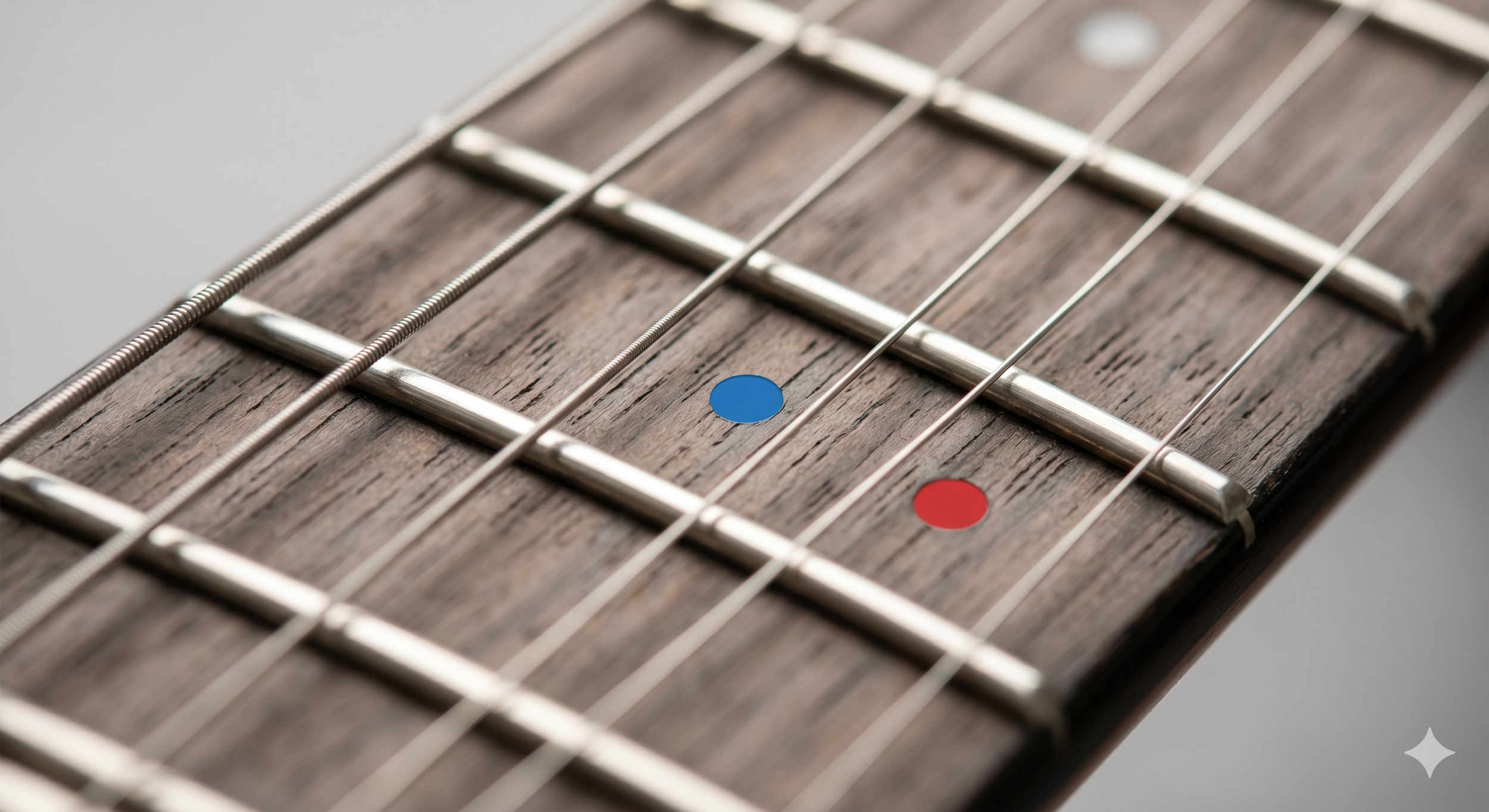
Finding jazz guitar guide tones on the second and third string is a matter of octave displacement: take the guide tone pair you know on the fourth and third string, and move the lower voice up an octave so both notes land on the upper string positions.

Guide Tones and Voice Leading in Church Music With Triad Cycles on Guitar
In church music built on 1-4-5 progressions without seventh chords, guide tone voice leading does not directly apply. Triad cycles offer an equivalent structural framework that creates smooth, connected motion across the same changes. This post explains what Junewon Choi demonstrated at the April 4 VLJG Office Hour.
How to Adapt a Familiar Jazz Melody to Harmonic Minor Sound on Guitar
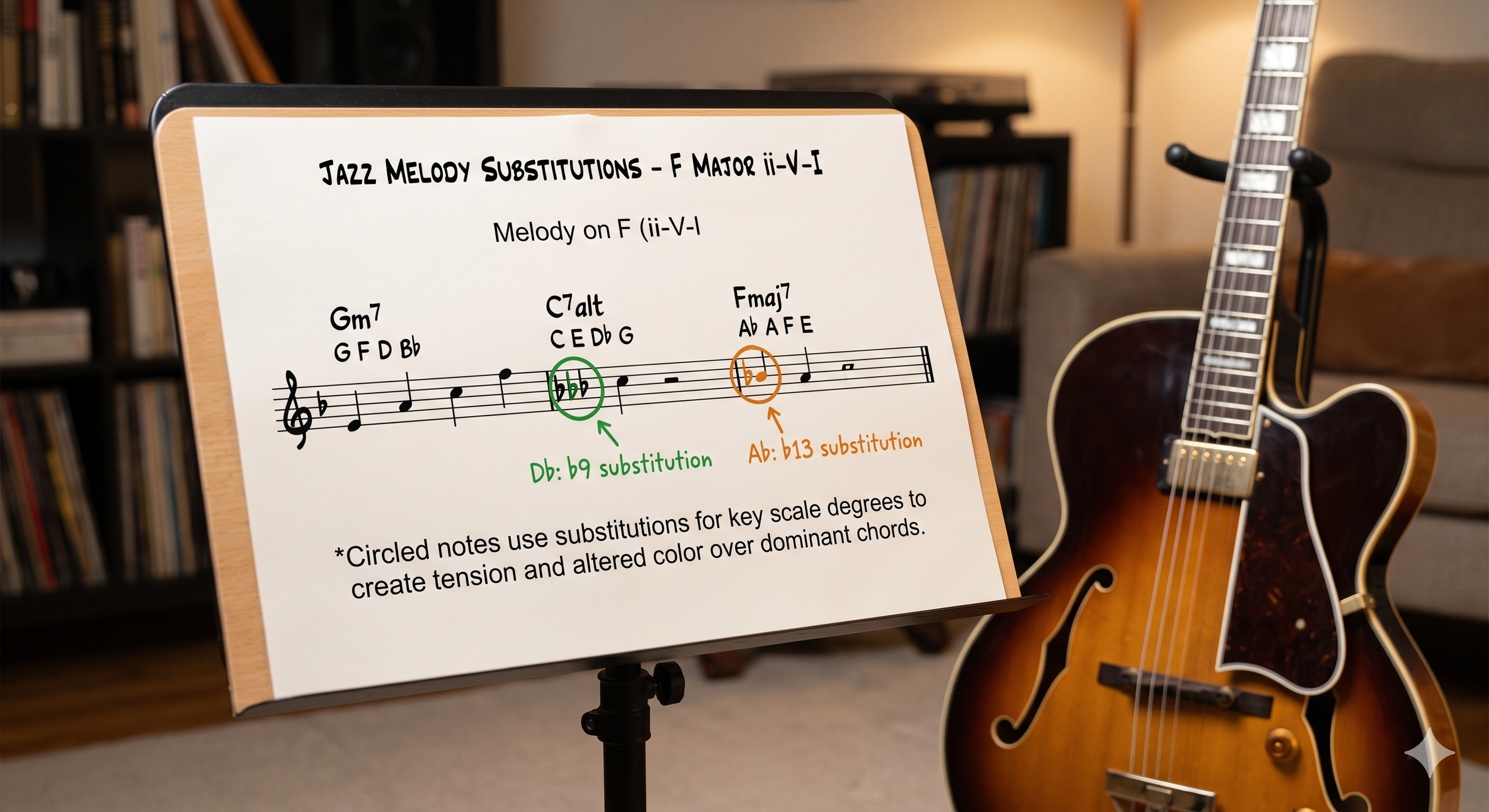
Adapting a familiar jazz melody to harmonic minor sound requires identifying specific scale degrees and substituting them with their harmonic minor equivalents — replacing the major sixth with a flat sixth and the major third with a minor third. This post explains the one-to-one note mapping method Junewon Choi described at the April 4 VLJG Office Hour.

Sparse Jazz Guitar Comping With Shell Voicings: How to Comp Yourself
Creating rhythmically engaging sparse jazz guitar comping requires stripping chords down to their guide tones — the third and seventh of each chord — using shell voicings as the source material. This post explains how shell voicings generate both solo lines and sparse accompaniment, and how to build the sound Junewon Choi demonstrated at the April 4 VLJG Office Hour.

Why the Wes Line Feels Forced Before It Feels Natural
When the Wes Line from the Functional Diagonal Approach (FDA) feels mechanical rather than musical, it is a signal that the ear has not yet internalized the structure. This post explains why that gap is normal, what Junewon Choi teaches about bridging technical vocabulary and personal sound, and what to practice next.
Tonic vs. Non-Tonic in the FDA: Getting the Chord Function Right
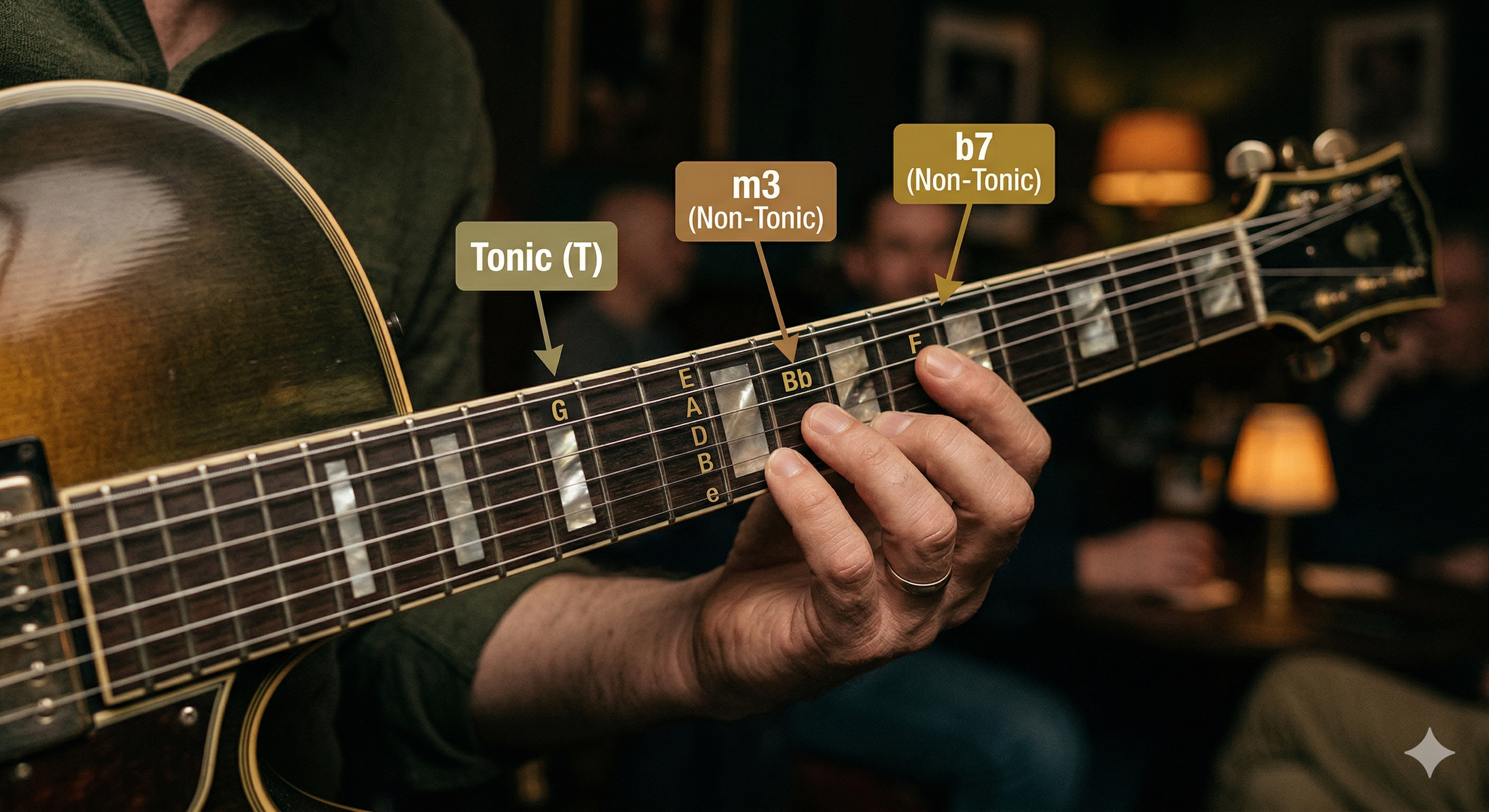
Knowing whether a chord is tonic or non-tonic in the FDA determines which diagonal line you use — and getting that wrong means the whole system breaks down. This post clarifies the G minor 7 and E-flat major 7 relationship in the key of B-flat and explains how to apply tonic and non-tonic assignments consistently around the circle of fifths.
Playing Wes Line and Django Line Over Fast 2-5s: Blues for Alice
Fast 2-5 progressions in bebop tunes like Blues for Alice move quickly — but the FDA reduces that complexity to the same half-step voice leading motion you already know, played along the diagonal structures. This post shows how Charlie Parker's melody already contains the answer.
Secondary Dominants and Upper Structure Chords Inside the FDA
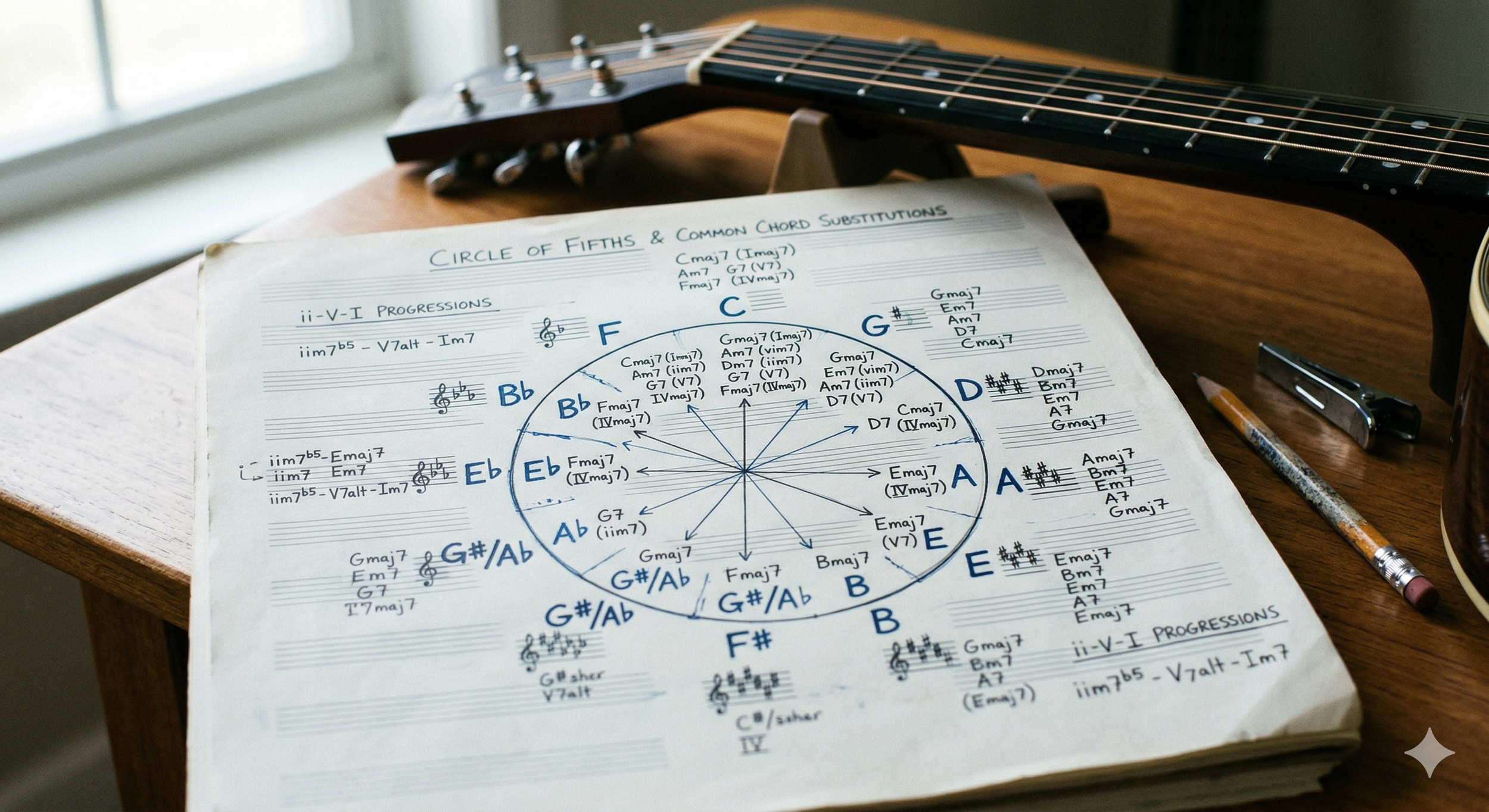
Secondary dominants follow a specific rule — circle-of-fifths motion resolving to a diatonic chord — and within the FDA, their upper structure chords are simply Wes Line or Django Line structures sitting a half step above the resolution point. This post explains how every secondary dominant fits into the same binary framework you already know.
How to Transfer a Jazz Line from the Wes Line to the Django Line
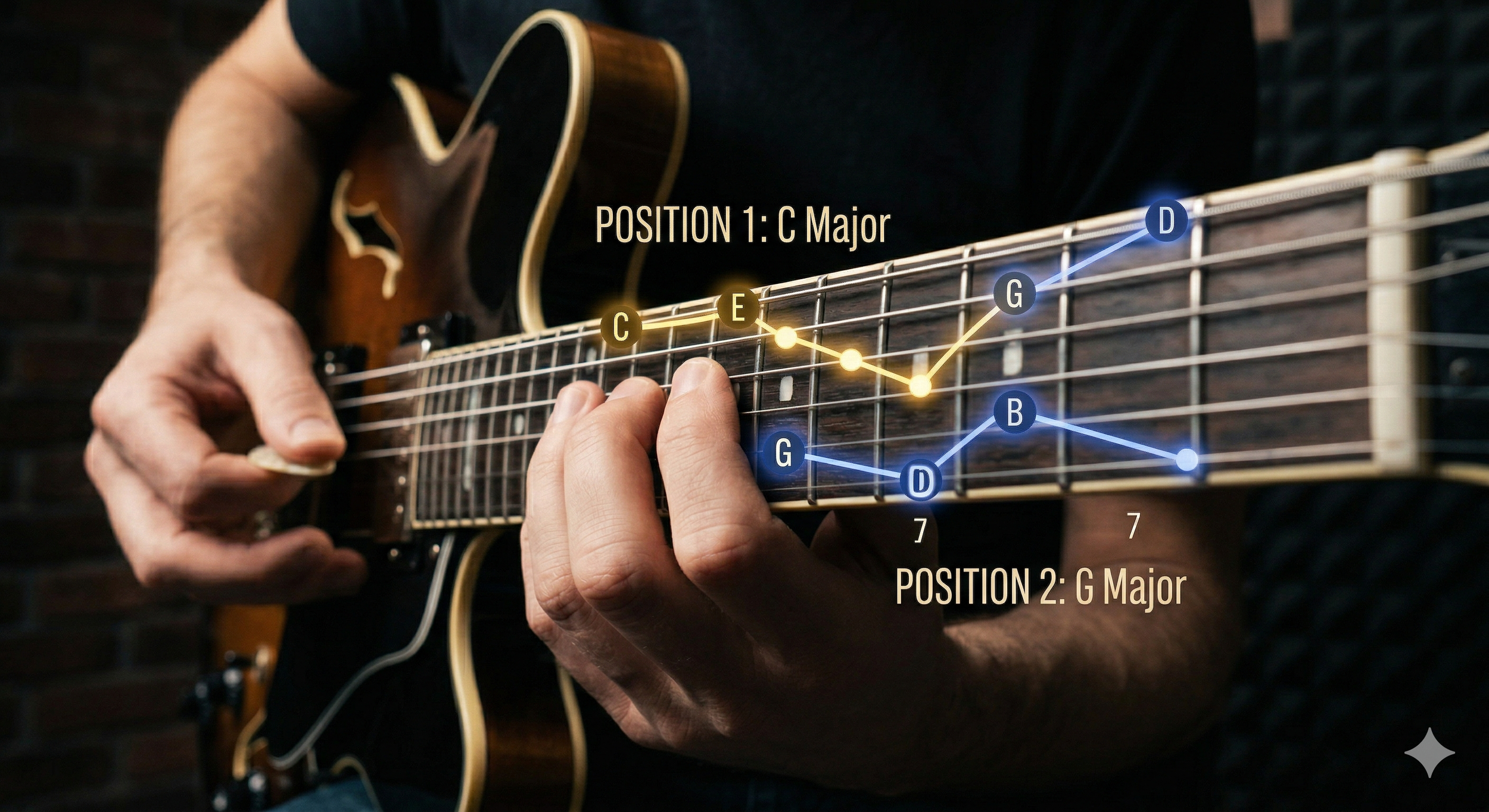
When you find a line that works on the Wes Line, how do you play the same phrase on the Django Line? This post examines how Wes Montgomery extended lines across diagonal structures and what that means for your own fretboard vocabulary.
Voice Leading on Complex Tunes: How to Get Information from the Chord Melody
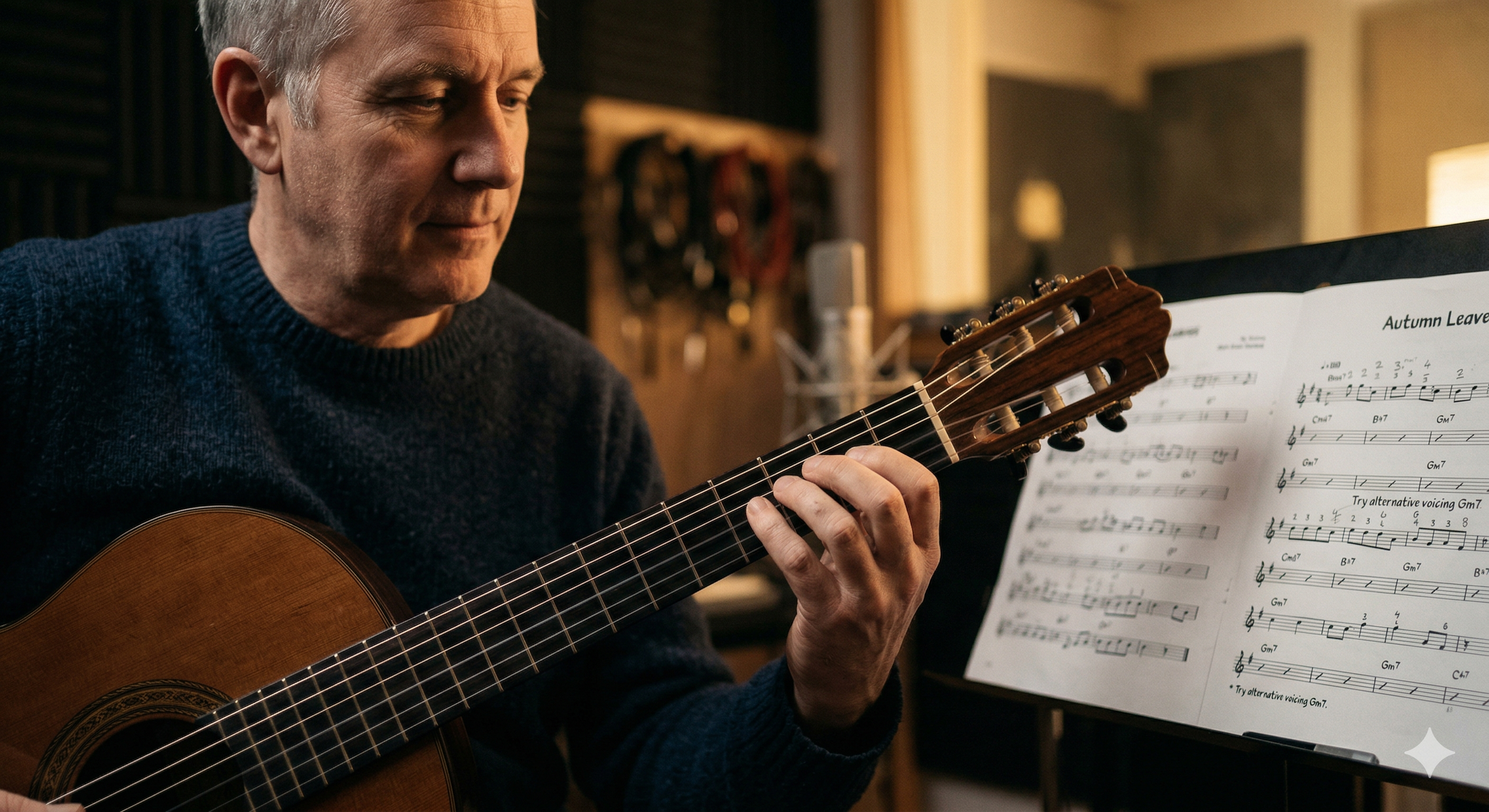
Voice leading is not just a theory concept — it is the practical foundation for building solos on complex jazz tunes like Stella by Starlight. This post explains the 12-step chord-melody process that extracts improvisation material directly from the tune itself.

How to Create Dominant Function Using Django and Wes Lines
Learn to move beyond standard diminished chords and use true dominant functions to push harmony forward. Discover how applying standard Django and Wes Montgomery lines creates powerful tension and resolution.
Why Major and Minor Are Often the Same in 2-5-1 Progressions
Uncover why legendary players treat major and minor chords interchangeably in their improvisations. By focusing on upper structures and voice leading, you can vastly simplify how you navigate 2-5-1 progressions.
How to Build a Jazz Guitar Practice Routine in 10-Minute Blocks
Discover how to structure your daily jazz guitar practice using manageable 10-minute blocks. Learn why breaking out of box shapes and listening to voice leading will transform how you navigate the fretboard.