

How to Learn Jazz Guitar Tunes: Start by Singing the Melody
Most beginners try to learn a jazz standard by chasing chord symbols. The faster route is the one almost no one starts with: sing the melody first. Here's why, and how to begin today.

Beyond Bebop: Why J.S. Bach is the Ultimate Jazz Teacher for Guitarists
From George Benson to modern players, the link between Baroque music and Jazz is undeniable. But it’s not just history—it’s practical application. Bach is the ultimate teacher of "Implied Harmony." Learn how studying his works can train you to make a single note carry the weight of an entire chord progression, turning your solo lines into a self-contained orchestra.
Play Like You Mean It: The Musician’s Mindset and the Power of Consistency
Instead of listening to the music, does your brain turn into a calculator during solos? The "Anxiety of the Empty Bar" kills creativity. Learn why internalizing the melody—not counting—is the secret to never getting lost again, and how adopting the "Long Game" mindset builds true mastery.
Beyond Scales: Painting on a Blank Canvas with Motivic Development
You’ve memorized the modes and arpeggios, yet your solos still feel like a random string of notes. The missing link isn't a new scale—it's Motivic Development. Discover how to turn "noodling" into a cohesive musical narrative by treating your improvisation like a conversation.
Escaping the Root Trap: The Art of Guide Tone Mapping for Beginners
Are your jazz chords sounding heavy and amateurish? You might be falling into the "Root Note Trap." Discover why leaving the low notes to the bassist and focusing on the structural power of 3rds and 7ths is the secret to a professional, breathing jazz sound.

Embracing Imperfection: Lessons from a Wedding Performance Disaster
Social media shows us the highlight reels, but real jazz happens in the recovery. From a chaotic wedding performance to the practice room, discover why connection matters more than perfection in this heartwarming Sunday insight.
Beyond Theory: Target Notes and Visualizing Sound Colo
In the heat of improvisation, mental calculus is a burden, not a tool. Discover why masters prioritize "Sound Color" over scale names, and learn how to use the Target Note method to bridge the gap between your brain and your ears.

Mastering Comping: Abandoning Flash for the Art of Space
Instead of praise for your complex chords, do you hear pleas to "play less"? The harsh reality is that the guitar fights for sonic space. Discover how to fix muddy tone using Shell Voicings and the art of silence.
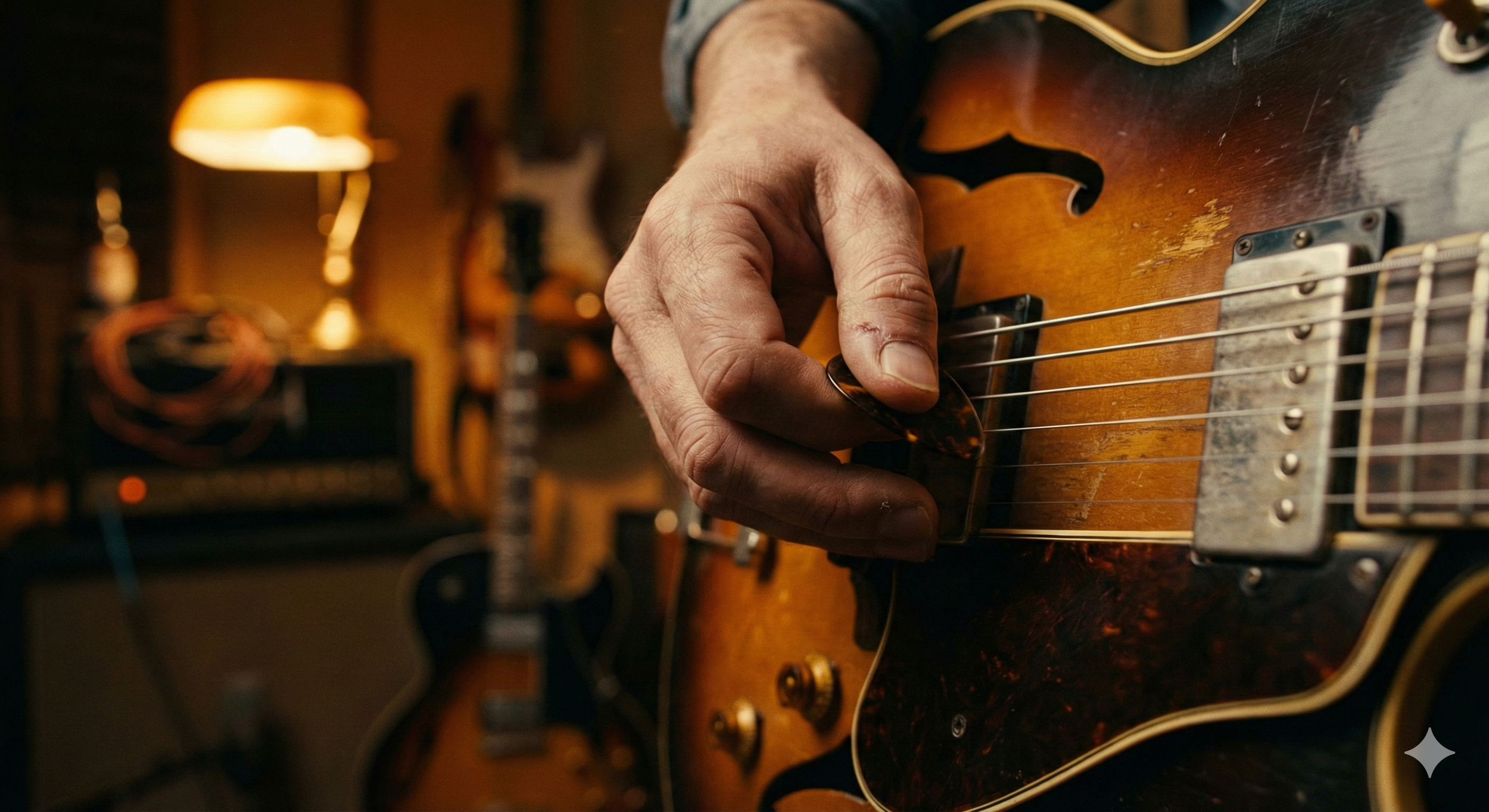
The Physics of Jazz Tone: Pick Thickness and the Rest Stroke
Why doesn't my guitar sound like the records? The answer might be in your fingertips. Discover how pick thickness and the "Rest Stroke" technique can transform your sound from thin to warm and punchy.
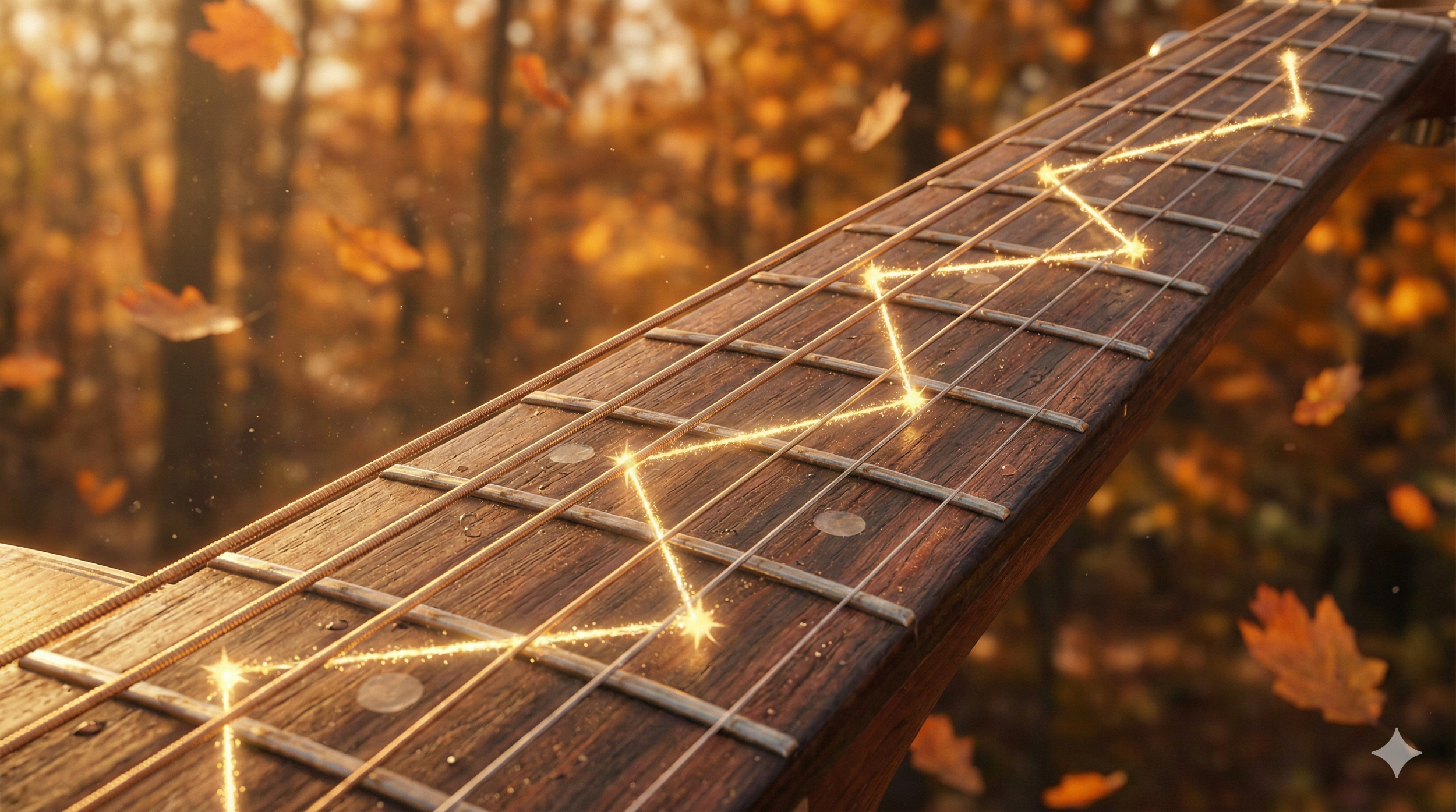
How to Internalize Complex Tunes: A Case Study on "What Is This Thing Called Love"
Are your solos sounding like random scale exercises? Discover the "Fly Me to the Moon logic" applied to "Autumn Leaves." This step-by-step process helps you build a melodic skeleton using 3rds and 7ths, ensuring your lines resolve beautifully through the changes every time—before you even add the "fancy stuff."
Stop Chasing Upper Structures: The Tonic vs. Non-Tonic Approach
Are you mentally exhausted trying to chase every chord extension in a progression? It’s time to stop doing "abstract math" on the fretboard. Discover why categorizing chords into just two functions—Tonic and Non-Tonic—is the secret to playing smoother, more melodic jazz lines like the masters.
The 4 Faces of Diminished Chords: Resolution Logic & Upper Structure Triad Pairs
In advanced jazz theory, the Diminished 7th chord is often misunderstood as merely a "spooky" passing chord. In reality, it is a functional powerhouse. Because of its symmetrical nature, a single diminished grip allows you to resolve into four different tonalities. In this post, we destruct the "Four Faces" of the diminished chord and explore how to use Major Triad Pairs to modernize your improvisation.
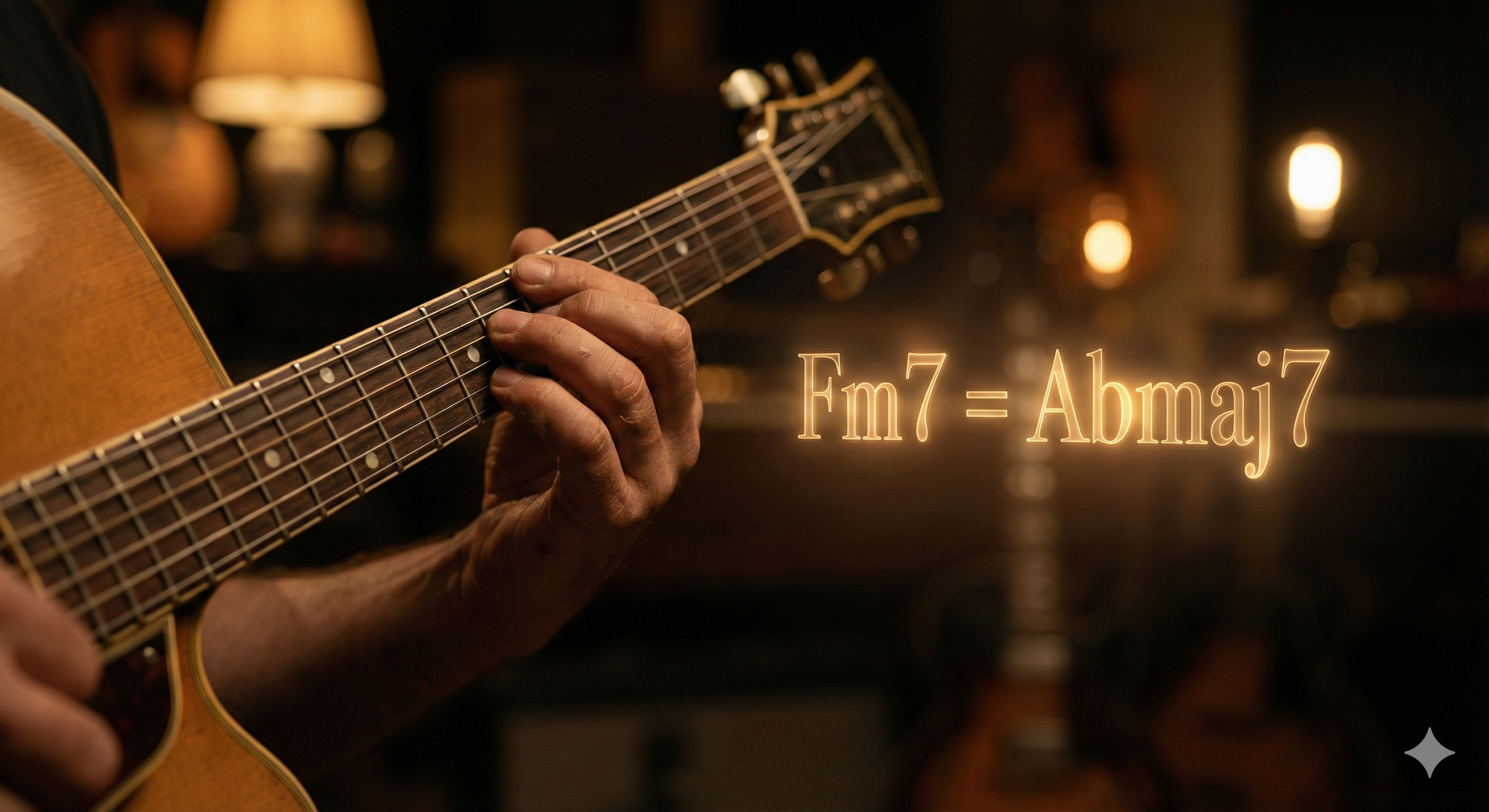
Decoding the "Wes Line": Upper Structures in Fly Me to the Moon
Beginners are often told to play root-based arpeggios, but this approach creates a mechanical, disconnected sound. The secret to that floating, professional jazz quality isn't playing the root—it's playing the Upper Structure. Discover how to transform a simple Fm7 into a lush Abmaj7 sound (the "Wes Line") and navigate the fretboard with the efficiency of a pro.
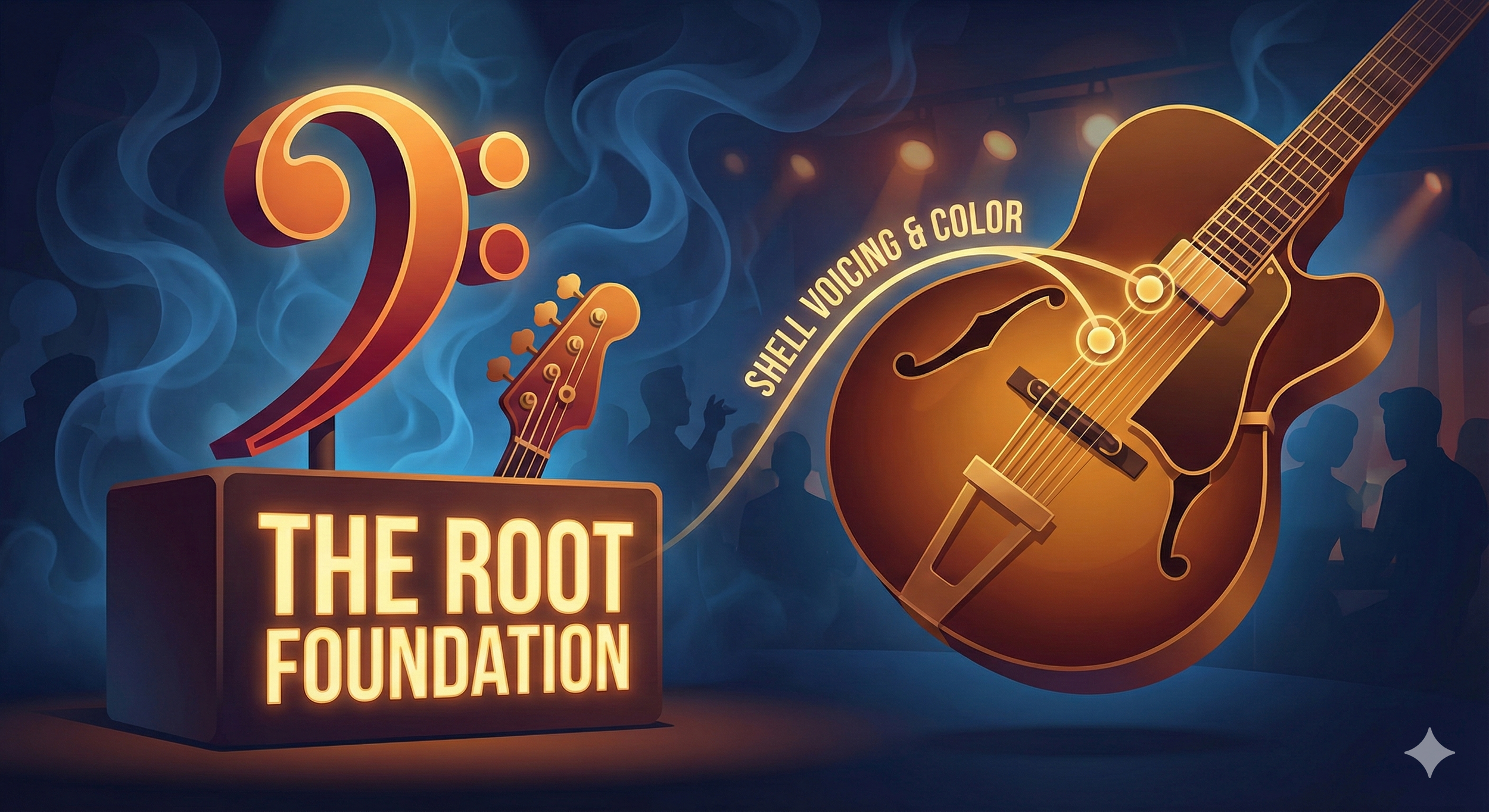
Stop Playing Roots: The Power of Shell Voicings for Beginners
Transitioning to jazz guitar? Your obsession with anchoring on root notes might be muddying the mix. The bass player has the foundation covered. Your job is to define the color. Discover why stripping your chords down to just the 3rds and 7ths—Shell Voicings—is the key to unlocking smooth voice leading and that sophisticated "jazz sound."

Play Like You Mean It: "What Do You Hear?”
Many of us fight a lonely battle in the practice room, balancing day jobs and passion. But growth isn't about how many hours you have; it's about the intensity of your focus. Discover the profound lesson Richie Hart taught me: "What do you hear?" Learn why playing with sincerity for just 15 minutes is infinitely more valuable than mindlessly noodling for two hours.
Unlocking 'The Girl from Ipanema': Upper Structure Triads & Superimposition
To advance as a jazz guitarist, you must break the habit of chasing roots. In complex tunes like The Girl from Ipanema, the key to fluid soloing isn't a new scale—it's Superimposition. Discover how to float simple "Upper Structure Triads" over complex chords to create that sophisticated, modern jazz sound without over-thinking.
The Only Cheat Sheet You Need for Rhythm Changes: Deep Listening & Playlists
"Rhythm Changes" is a rite of passage for intermediate jazz players. But if you are asking "what scales do I play over the bridge?", you might be missing the point. Discover why masters like Wes Montgomery didn't rely on scale charts, and how building a specific playlist can train your ears to navigate the fretboard instinctively.

Stops Chasing Roots: The Magic of Guide Tones and Voice Leading
One of the biggest struggles for jazz guitar beginners is that their solos sound disconnected. Do you find your hand jumping frantically from one end of the fretboard to the other? It feels like a game of "Whac-A-Mole." Discover why chasing roots is inefficient and how mastering "Guide Tones" will transform your playing into smooth, storytelling solos.

Can You Really Start Jazz Guitar Without Theory? The Secret of the Early Masters
Is it possible to play jazz guitar without learning music theory or reading notation?
Yes—but only if you’re willing to develop your ears through deep listening. This article explores how early jazz musicians learned and why theory still matters today.
The Secret to George Benson's Speed: A Complete Guide to Rest Stroke Picking
Playing fast doesn’t mean your lines will sound clear.
Many jazz guitarists struggle with muddy articulation at higher tempos—not because of the left hand, but because of inefficient right-hand technique. The rest stroke is the missing link behind powerful, clean, swinging lines.