
Embracing Imperfection: Lessons from a Wedding Performance Disaster
Even the Pros Have "Those" Moments
Happy Sunday evening to you all.
Social media often tricks us into believing that professional musicians are flawless machines. We see the polished clips, the perfect studio takes, and assume they never hit a wrong note or lose the form. So when we make mistakes in the practice room or fumble during a jam session, we feel inadequate. But what if I told you that even a 30-year veteran has a memory of a performance so chaotic it still makes him sweat?
Today, for our Weekend Insight, guitarist Choi June-won shares a hilarious, human, and heartwarming story from his own wedding performance. It’s a tale about a "failed" performance that teaches us deeply about attitude, connection, and the art of recovery.
If you want a structured way to apply this discipline, see How to Build a Jazz Guitar Practice Routine in 10-Minute Blocks.
2. Main Insight: The Language Barrier and the Moment of Connection
The Bill Evans Disaster
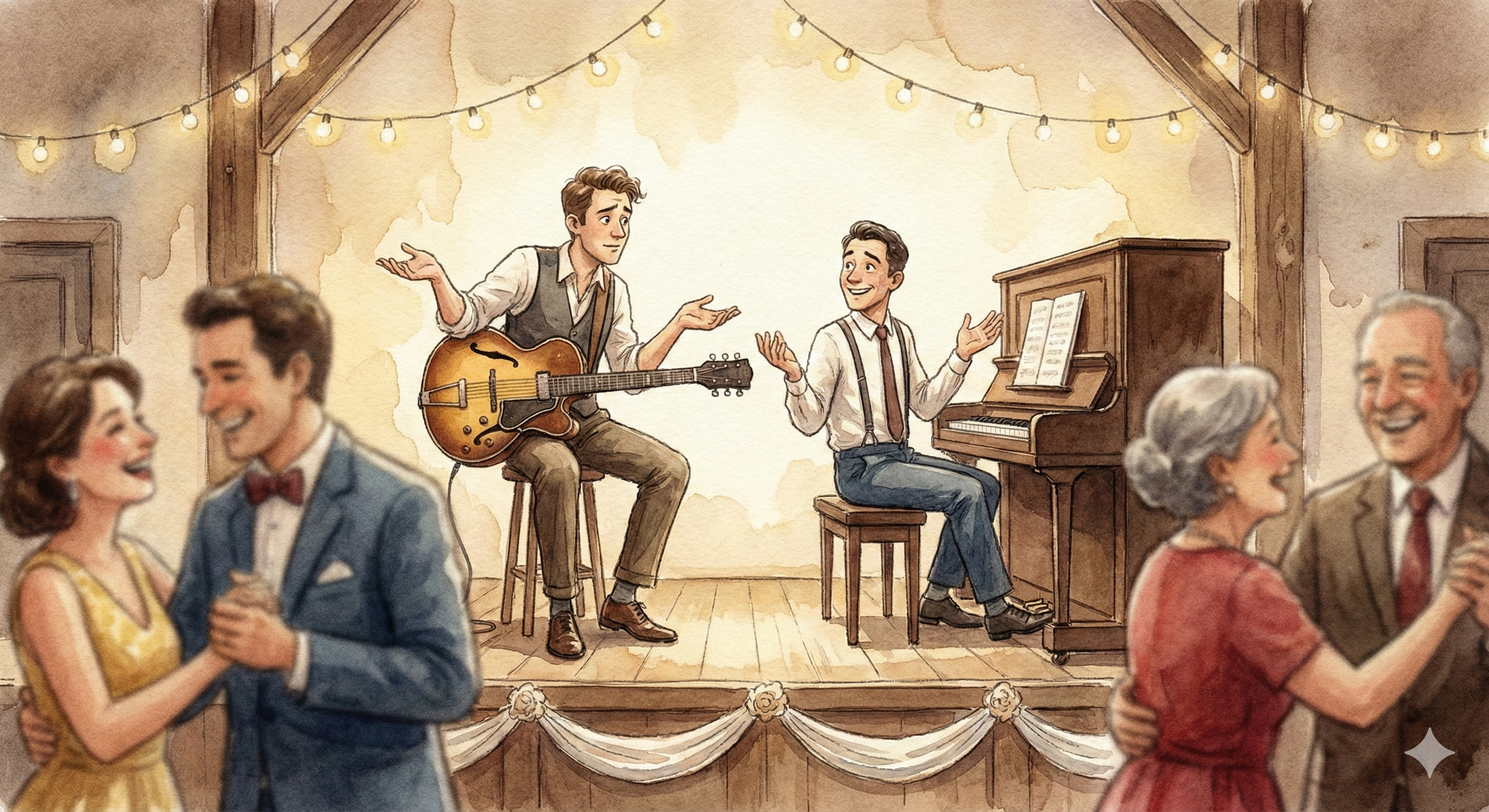
The setting was Choi’s wedding. The song was the beautiful, standard waltz, “Someday My Prince Will Come.” The duo consisted of Choi on jazz guitar and his wife on piano. The catch? His wife is a classically trained pianist, accustomed to reading notation with precision.
Choi prepared a transcription of a Bill Evans version. For jazz aficionados, this sounds wonderful. But practically, it was a trap. Bill Evans is famous for rhythmic displacement—making a 3/4 waltz feel like 4/4, stretching phrases across bar lines, and superimposing different time feels.
The Classical Musician (Wife): She read the sheet music literally, adhering strictly to the written time and expecting the downbeat to be where it was written.
The Jazz Musician (Choi): He played with the "feel," pushing and pulling the time, expecting improvisation and fluidity.
The result was a train wreck. The downbeats clashed, the harmonies misaligned, and they were essentially playing two different songs at the same time. It was, strictly speaking, a musical disaster.
The Beauty of Recovery
However, the true lesson lies in how they finished the song. When the structure collapsed and the chaos peaked, they stopped looking at the sheet music and started looking at each other. They abandoned the complex re-harmonizations and polymeters, latching onto the simple melody to drag the song across the finish line together.
It might not have been the "perfect" musical performance they planned, but that moment of desperate, intense eye contact and unspoken communication was pure Interplay. They survived the chaos together. Now, years later, it is a cherished memory they laugh about. This is the essence of jazz: it's not about avoiding mistakes, but about how you recover from them with a smile.
Play for Joy, Not Just Perfection
This story connects beautifully to the advice given later in the interview regarding the practice of "transcription" (copying solos).
"Don't torture yourself trying to copy a whole song if you hate the process. Just steal one phrase. Enjoy it until it becomes your muscle memory."
Guitarist Park Gap-yun emphasized the joy of the moment where "12 strings (two guitars) meet to become one music." If practice feels like a chore, or if you are paralyzed by the fear of mistakes, you are missing the point. Even the pros get lost on stage. The skill isn't perfection; it's resilience—the ability to find the groove again after stumbling.

3. Conclusion: Your Playing is Enough
Whether you are a hobbyist or a serious student, remember that imperfection is an integral part of the art form. This Sunday, put away the metronome and the complex scale books for a moment. Play a simple melody that you love. Play it with feeling.
If you hit a wrong note, smile and keep going. If you can connect with the music (or your bandmate) even when things go wrong, you are playing real jazz.
If any of this resonates and you’re ready to move your playing forward with a real musical foundation, Building Blocks is the entry point.
Wishing you a week full of inspiration and joyful mistakes.
VoiceLidJazzGuitar.com