

The Myth of Being "Ready": Why You Should Just Jam
"I'll go to a jam session once I master my scales." We’ve all said it. But waiting for perfection is a trap. Real growth only happens when you step out of the bedroom and collide with other musicians. In this post, we explore why a chaotic, imperfect jam is infinitely more valuable than a perfect solo practice session.
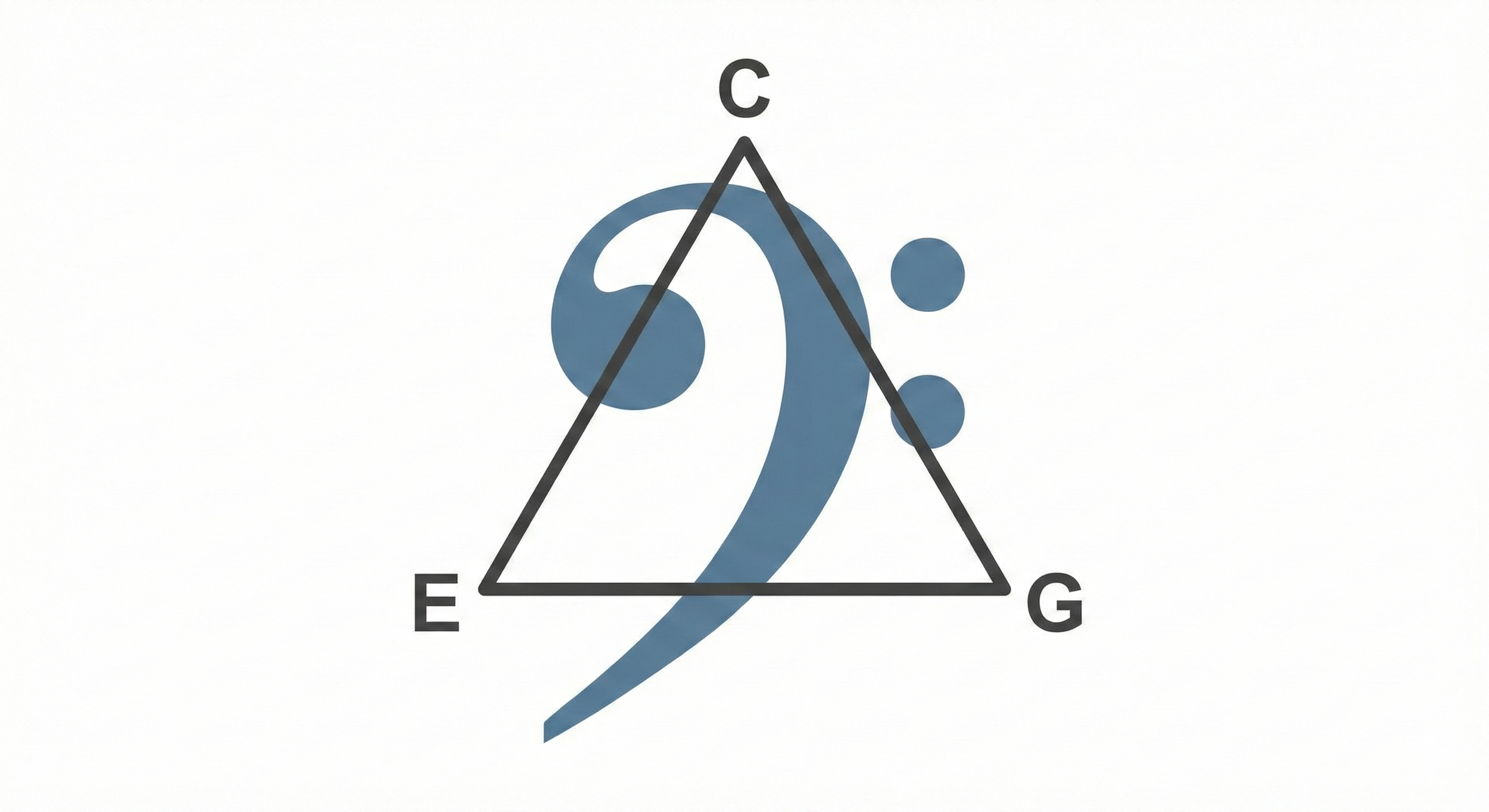
Understanding Triad Cycles: C Major over Db and Bb Bass
Unlock the power of 'Auxiliary Diminished' chords. Learn why playing a C Major triad over a Db bass note creates sophisticated jazz tension.
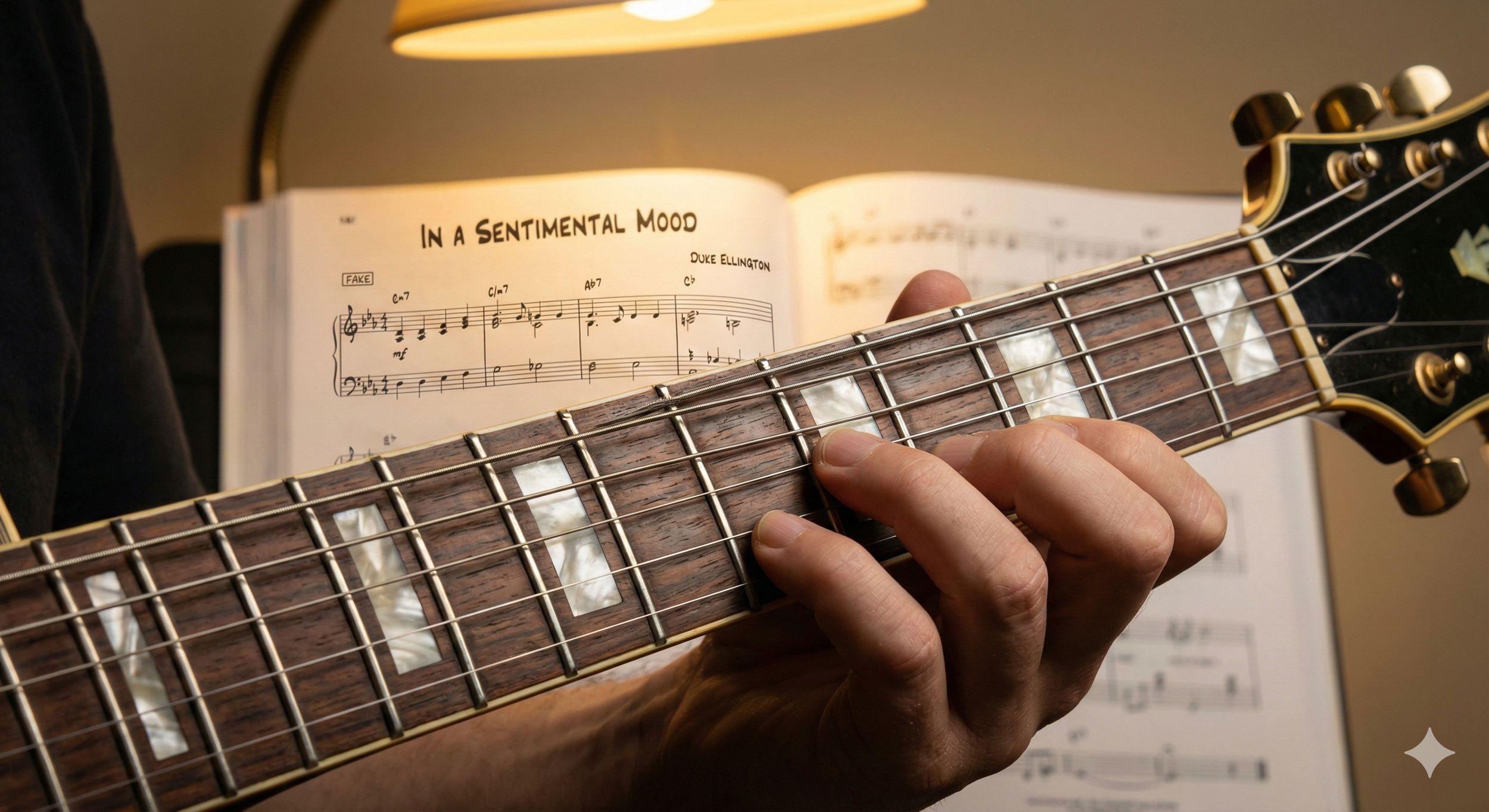
Beyond the Blues Scale: How to Structure Melodic Improvisation
Learn why playing the melody is more effective than relying on the blues scale for songs like 'In A Sentimental Mood'. Discover the three-step framework for developing your own phrasing.
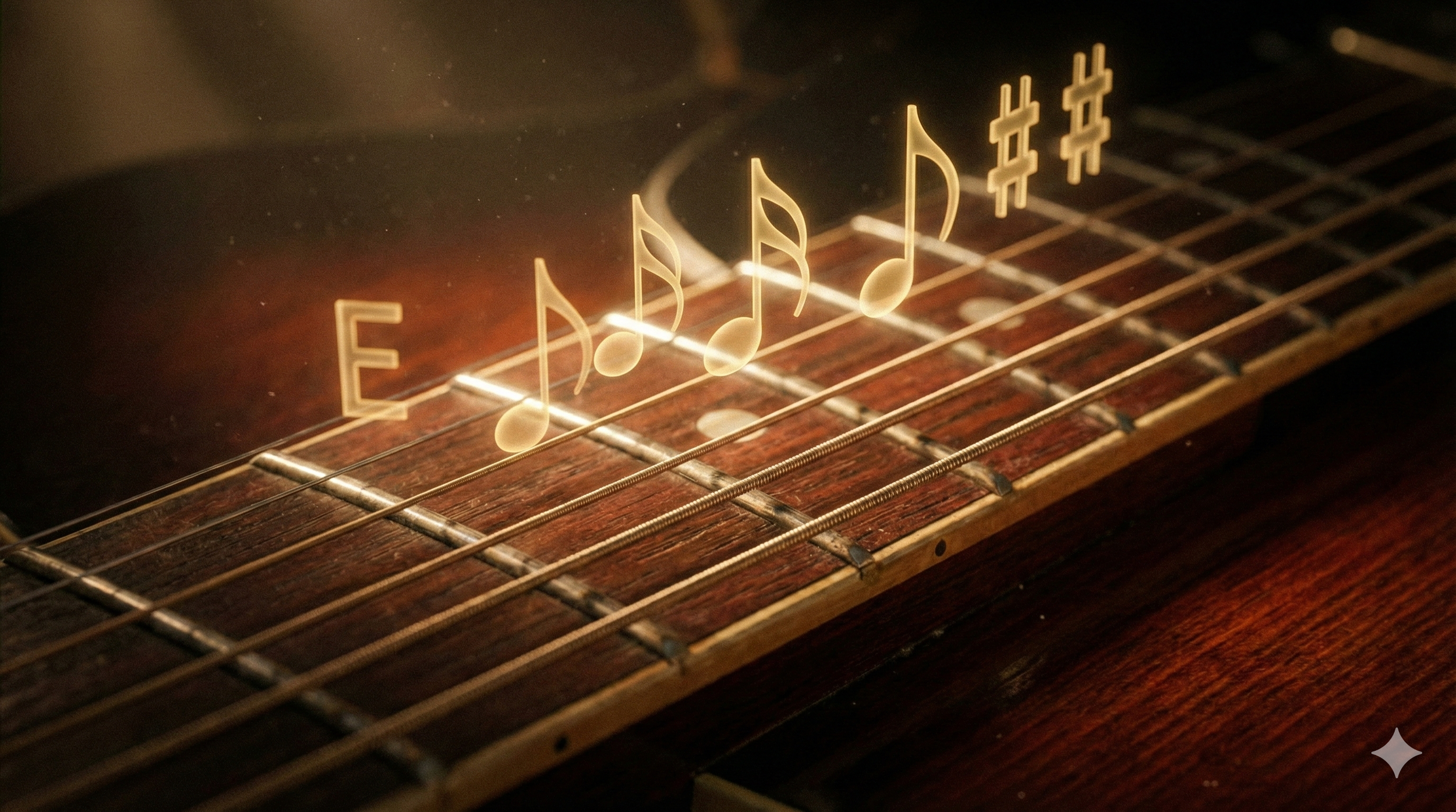
Decoding the Wes Montgomery Sound: Upper Structure Triads meets Drop 2 Voicings
Ready to move beyond basic diatonic boxes? Discover the "Chord over Chord" logic used by legends like Wes Montgomery. We break down how to use Upper Structure Triads and Drop 2 voicings to turn simple shapes into rich, complex textures.
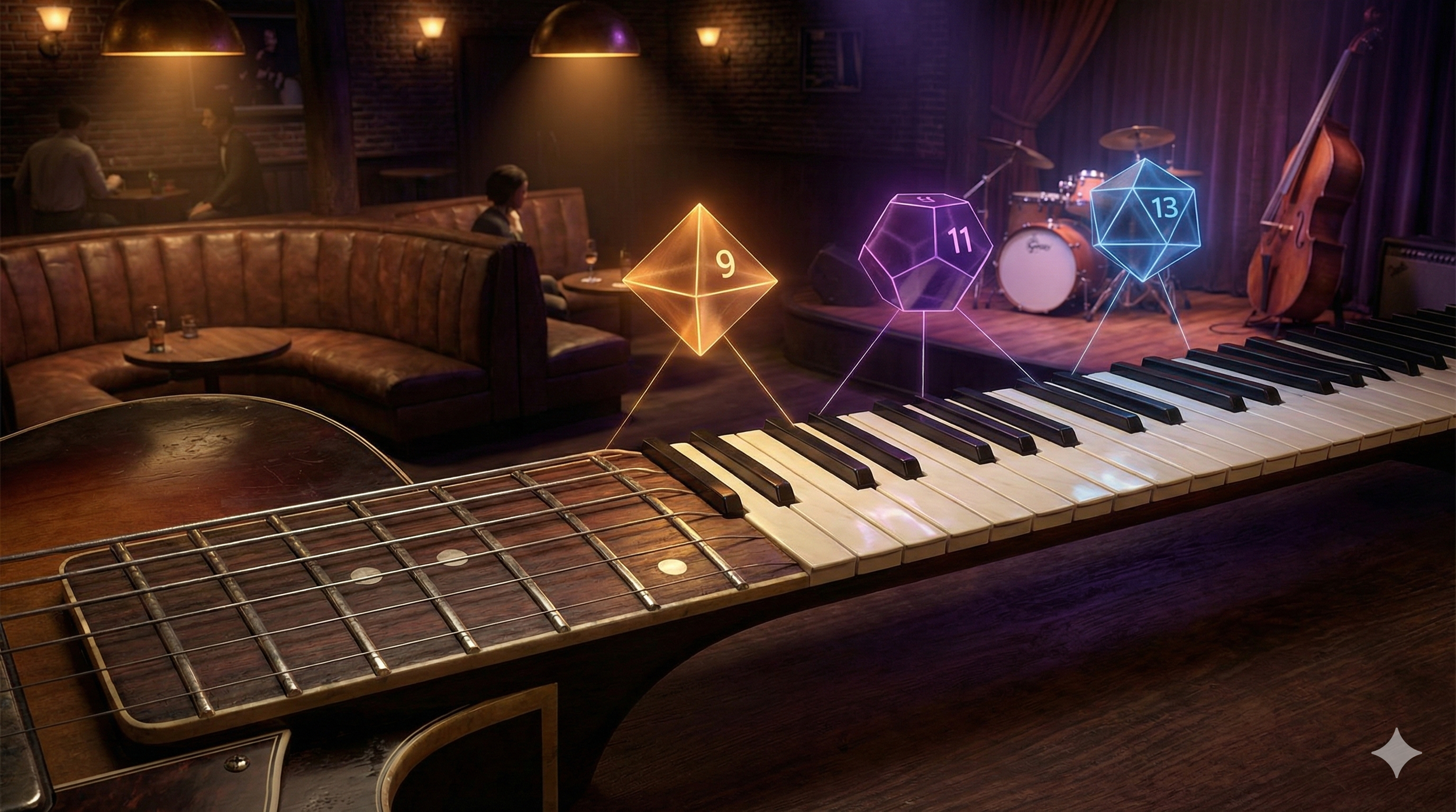
The Pianistic Guitar: Expanding Shell Voicings into Upper Structures
Guitarists often feel limited compared to pianists who can comp and solo simultaneously. The solution? Stop playing the root. By using Shell Voicings and Upper Structures, you can stack arpeggios to create 3D harmonic lines. Discover the "pianistic" approach used by Charlie Parker and Wes Montgomery.

Breaking Muscle Memory: The Real Power of Practicing in 12 Keys
You practice for hours, yet the same old licks pour out when you solo. We call this "Hand Habit." Muscle memory provides safety, but it kills creativity. In this post, we explore painful but effective methods—like strict constraints and 12-key practice—to shatter these boxes and reconnect your ears to the fretboard.

Jazz Ear Training: You Don't Need Perfect Pitch to Hear Changes
Identifying chord changes by ear is one of the biggest hurdles for jazz beginners. You don't need perfect pitch to solve it—you just need to shift your perspective. Discover the "Diatonic Thinking" method that simplifies complex harmony into simple, hearable intervals.
How Many "Real" Songs Are in Your Repertoire? (And the Art of Lay-back)
If a bandleader asked the audience for someone who truly knows one standard—head, comping, solo, and outro—could you raise your hand? This post argues for repertoire first, theory second, and explains why real time feel (like Grant Green’s lay-back) only appears after you’ve fully internalized the song.

How to Internalize Complex Tunes: A Case Study on "What Is This Thing Called Love"
Are your solos sounding like random scale exercises? Discover the "Fly Me to the Moon logic" applied to "Autumn Leaves." This step-by-step process helps you build a melodic skeleton using 3rds and 7ths, ensuring your lines resolve beautifully through the changes every time—before you even add the "fancy stuff."

A Step-by-Step Process for Composing Melodic Lines on "Autumn Leaves"
Unlike simple circle-of-fifths tunes, "What Is This Thing Called Love" presents a unique challenge: the melody often soars high while standard chords sit low, creating a disconnect. In this case study, we explore the "12th Step"—a method of projecting voicings into the upper register—to create fluid, professional lines that support the melody without jumping frantically around the fretboard.
Stop Chasing Upper Structures: The Tonic vs. Non-Tonic Approach
Are you mentally exhausted trying to chase every chord extension in a progression? It’s time to stop doing "abstract math" on the fretboard. Discover why categorizing chords into just two functions—Tonic and Non-Tonic—is the secret to playing smoother, more melodic jazz lines like the masters.

The 4 Faces of Diminished Chords: Resolution Logic & Upper Structure Triad Pairs
In advanced jazz theory, the Diminished 7th chord is often misunderstood as merely a "spooky" passing chord. In reality, it is a functional powerhouse. Because of its symmetrical nature, a single diminished grip allows you to resolve into four different tonalities. In this post, we destruct the "Four Faces" of the diminished chord and explore how to use Major Triad Pairs to modernize your improvisation.
Why You Should Ignore 'Ridiculous' Drop 2 Inversions
Not all chord inversions are created equal. Discover why finding a 'home base' on the fretboard is better than memorizing impossible shapes.
How to Stop Getting Lost During a Solo
Getting lost in the chord changes is a common fear. The solution isn't counting measures—it's doing what great drummers do.

Improvisation Myths: Why Chords Matter More Than Scales (feat. Fly Me to the Moon)
A common frustration among intermediate jazz guitarists is playing the "correct" scales but lacking authentic sound. The harsh truth: Improvisation is based on chords, not scales. Stop fighting the bassist for the root. Learn how to target the 3rds and 7ths to make your solos sing using the golden rule of functional harmony voice leading.
What Does "Following the Melody Direction" Actually Mean?
Does following the melody mean matching its pitch and register? No. It means understanding the magnetic pull of the Third.

The Prerequisite to Learning Tunes Without a Real Book
Struggling to memorize jazz standards? The secret isn't on the fretboard—it’s what you do for a full week before you even pick up the guitar.

Revealing the Tritone in the Django Line
Where is the tritone hiding in a major 7th shape? See how moving just one note in the Django Line creates perfect dominant voice leading.

Can You Self-Teach Jazz? The Trap of Modern Convenience
"Is it possible to learn jazz on my own?" Yes, but modern convenience is a double-edged sword. Legends like George Benson didn't have YouTube; they had "survival mode" and their ears. Discover why closing your laptop and struggling with a record is the only way to truly master the language of jazz.
Make an Impact Today
When you give, you invest in progress, compassion, and a better world for everyone.