
Jazz Ear Training: You Don't Need Perfect Pitch to Hear Changes
Why Can't I Hear the Changes?
One of the biggest hurdles for jazz guitar beginners is ear training. You might hear the chords changing, but identifying what they are feels impossible. During our recent live Q&A, a viewer asked, "If I know a song's melody but haven't played the chords, how do I find the changes by ear?"
This is a struggle even for pros. But here's the good news: you don't need perfect pitch. The answer lies in how we listen to simple pop songs or nursery rhymes. Today, let’s explore a practical "hack" for ear training that involves no complex theory—just listening relative to a key center.
If you’re just starting out and want to build your ear alongside solid harmony fundamentals, Building Blocks is the place to begin.
If you want a structured way to apply this discipline, see How to Build a Jazz Guitar Practice Routine in 10-Minute Blocks.
The "Thinking in C Major" Trick
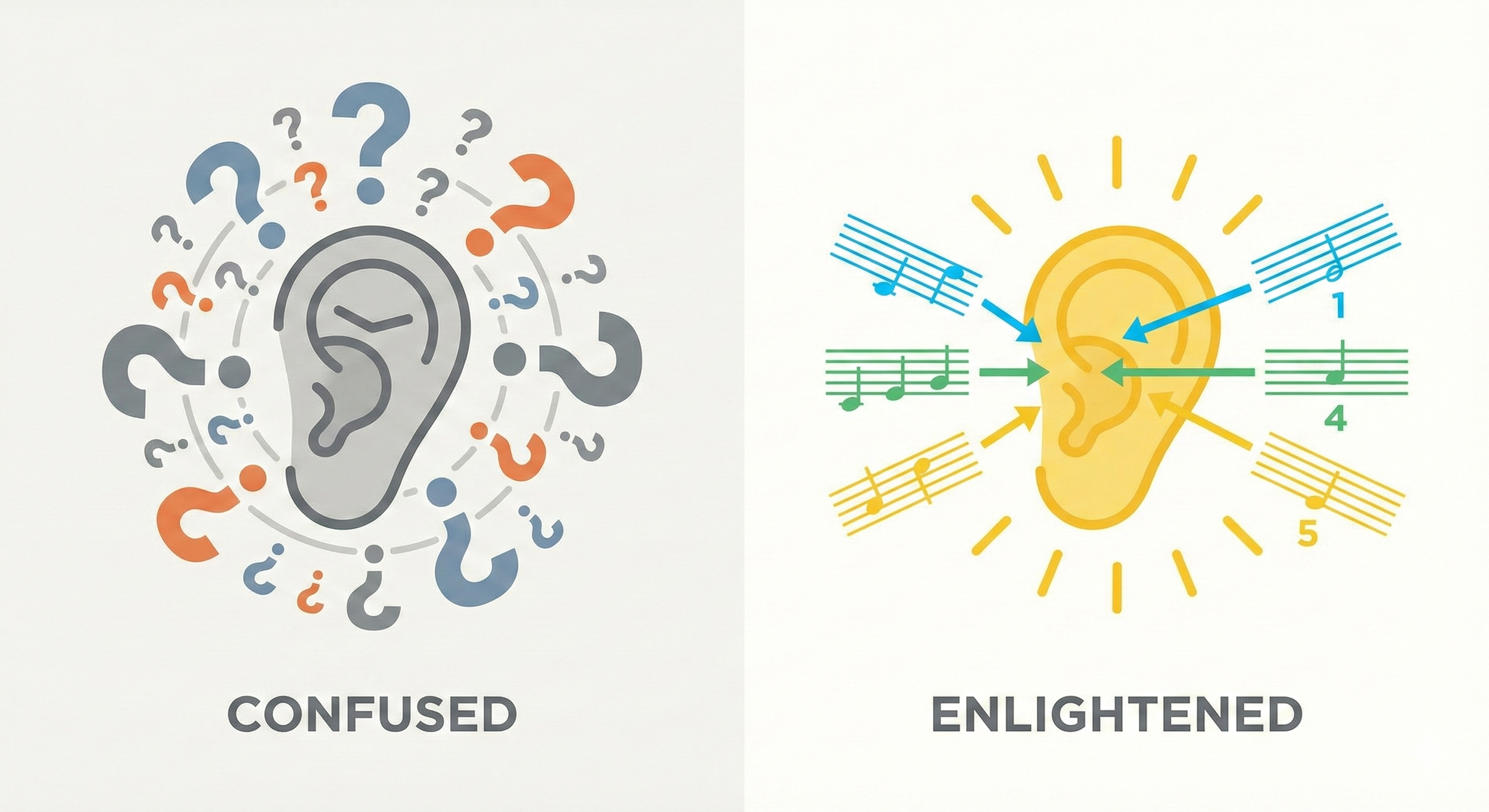
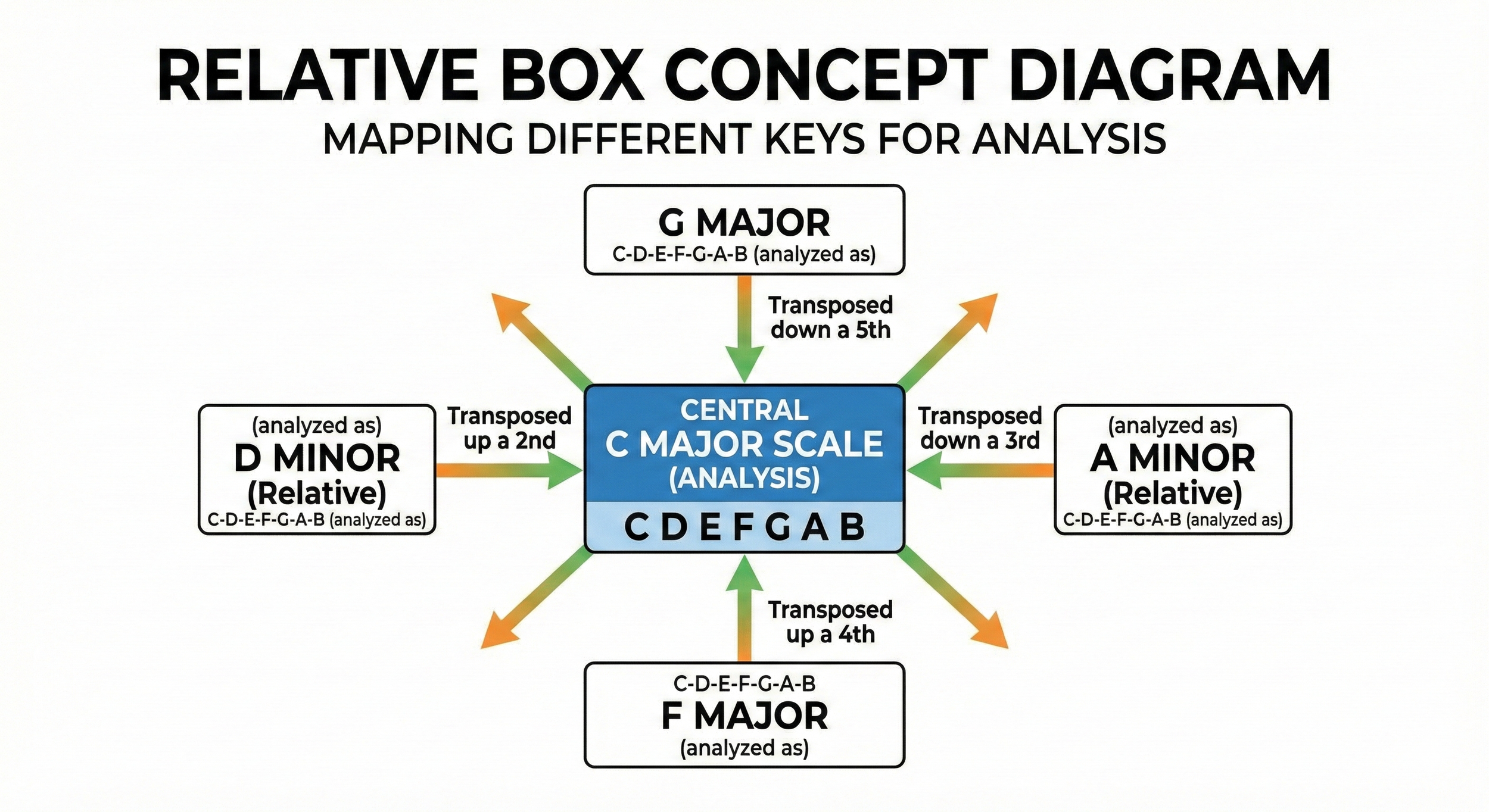
Both myself and guest guitarist Gapyun Park emphasized one crucial method: Diatonic Thinking. It sounds technical, but it’s simple. Regardless of the actual key a song is in, try to transpose it in your head to C Major.
Imagine hearing a progression like Eb - Ab - Bb. Identifying those exact pitches is hard without perfect pitch. But hearing the relationship—the I - IV - V movement—is a learnable skill. It’s the same feeling as simple folk songs. By constantly asking yourself, "Does this sound like the 1 chord (Home)? Or does it feel like the 4 chord (Moving away)?", you build a relative pitch map in your brain.
Focus on the bass line. While piano voicings can be dense and confusing, the bass usually plays the root notes. If you can hum the bass movement and relate it to a Do-Re-Mi scale, you’re halfway there. Practice this away from the guitar—on your commute, at a cafe, anywhere music is playing. Guess the intervals, then check them on your instrument later. This active listening builds the connection between your ear and your fretboard.
Ears Are Built, Not Born
Jazz is a conversation based on listening, not just reading charts. Start today by listening to non-jazz songs and analyzing their movement relative to C. Once your ears open up to these simple intervals, complex jazz harmonies will become much less intimidating. For more structured ear training methods, visit VoiceLidJazzGuitar.com.