
Breaking Muscle Memory: The Real Power of Practicing in 12 Keys
Why Do I Sound the Same Every Time?
You practice for hours, learn new tunes, but the moment you start soloing at a jam session, familiar licks pour out. We call this "Hand Habit." A user in our live stream asked specifically about this: "I keep playing the same habits over and over. How do I fix this?"
Muscle memory is a double-edged sword. It provides safety, but it kills creativity. Staying in your comfort zone leads to boredom—for you and the audience. Today, we discuss painful but effective methods to shatter these boxes and force your brain to create fresh lines.
If you want to break hand habits for good, Building Blocks is where the rewiring starts.

Constraints Create Creativity
To break habits, you must impose Constraints.
Method 1: Position Limiting.
If you always play a standard in a specific position because it's "safe," stop. Force yourself to play the entire tune in an uncomfortable area of the neck. Or, limit yourself to only two strings. When you take away your go-to patterns, your fingers get confused. That confusion is good—it forces your ears to take over. You start searching for melodies instead of reciting shapes.
Method 2: The Dreaded 12-Key Practice.
Why do teachers nag about practicing in all 12 keys? It's not just so you can accommodate a singer (though that's a benefit). The real reason is to reset your ears and hands.
When you move a familiar phrase to an awkward key like Gb or B, the physical geometry changes. You can't rely on your usual fingering. You stumble, you adapt, and you discover new phrasings by accident. When you finally return to the original key, your perspective has shifted. The fretboard looks different. You hear new possibilities in the same old chords.
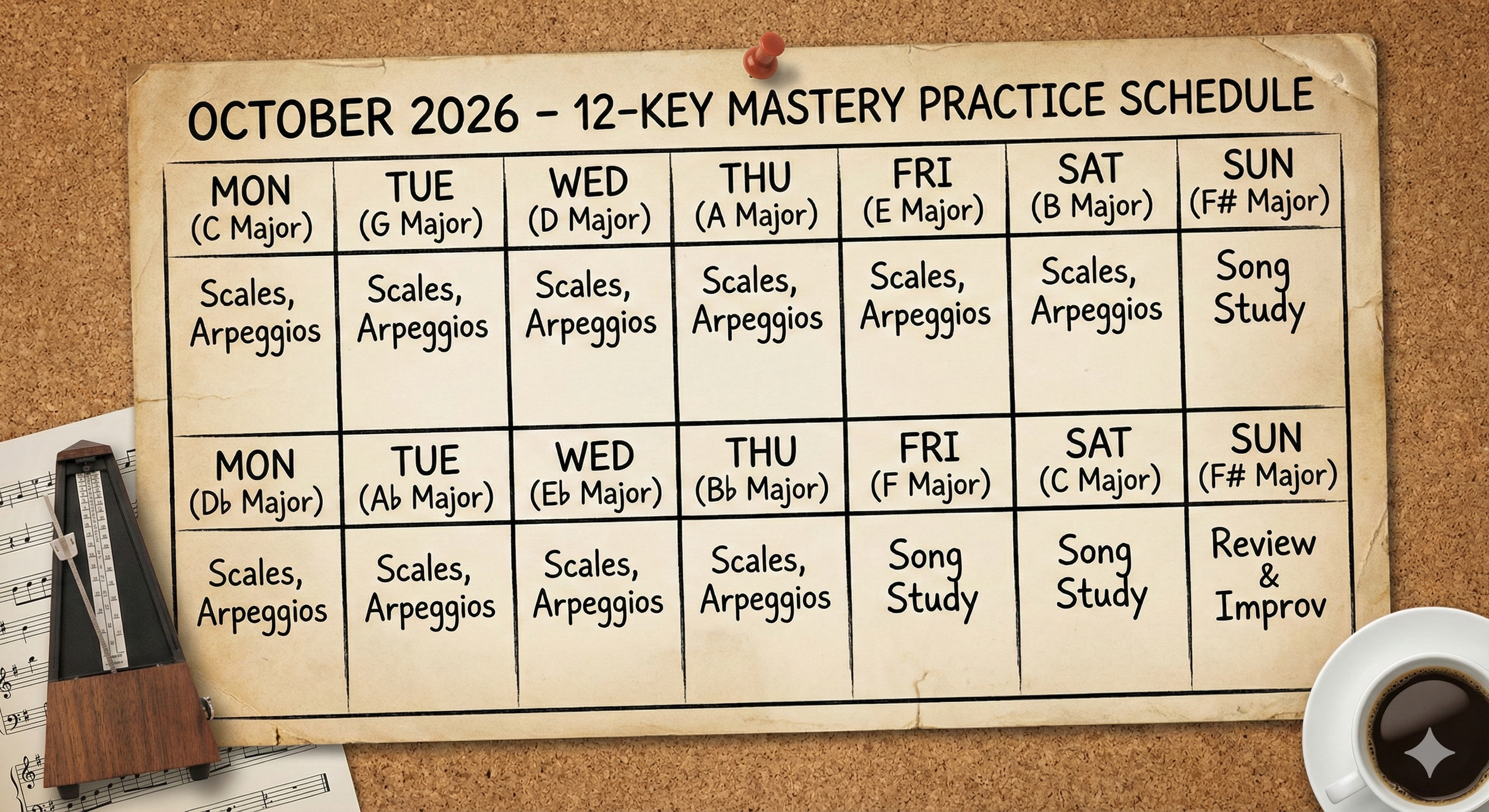
Try dedicating each day of the week to a different key. It’s grueling work, but it detaches your improvisation from muscle memory and reconnects it to your musical intention.
3. Conclusion: Embrace the Discomfort
If your practice feels easy, you're likely just reviewing what you already know. Growth happens in the uncomfortable zone where your fingers don't know where to go. Break up with your familiarity. Let your mind and ears lead your hands, not the other way around. For structured guides on navigating the fretboard in all keys, check out VoiceLidJazzGuitar.com.