
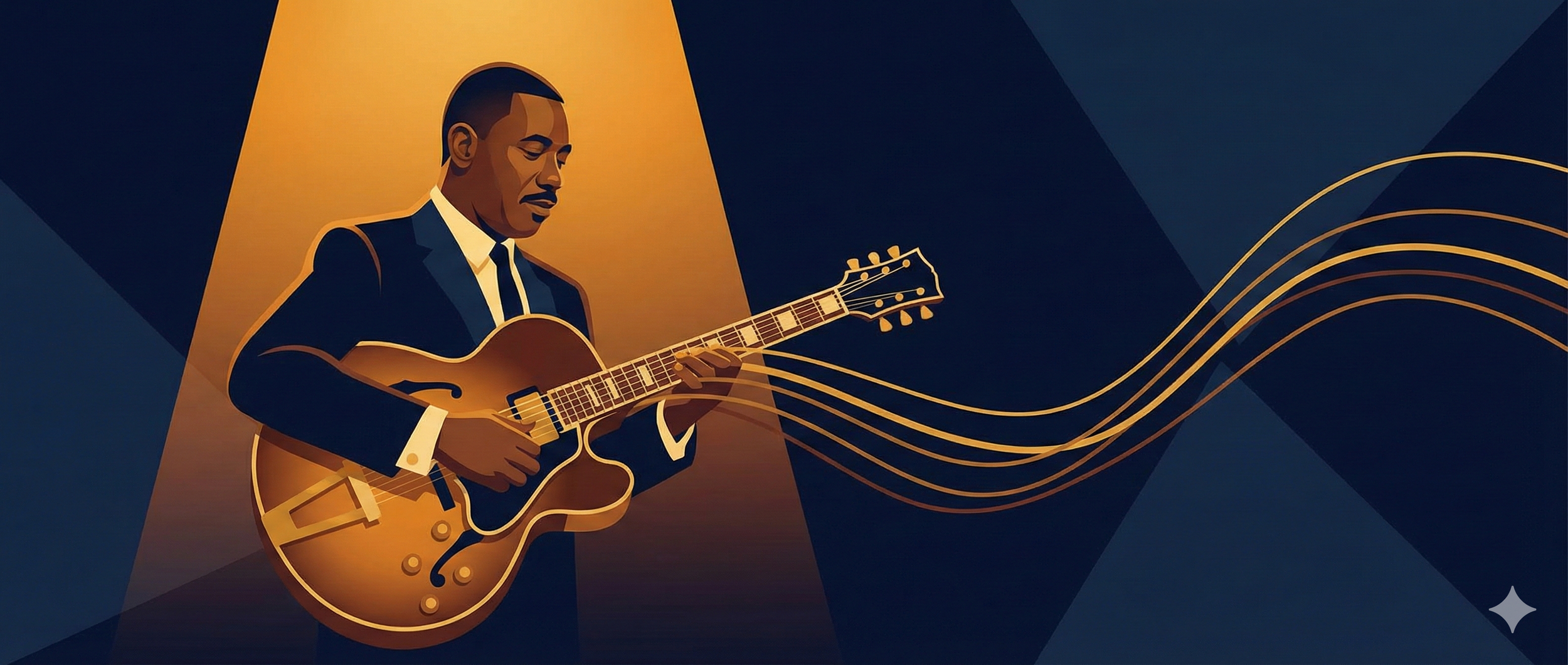
Starting Jazz Guitar? Here’s Who You Must Listen to First (Feat. Wes Montgomery)
Wes Montgomery is the clearest starting point for anyone entering jazz guitar. His melodic clarity, harmonic depth, and iconic octave style form the perfect foundation for understanding the entire lineage of jazz guitar masters.
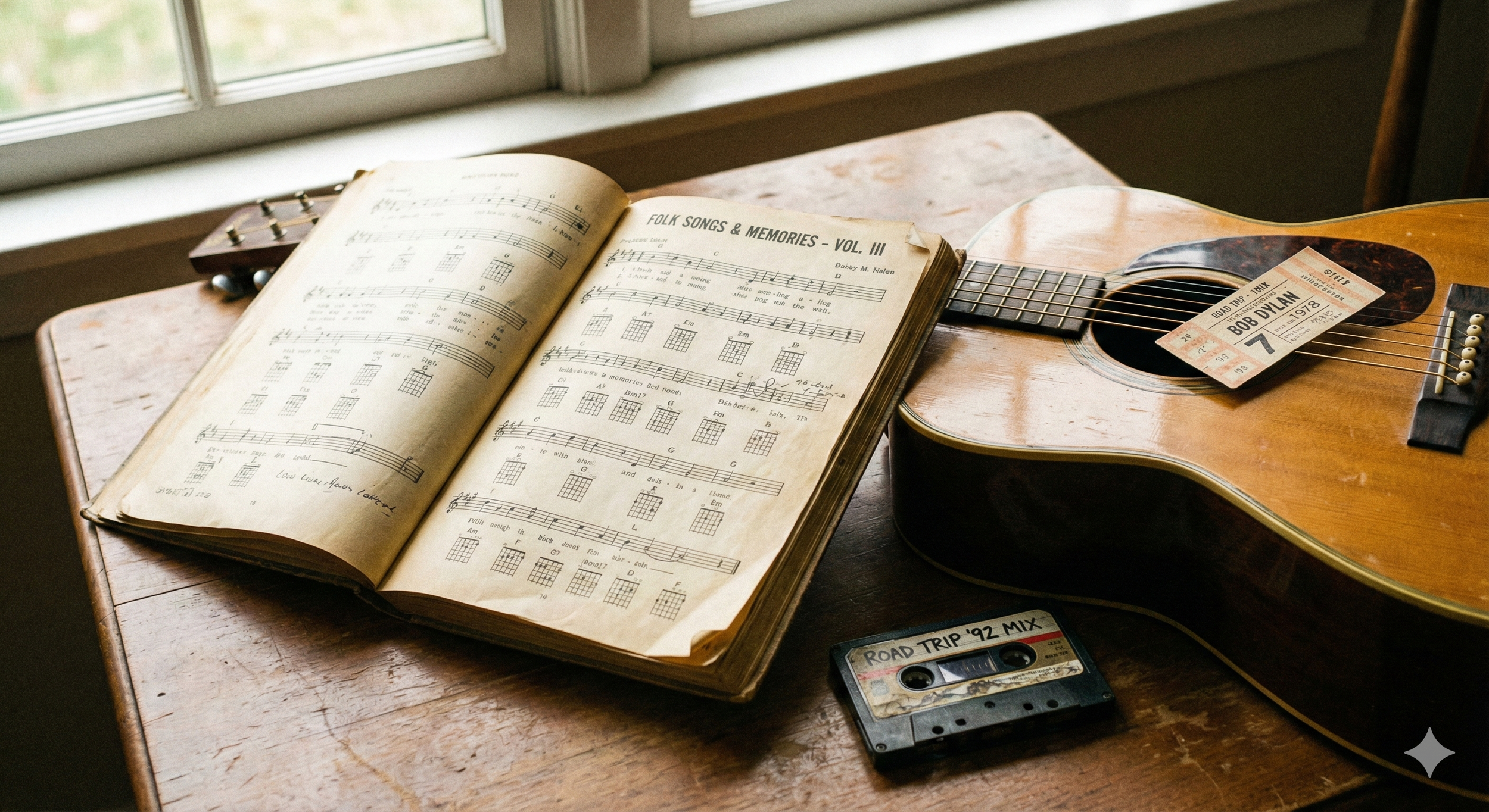
The Song Request That Unlocked a Memory: How Music Becomes Our Time Capsule
A late-night song request unexpectedly transported me back to my Michigan student days—reminding me how music can hold our most important memories. This essay explores how a single tune becomes a time capsule that shapes our emotional lives.
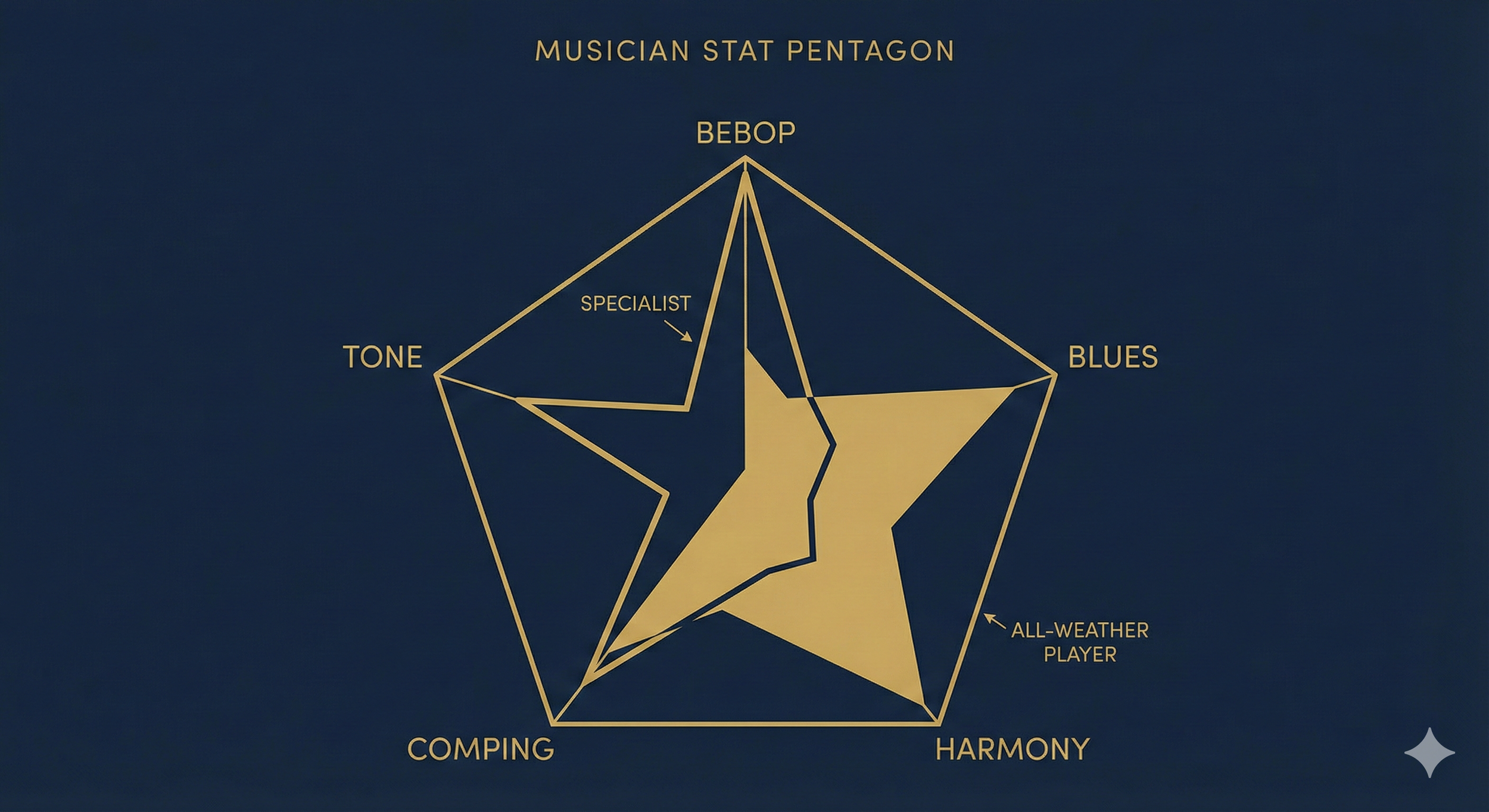
Beyond Lineage: The 'All-Weather Virtuoso' in Modern Jazz Guitar (A Jesse van Ruller Case Study)
Are you shaped more by the explosive bebop lineage of George Benson or the soulful, blues-driven school of Grant Green? This article explores how modern masters like Jesse van Ruller transcend lineage—becoming “all-weather” guitarists with fully developed musical spectrums.
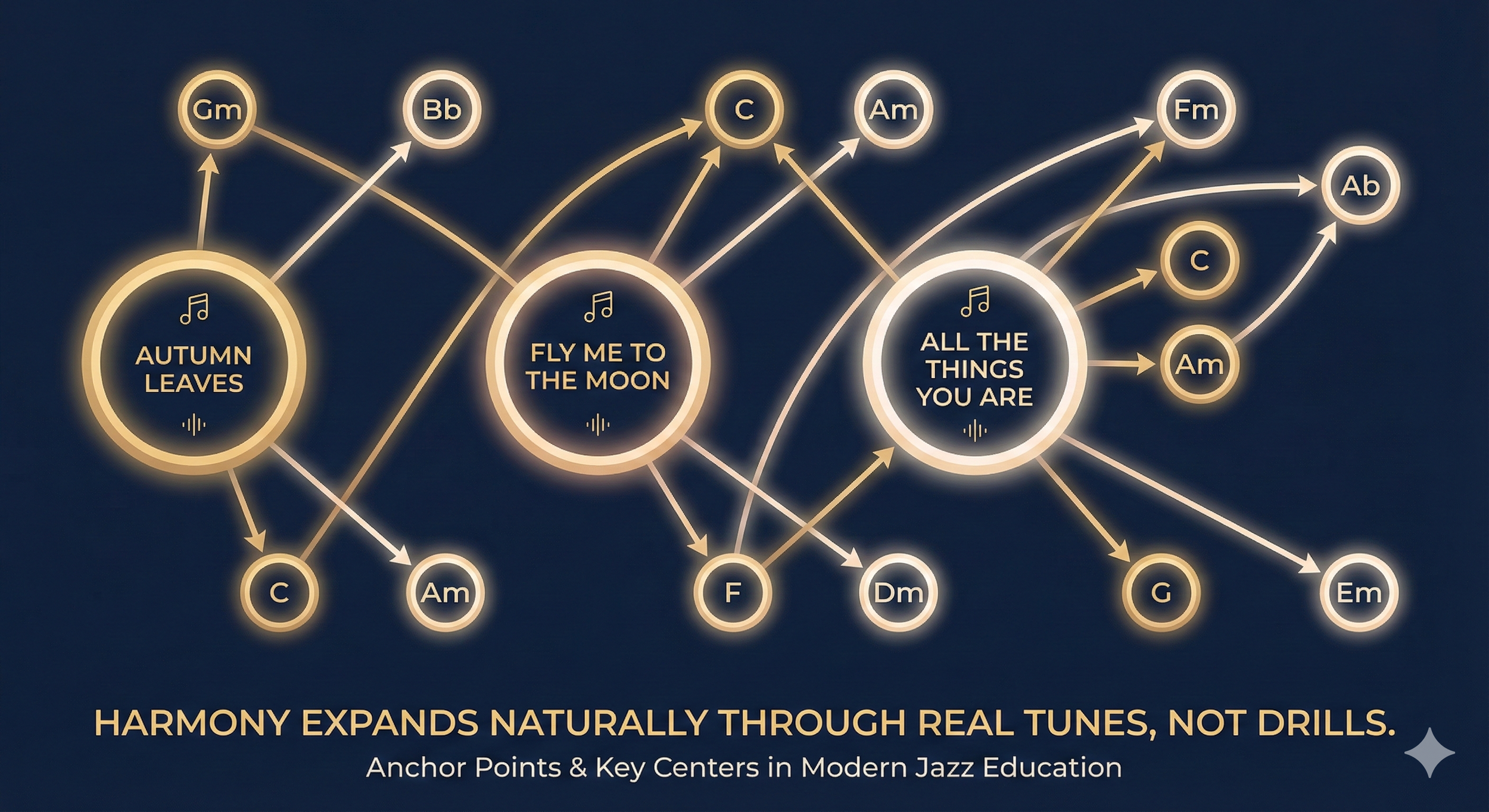
The 12-Key Trap: Why Trying to Conquer Every Key in Order Is Doomed to Fail
Many intermediate players try to master all 12 keys only to get stuck in a cycle of conquering one key and forgetting another. This article explains why isolated “12-key drills” fail—and how a song-based, top-down approach allows you to absorb harmony naturally and permanently through real tunes.
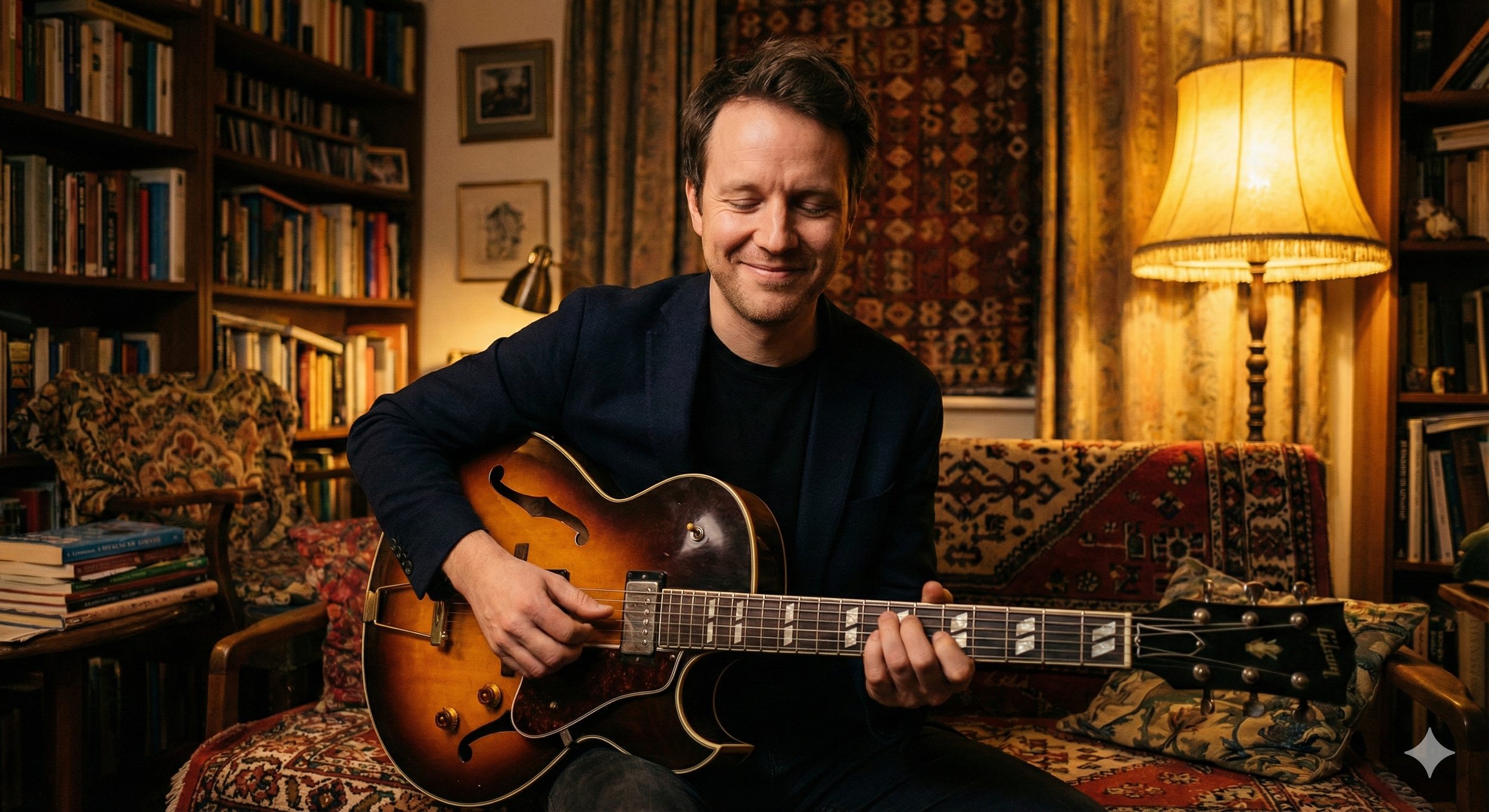
Stop 'Practicing' and Start 'Playing': The Most Important Mindset Shift for Jazz Guitar Growth
Many beginners fall into the trap of practicing drills endlessly—scales, chromatic exercises, arpeggios—without ever truly playing music. This article reframes your mindset: your practice room is not a gym, it’s a stage. Learn why playing full songs, even imperfectly, is the fastest and most joyful path to becoming a real musician.

'Excuses Are Just Excuses': A Working Musician's Philosophy for Growth
Busy musicians struggle to find time, but true growth comes from intention, not hours. This post explores internalization, transcription, and sincerity—how even 30 minutes of focused listening or mindful playing can transform your musical journey.
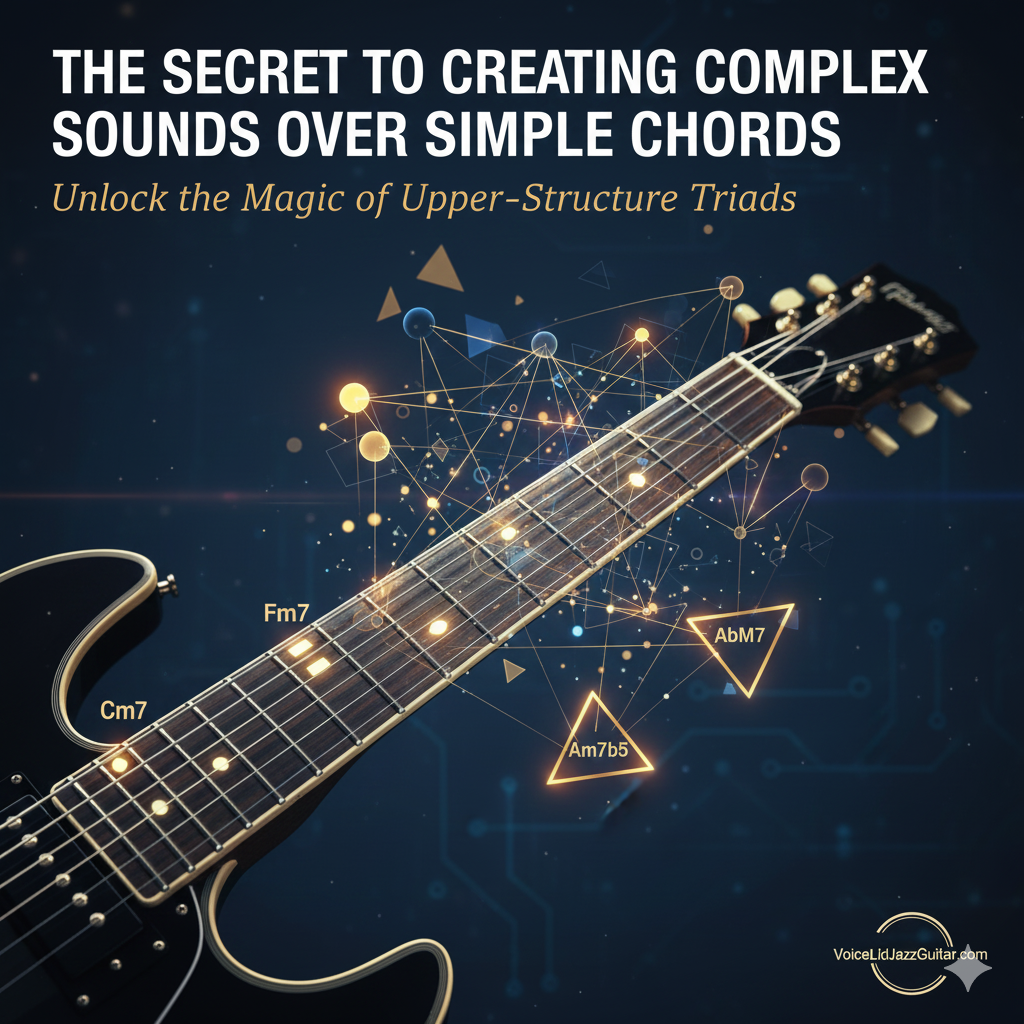
Deconstructing Harmony: A Functional Analysis of 'Blue Bossa' with Upper-Structure Triads
Upper-structure triads let you create rich, modern sounds over simple chords. By reinterpreting Cm7–Fm7 or Dm7b5–G7–Cm through superstructures, the fretboard becomes a logical map of colors, not isolated shapes. This post breaks down Blue Bossa using real functional UST flow.
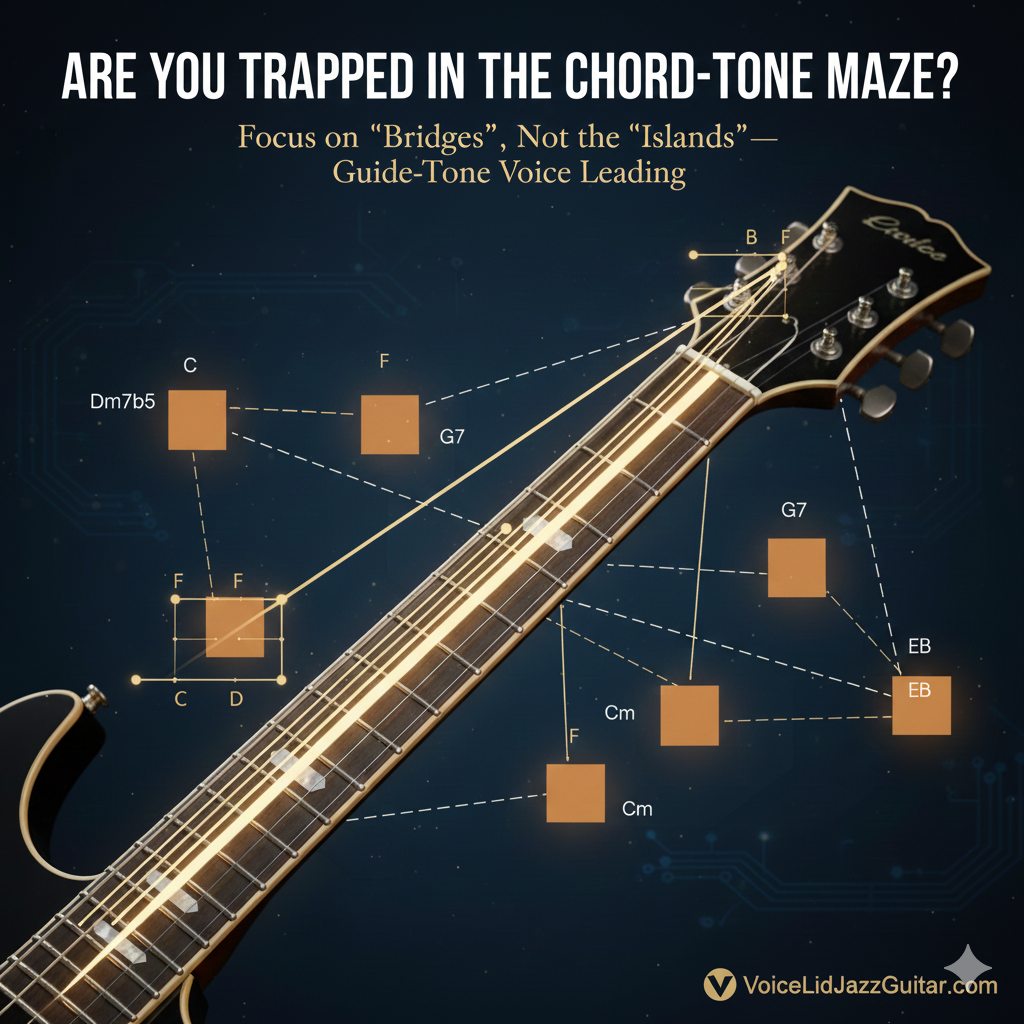
Beyond Chord Tones: The Secret to Fluid II-V-I Lines on Jazz Guitar
Most players memorize chord-tone shapes but still sound disconnected. This article explains why guide-tone voice leading—not arpeggio recall—is the key to flowing II–V–I improvisation, and how tracking 3rds and 7ths creates smooth, lyrical lines.

Master Jazz Guitar Scales: The Beginner's Guide to the 'Diagonal Form’
Most beginners get lost memorizing endless scale blocks. This post introduces the simple “skip a string, same shape” diagonal form that frees you from boxed positions and helps you see the fretboard as a fluid, connected pathway.

Lessons from the Lineage: What Richie Hart and the Masters Teach Us About Practice
Jazz guitar becomes meaningful when we stop chasing techniques and begin listening deeply. This post reflects on lessons passed down from Richie Hart and Wes Montgomery, and why sincere listening—not more scales—creates true musical growth.

Liberating the Fretboard: Wes Montgomery's Diagonal Logic and Functional Harmony
Many players feel trapped in vertical scale positions. This article explains how Wes Montgomery’s diagonal fretboard approach, harmonic function, and upper-structure triads reveal the guitar as a flowing map of color and tension—not a set of boxes.

The Secret to Melodic II–V–I Lines: Unlocking Guide-Tone Motion
Many players practice their II–V–I arpeggios but still sound disconnected. This post explains how guide-tone lines (3rds and 7ths) create smooth, musical phrasing and why learning their flow is the key to fluid jazz improvisation.
Is Memorizing Chord Tones Enough for Jazz Guitar? (A Better Approach for Beginners)
Many guitarists memorize chord tones but still struggle to sound musical. This post explains why chord-tone soloing often feels mechanical and shows how shifting to a pianist’s mindset—melody + harmony together—instantly transforms your improvisation.

It's Okay to Be a Hobbyist: How to Hold On to Your Identity as a Guitarist
Can you still call yourself a guitarist while working a day job? Yes—when you treat music as a lifelong companion and practice with sincerity, even off the instrument. Here’s a mindset and method to keep your identity alive through listening, intention, and quiet dedication.
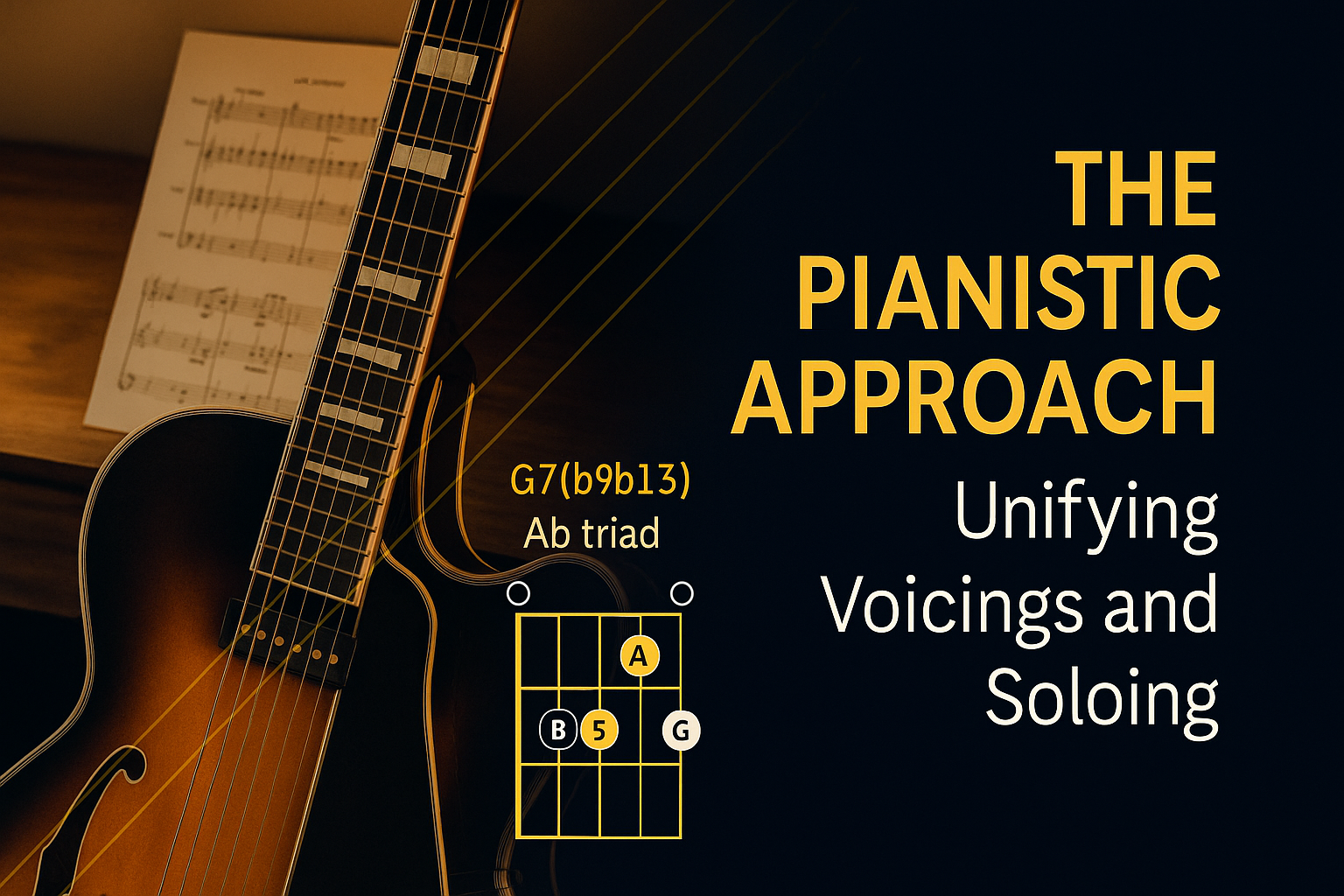
Beyond Chord-Tone Soloing: A Pianistic Approach to Jazz Guitar Improvisation
Most guitarists learn to “outline chord tones” — a method borrowed from monophonic instruments. But jazz guitar is polyphonic. By thinking like a pianist, we can merge voicing and improvisation into one language. This article explores how four-part harmony, voice leading, and upper-structure triads can transform your playing forever.
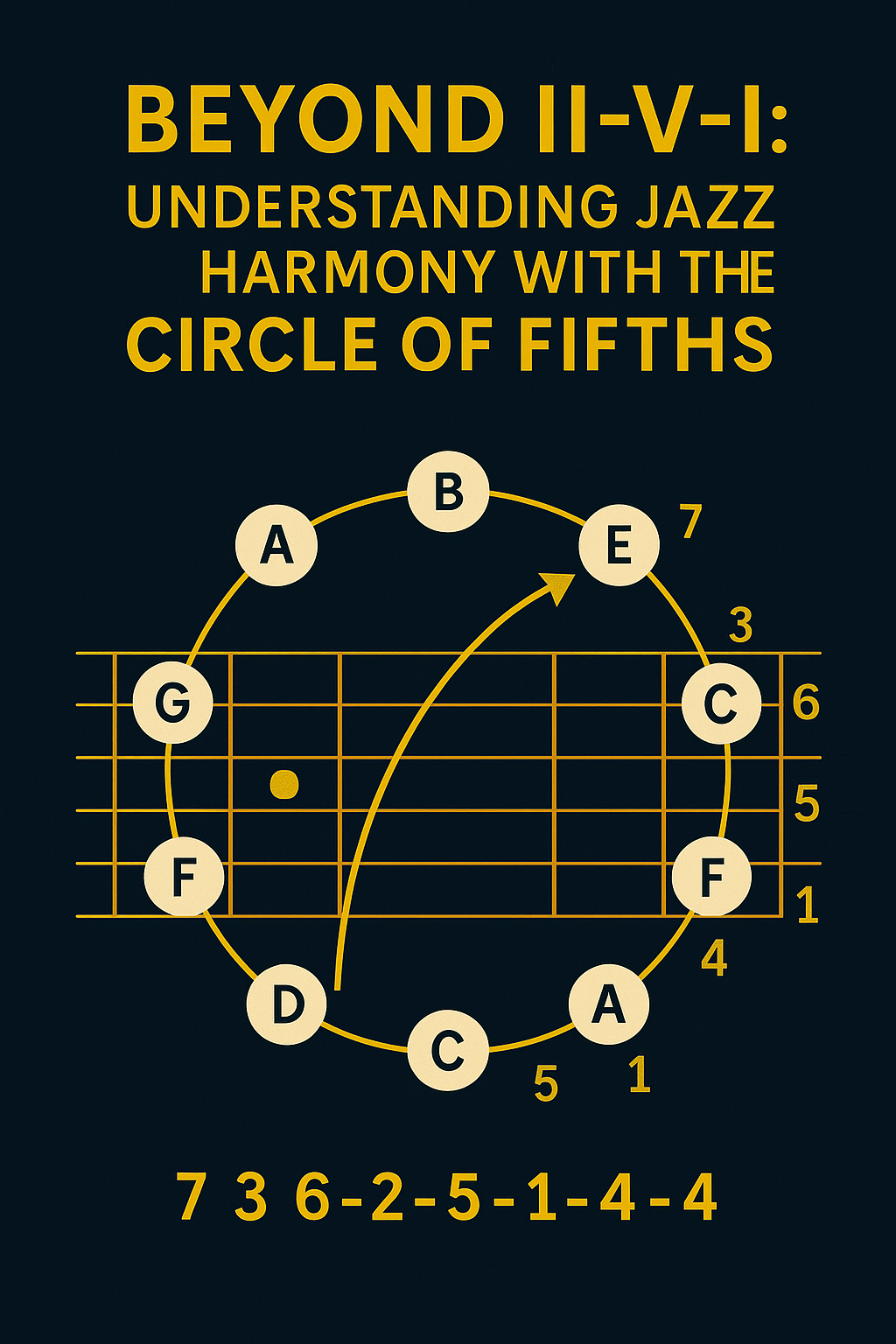
The 'Magic Number' of Jazz Harmony: Unlocking the Fretboard with the Diatonic Circle of Fifths
The II–V–I progression is everywhere in jazz—but why? This post uncovers the deeper logic behind it: the Diatonic Circle of Fifths (7–3–6–2–5–1–4). Discover how this “magic number” explains the flow of harmony in tunes like Fly Me to the Moon and Autumn Leaves, and how it transforms your view of the fretboard through the Functional Diagonal Approach.

How to Start Self-Taught Jazz Guitar: A 3-Step Method to Master Your First 'Real Book' Tune
Feeling lost when opening the Real Book? Many guitarists jump straight into chords or melodies without truly understanding the tune’s structure. This three-step approach—focusing on melody, bass, and shell voicings—shows how to internalize any jazz standard from the inside out.

The Real Reason a Club Owner Hated Guitar Trios
During my time playing in South Korea, there was a jazz club owner who was notoriously hesitant to book one specific type of ensemble: the guitar trio. He confessed that guitar trios were bad for business, not due to lack of skill, but because they were failing at their most fundamental responsibility as performers.
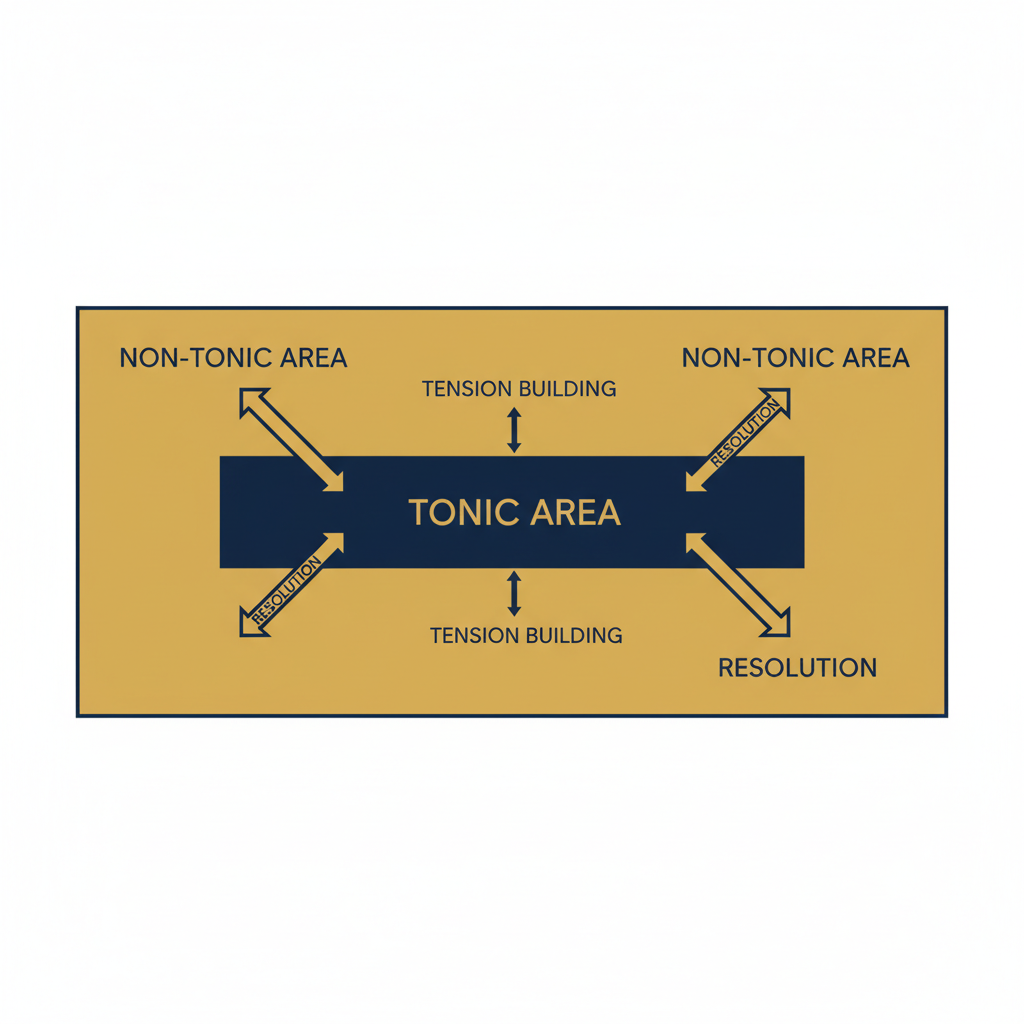
Deconstructing John Scofield's Outside Lines: Chromatic Displacement & Functional Resolution
The 'outside' playing of a master like John Scofield is often misunderstood. It's not a random spray of dissonant notes but rather an artful and calculated act of 'Chromatic Displacement' followed by a 'Functional Resolution.' This advanced concept goes beyond simply shifting a scale up a half-step; it involves temporarily moving an entire harmonic structure into a non-tonic space before flawlessly returning it to the gravitational pull of the tonic center.

Mastering the George Benson 'Rest Stroke' for Jazz Guitar
For many intermediate jazz guitar players, the quest for the perfect tone can feel like an endless journey of buying new pedals, amps, and guitars. We chase the warmth of Wes Montgomery or the fluid drive of Pat Metheny, but often overlook the most crucial element: the pick. If you're accustomed to alternate picking, the technique of the legendary George Benson offers... a profound opportunity to transform your tone and rhythmic feel.