
Lessons from the Lineage: What Richie Hart and the Masters Teach Us About Practice
Finding Meaning Beyond a Hobby As you pick up your guitar on a weekend evening, what's on your mind? It might be a concrete goal, like mastering a new tune. Or it could be a simple act of solace after a long week. Many of us start playing jazz guitar as a "hobby," but we soon find ourselves yearning for something more—a desire to move beyond just playing the right notes and begin expressing our inner stories through music. This is the driving force that keeps pulling us back to the practice room. Today, let's set aside the technical tips for a moment and talk about our attitude and direction in music. This story is about a powerful lineage of teaching, passed down from the legendary Berklee instructor Richie Hart, inherited from the master he revered, Wes Montgomery.
If you want a structured way to apply this discipline, see How to Build a Jazz Guitar Practice Routine in 10-Minute Blocks.
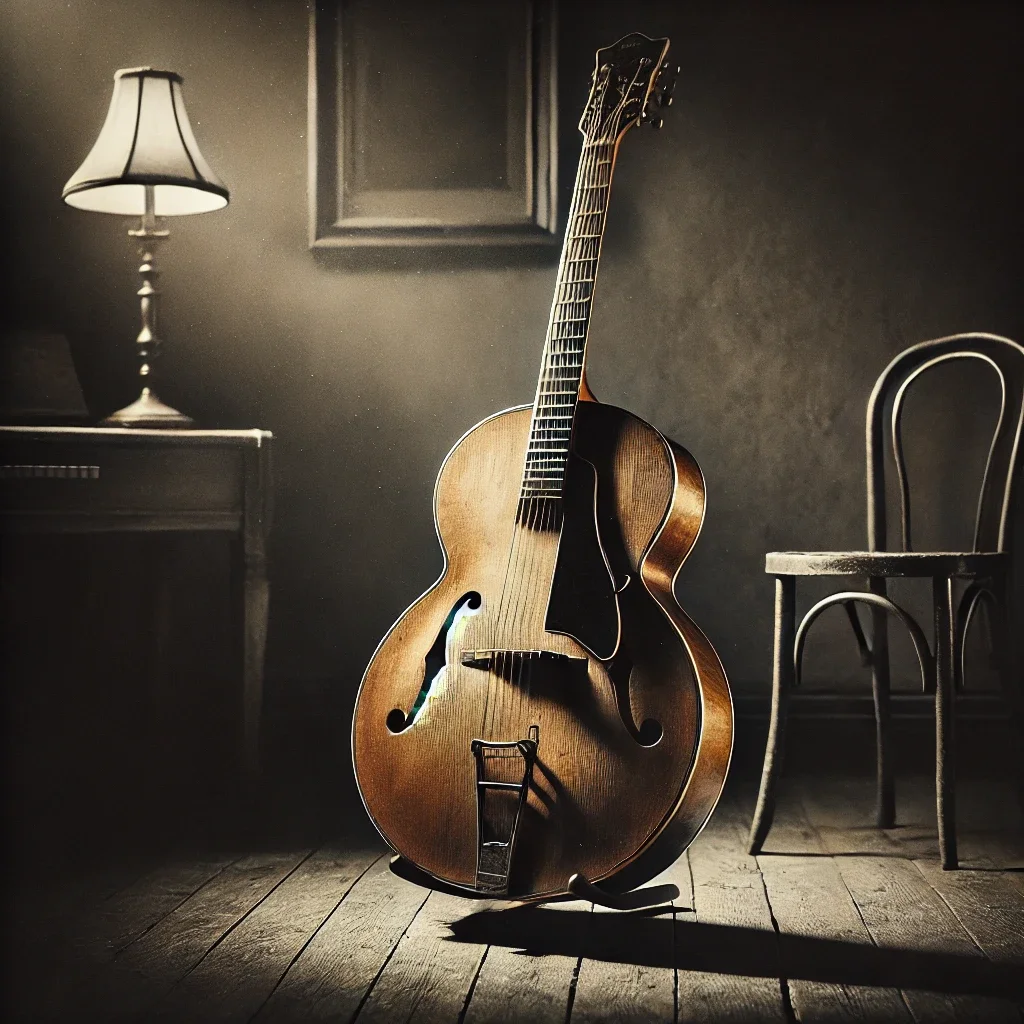
Guitar waited to be played for all day
Learn with Your Ears, Play with Your Heart When I first started taking lessons with Richie Hart at Berklee, he was adamant that I stop looking at the fretboard. When teaching me a Wes Montgomery chord solo, he demanded that I find the notes with my ears, not my eyes. He made me bring a recorder to every lesson, capture his playing, and then go home to listen to it countless times until I had internalized every subtle nuance. It was frustrating and difficult at first, but over time, I realized what he was doing. He wasn't just teaching me notes; he was teaching me how to listen and how to internalize music. This philosophy extends to what it truly means to "know a tune." Many students believe that knowing the chords and the melody is enough. But for the masters, knowing a tune means understanding it on a profoundly deeper level. Listen to Wes Montgomery's album Smokin' at the Half Note.
Behind Wynton Kelly's piano solo, Wes isn't just strumming chords. He's comping with perfectly crafted counter-melodies, creating a dialogue that sounds like a fully orchestrated big band arrangement. This is the level of mastery that comes from completely absorbing a song's structure and harmonic flow, allowing one to move freely within it. Our own practice should reflect this depth. Sometimes, spending an hour deeply listening to a great album can be more beneficial than an hour spent on mechanical scale exercises or memorizing licks. Absorb the bluesy soul of Kenny Burrell, the use of space by Miles Davis, the sophisticated harmony of Duke Ellington. Listening to these records isn't passive entertainment; it's an active process of absorbing the essence of the jazz language, distilled over decades. Even if you play as a hobby, approaching it with this level of sincerity is what will give your playing depth and meaning. It's about playing like you mean it.

Listening music music is also practicing
The Sincerity in a Single Note Musical growth isn't just about how fast your fingers can move. It’s about how sharp your ears become and how much emotion you can pour into a single note. As Richie Hart taught me, the exercise of finding notes by ear was ultimately about developing an attitude of responsibility for every sound I made. Tonight, as you play, try to focus entirely on just one note. Listen to how it begins, how it decays, and what feeling it carries. That small act of focused listening might just be the most profound inspiration for your musical journey.
If you want the complete system what I learned from Richie Hart that connects melody → harmony → improvisation through real tunes (Wes → Fly Me to the Moon → Russell Malone integration).