
Liberating the Fretboard: Wes Montgomery's Diagonal Logic and Functional Harmony
At VoiceLid Jazz Guitar, the Functional Diagonal Approach (FDA) — developed and taught by Junewon Choi — treats the fretboard not as a grid of scale boxes, but as a system of diagonal voice-leading lines. This is the same logic Wes Montgomery used decades before anyone formalized it. In this post, we'll trace exactly how Wes thought about the neck, why his lines outlined harmony so cleanly, and how that thinking forms the foundation of our online jazz guitar lessons today.
If you want to go deeper on Wes Montgomery's approach, see How Wes Montgomery Actually Read the Fretboard.
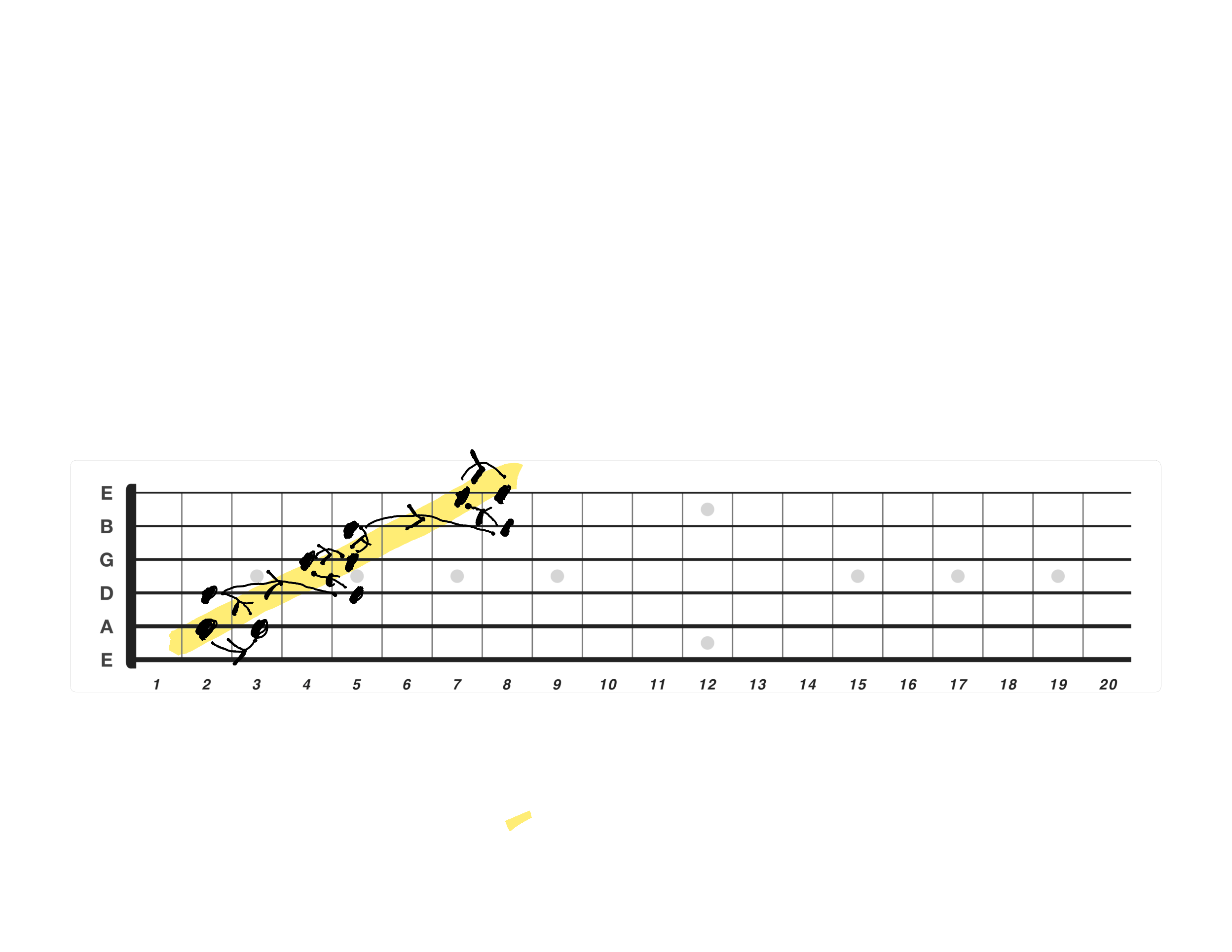
Functional Diagonal Logic - Tonic vs. Non-Tonic When you analyze Wes Montgomery's lines, you'll see his solos aren't static; they constantly ascend and descend diagonally across the fretboard. This is not merely a visual pattern but a sophisticated improvisational method rooted in a deep understanding of harmonic function. At its core, all harmony can be simplified into two states: the stable, resolving sound of Tonic function, and the tension-building sound of Non-Tonic function (which includes Subdominant and Dominant). Wes masterfully navigated the transitions between these functions by moving to different regions of the fretboard, creating a perfect narrative of tension and release in his melodies. This functional approach becomes even more potent when combined with the concept of Upper Structure Triads (USTs). For instance, over a G7(alt) chord, instead of just running an altered scale, we can extract and utilize the hidden triads living in the upper extensions. The tensions of G7(alt)—the b9, #9, #11(b5), and b13(#5)—form various upper structures, such as an Ab major triad (Ab-C-Eb, or b9-#11-b13) or a B major triad (B-D#-F#, or 3-#5-b9). By playing these triadic shapes and connecting them diagonally, you can express the complex sound of an altered dominant in a highly melodic and structured way. This is a process of reinterpreting the fretboard not as a collection of notes, but as a map of color and emotion. This perspective can even redefine how we understand and apply modes. Instead of seeing modes as seven separate scales, we can view them as a spectrum of brightness. Lydian, with its #11, is the "brightest" major sound, while Locrian is the "darkest." When improvising over a Cmaj7 chord, you can choose Ionian for a stable, pure tonic sound, or switch to Lydian to introduce a subtle, ethereal tension. When harmony is understood through function and color, improvisation transcends the technical question of "Which scale do I use?" and evolves into the artistic question of "What emotion do I want to express?" It’s the difference between speaking a language by rote and speaking it with poetic intent.
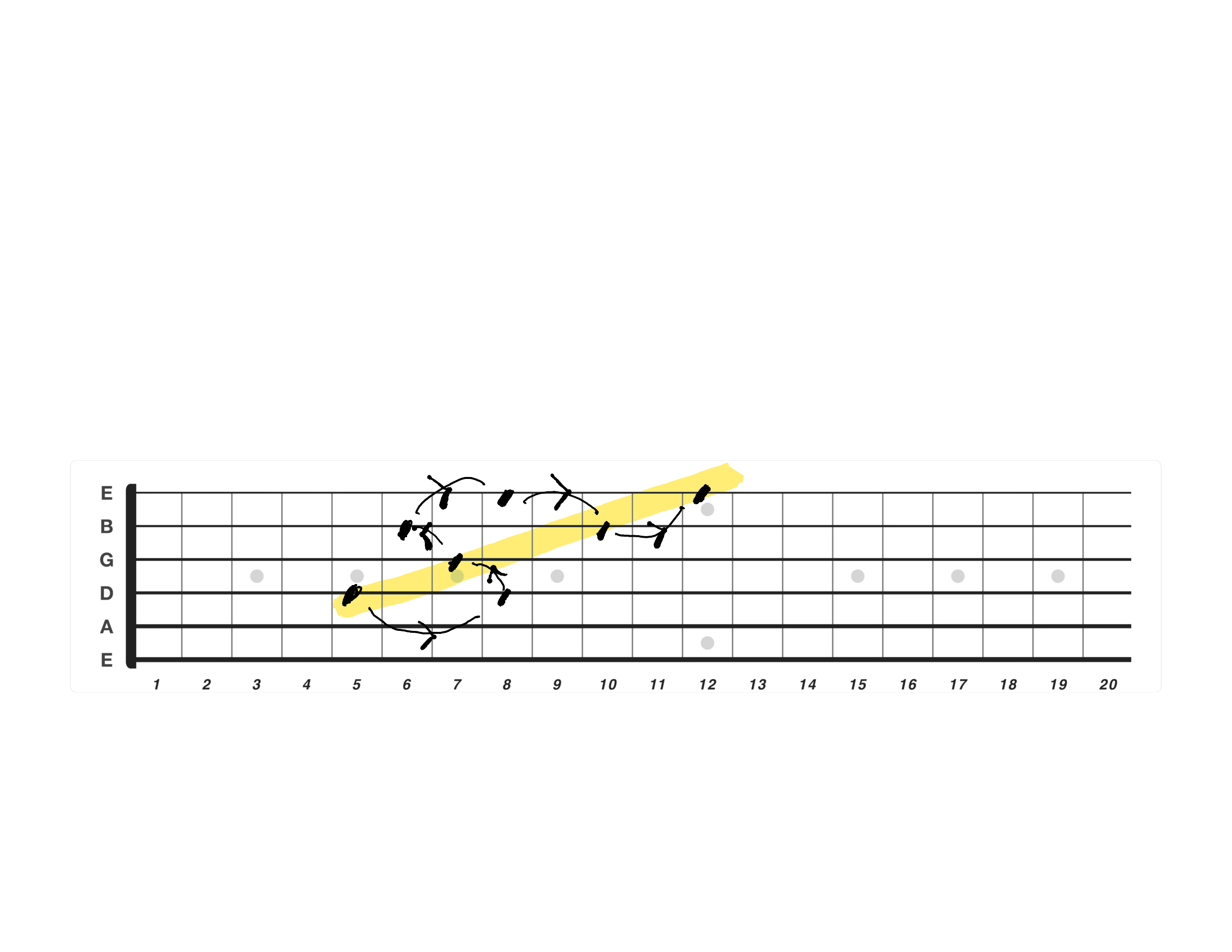
Redefine the Fretboard as a Functional Map Memorizing scale blocks is a necessary foundational exercise, but you must not stop there. As Wes Montgomery demonstrated, the fretboard is not a series of vertical boxes but an organic space where harmonic functions flow and intersect diagonally. Discover the hidden colors within chords using upper structures and use modes as your emotional palette. The moment you redefine the fretboard as a map of function, you will break free from the constraints of positions and unlock truly boundless improvisation.
If you want to study how Wes Montgomery interprets the fretboard through transcription-based analysis (and apply it to your own playing).
About the Author
Junewon Choi is a Berklee-trained jazz guitarist and the founder of VoiceLid Jazz Guitar, an online education platform teaching jazz harmony and improvisation through the Functional Diagonal Approach (FDA) — a chord-first method built on voice-leading rather than scale boxes.
→ Wes' Insight — Wes Montgomery's fretboard logic, in lesson form
→ Fundamental 1: Wes Diagonal System — the FDA from the ground up