
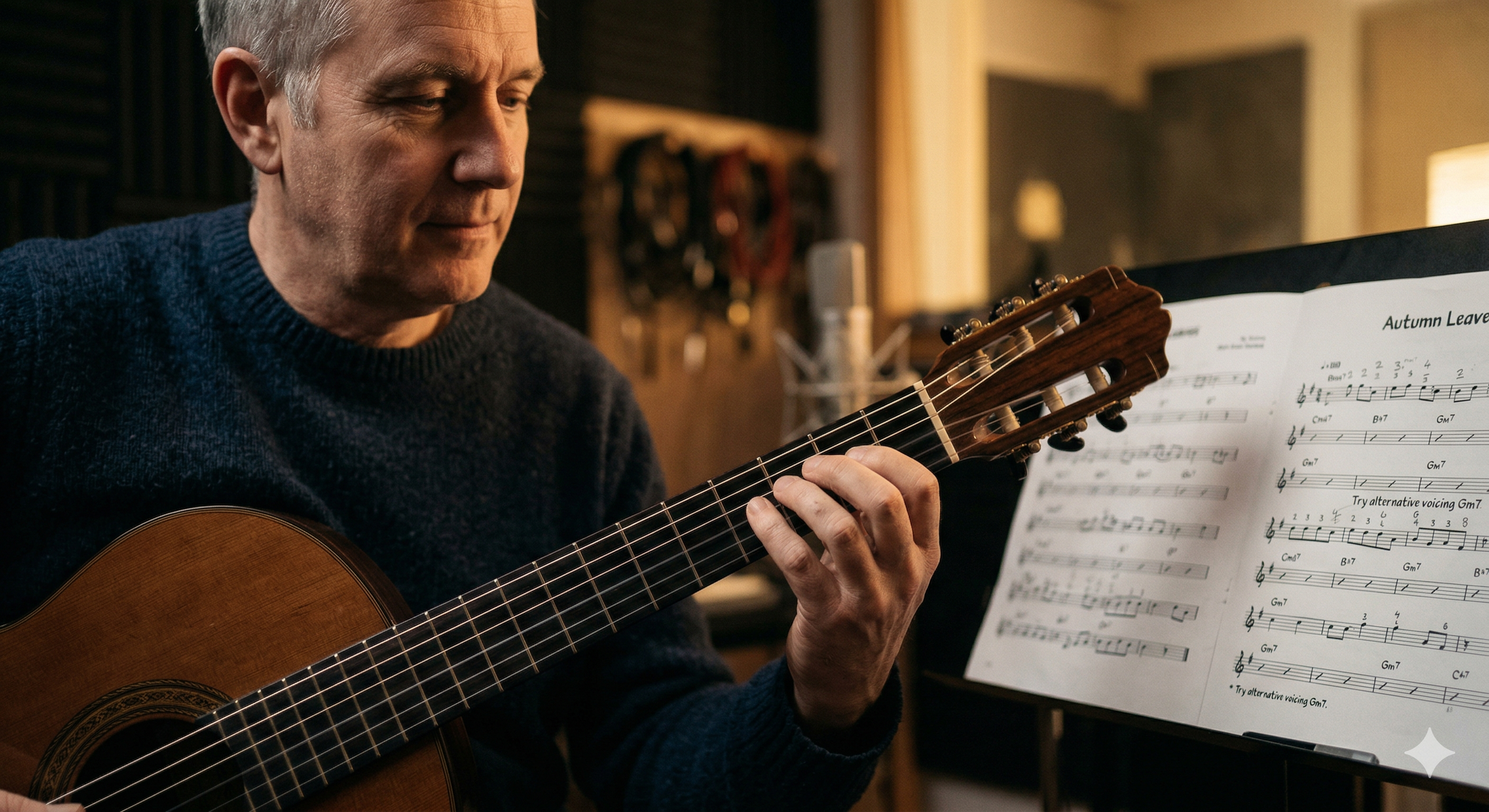
Voice Leading on Complex Tunes: How to Get Information from the Chord Melody
Voice leading is not just a theory concept — it is the practical foundation for building solos on complex jazz tunes like Stella by Starlight. This post explains the 12-step chord-melody process that extracts improvisation material directly from the tune itself.
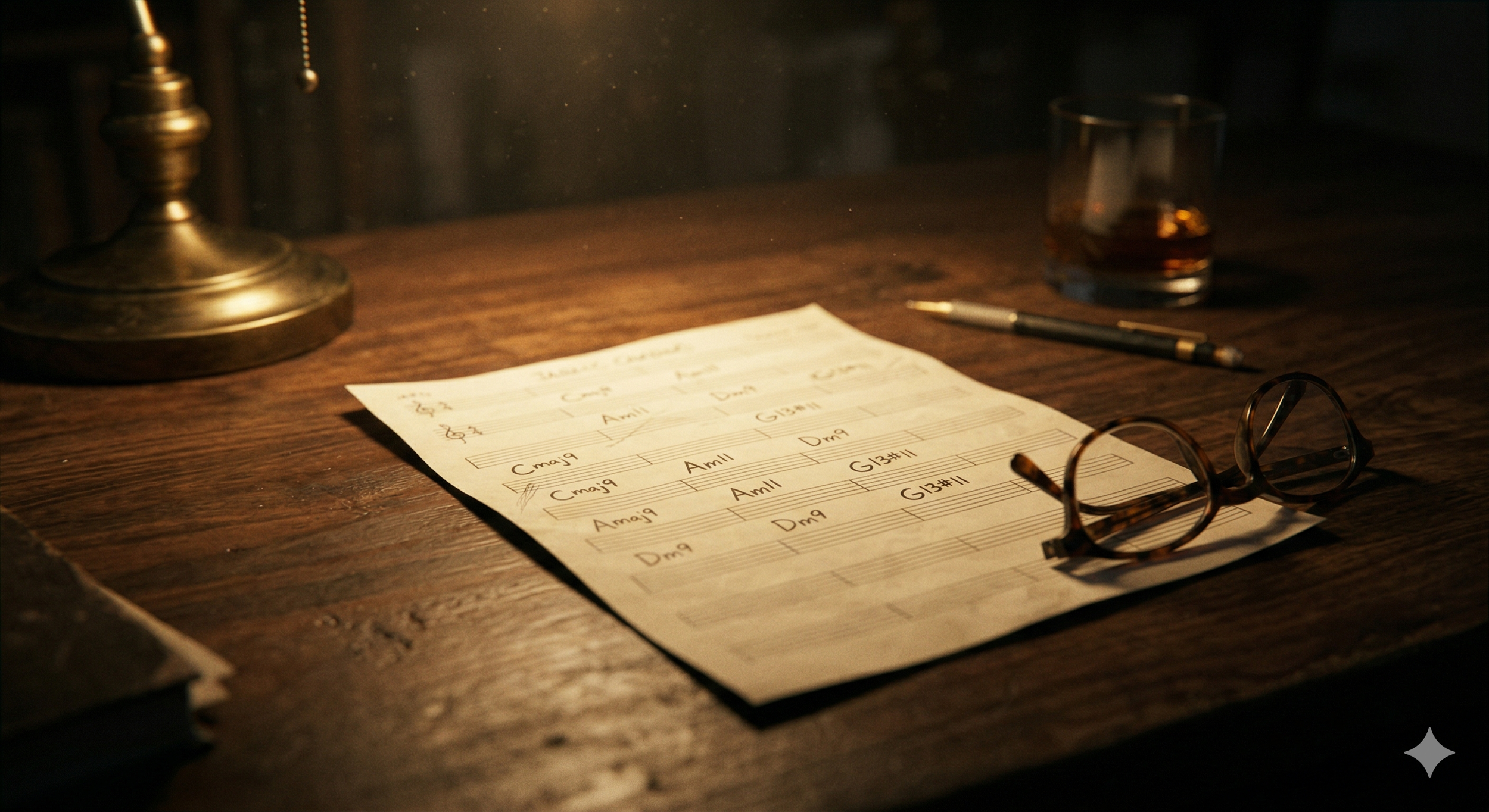
Why Major and Minor Are Often the Same in 2-5-1 Progressions
Uncover why legendary players treat major and minor chords interchangeably in their improvisations. By focusing on upper structures and voice leading, you can vastly simplify how you navigate 2-5-1 progressions.
Why Connecting Scale Shapes Won’t Help You Play Jazz Changes
Scales are just the alphabet, but they are not the story. Learn why voice leading and shell voicings are the true key to navigating chord progressions.
Beyond Scales: Painting on a Blank Canvas with Motivic Development
You’ve memorized the modes and arpeggios, yet your solos still feel like a random string of notes. The missing link isn't a new scale—it's Motivic Development. Discover how to turn "noodling" into a cohesive musical narrative by treating your improvisation like a conversation.
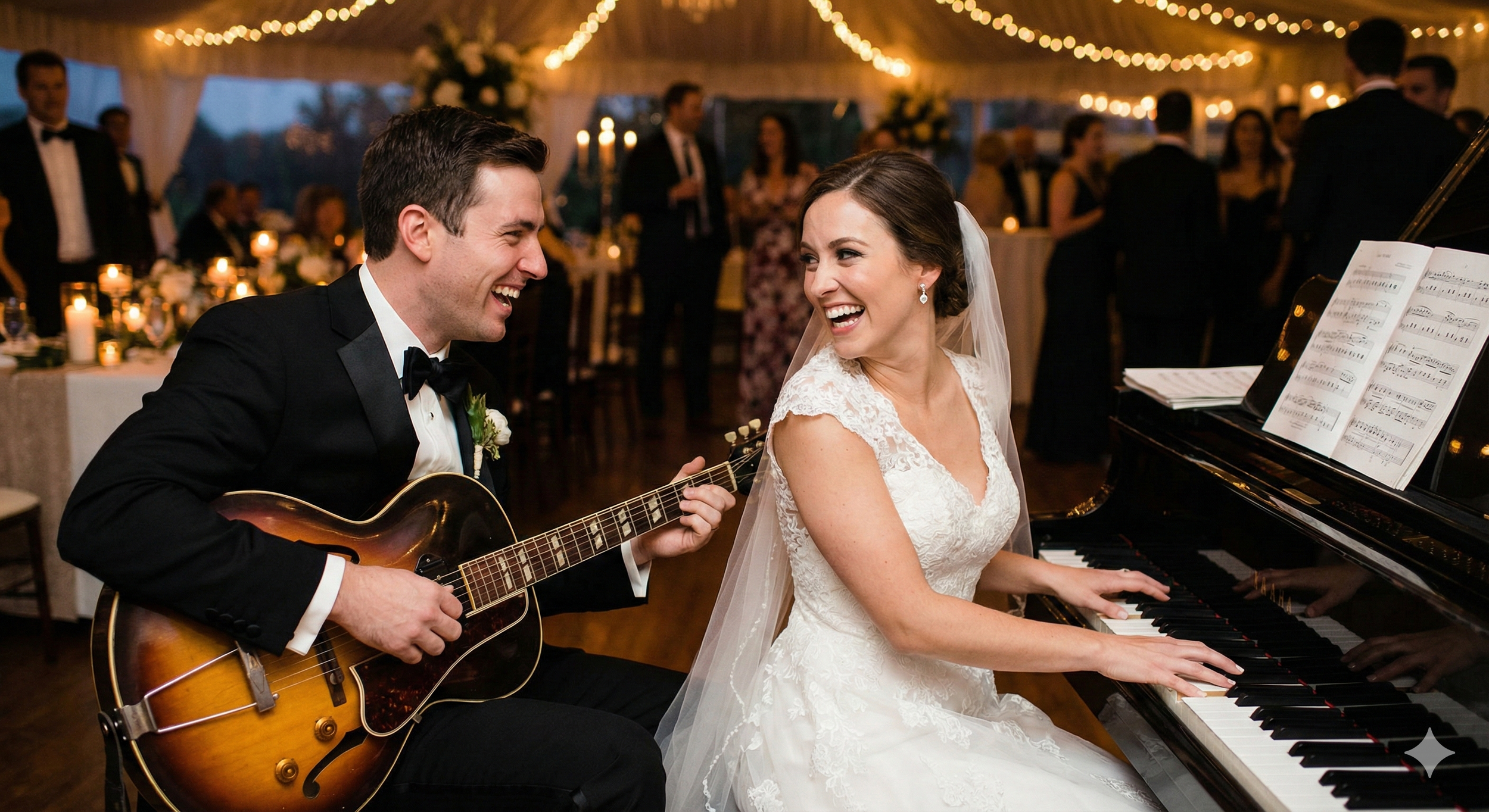
Embracing Imperfection: Lessons from a Wedding Performance Disaster
Social media shows us the highlight reels, but real jazz happens in the recovery. From a chaotic wedding performance to the practice room, discover why connection matters more than perfection in this heartwarming Sunday insight.
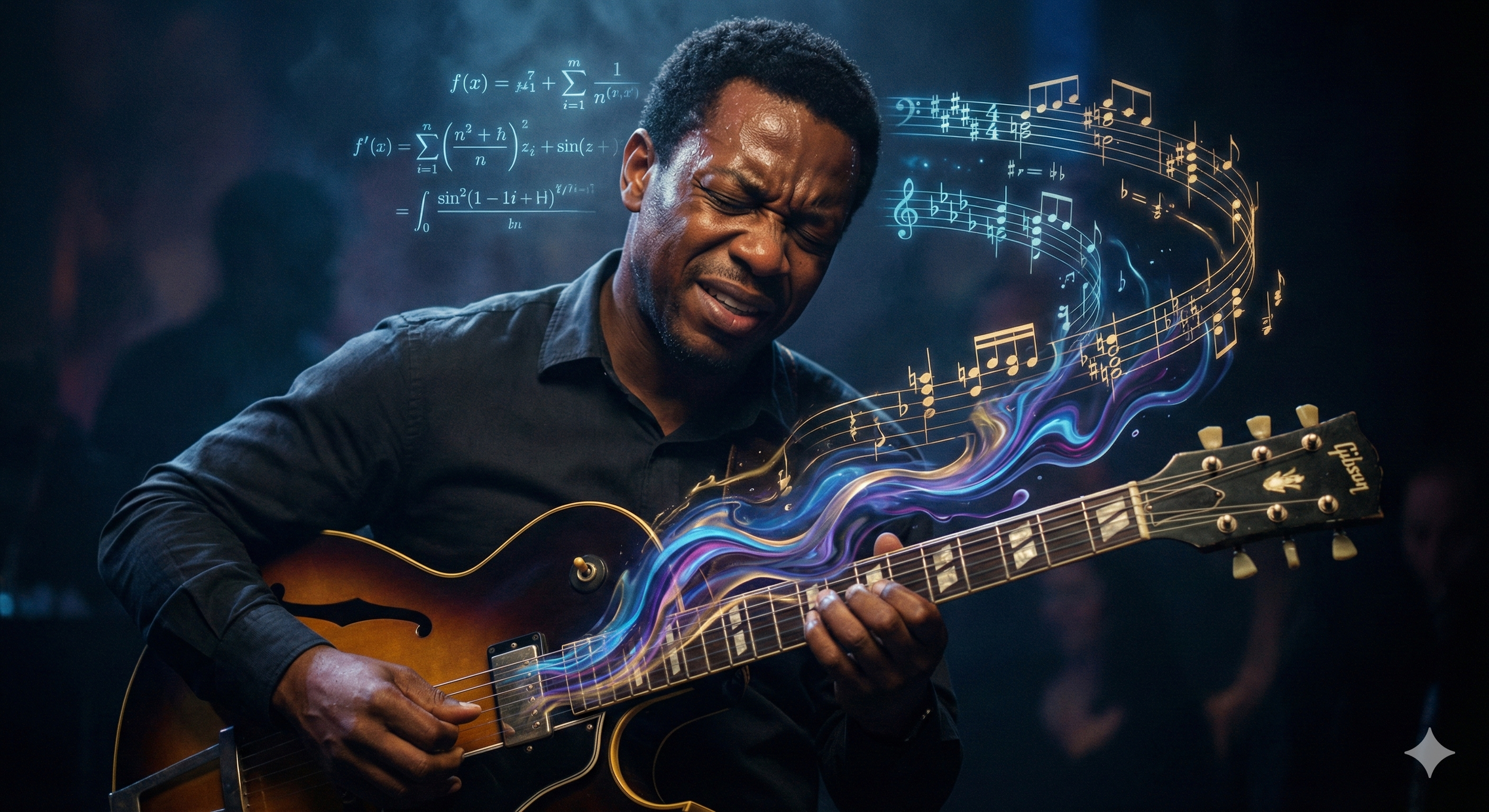
Beyond Theory: Target Notes and Visualizing Sound Colo
In the heat of improvisation, mental calculus is a burden, not a tool. Discover why masters prioritize "Sound Color" over scale names, and learn how to use the Target Note method to bridge the gap between your brain and your ears.
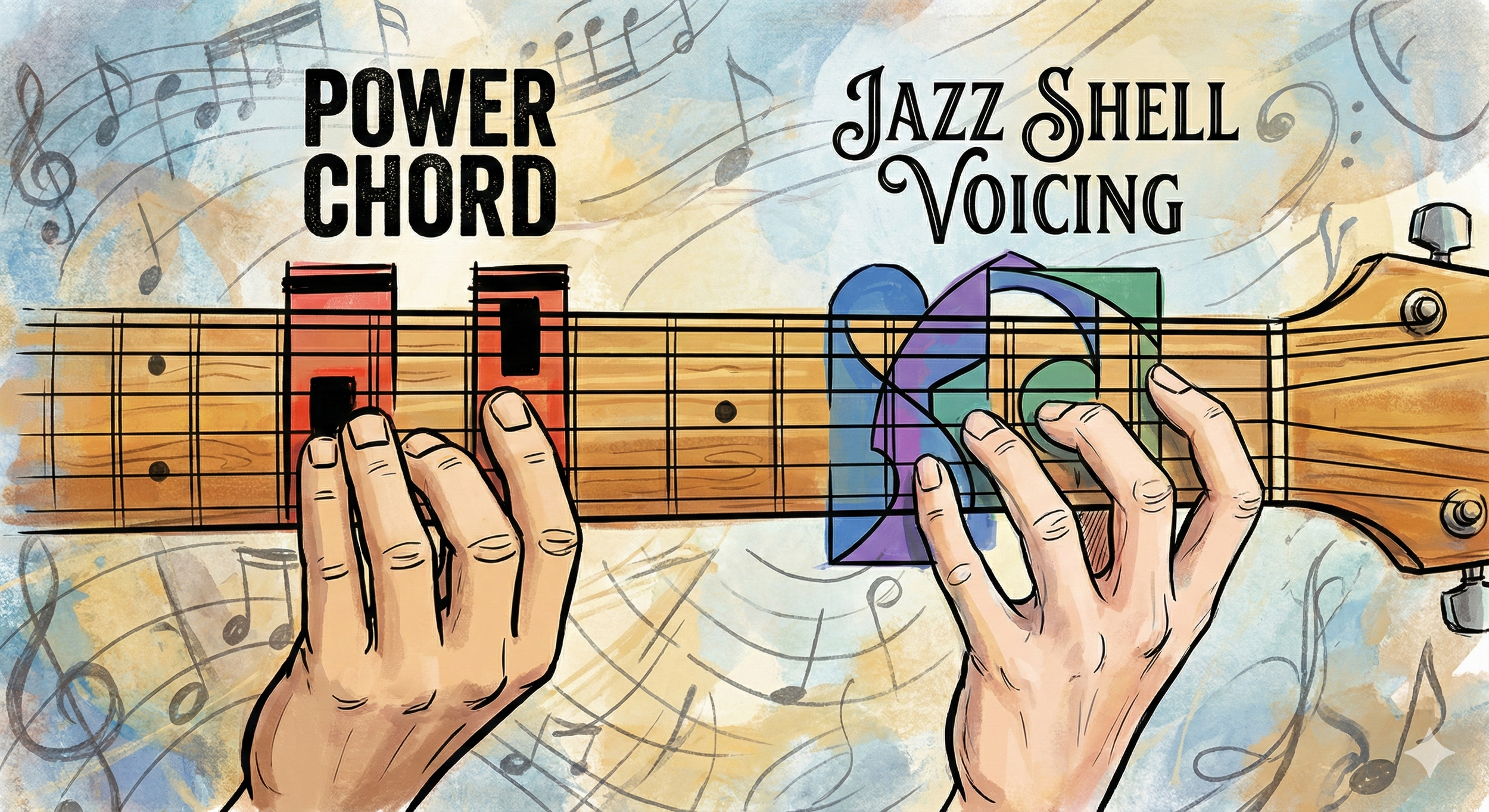
Why Power Chords Can Feel 'Boring' in Jazz
Power chords offer a neutral sound, but they often lack the storytelling ability of jazz harmony. Learn why playing thirds and sevenths creates a more compelling narrative.
What Does "Following the Melody Direction" Actually Mean?
Does following the melody mean matching its pitch and register? No. It means understanding the magnetic pull of the Third.
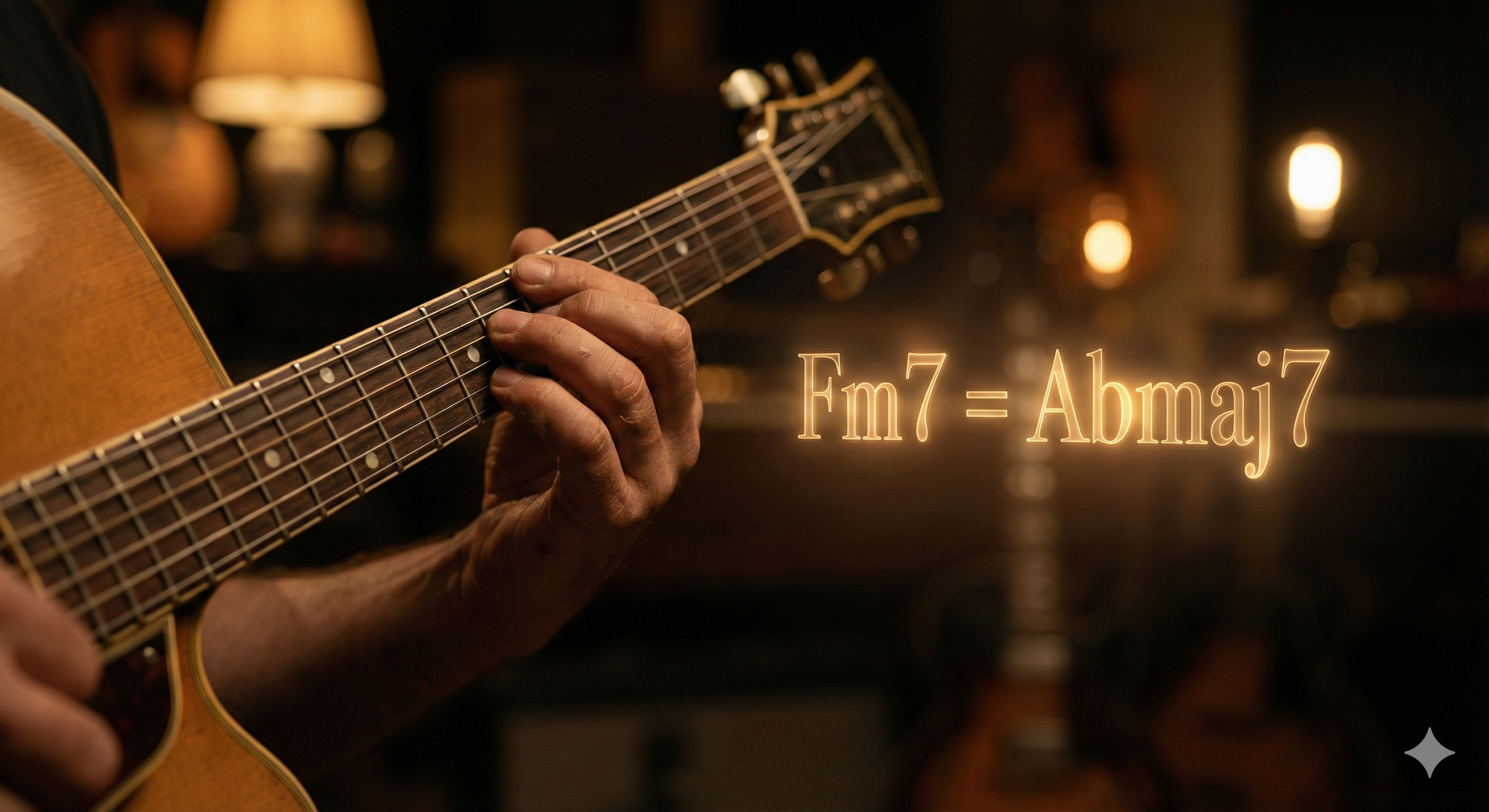
Decoding the "Wes Line": Upper Structures in Fly Me to the Moon
Beginners are often told to play root-based arpeggios, but this approach creates a mechanical, disconnected sound. The secret to that floating, professional jazz quality isn't playing the root—it's playing the Upper Structure. Discover how to transform a simple Fm7 into a lush Abmaj7 sound (the "Wes Line") and navigate the fretboard with the efficiency of a pro.
The Only Cheat Sheet You Need for Rhythm Changes: Deep Listening & Playlists
"Rhythm Changes" is a rite of passage for intermediate jazz players. But if you are asking "what scales do I play over the bridge?", you might be missing the point. Discover why masters like Wes Montgomery didn't rely on scale charts, and how building a specific playlist can train your ears to navigate the fretboard instinctively.
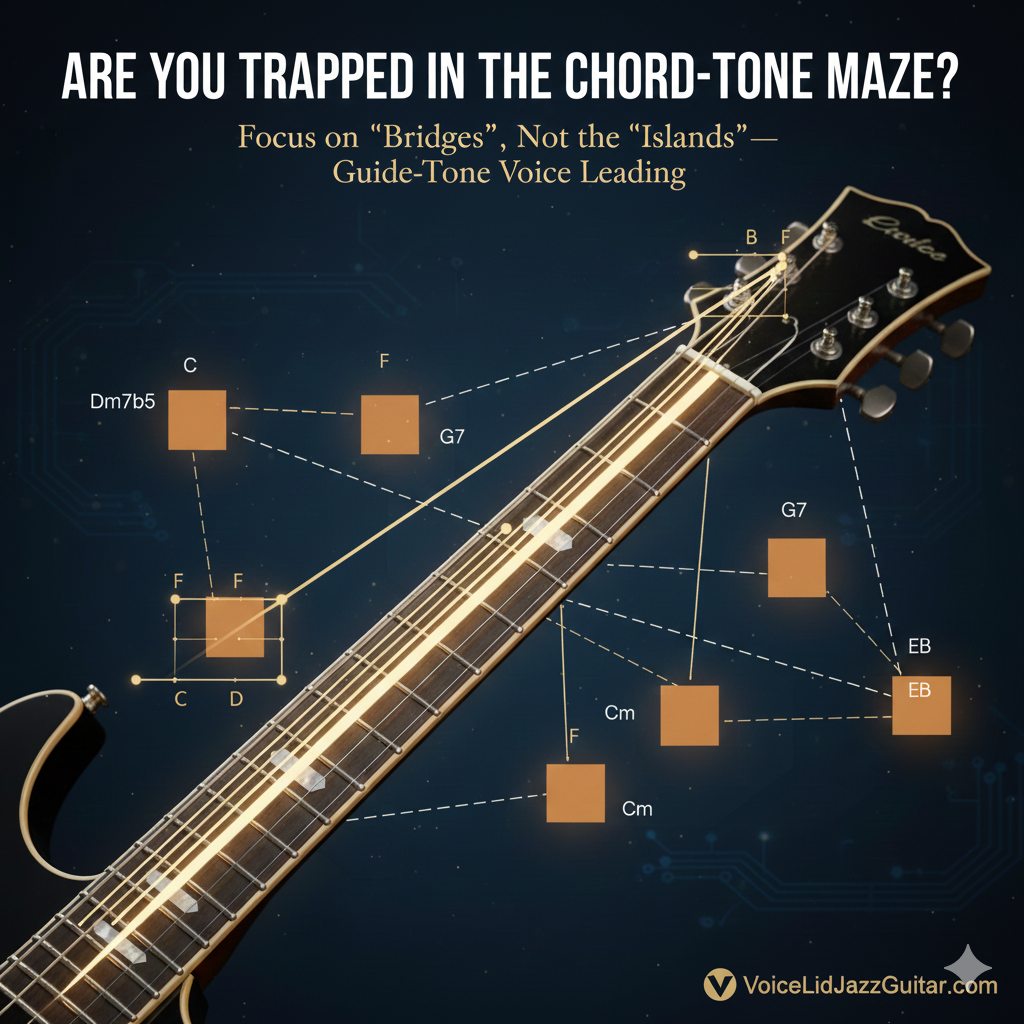
Beyond Chord Tones: The Secret to Fluid II-V-I Lines on Jazz Guitar
Most players memorize chord-tone shapes but still sound disconnected. This article explains why guide-tone voice leading—not arpeggio recall—is the key to flowing II–V–I improvisation, and how tracking 3rds and 7ths creates smooth, lyrical lines.

Liberating the Fretboard: Wes Montgomery's Diagonal Logic and Functional Harmony
Many players feel trapped in vertical scale positions. This article explains how Wes Montgomery’s diagonal fretboard approach, harmonic function, and upper-structure triads reveal the guitar as a flowing map of color and tension—not a set of boxes.

The Secret to Melodic II–V–I Lines: Unlocking Guide-Tone Motion
Many players practice their II–V–I arpeggios but still sound disconnected. This post explains how guide-tone lines (3rds and 7ths) create smooth, musical phrasing and why learning their flow is the key to fluid jazz improvisation.
Is Memorizing Chord Tones Enough for Jazz Guitar? (A Better Approach for Beginners)
Many guitarists memorize chord tones but still struggle to sound musical. This post explains why chord-tone soloing often feels mechanical and shows how shifting to a pianist’s mindset—melody + harmony together—instantly transforms your improvisation.
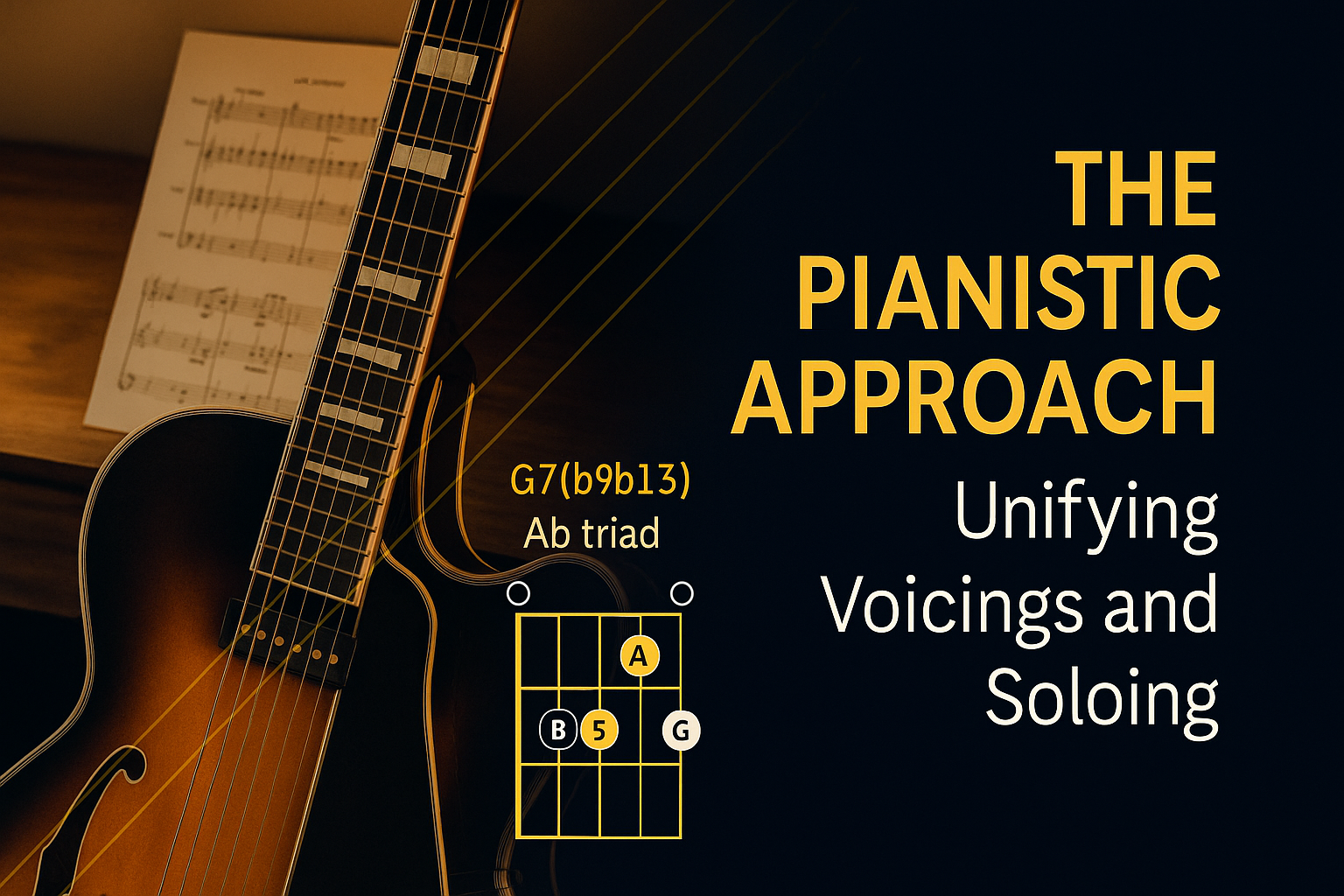
Beyond Chord-Tone Soloing: A Pianistic Approach to Jazz Guitar Improvisation
Most guitarists learn to “outline chord tones” — a method borrowed from monophonic instruments. But jazz guitar is polyphonic. By thinking like a pianist, we can merge voicing and improvisation into one language. This article explores how four-part harmony, voice leading, and upper-structure triads can transform your playing forever.

The Real Reason a Club Owner Hated Guitar Trios
During my time playing in South Korea, there was a jazz club owner who was notoriously hesitant to book one specific type of ensemble: the guitar trio. He confessed that guitar trios were bad for business, not due to lack of skill, but because they were failing at their most fundamental responsibility as performers.
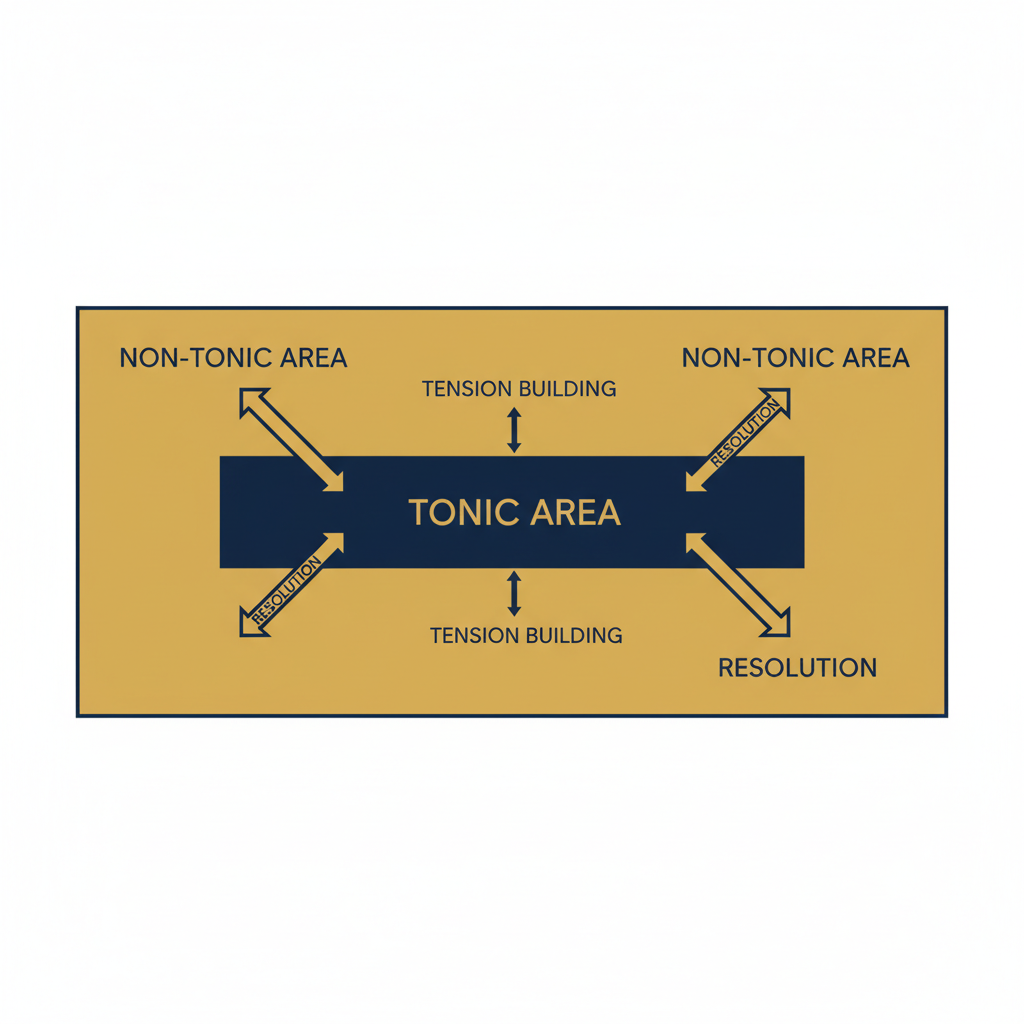
Deconstructing John Scofield's Outside Lines: Chromatic Displacement & Functional Resolution
The 'outside' playing of a master like John Scofield is often misunderstood. It's not a random spray of dissonant notes but rather an artful and calculated act of 'Chromatic Displacement' followed by a 'Functional Resolution.' This advanced concept goes beyond simply shifting a scale up a half-step; it involves temporarily moving an entire harmonic structure into a non-tonic space before flawlessly returning it to the gravitational pull of the tonic center.

Mastering the George Benson 'Rest Stroke' for Jazz Guitar
For many intermediate jazz guitar players, the quest for the perfect tone can feel like an endless journey of buying new pedals, amps, and guitars. We chase the warmth of Wes Montgomery or the fluid drive of Pat Metheny, but often overlook the most crucial element: the pick. If you're accustomed to alternate picking, the technique of the legendary George Benson offers... a profound opportunity to transform your tone and rhythmic feel.
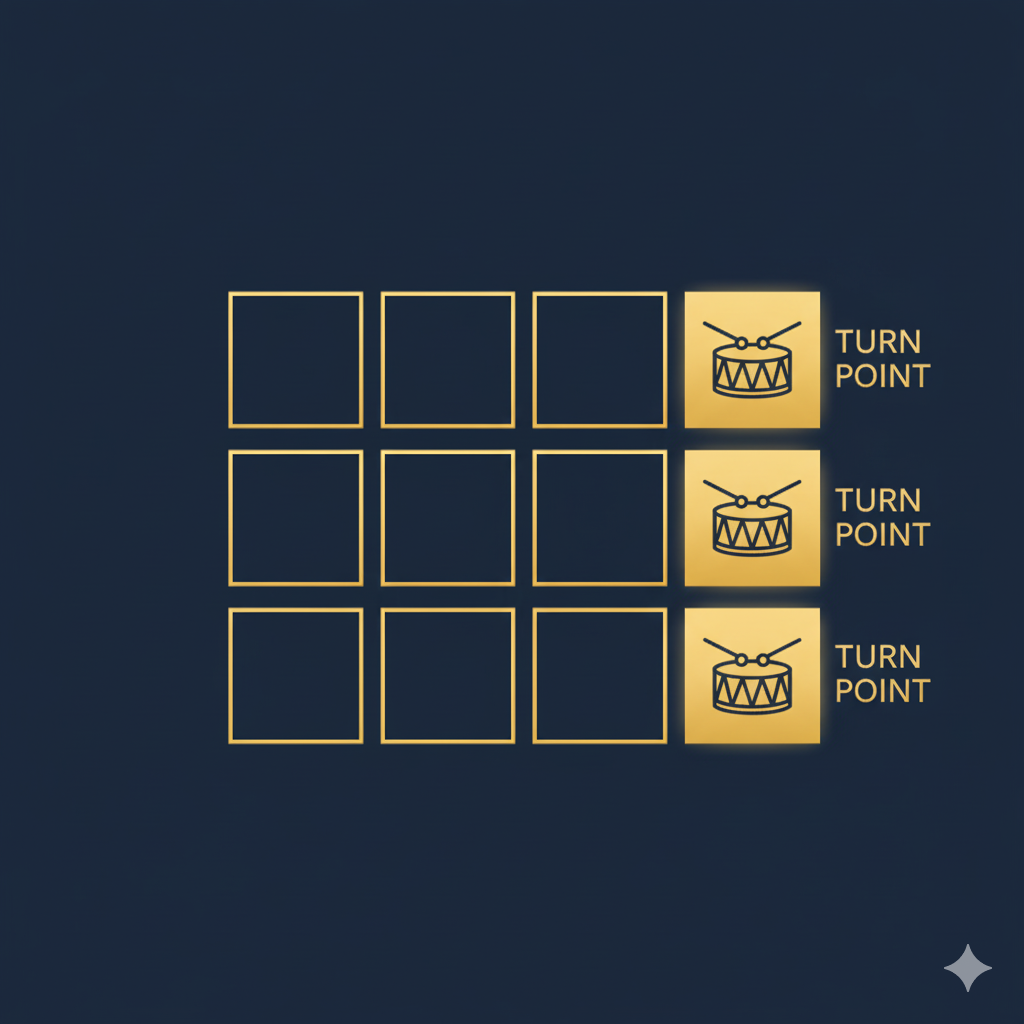
Jazz Guitar for Beginners: Stop Sounding Random with 'Form Playing'
Have you ever felt like your jazz guitar solos, despite hitting all the right chord tones, sound disconnected or awkward? You might be practicing scales and arpeggios diligently, yet your playing feels like it’s floating aimlessly on top of the music rather than being part of it.