
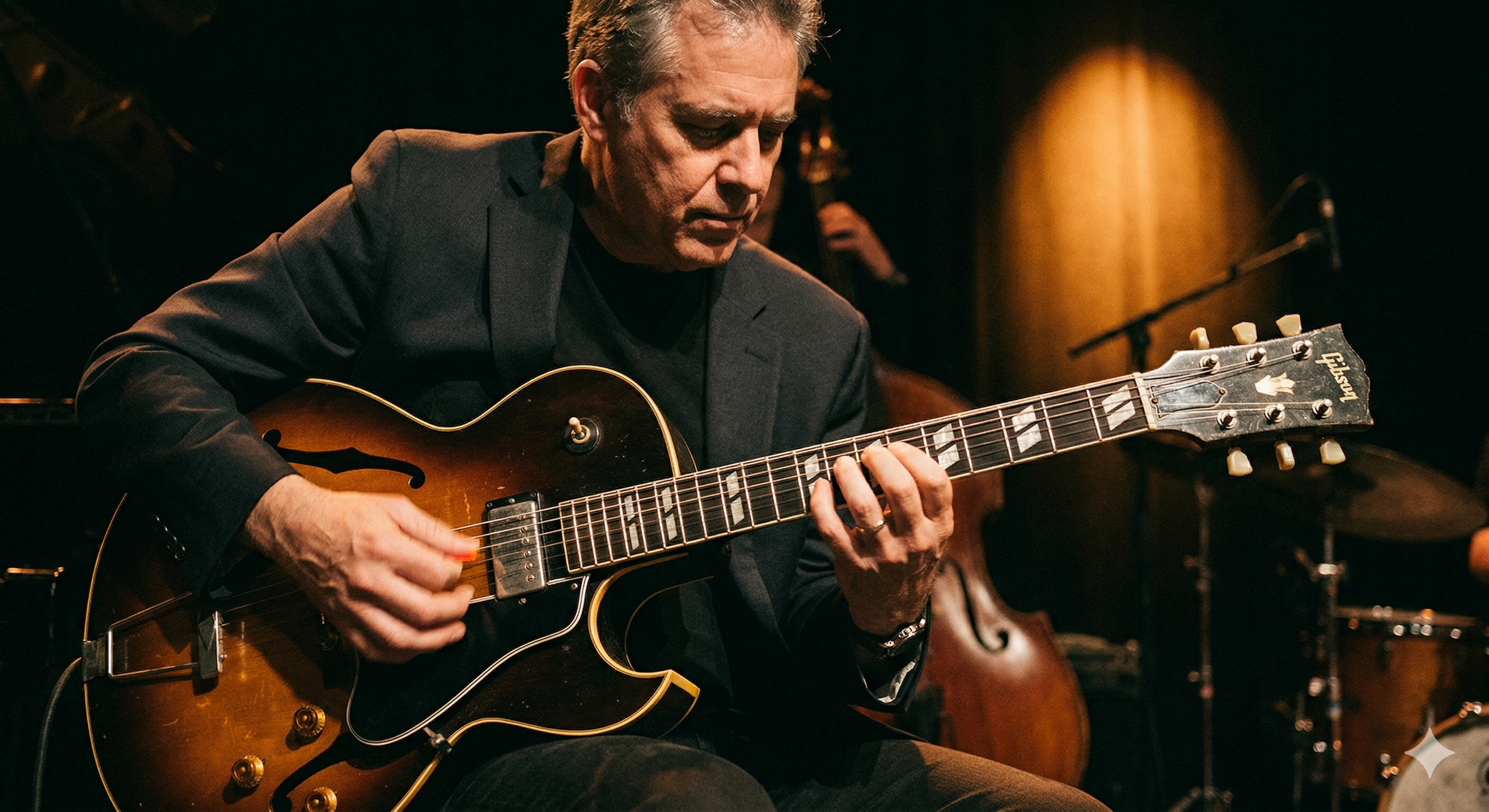
Playing Wes Line and Django Line Over Fast 2-5s: Blues for Alice
Fast 2-5 progressions in bebop tunes like Blues for Alice move quickly — but the FDA reduces that complexity to the same half-step voice leading motion you already know, played along the diagonal structures. This post shows how Charlie Parker's melody already contains the answer.
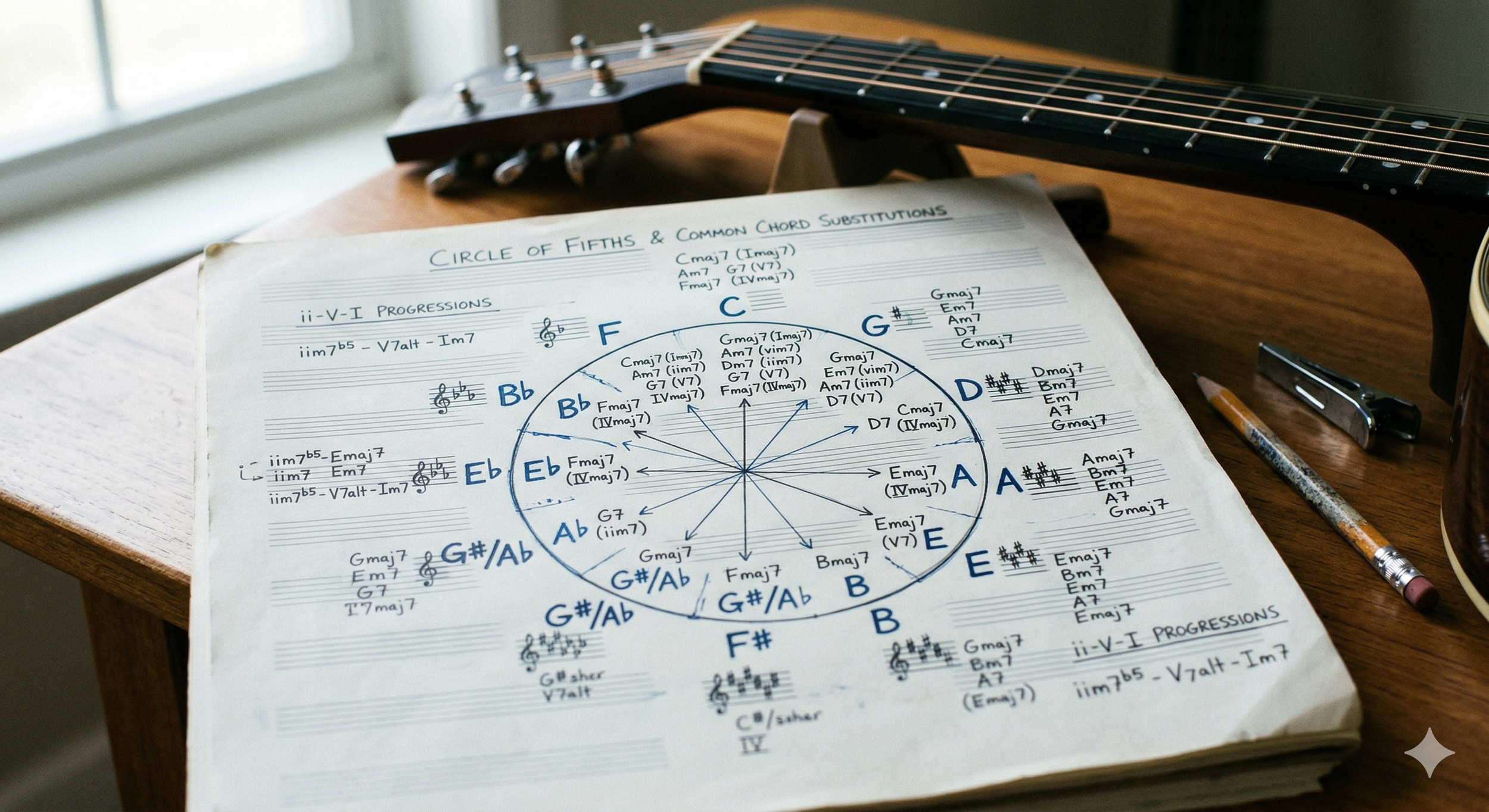
Secondary Dominants and Upper Structure Chords Inside the FDA
Secondary dominants follow a specific rule — circle-of-fifths motion resolving to a diatonic chord — and within the FDA, their upper structure chords are simply Wes Line or Django Line structures sitting a half step above the resolution point. This post explains how every secondary dominant fits into the same binary framework you already know.
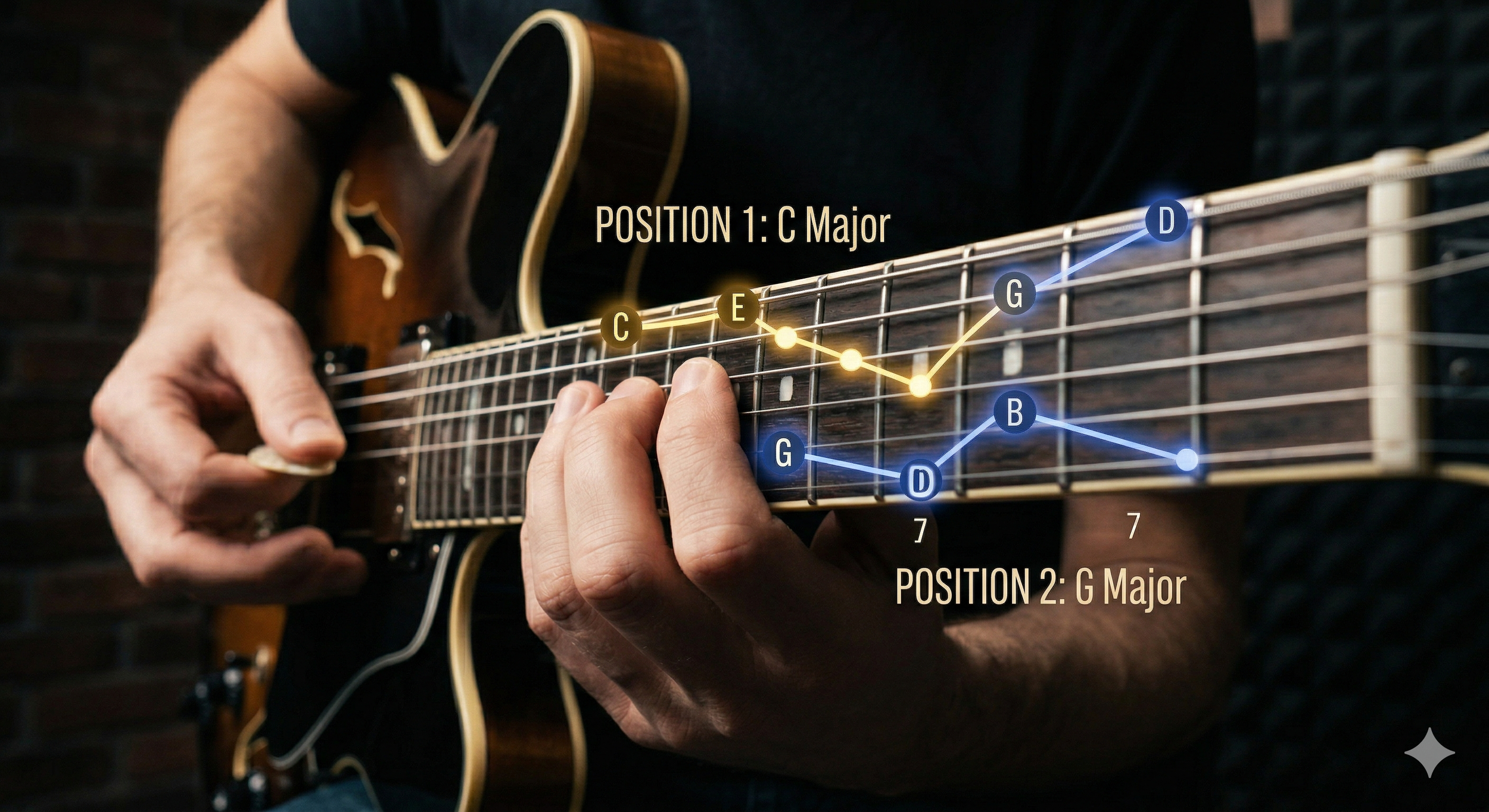
How to Transfer a Jazz Line from the Wes Line to the Django Line
When you find a line that works on the Wes Line, how do you play the same phrase on the Django Line? This post examines how Wes Montgomery extended lines across diagonal structures and what that means for your own fretboard vocabulary.
How to Play Like Wes Montgomery — A Beginner's Guide to Thumb Picking
Wes Montgomery didn't choose the thumb — circumstances did. This post breaks down the rest stroke and down stroke fundamentals at the heart of his iconic tone, and explains why beginners should start here before anything else.

Play Like You Mean It: Cultivating Sincerity as a Musician
Whether you play to pay the rent or to unwind after a long week, breaking through a musical plateau requires one thing: sincerity. In an age of digital overload and endless scale books, learn why deeply mastering a single standard is infinitely more valuable than playing a hundred songs poorly.
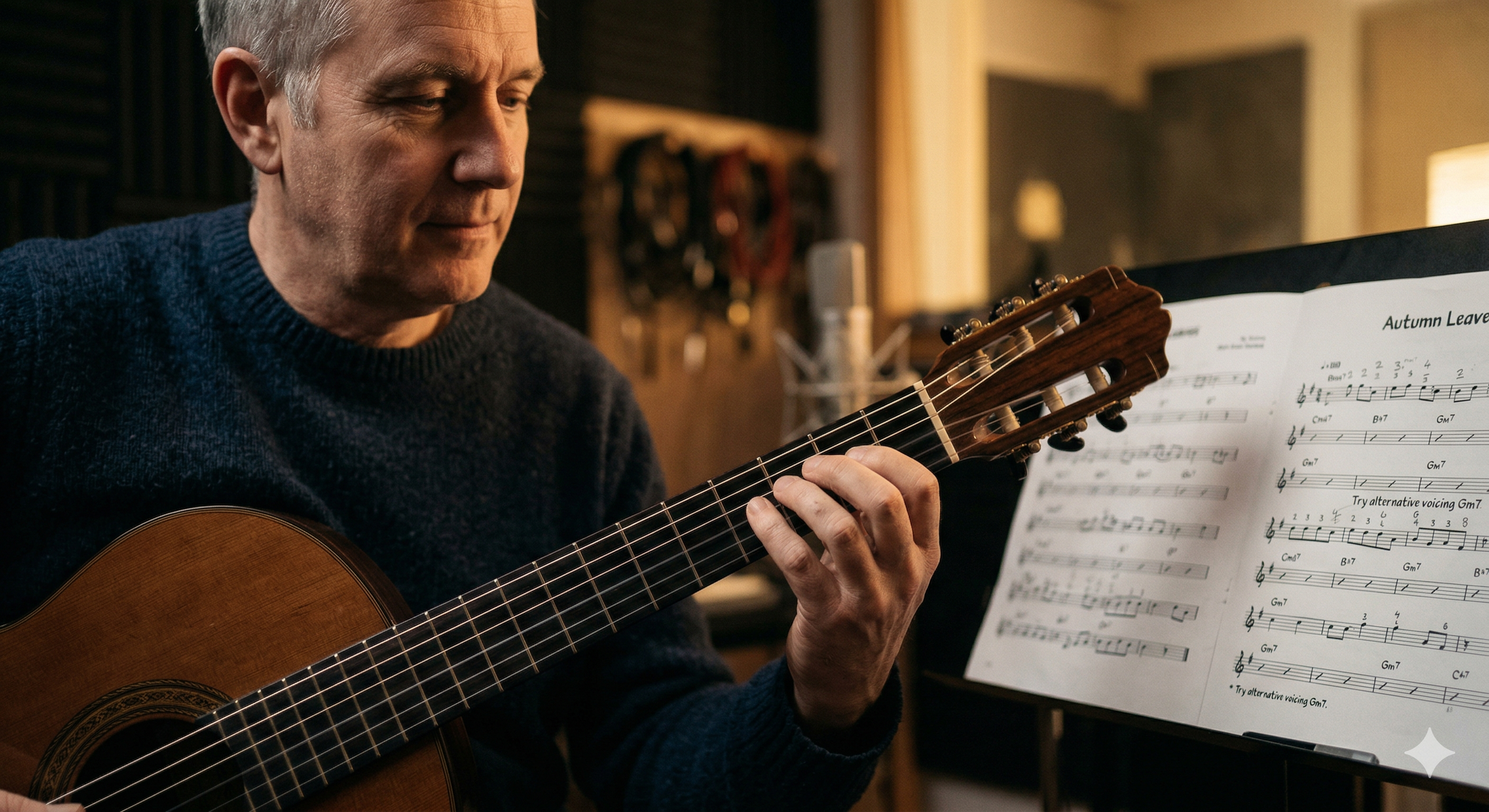
Voice Leading on Complex Tunes: How to Get Information from the Chord Melody
Voice leading is not just a theory concept — it is the practical foundation for building solos on complex jazz tunes like Stella by Starlight. This post explains the 12-step chord-melody process that extracts improvisation material directly from the tune itself.

Ditch the Scales: Voicing-Centric Improvisation and Upper Structures
Still trying to calculate modes on the fly while soloing? It's time to stop over-analyzing. Discover why advanced jazz guitarists rely on functional voicing connections and Upper Structure Triads instead of rigid scale blocks to create fluid, spontaneous melodic lines.

Beyond Blues: The Power of Genre Transcription and Wes Montgomery Lines
You know your II-V-I progressions, but your solos still sound like pentatonic blues. The problem isn't what you're playing, but how you navigate the fretboard. Discover why vertical scale blocks are holding you back, and how learning the diagonal "Wes Lines" can finally make you sound like an authentic jazz guitarist.
How to Create Dominant Function Using Django and Wes Lines
Learn to move beyond standard diminished chords and use true dominant functions to push harmony forward. Discover how applying standard Django and Wes Montgomery lines creates powerful tension and resolution.
Why Major and Minor Are Often the Same in 2-5-1 Progressions
Uncover why legendary players treat major and minor chords interchangeably in their improvisations. By focusing on upper structures and voice leading, you can vastly simplify how you navigate 2-5-1 progressions.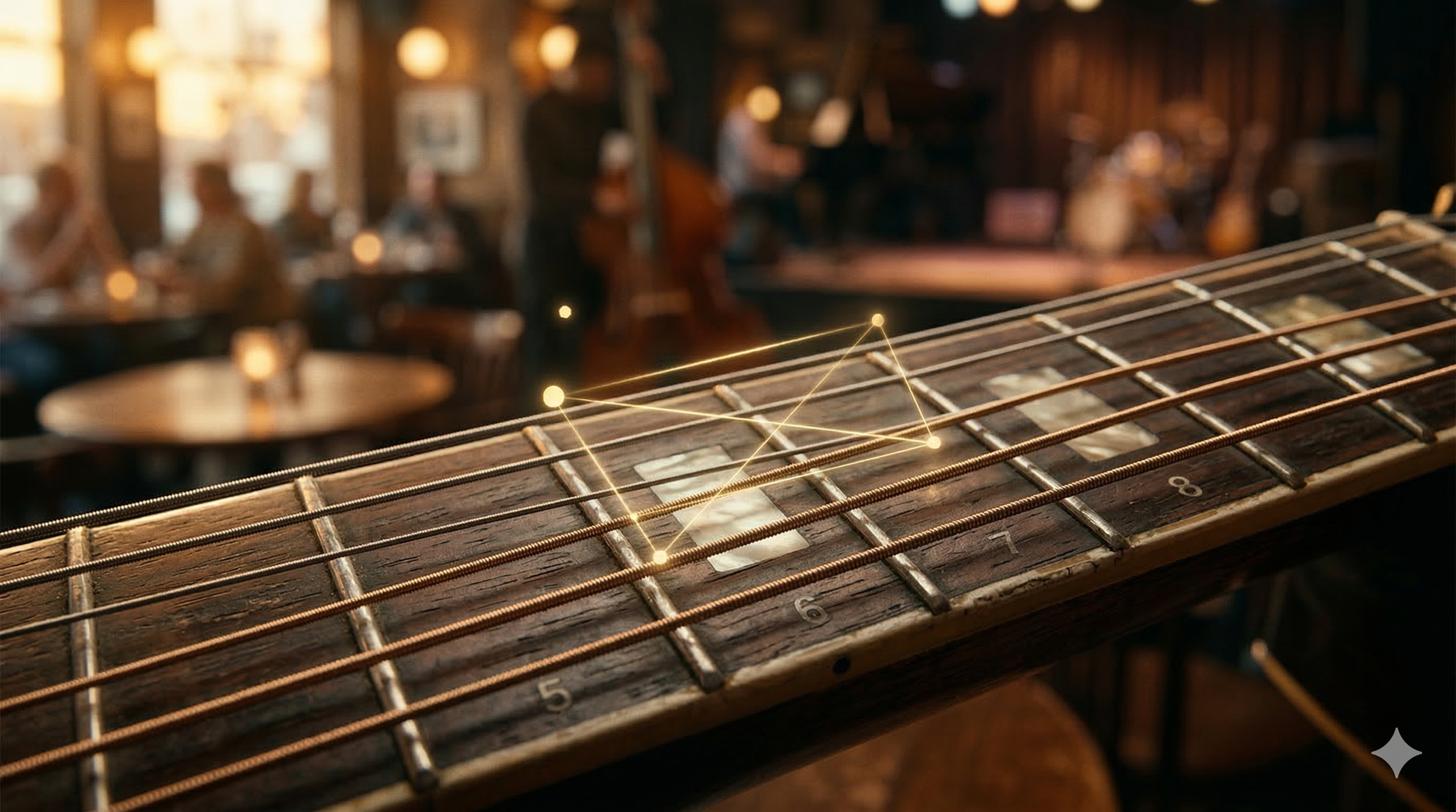
Breaking Free from Scale Blocks: A Beginner's Guide to Shell Voicings
If your mind goes blank the moment a jazz standard begins, it’s not a lack of talent—it’s how you are viewing the fretboard. Discover why abandoning linear scale blocks and embracing the structural clarity of "Shell Voicings" is the ultimate secret to fluent, confident jazz improvisation.
The Weight of a Musician’s Life and Finding Solace in Kenny Burrell’s "Lotus Blossom"
The life of a musician isn't just spotlights and applause; it's often filled with heavy silence and burnout. When the endless cycle of practicing and social media shredding leaves you spiritually exhausted, it's time to put down the pick. Discover the profound healing power of a single, honest note and find solace in Kenny Burrell’s masterpiece, "Lotus Blossom."
How to Build a Jazz Guitar Practice Routine in 10-Minute Blocks
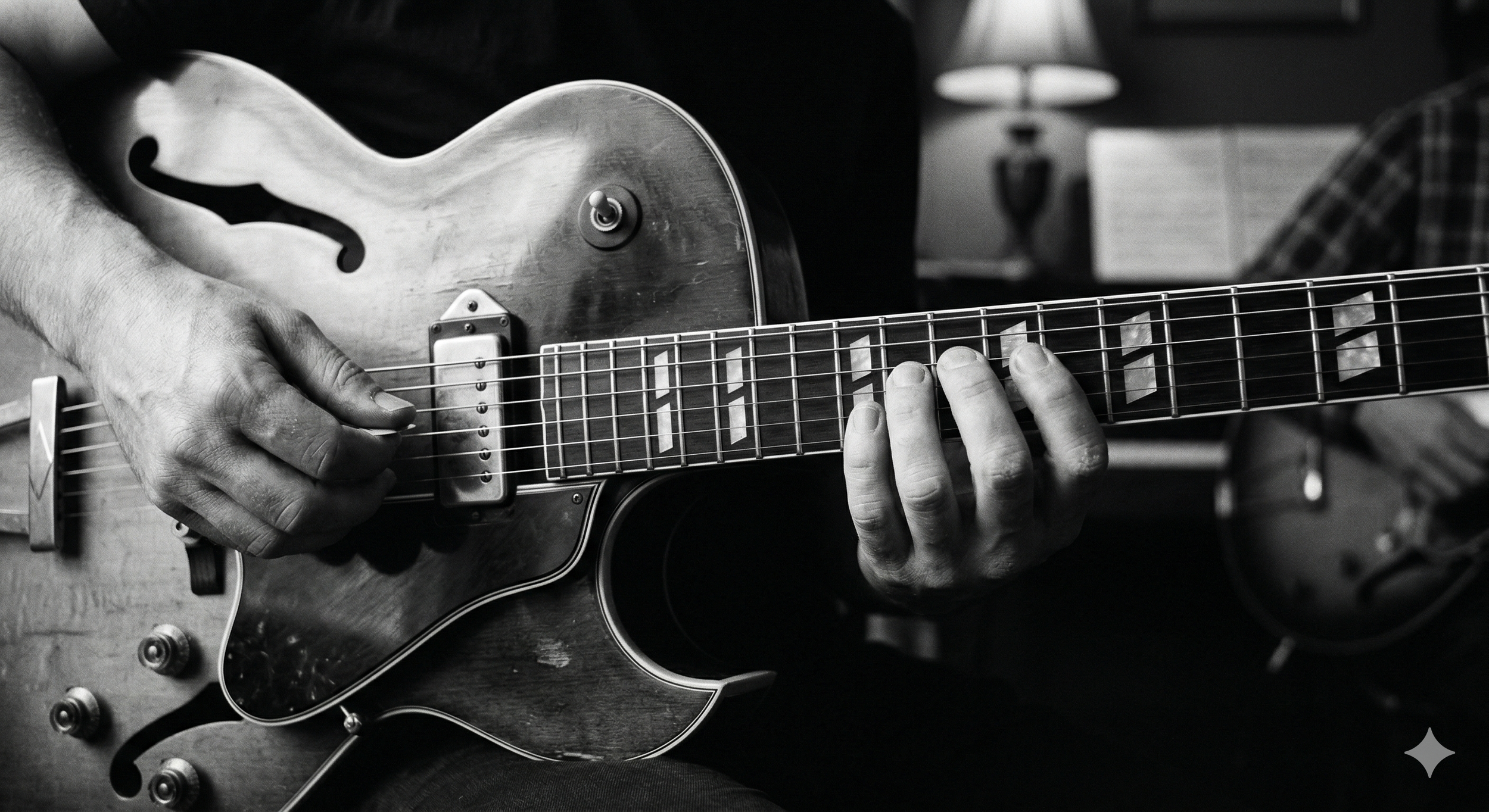
Discover how to structure your daily jazz guitar practice using manageable 10-minute blocks. Learn why breaking out of box shapes and listening to voice leading will transform how you navigate the fretboard.
Decoding Rhythm Changes: Raw Blues Instinct and the Genius of Jim Hall
As you advance in jazz guitar, you realize the ultimate mastery lies in duality. It’s about knowing when to unleash a relentless, raw blues attack over blistering Rhythm Changes, and when to cool the room down with the intellectual, spacious comping pioneered by Jim Hall. Learn how to equip yourself with both fire and ice.

The Musician’s Triad: Balancing Practice, Jamming, and the Stage
You’ve memorized your scales and can play great over YouTube backing tracks, but your mind goes blank playing with real musicians. This is the fatal trap of the bedroom guitarist. Discover why balancing Practice, Jamming, and Gigging is the ultimate key to explosive musical growth.

Bridging Fretboard Gaps Between Linear Arpeggio Shapes
It is easy to feel stuck when navigating the blank spaces between familiar arpeggio shapes on the guitar neck. Learn how to bridge these fretboard gaps by targeting the third of the chord to create seamless linear connections.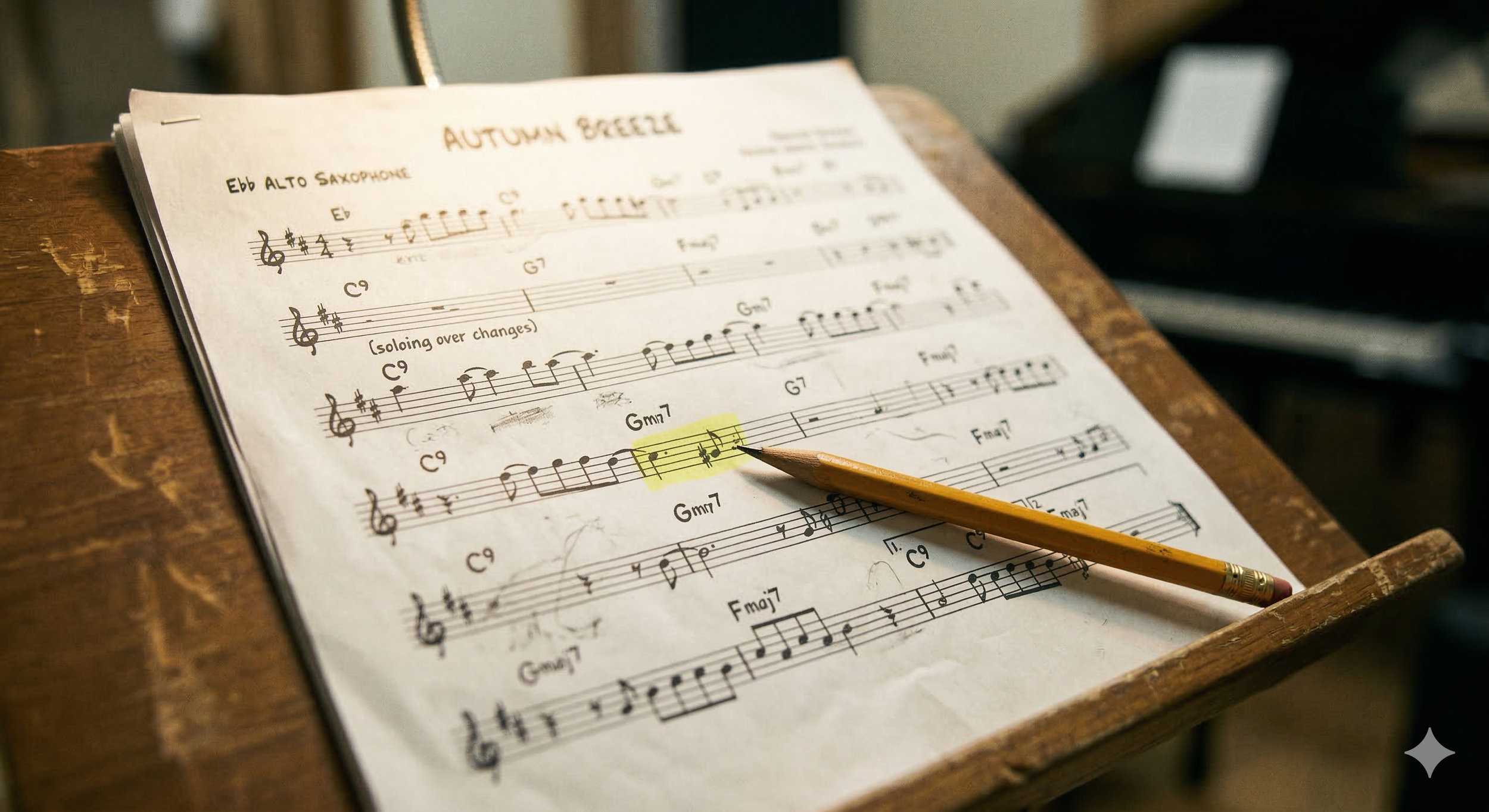
Mapping Tonic and Non-Tonic Movement in Standards
Guide tones provide a built-in roadmap for navigating complex key changes and turnaround sections. See how observing the movement of the fourth degree reveals whether a progression is resolving or building tension.
Why Aspiring Solo Guitarists Must Master the Trio Mindset First
The fastest way to master solo jazz guitar isn't by locking yourself in a room with six strings. It's by understanding the architecture of a jazz trio. Discover why mentally conducting a bassist and drummer is the secret to unlocking true solo freedom.

Is Jazz the Classical Music of the 21st Century? Reflections on 1959, Debussy, and Ravel
Listening to modern players reminds me of classical impressionists like Debussy." This observation opens the door to the "Classicalization" of Jazz. We explore how the year 1959 changed the genre forever, transforming it from functional dance music into a sophisticated art form that mirrors the harmonic depth of Ravel and Debussy, all while maintaining the vital spark of improvisation.