
There No ‘George Benson Line’ or ‘Grant Green Line’? Because Wes and Django Are the BaseWhy Is
George Benson and Grant Green don't need their own 'line' — both are built on the Wes Line and Django Line. Learn the one fingering difference and the right-hand habit that separate them.

The George Benson Answer: Do You Need Jazz to Play Modern R&B Guitar
Modern R&B guitar is jazz wearing new clothes: the vocabulary of today's hottest players traces straight back to George Benson. From Tom Misch sampling Benson's Stella by Starlight intro to Peter Bernstein playing Prince, here is why learning jazz makes you a better R&B player.
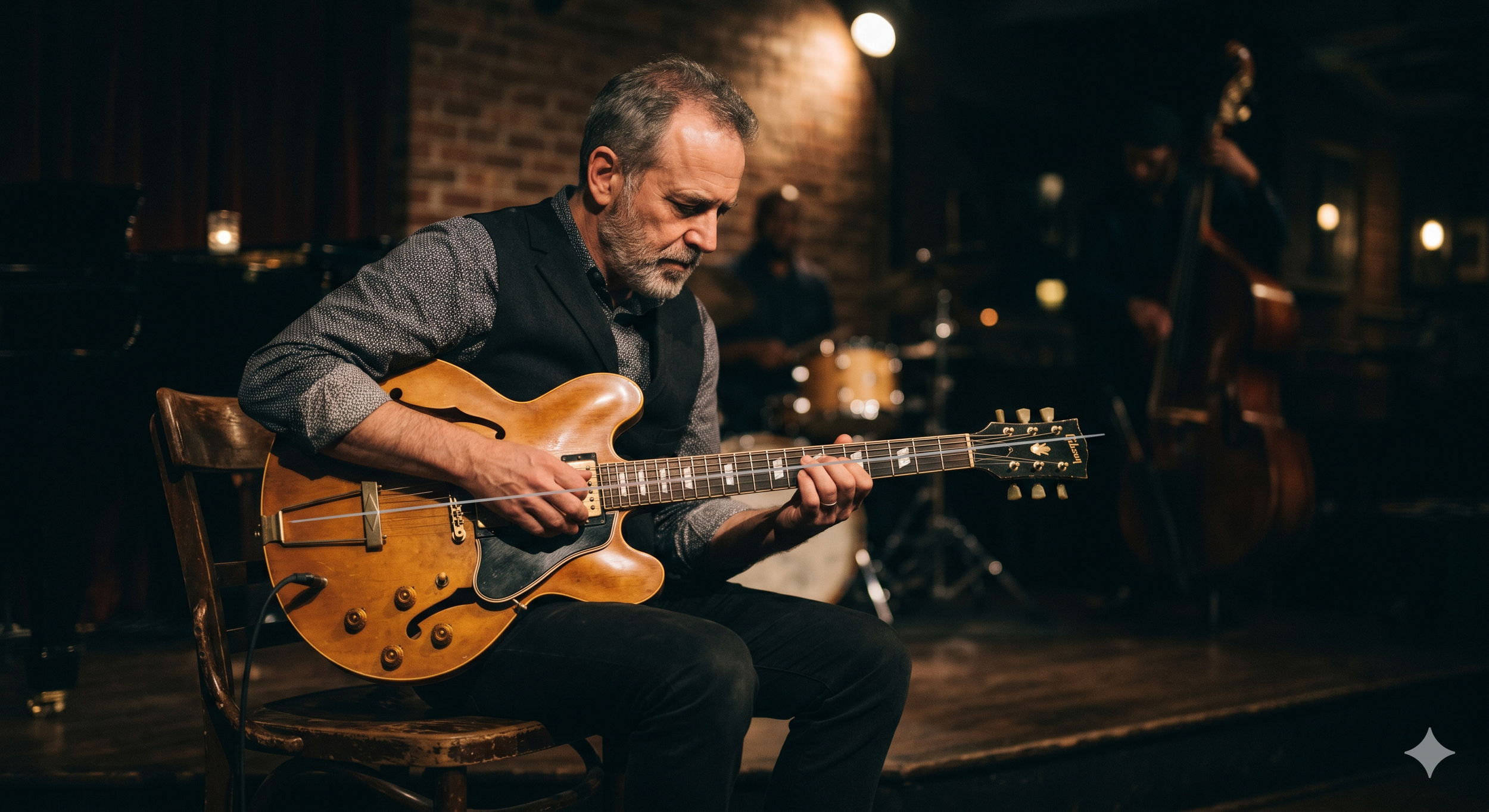
Why Jazz Guitar Uses the 6th Degree on the One Chord
In bebop and swing jazz, the tonic I chord is almost always treated as a sixth chord, not a major seventh chord — a practice rooted directly in how Charlie Parker and the swing-era players heard and played the one. This post explains the historical and harmonic logic behind this choice, why George Benson's signature I-chord phrase is built around the 6th degree, and what it means for jazz guitar improvisation and the Functional Diagonal Approach (FDA).

Ditch the Scales: Voicing-Centric Improvisation and Upper Structures
Still trying to calculate modes on the fly while soloing? It's time to stop over-analyzing. Discover why advanced jazz guitarists rely on functional voicing connections and Upper Structure Triads instead of rigid scale blocks to create fluid, spontaneous melodic lines.

Decoding Rhythm Changes: Raw Blues Instinct and the Genius of Jim Hall
As you advance in jazz guitar, you realize the ultimate mastery lies in duality. It’s about knowing when to unleash a relentless, raw blues attack over blistering Rhythm Changes, and when to cool the room down with the intellectual, spacious comping pioneered by Jim Hall. Learn how to equip yourself with both fire and ice.

Transcending the Fretboard: Chromatic Approaches and the Vocalist’s Mindset
Advanced guitarists often hit a plateau where solos feel like a typing exercise rather than a song. The culprit is "Guitar Logic"—relying on shapes rather than sounds. In this post, we explore how to adopt the mindset of a vocalist, using chromatic approach notes and the concept of "breath" to transform mechanical lines into soulful melodies.
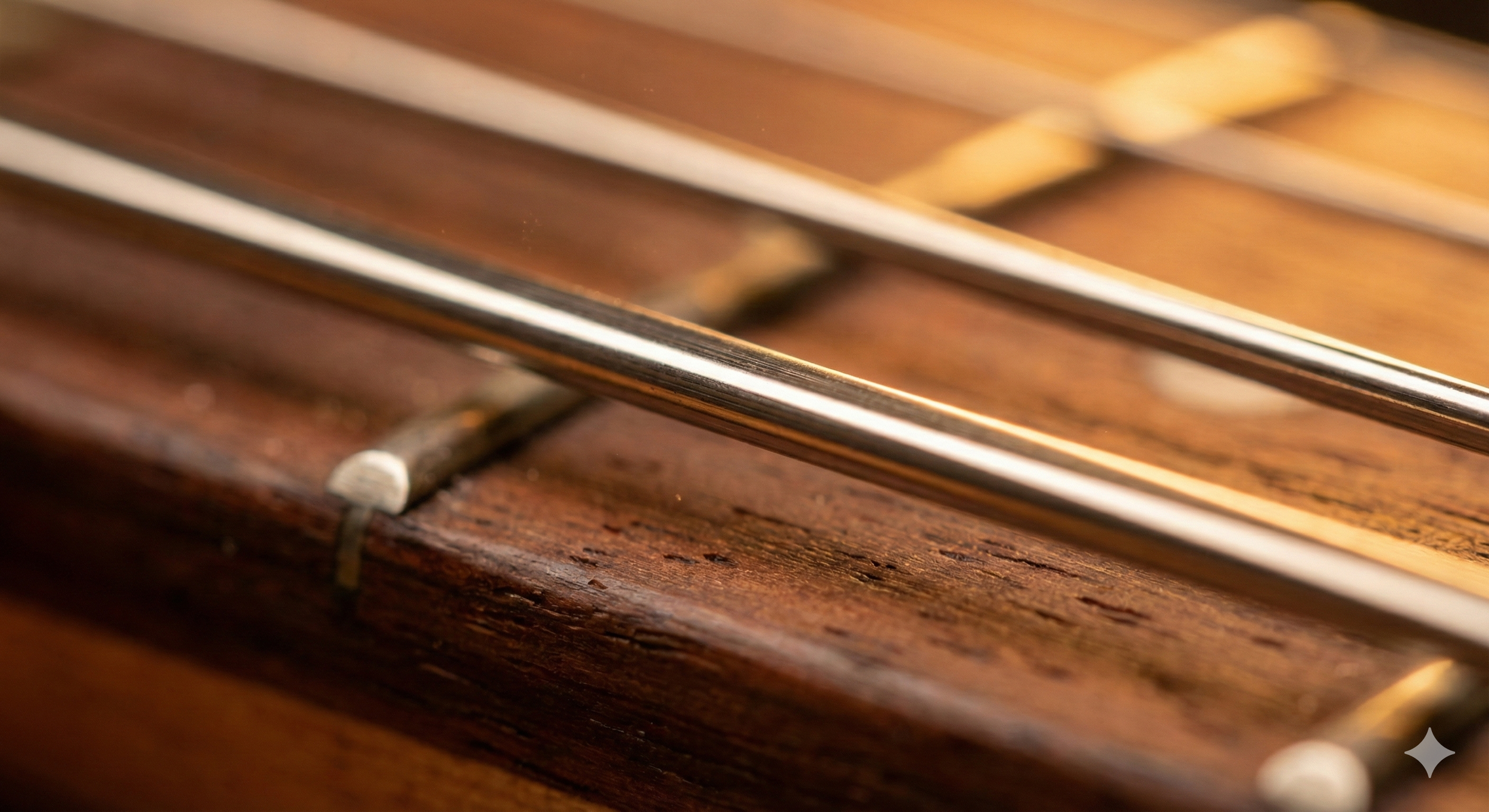
The Metamorphosis of Tone: A Comprehensive Guide to Flatwound Strings for Solid Body Guitars
If you are playing the right notes but your sound is too bright and aggressive, the culprit is likely your strings. Changing to Flatwounds is the single most transformative modification for a solid-body guitar. In this post, we explore the physics of the "thud" and provide a buyer's guide to D'Addario, Thomastik-Infeld, and Pyramid strings.
More Than Technique: Finding the "Blues" and the Art of Storytelling
George Benson, arguably the most technically gifted guitarist in history, understood that technique is not the same as "soul." He famously couldn't replicate Grant Green's unique time feel. From the importance of the Blues foundation to the psychoacoustic strategy of tuning slightly sharp (442Hz), learn why playing "music" matters more than playing notes.
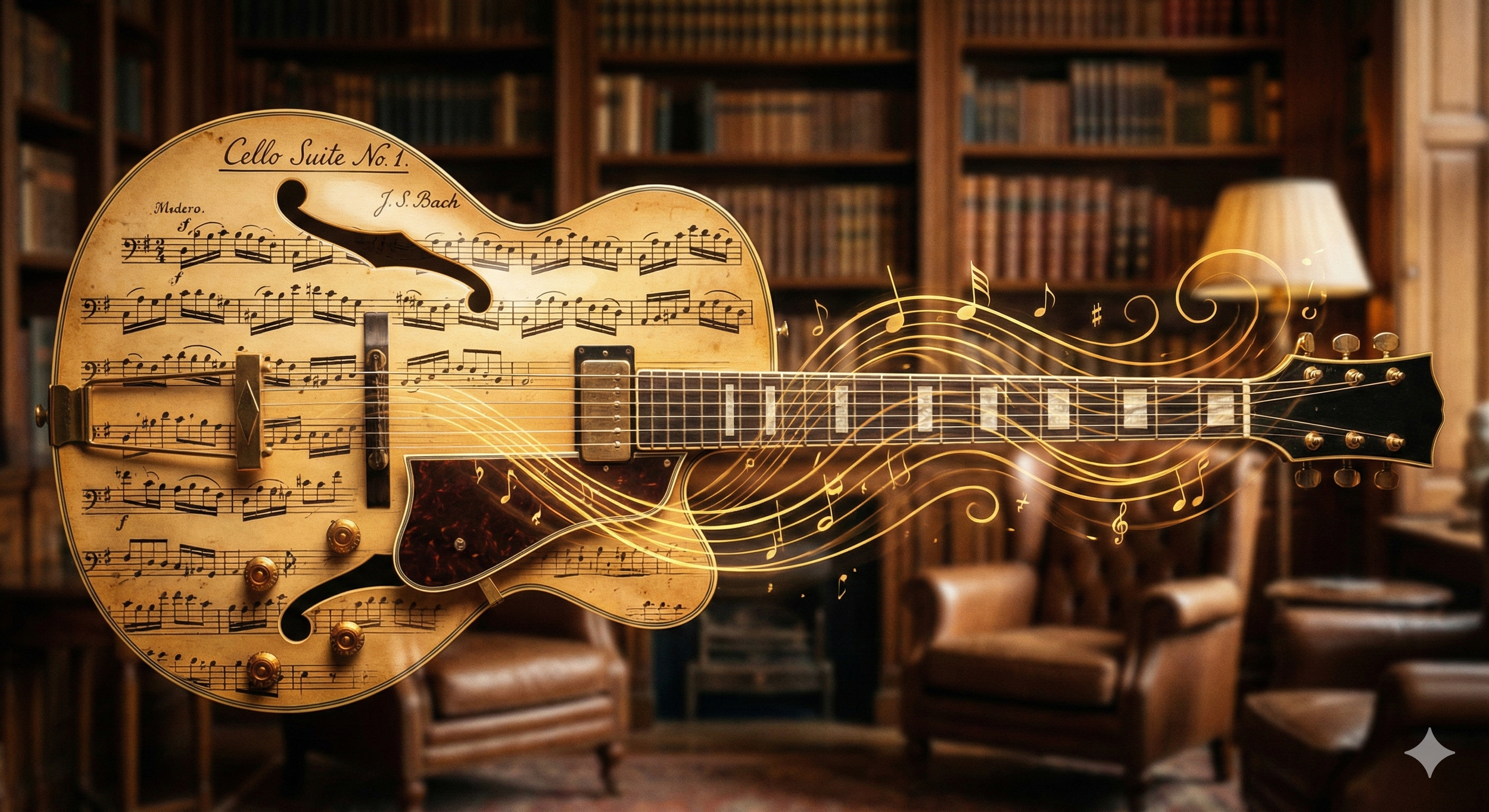
Beyond Bebop: Why J.S. Bach is the Ultimate Jazz Teacher for Guitarists
From George Benson to modern players, the link between Baroque music and Jazz is undeniable. But it’s not just history—it’s practical application. Bach is the ultimate teacher of "Implied Harmony." Learn how studying his works can train you to make a single note carry the weight of an entire chord progression, turning your solo lines into a self-contained orchestra.
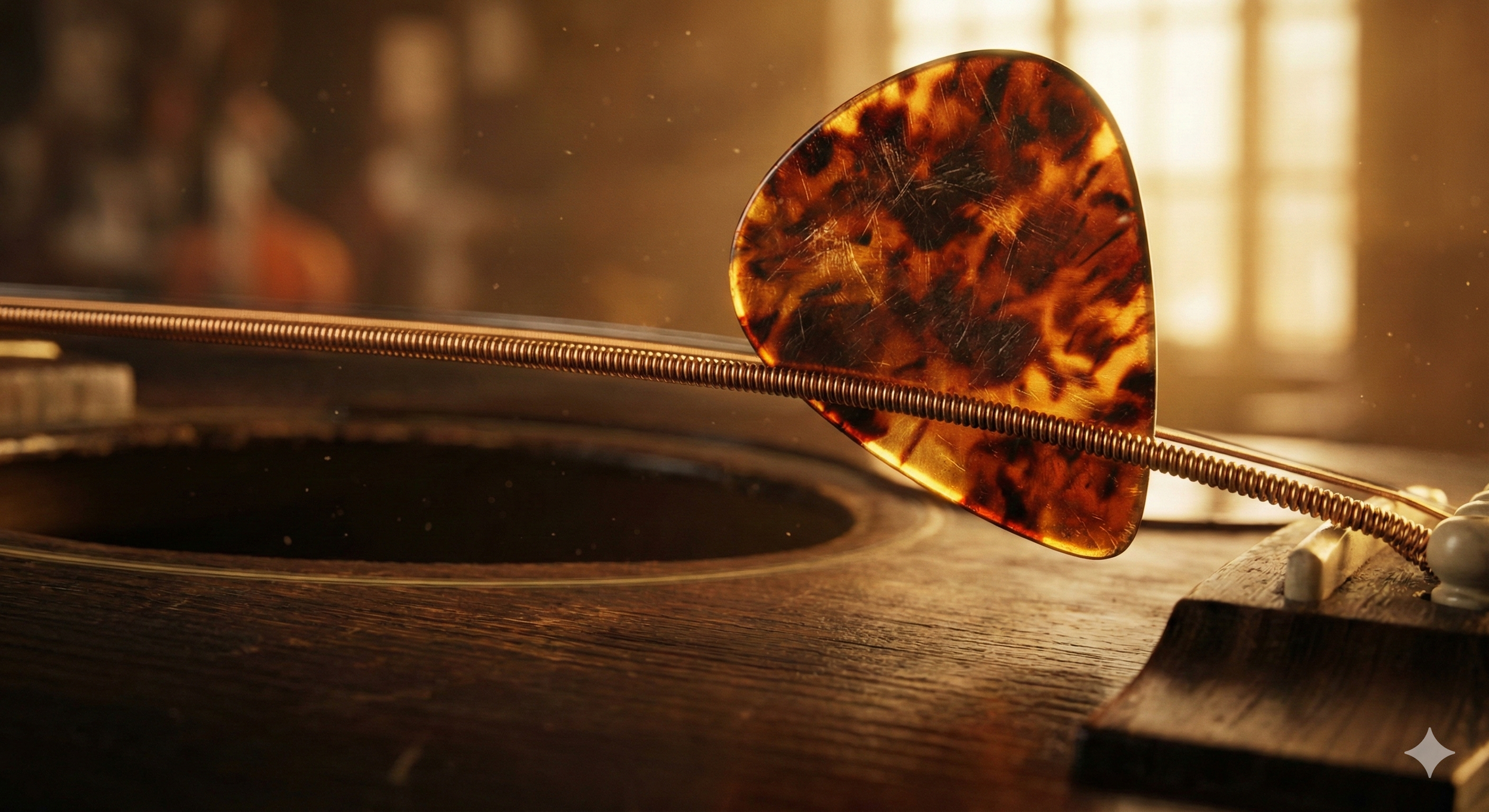
The Anatomy of Thick Tone: Decoding the Right Hand of George Benson and Grant Green
You might blame your amp, guitar, or cables for a thin tone, but the real culprit is your right hand. The secret to that thick, punchy sound of legends like George Benson isn't in a pedal—it’s in the physics of how you strike the string. Discover how the "Rest Stroke" drives energy into the guitar body to create maximum fundamental frequency and tone density.
How Many "Real" Songs Are in Your Repertoire? (And the Art of Lay-back)
If a bandleader asked the audience for someone who truly knows one standard—head, comping, solo, and outro—could you raise your hand? This post argues for repertoire first, theory second, and explains why real time feel (like Grant Green’s lay-back) only appears after you’ve fully internalized the song.
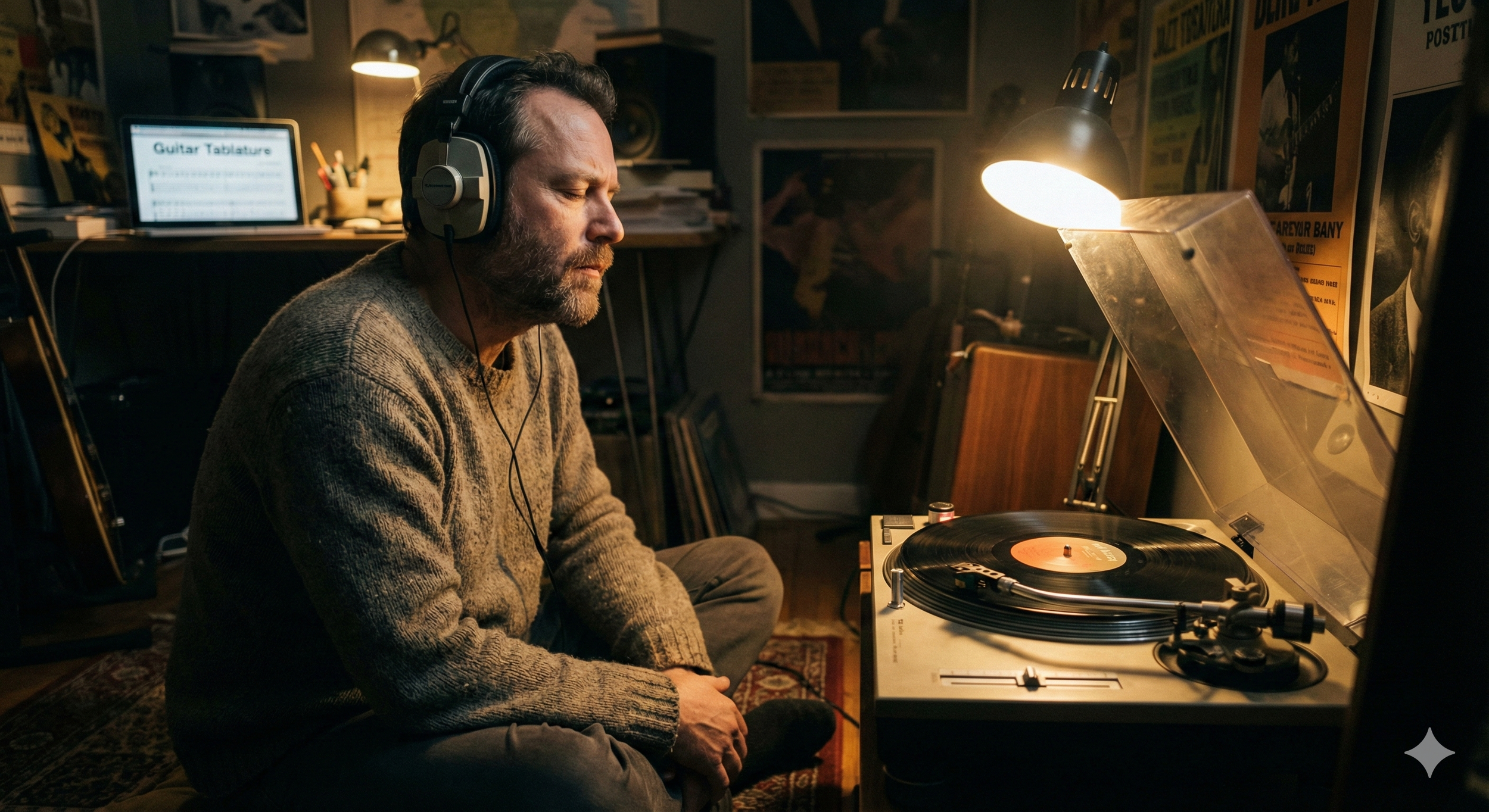
Can You Self-Teach Jazz? The Trap of Modern Convenience
"Is it possible to learn jazz on my own?" Yes, but modern convenience is a double-edged sword. Legends like George Benson didn't have YouTube; they had "survival mode" and their ears. Discover why closing your laptop and struggling with a record is the only way to truly master the language of jazz.
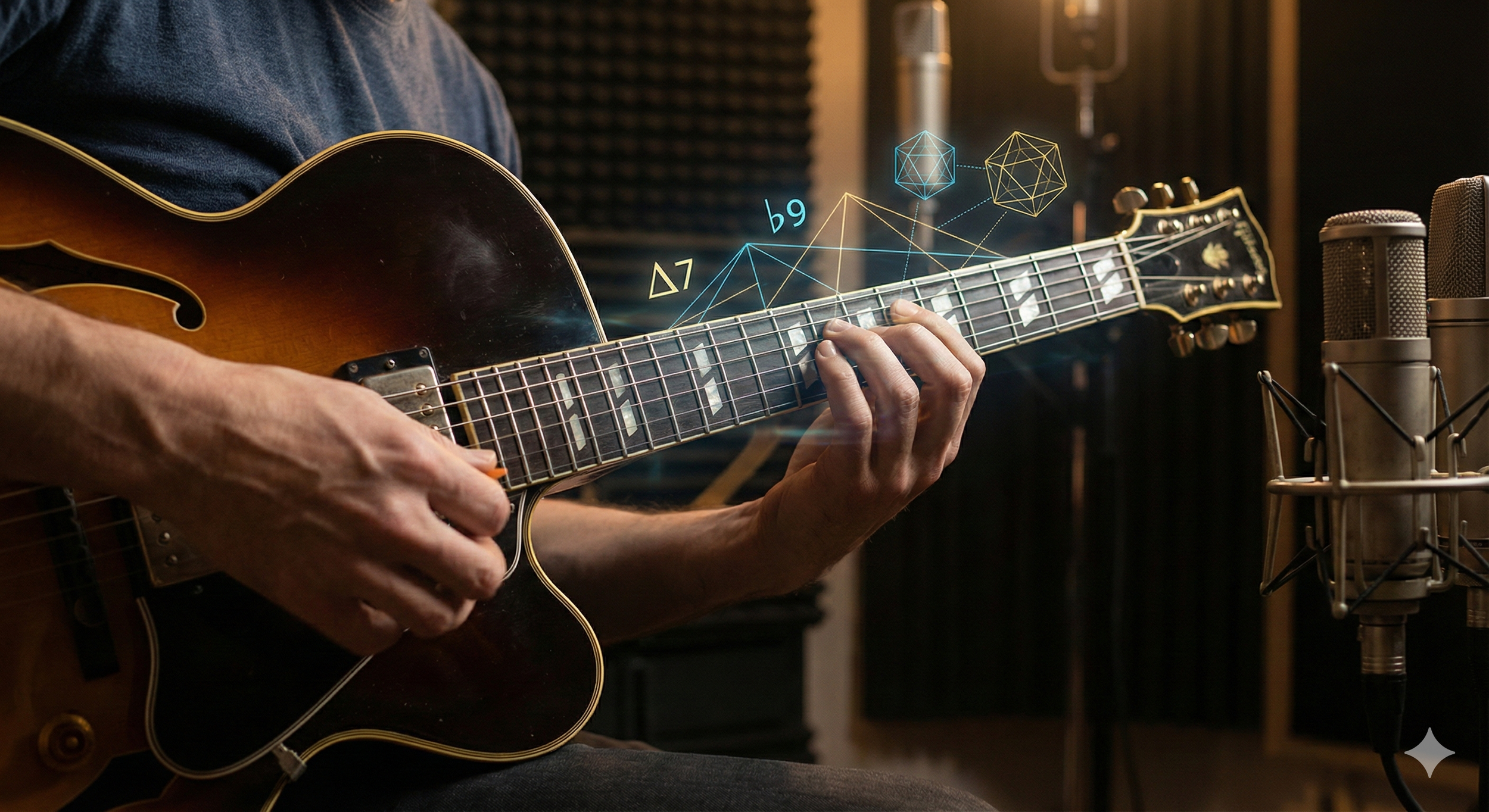
Decoding Wes: Upper Structures and Reverse Picking Mechanics
Advanced jazz guitar is not just about speed; it's about harmonic depth and physical mechanics. To truly sound like a pro, one must investigate the logic behind the legends. In this post, we deconstruct the "Db Major over Bb7" superimposition used by Wes Montgomery and analyze the unorthodox "negative angle" picking technique that defines the George Benson sound.
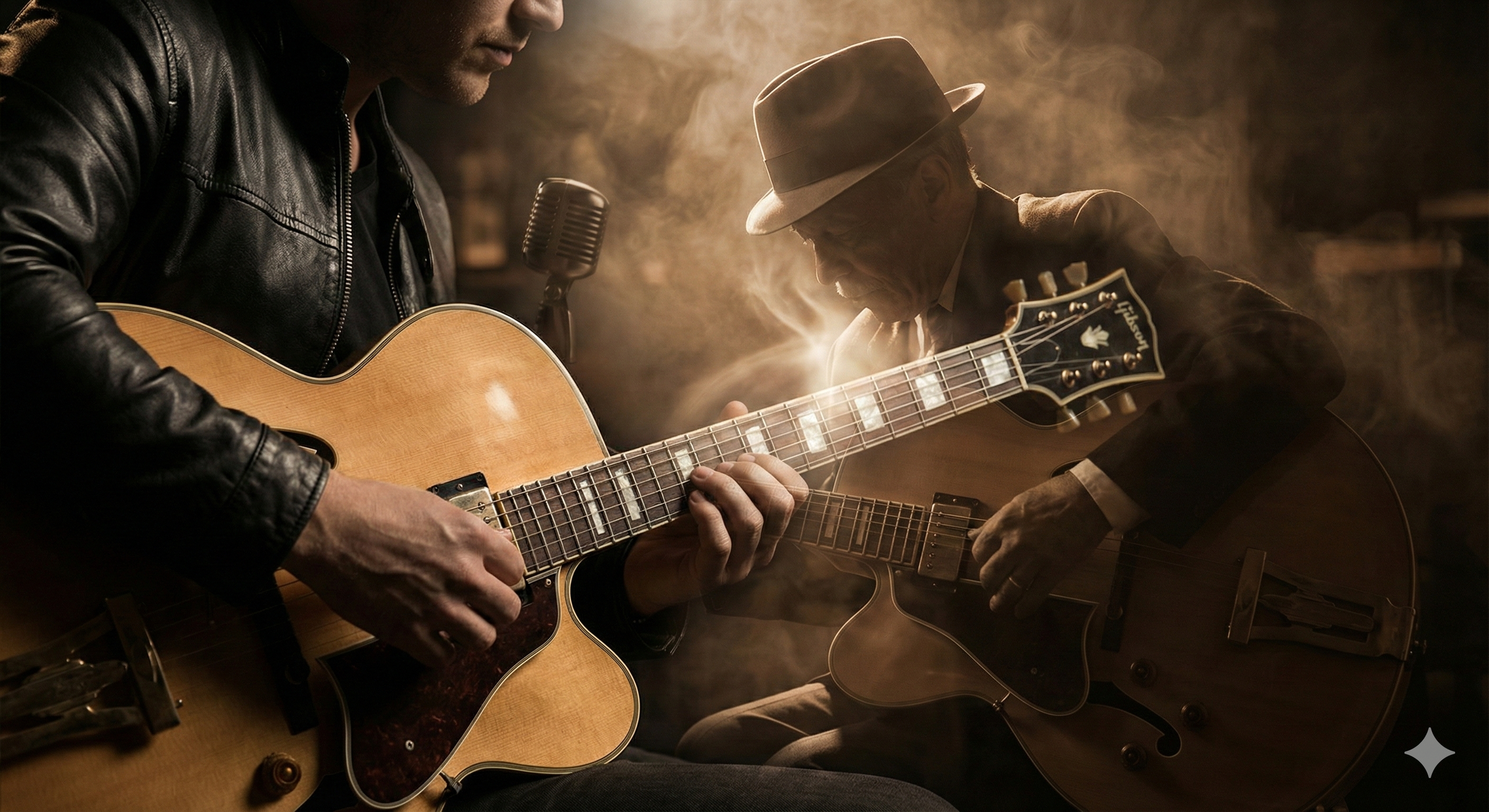
Finding Your Voice in the Shadow of Giants: Benson, Hall, and the Art of Copying
We aren't just learning notes; we are entering a conversation spanning decades. From the fiery blues of George Benson to the harmonic depth of Jim Hall, finding your future voice starts with understanding history. Discover why "copying" the masters is actually the fastest path to originality and how to turn transcription into synthesis.

Starting Jazz Guitar? Here’s Who You Must Listen to First (Feat. Wes Montgomery)
Wes Montgomery is the clearest starting point for anyone entering jazz guitar. His melodic clarity, harmonic depth, and iconic octave style form the perfect foundation for understanding the entire lineage of jazz guitar masters.
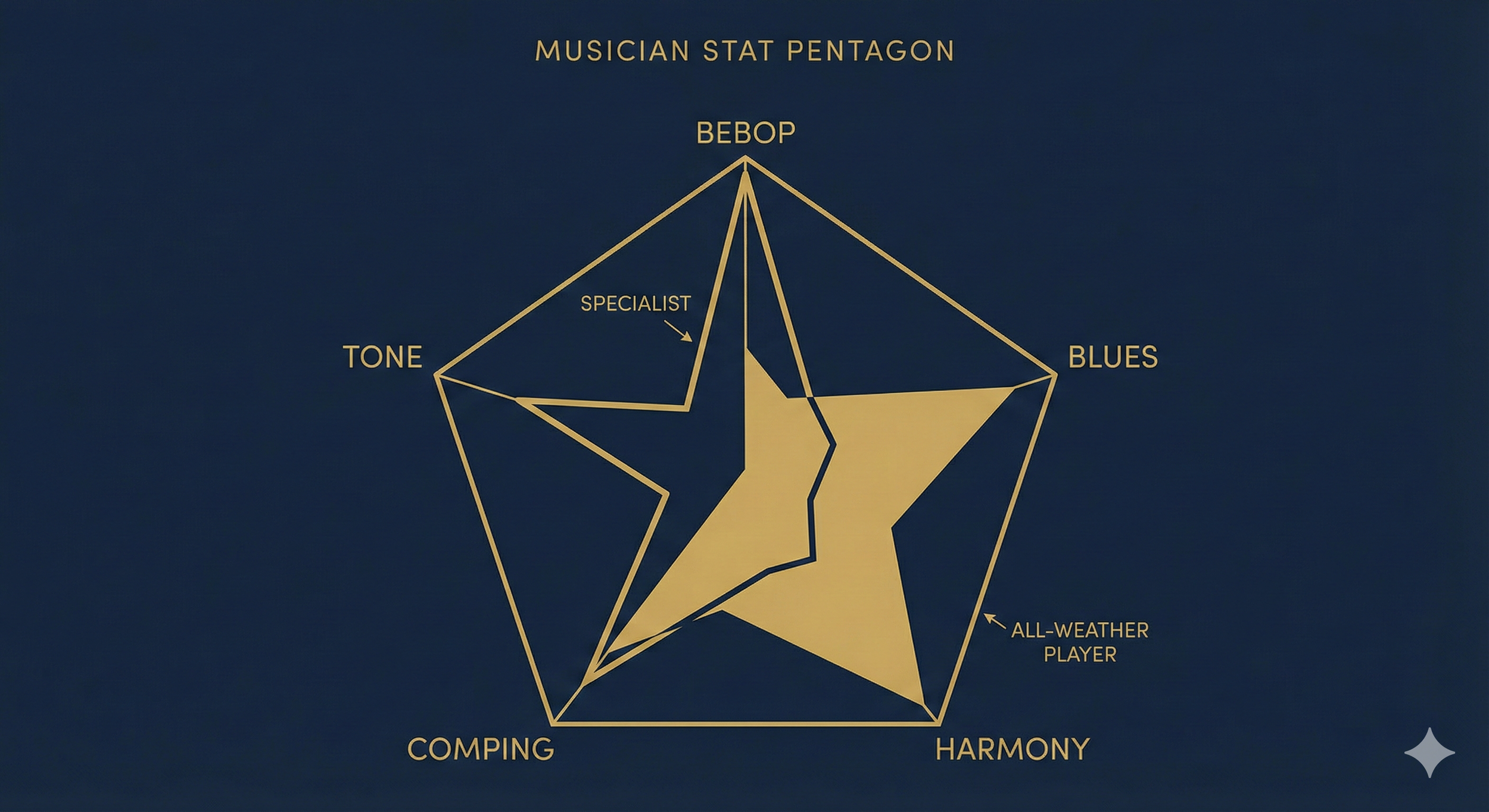
Beyond Lineage: The 'All-Weather Virtuoso' in Modern Jazz Guitar (A Jesse van Ruller Case Study)
Are you shaped more by the explosive bebop lineage of George Benson or the soulful, blues-driven school of Grant Green? This article explores how modern masters like Jesse van Ruller transcend lineage—becoming “all-weather” guitarists with fully developed musical spectrums.

Mastering the George Benson 'Rest Stroke' for Jazz Guitar
For many intermediate jazz guitar players, the quest for the perfect tone can feel like an endless journey of buying new pedals, amps, and guitars. We chase the warmth of Wes Montgomery or the fluid drive of Pat Metheny, but often overlook the most crucial element: the pick. If you're accustomed to alternate picking, the technique of the legendary George Benson offers... a profound opportunity to transform your tone and rhythmic feel.