
Transcending the Fretboard: Chromatic Approaches and the Vocalist’s Mindset
The Trap of "Guitar Logic"
Advanced guitarists often hit a plateau where their solos are theoretically perfect but emotionally sterile. We memorize scales, master arpeggios, and connect the dots on the fretboard, yet the result often sounds like a typing exercise rather than a song. This phenomenon occurs when we rely on "visual logic" (shapes/patterns) rather than "aural logic."
Based on the deep-dive discussion in our transcript regarding There Will Never Be Another You and chromatic concepts, we explore how to break these mechanical habits by adopting the mindset of a vocalist.
If you’re working on thinking beyond the fretboard and toward a more vocal, melodic approach, Building Blocks lays the groundwork for exactly this kind of thinking.
If you want a structured way to apply this discipline, see How to Build a Jazz Guitar Practice Routine in 10-Minute Blocks.
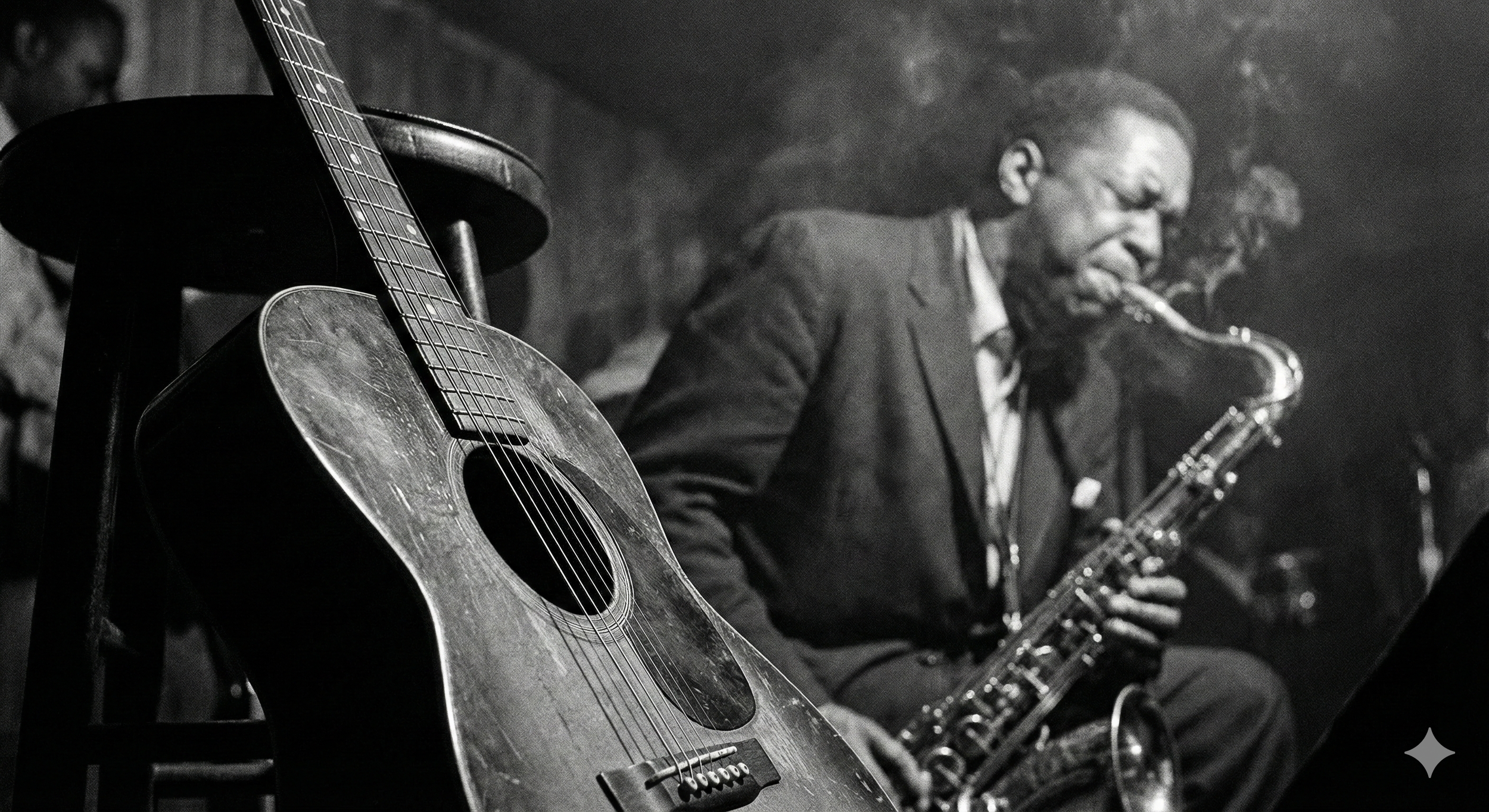
Main Concept: Targeting and Breath
Chromatic Approach notes are not just "filler" between chord tones; they are the connective tissue that creates forward motion. When analyzing tunes with complex harmonic rhythms, the goal is to identify a Target Note (usually a 3rd or 7th of the next chord) and approach it from a half-step above or below. This creates tension and release—the heartbeat of jazz.
However, the best way to master this is not through guitar books, but through Transcription of Vocalists:
Ella Fitzgerald: As discussed, her scat singing was essentially bebop horn lines performed with the human voice. Copying her phrasing forces you to incorporate breath. Unlike guitarists who can wiggle their fingers indefinitely, singers must breathe. Mimicking this creates natural pauses and phrasing that makes your solos "speak" rather than "run."
George Benson & Chet Baker: Benson’s technique of scatting in unison with his guitar lines proves a vital point: if you can't sing it, it probably isn't melodic. Copying the lyrical articulation of Chet Baker or the rhythmic scat of Benson forces you to abandon comfortable guitar box shapes in favor of musicality.
Louis Armstrong: The transcript touches on the legend that scat singing was invented when Armstrong dropped his sheet music during a recording. This embodies the jazz spirit—turning a "mistake" into a new form of expression.

Summary
To play better guitar, stop thinking like a guitarist. Start thinking like a horn player or a singer. Use chromatic notes to target chord tones with intention, and use the concept of "breath" to structure your phrases. Your fingers should serve your ears, not the other way around.
For advanced improvisation workshops and detailed articulation studies, join us at VoiceLidJazzGuitar.com.