

The Weight of a Musician’s Life and Finding Solace in Kenny Burrell’s "Lotus Blossom"
The life of a musician isn't just spotlights and applause; it's often filled with heavy silence and burnout. When the endless cycle of practicing and social media shredding leaves you spiritually exhausted, it's time to put down the pick. Discover the profound healing power of a single, honest note and find solace in Kenny Burrell’s masterpiece, "Lotus Blossom."
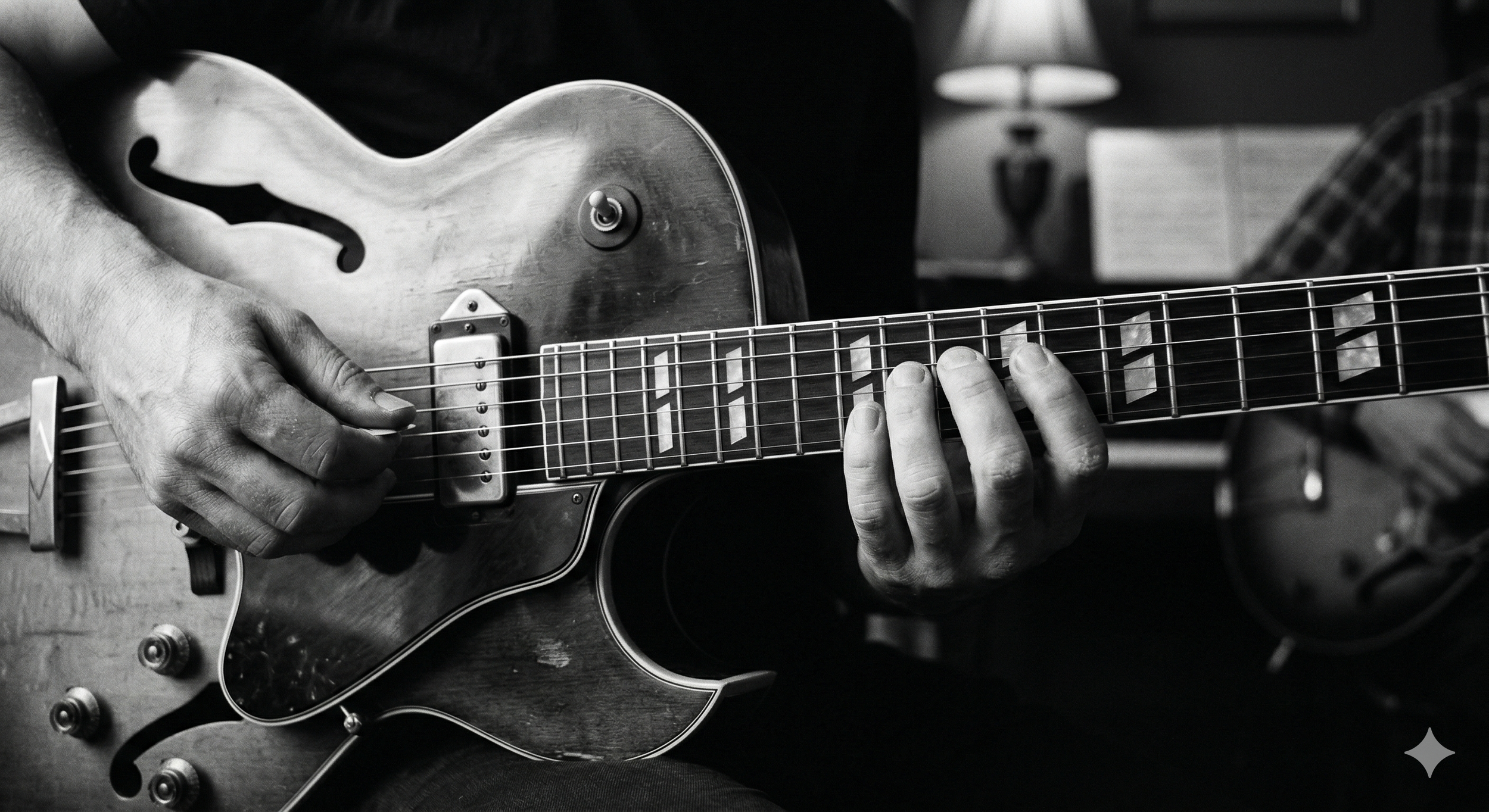
How to Build a Jazz Guitar Practice Routine in 10-Minute Blocks
Discover how to structure your daily jazz guitar practice using manageable 10-minute blocks. Learn why breaking out of box shapes and listening to voice leading will transform how you navigate the fretboard.
Decoding Rhythm Changes: Raw Blues Instinct and the Genius of Jim Hall
As you advance in jazz guitar, you realize the ultimate mastery lies in duality. It’s about knowing when to unleash a relentless, raw blues attack over blistering Rhythm Changes, and when to cool the room down with the intellectual, spacious comping pioneered by Jim Hall. Learn how to equip yourself with both fire and ice.

The Musician’s Triad: Balancing Practice, Jamming, and the Stage
You’ve memorized your scales and can play great over YouTube backing tracks, but your mind goes blank playing with real musicians. This is the fatal trap of the bedroom guitarist. Discover why balancing Practice, Jamming, and Gigging is the ultimate key to explosive musical growth.

Bridging Fretboard Gaps Between Linear Arpeggio Shapes
It is easy to feel stuck when navigating the blank spaces between familiar arpeggio shapes on the guitar neck. Learn how to bridge these fretboard gaps by targeting the third of the chord to create seamless linear connections.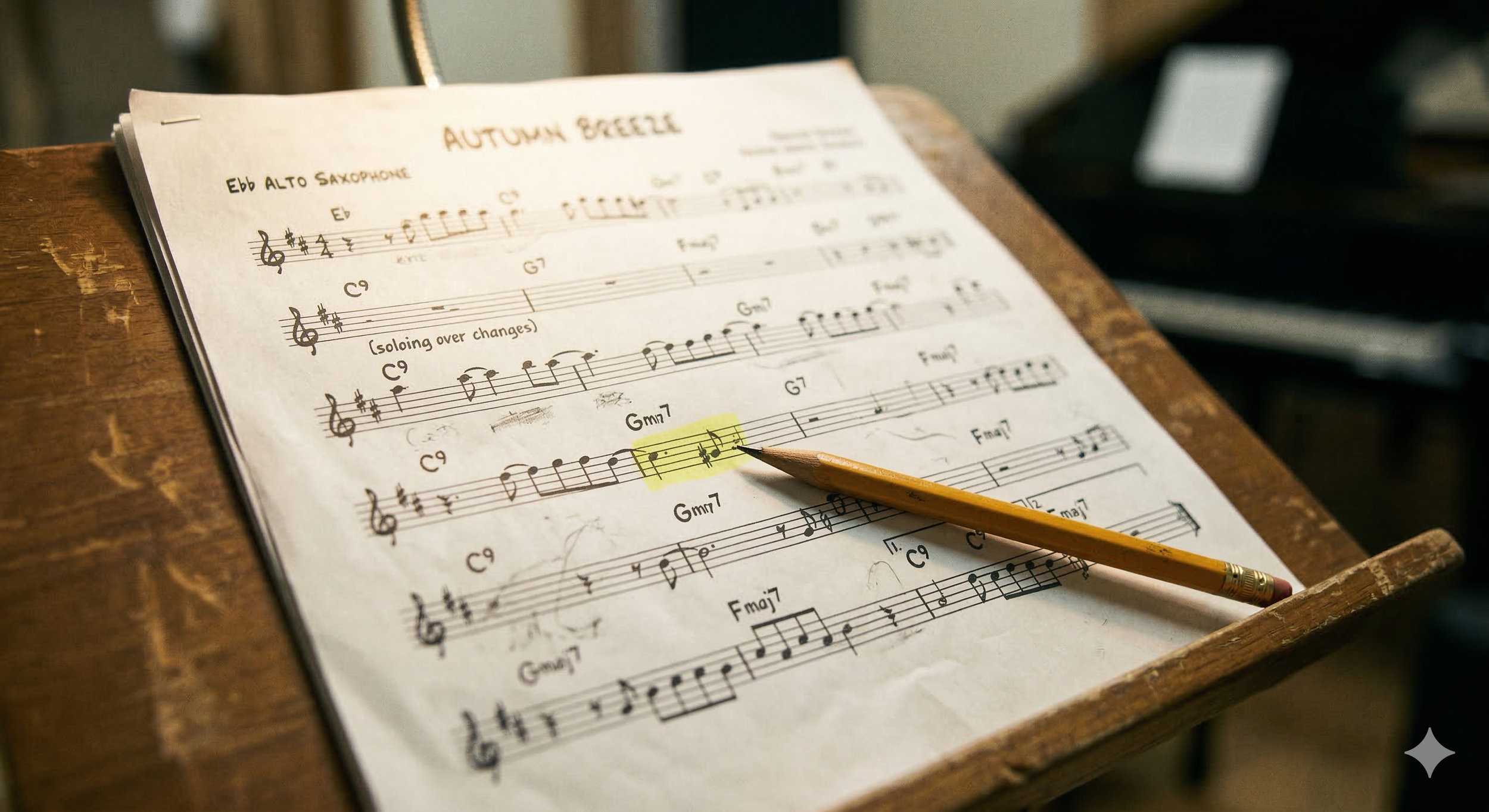
Mapping Tonic and Non-Tonic Movement in Standards
Guide tones provide a built-in roadmap for navigating complex key changes and turnaround sections. See how observing the movement of the fourth degree reveals whether a progression is resolving or building tension.
Why Aspiring Solo Guitarists Must Master the Trio Mindset First
The fastest way to master solo jazz guitar isn't by locking yourself in a room with six strings. It's by understanding the architecture of a jazz trio. Discover why mentally conducting a bassist and drummer is the secret to unlocking true solo freedom.

Is Jazz the Classical Music of the 21st Century? Reflections on 1959, Debussy, and Ravel
Listening to modern players reminds me of classical impressionists like Debussy." This observation opens the door to the "Classicalization" of Jazz. We explore how the year 1959 changed the genre forever, transforming it from functional dance music into a sophisticated art form that mirrors the harmonic depth of Ravel and Debussy, all while maintaining the vital spark of improvisation.
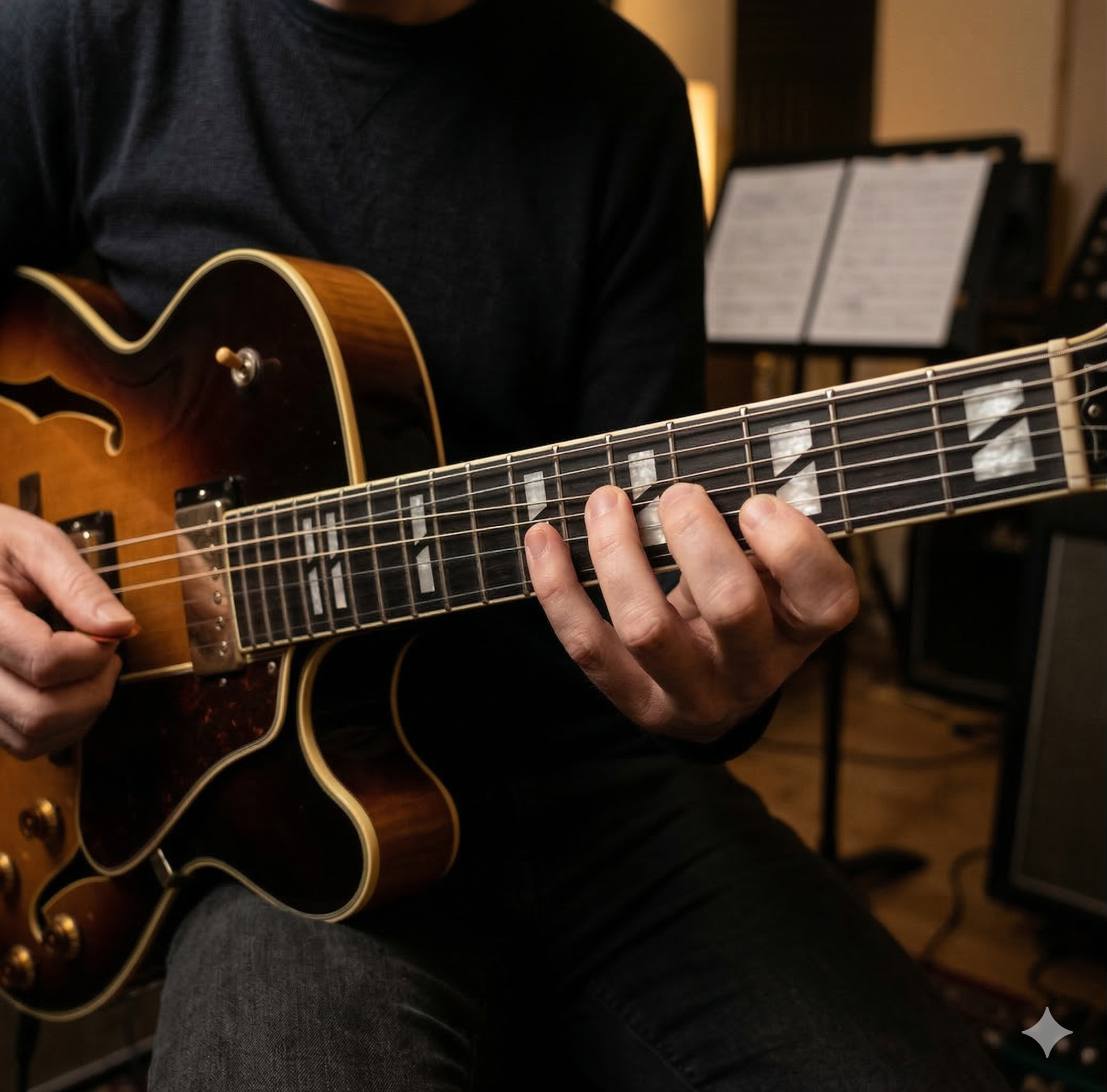
Comping and Soloing Safely with Drop 2 Voicings
Balancing Drop 2 voicings with single-line soloing can be overwhelming if you do not know where to place them. Find out how to safely comp for yourself or another soloist without muddying the mix.
Turning Guide Tones and Upper Structures into Melodic Lines
Learn how to transform static guide tones into flowing melodic lines using upper structures. This lesson breaks down the exact fretboard logic used by Charlie Christian and Wes Montgomery.
Transcending the Fretboard: Chromatic Approaches and the Vocalist’s Mindset
Advanced guitarists often hit a plateau where solos feel like a typing exercise rather than a song. The culprit is "Guitar Logic"—relying on shapes rather than sounds. In this post, we explore how to adopt the mindset of a vocalist, using chromatic approach notes and the concept of "breath" to transform mechanical lines into soulful melodies.

The Magic Number 11: Expanding Minor Chord Voicings for Depth and Color
As intermediate players, we often get trapped in "safe" muscle memory, playing the same Cm7 shape we learned on day one. But the secret to a professional, modern sound lies in breaking free. In this lesson, we explore the harmonic safety of the Minor 11th tension—why it creates a beautiful "floating" quality unlike the major 11th—and how to instantly apply it to your playing using shell voicings.

Turning Static Scale Patterns into Dynamic Jazz Lines
Knowing your scales and arpeggios isn't enough if you run out of time. Learn to anchor your improvisational lines using guide tones and chord melody shapes.
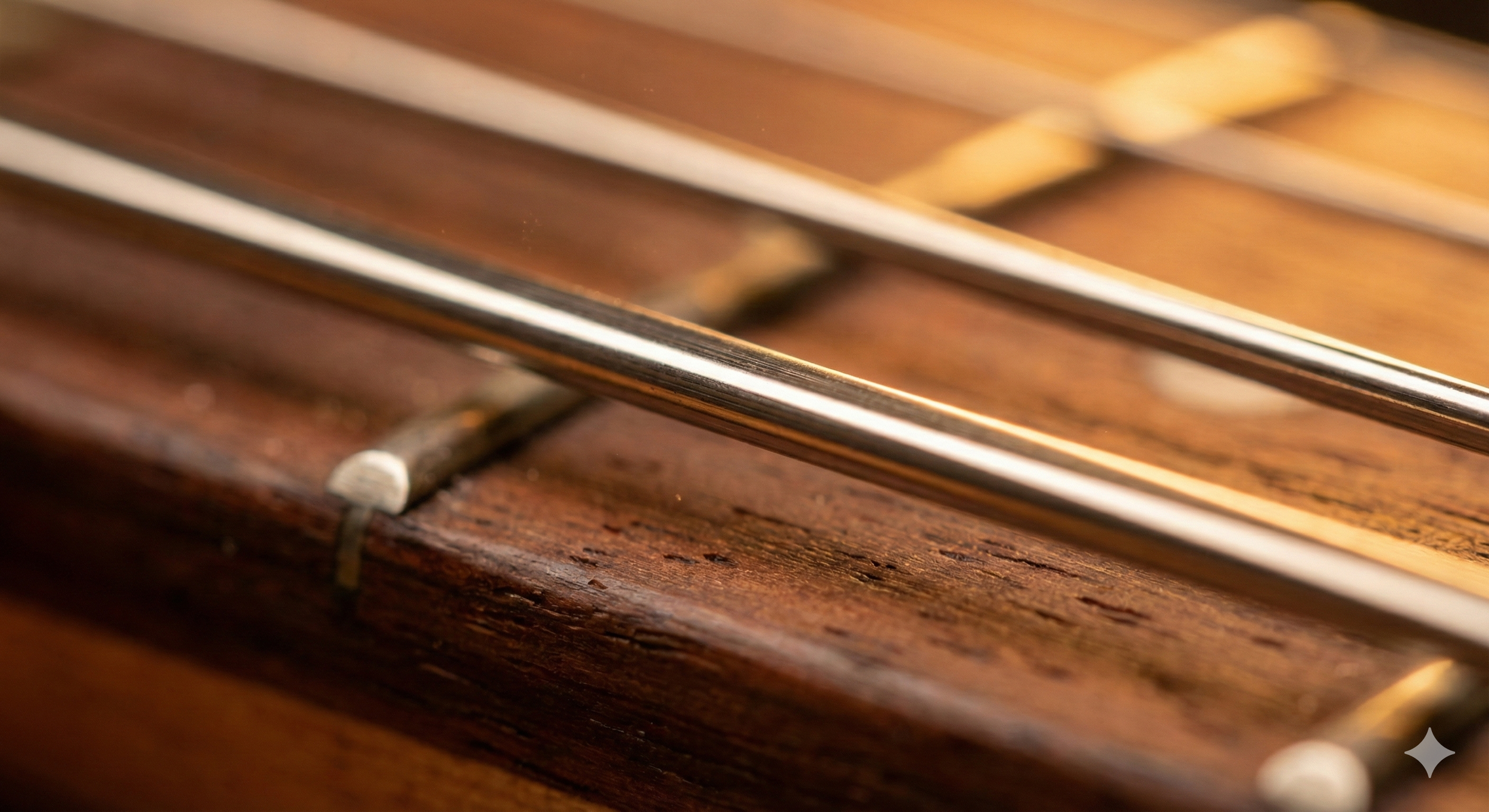
The Metamorphosis of Tone: A Comprehensive Guide to Flatwound Strings for Solid Body Guitars
If you are playing the right notes but your sound is too bright and aggressive, the culprit is likely your strings. Changing to Flatwounds is the single most transformative modification for a solid-body guitar. In this post, we explore the physics of the "thud" and provide a buyer's guide to D'Addario, Thomastik-Infeld, and Pyramid strings.

More Than Technique: Finding the "Blues" and the Art of Storytelling
George Benson, arguably the most technically gifted guitarist in history, understood that technique is not the same as "soul." He famously couldn't replicate Grant Green's unique time feel. From the importance of the Blues foundation to the psychoacoustic strategy of tuning slightly sharp (442Hz), learn why playing "music" matters more than playing notes.
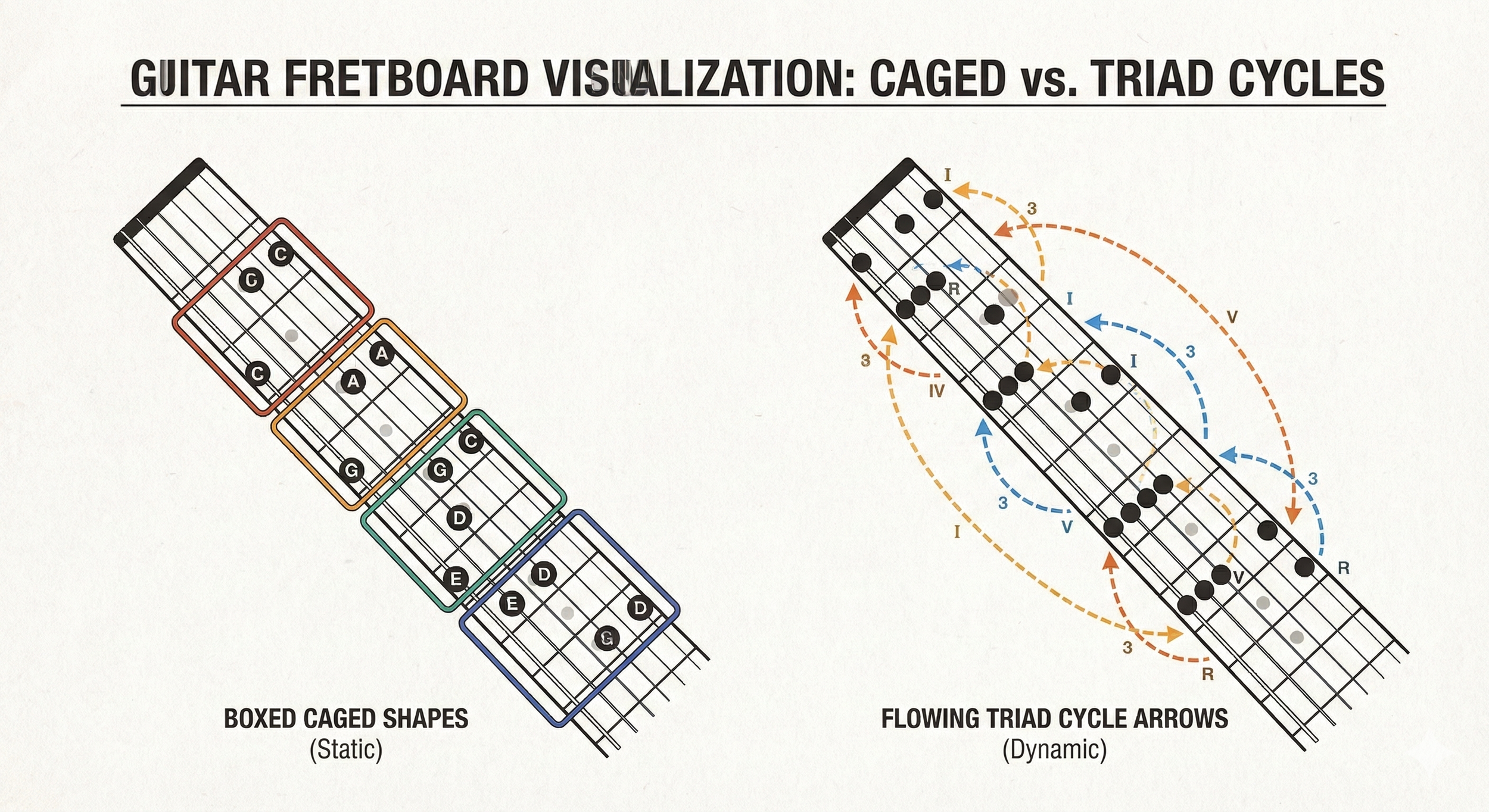
CAGED System vs. Triad Cycles: Which is Better?
The CAGED system is a popular starting point, but it has limits. Learn why practicing triad cycles reveals fretboard areas that CAGED misses.

Why Connecting Scale Shapes Won’t Help You Play Jazz Changes
Scales are just the alphabet, but they are not the story. Learn why voice leading and shell voicings are the true key to navigating chord progressions.

Beyond Bebop: Why J.S. Bach is the Ultimate Jazz Teacher for Guitarists
From George Benson to modern players, the link between Baroque music and Jazz is undeniable. But it’s not just history—it’s practical application. Bach is the ultimate teacher of "Implied Harmony." Learn how studying his works can train you to make a single note carry the weight of an entire chord progression, turning your solo lines into a self-contained orchestra.

Stop Playing Like a Typewriter: The 3-Finger System and Diagonal Phrasing
You’ve memorized the scales, yet your bebop lines still sound like a typewriter—rigid and devoid of swing. The problem is "vertical playing." Discover how legends like Wes Montgomery used the 3-Finger System and diagonal movement to break out of static boxes and make their guitar lines breathe like a saxophone.

Overwhelmed by Extensions? Let the Melody Decide
Should you build a triad off the 3rd, 5th, or 7th? The answer isn't random. The melody dictates your harmony.