

Escaping the Root Trap: The Art of Guide Tone Mapping for Beginners
Are your jazz chords sounding heavy and amateurish? You might be falling into the "Root Note Trap." Discover why leaving the low notes to the bassist and focusing on the structural power of 3rds and 7ths is the secret to a professional, breathing jazz sound.

Embracing Imperfection: Lessons from a Wedding Performance Disaster
Social media shows us the highlight reels, but real jazz happens in the recovery. From a chaotic wedding performance to the practice room, discover why connection matters more than perfection in this heartwarming Sunday insight.
Wes Montgomery’s Secret to High-Register Arpeggios
Wes Montgomery didn't reinvent the wheel for high notes; he used diagonal displacement. Discover how to reuse shapes for octave lines.
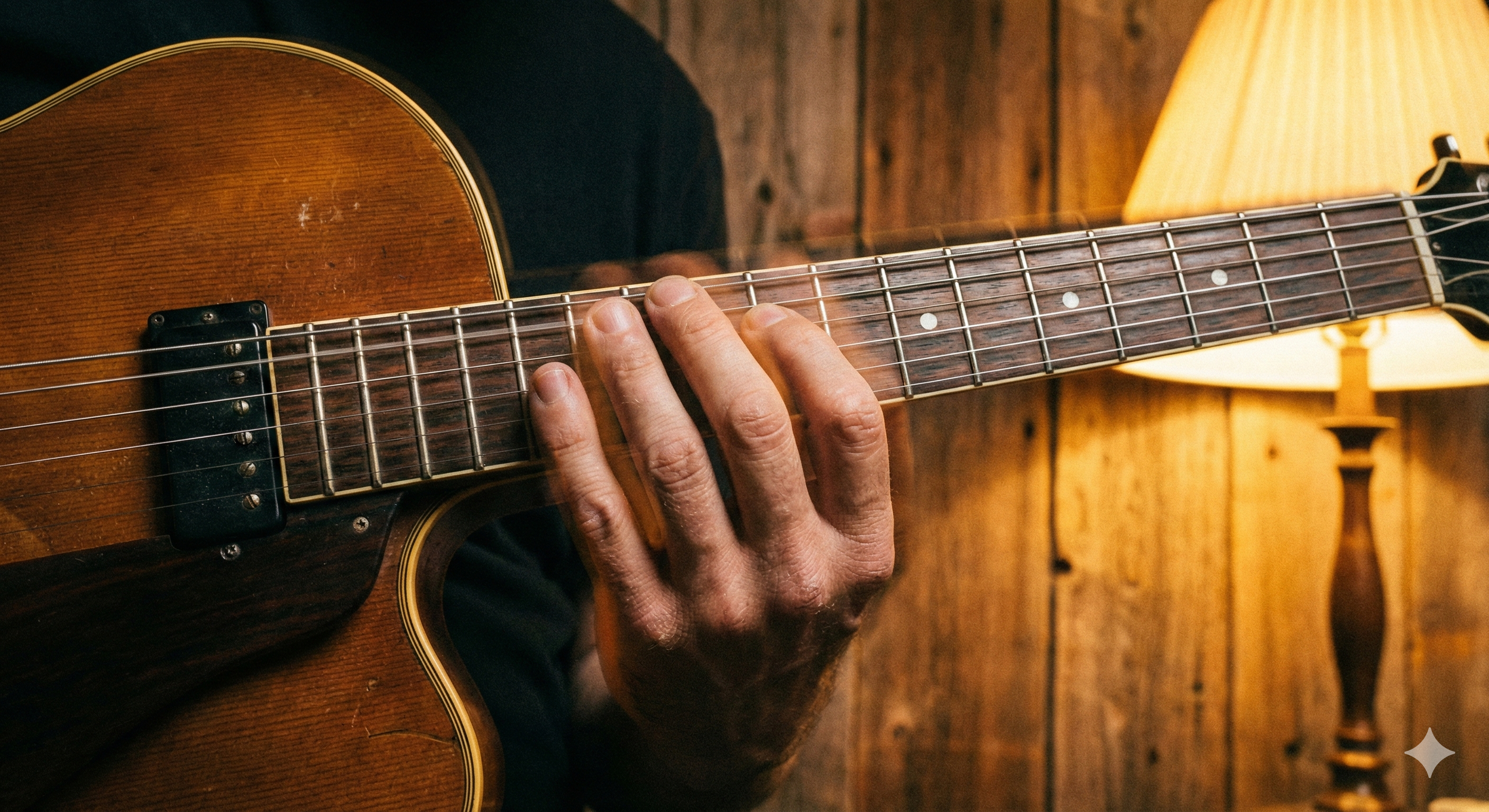
Stop Thinking Static Chords: Use Sliding Intervals for Upper Structures
Upper structures aren't just static shapes; they are movements. Learn how to use sliding intervals to navigate the neck fluidly.
Beyond Theory: Target Notes and Visualizing Sound Colo
In the heat of improvisation, mental calculus is a burden, not a tool. Discover why masters prioritize "Sound Color" over scale names, and learn how to use the Target Note method to bridge the gap between your brain and your ears.
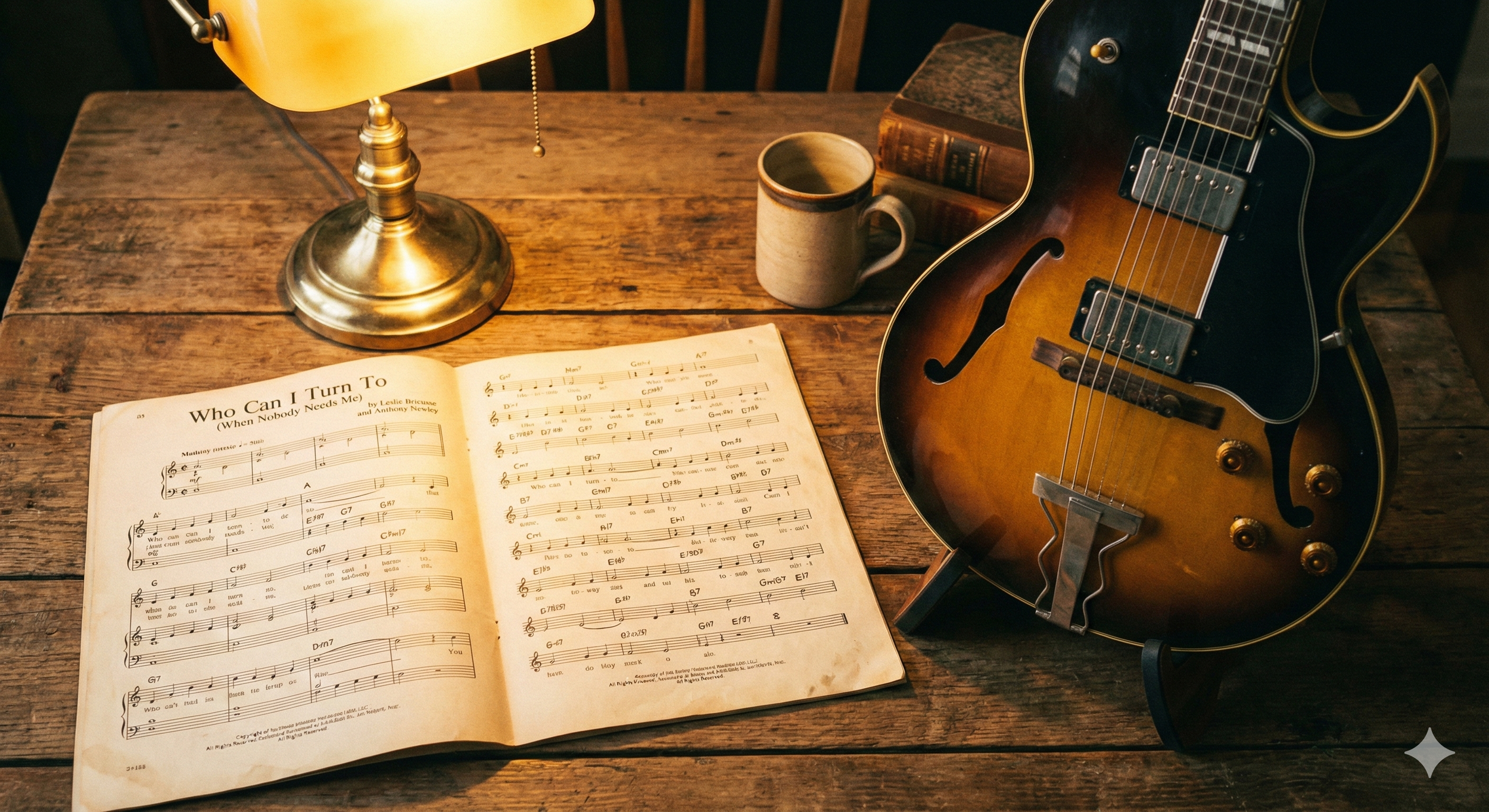
Jazz Standard Analysis: Who Can I Turn To
We break down strategies for navigating the jazz standard 'Who Can I Turn To,' focusing on melody, upper structures, and key centers.

Mastering Comping: Abandoning Flash for the Art of Space
Instead of praise for your complex chords, do you hear pleas to "play less"? The harsh reality is that the guitar fights for sonic space. Discover how to fix muddy tone using Shell Voicings and the art of silence.
How to Fix Your Rhythm Between Guide Tones
Connecting guide tones can be rhythmically challenging. Here is a simple permutation exercise to help you fill the gap between the 3rd and 7th.
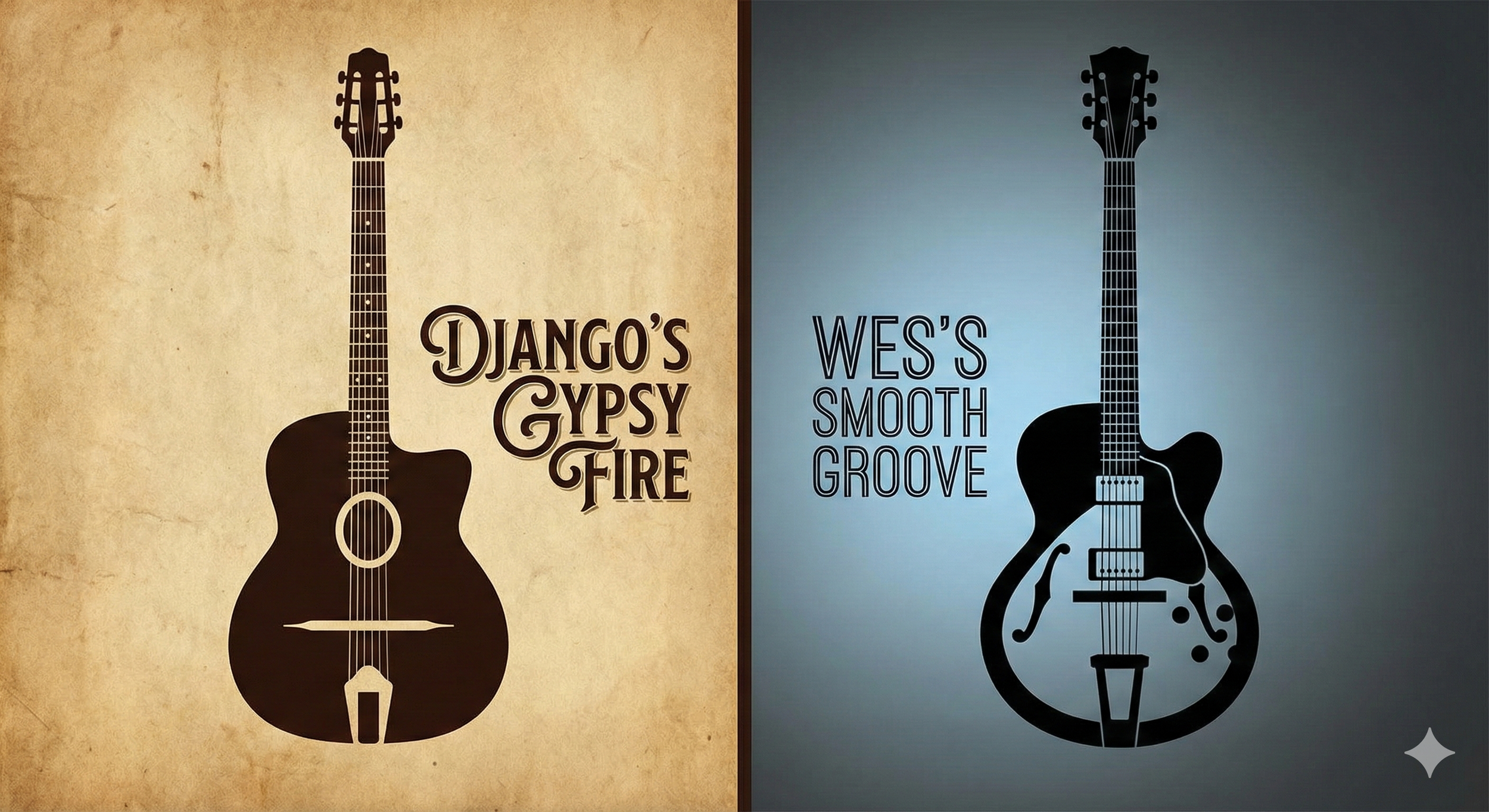
Django Line vs. Wes Line: Understanding the Difference
Ed asks if the Django Line and Wes Line are interchangeable. The answer lies in voice leading and understanding tonic vs. non-tonic function.
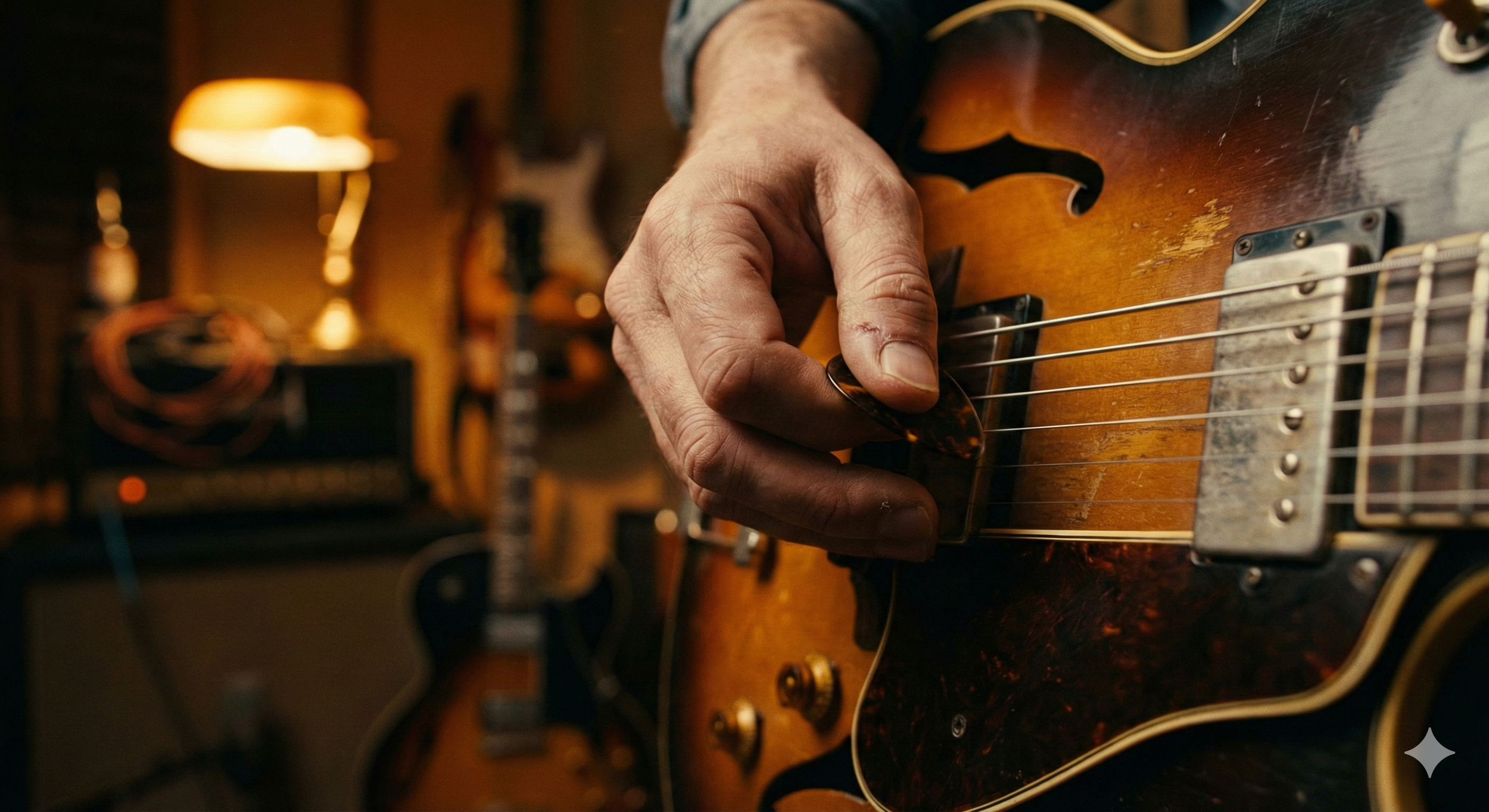
The Physics of Jazz Tone: Pick Thickness and the Rest Stroke
Why doesn't my guitar sound like the records? The answer might be in your fingertips. Discover how pick thickness and the "Rest Stroke" technique can transform your sound from thin to warm and punchy.
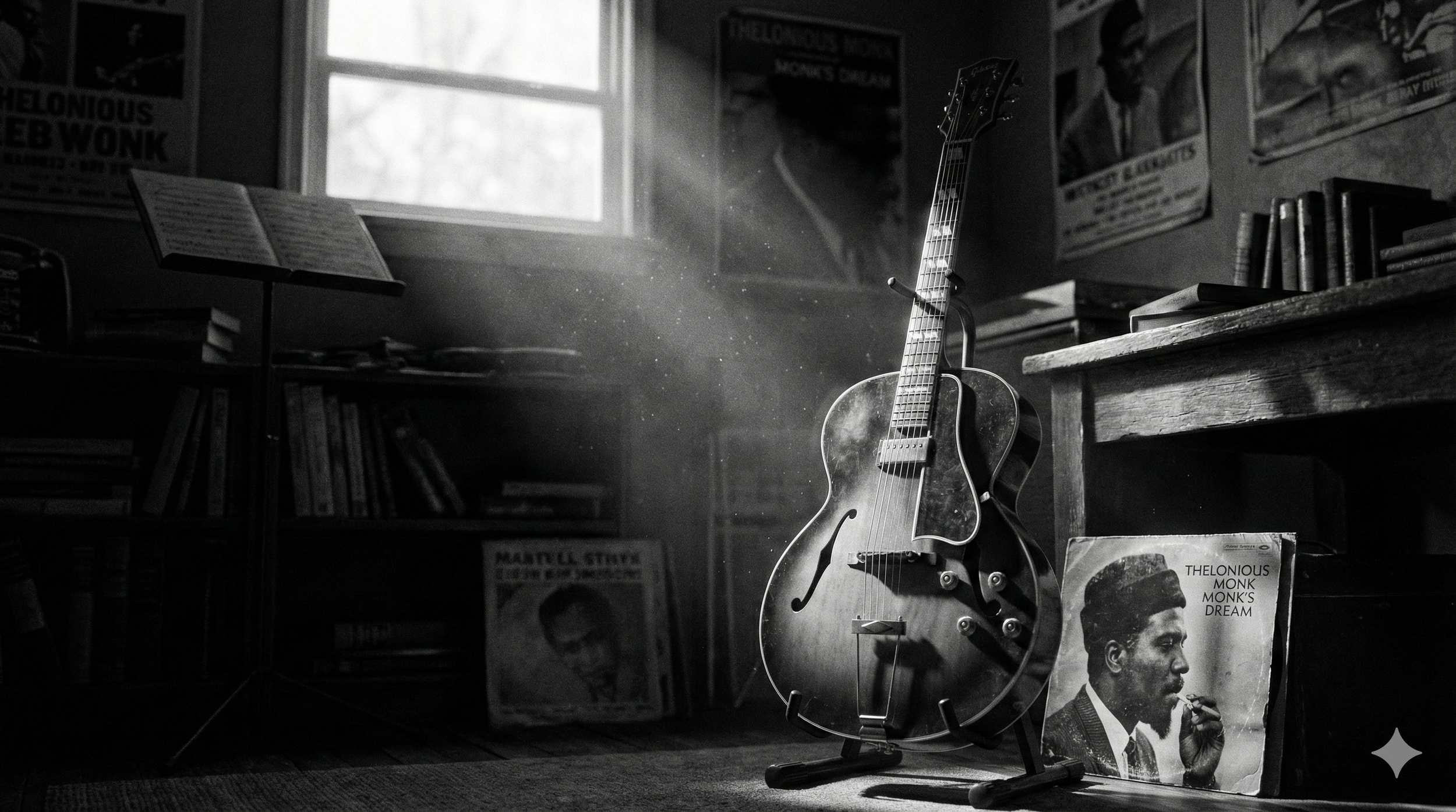
The Legacy of Monk & Duke: Why Finding Your Own Voice Matters More Than Technique
"Who is the most important figure in jazz?" My professor's answer surprised the whole class. We explore the genius of Duke Ellington and Thelonious Monk, and why true artistry is about intent, not just speed or technique.
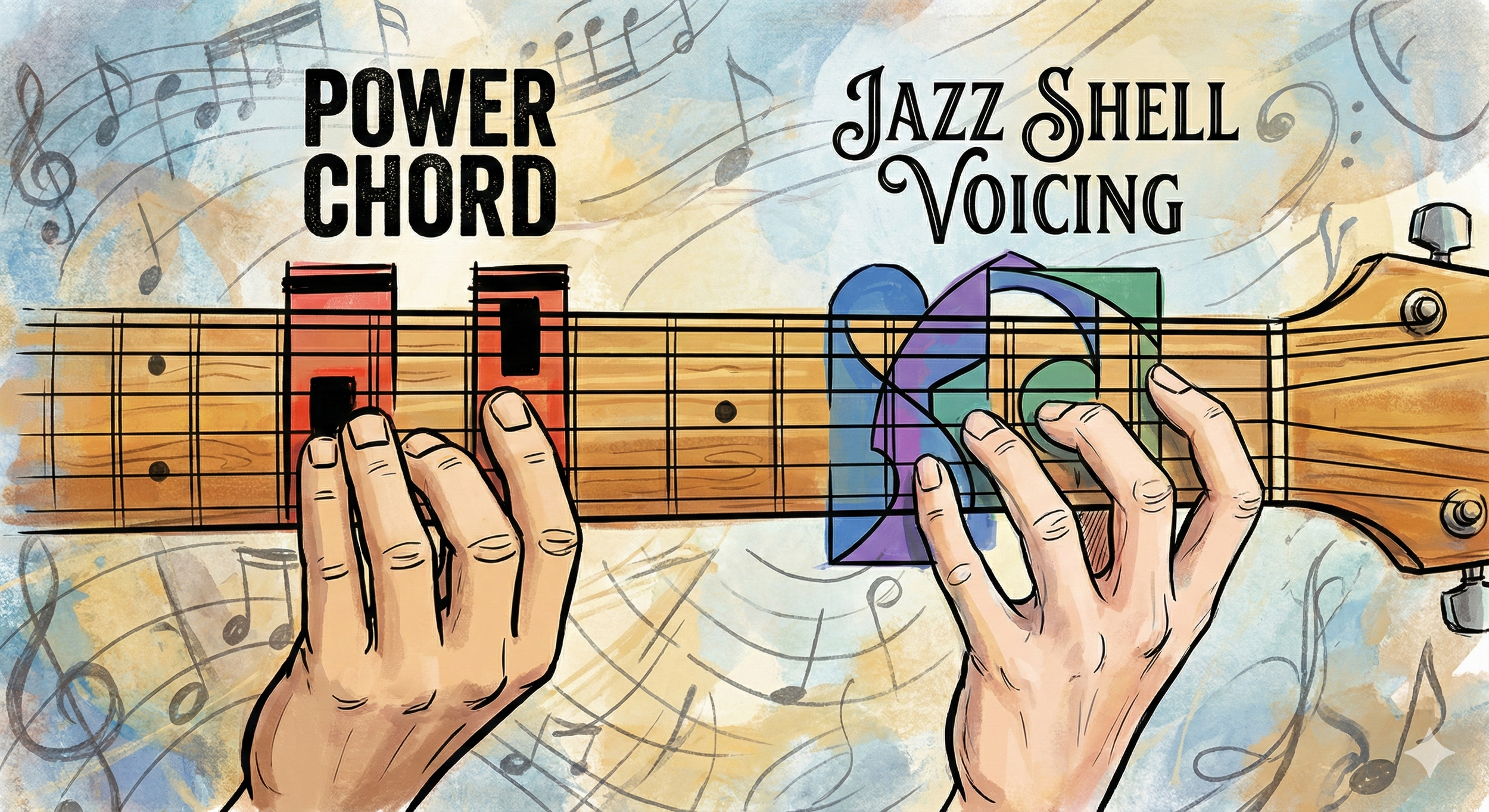
Why Power Chords Can Feel 'Boring' in Jazz
Power chords offer a neutral sound, but they often lack the storytelling ability of jazz harmony. Learn why playing thirds and sevenths creates a more compelling narrative.
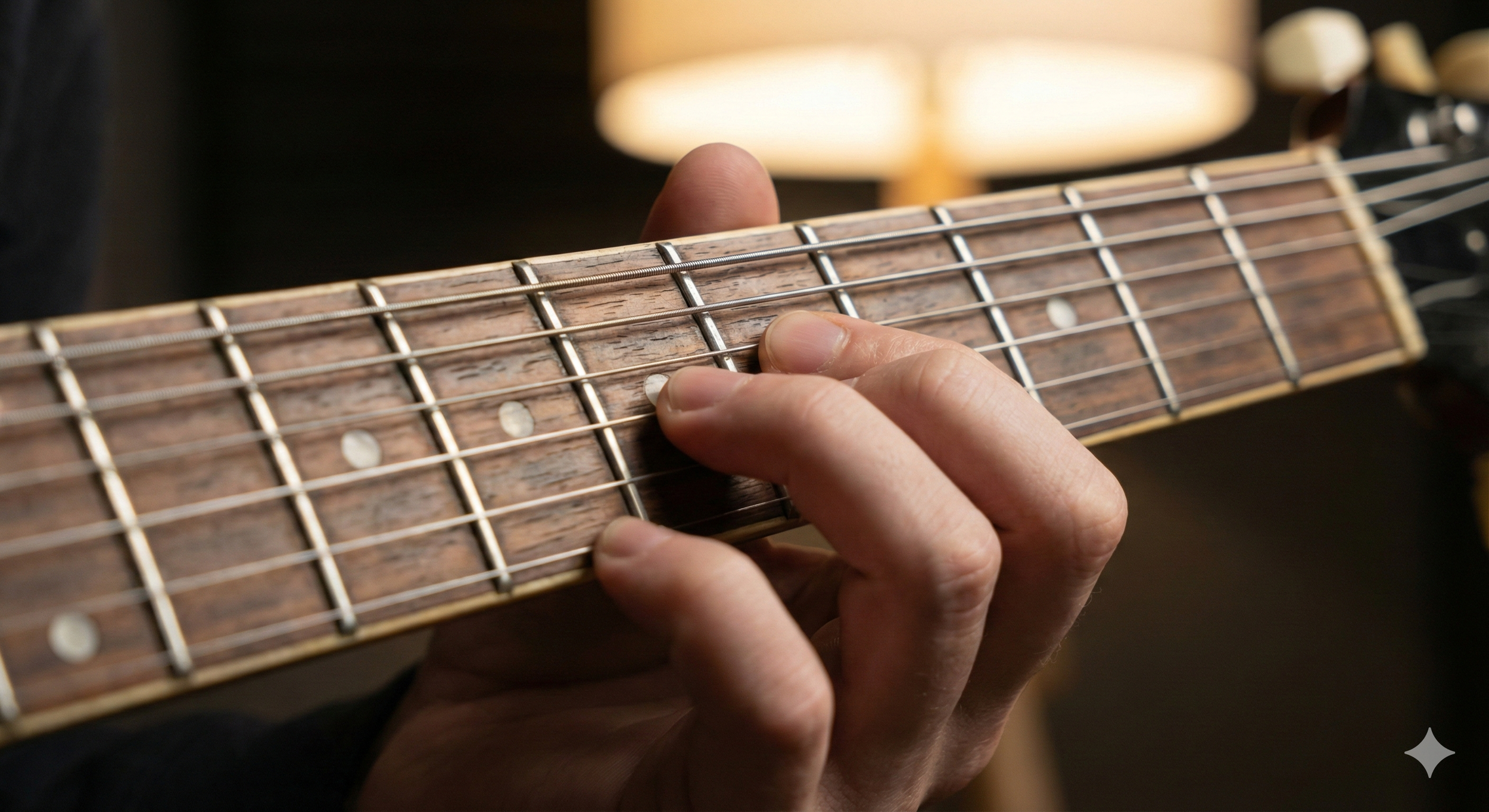
Is the IV Chord a New Tonic? Navigating the I to IV Change
When moving from the I chord to the IV chord, does the target become a new tonic? We explore secondary dominants and upper structures to make this transition smooth.

Stop Counting Bars: How Melody and Guide Tones Navigate the Changes
Panic strikes when you lose count of the bars. But pros don't count—they sing. Discover how to use Voice Leading and "Melody Authority" to navigate chord changes effortlessly, turning your solos from math equations into music.

Root & Melody Practice: From Chord Melody to Surfing the Change
Is practicing 'Root and Melody' just chord melody? Learn how to use this technique as a map for improvisation and try the 'Common Tone' exercise.

The Art of Omission: Mastering Shell Voicings and the 1-3-7 Rule for Jazz Guitar Beginners
Struggling to play complex piano voicings on the fretboard? Stop fighting the instrument. Discover why the secret to a pro jazz sound lies in playing fewer notes. We break down the "1-3-7" philosophy and how to master Shell Voicings.

The Myth of Being "Ready": Why You Should Just Jam
"I'll go to a jam session once I master my scales." We’ve all said it. But waiting for perfection is a trap. Real growth only happens when you step out of the bedroom and collide with other musicians. In this post, we explore why a chaotic, imperfect jam is infinitely more valuable than a perfect solo practice session.
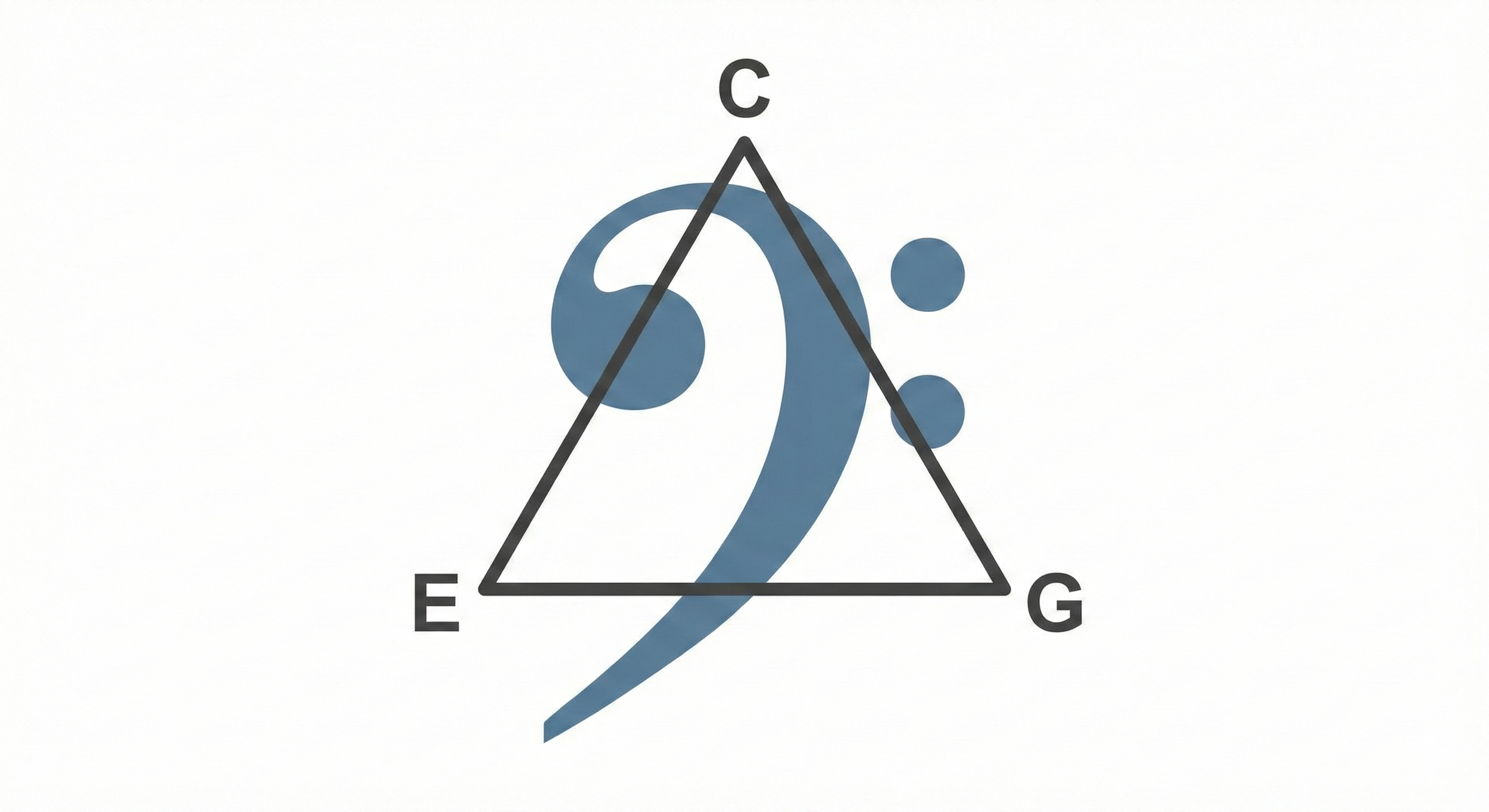
Understanding Triad Cycles: C Major over Db and Bb Bass
Unlock the power of 'Auxiliary Diminished' chords. Learn why playing a C Major triad over a Db bass note creates sophisticated jazz tension.
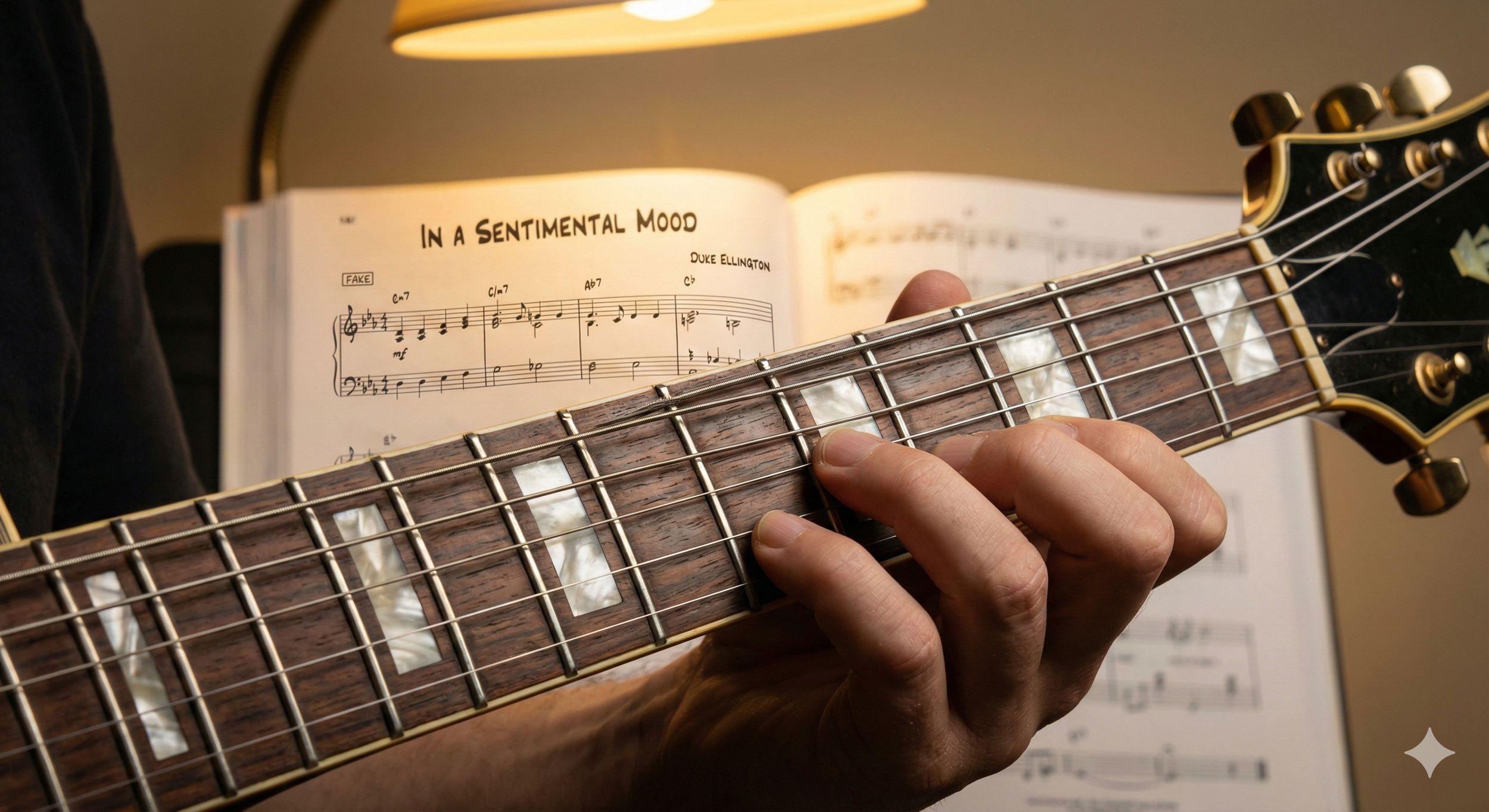
Beyond the Blues Scale: How to Structure Melodic Improvisation
Learn why playing the melody is more effective than relying on the blues scale for songs like 'In A Sentimental Mood'. Discover the three-step framework for developing your own phrasing.
Decoding the Wes Montgomery Sound: Upper Structure Triads meets Drop 2 Voicings
Ready to move beyond basic diatonic boxes? Discover the "Chord over Chord" logic used by legends like Wes Montgomery. We break down how to use Upper Structure Triads and Drop 2 voicings to turn simple shapes into rich, complex textures.