

Jazz Standard Analysis: Who Can I Turn To
We break down strategies for navigating the jazz standard 'Who Can I Turn To,' focusing on melody, upper structures, and key centers.

Mastering Comping: Abandoning Flash for the Art of Space
Instead of praise for your complex chords, do you hear pleas to "play less"? The harsh reality is that the guitar fights for sonic space. Discover how to fix muddy tone using Shell Voicings and the art of silence.
How to Fix Your Rhythm Between Guide Tones
Connecting guide tones can be rhythmically challenging. Here is a simple permutation exercise to help you fill the gap between the 3rd and 7th.
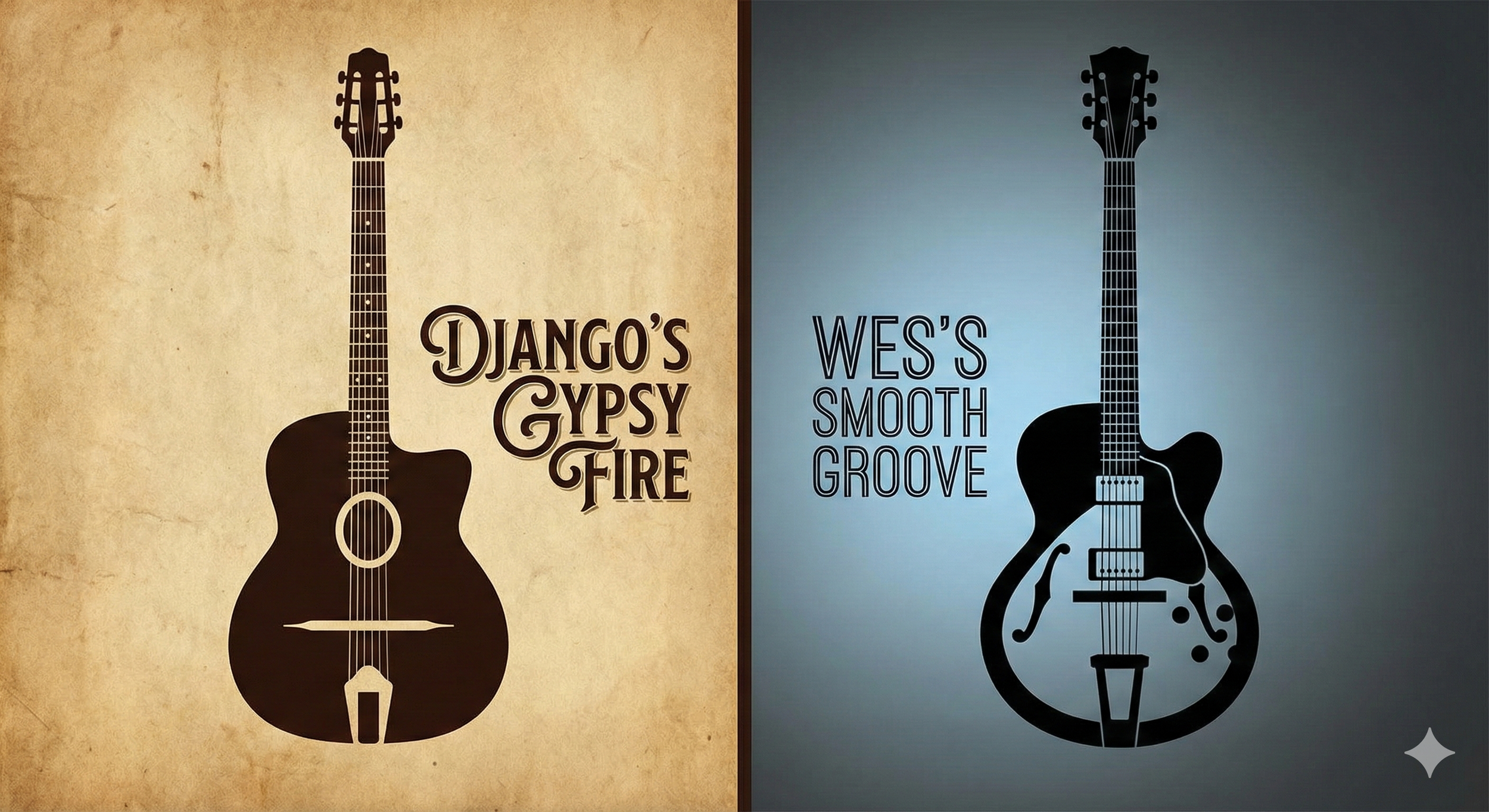
Django Line vs. Wes Line: Understanding the Difference
Ed asks if the Django Line and Wes Line are interchangeable. The answer lies in voice leading and understanding tonic vs. non-tonic function.

The Physics of Jazz Tone: Pick Thickness and the Rest Stroke
Why doesn't my guitar sound like the records? The answer might be in your fingertips. Discover how pick thickness and the "Rest Stroke" technique can transform your sound from thin to warm and punchy.
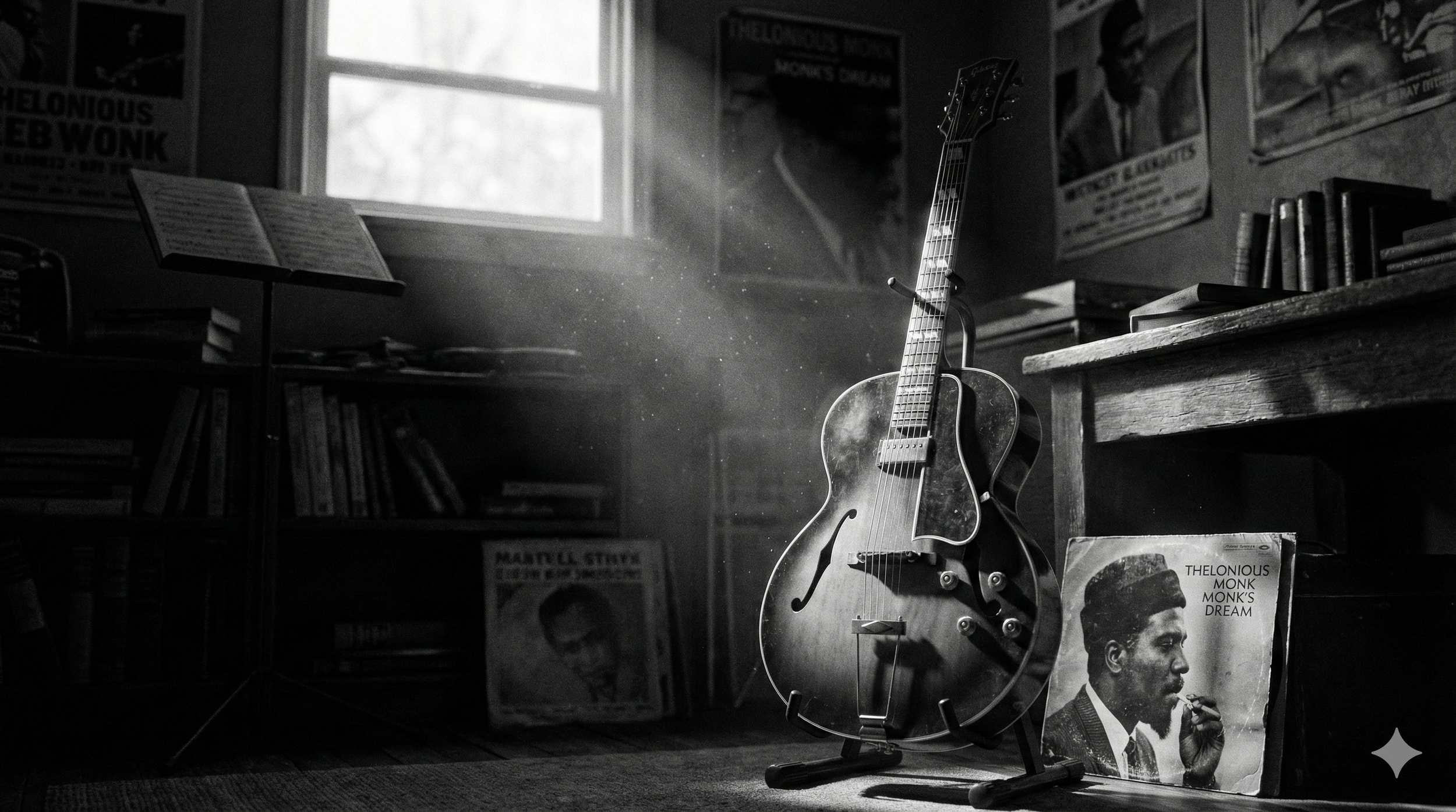
The Legacy of Monk & Duke: Why Finding Your Own Voice Matters More Than Technique
"Who is the most important figure in jazz?" My professor's answer surprised the whole class. We explore the genius of Duke Ellington and Thelonious Monk, and why true artistry is about intent, not just speed or technique.
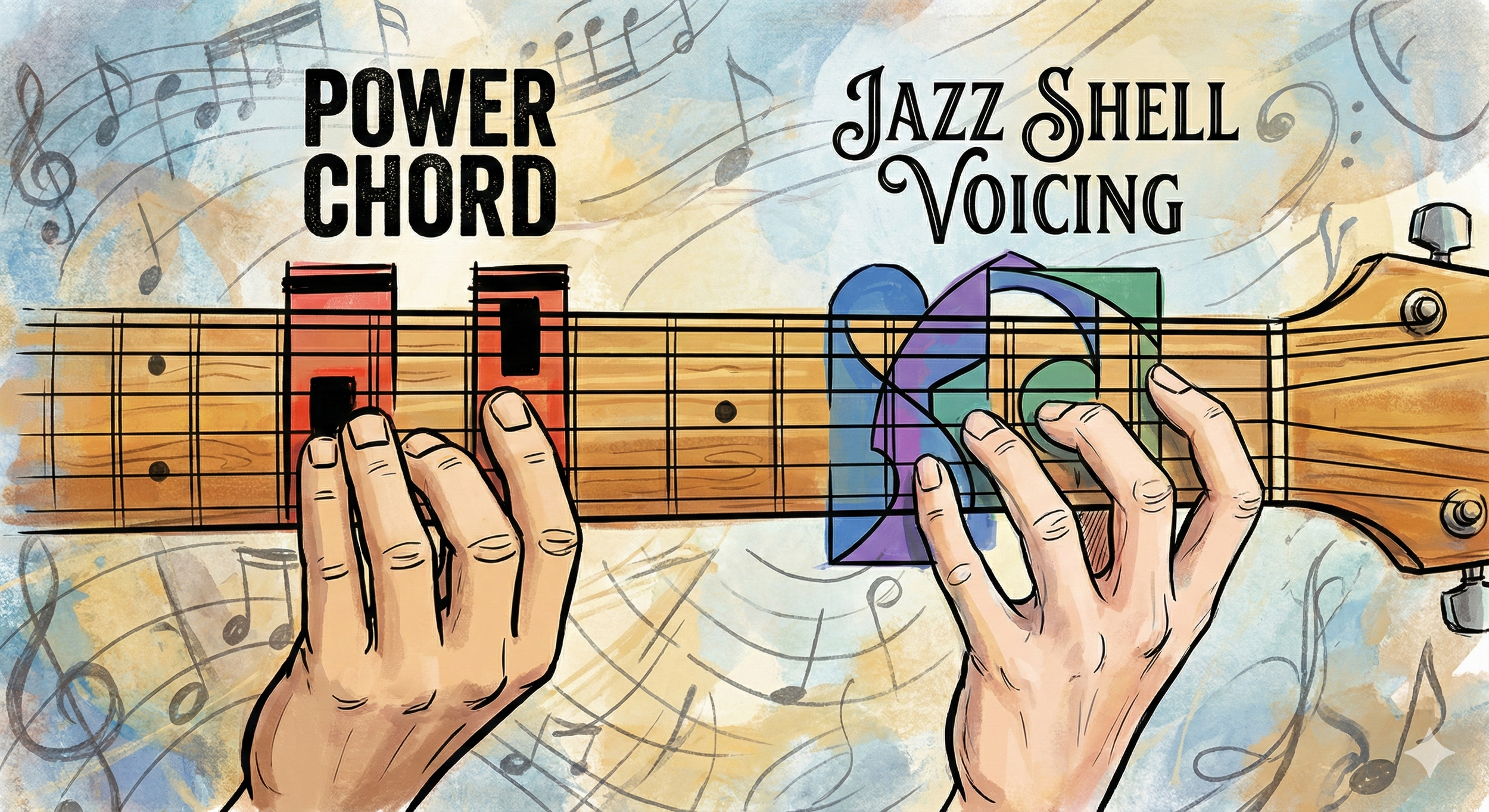
Why Power Chords Can Feel 'Boring' in Jazz
Power chords offer a neutral sound, but they often lack the storytelling ability of jazz harmony. Learn why playing thirds and sevenths creates a more compelling narrative.

Is the IV Chord a New Tonic? Navigating the I to IV Change
When moving from the I chord to the IV chord, does the target become a new tonic? We explore secondary dominants and upper structures to make this transition smooth.

Stop Counting Bars: How Melody and Guide Tones Navigate the Changes
Panic strikes when you lose count of the bars. But pros don't count—they sing. Discover how to use Voice Leading and "Melody Authority" to navigate chord changes effortlessly, turning your solos from math equations into music.

Root & Melody Practice: From Chord Melody to Surfing the Change
Is practicing 'Root and Melody' just chord melody? Learn how to use this technique as a map for improvisation and try the 'Common Tone' exercise.

The Art of Omission: Mastering Shell Voicings and the 1-3-7 Rule for Jazz Guitar Beginners
Struggling to play complex piano voicings on the fretboard? Stop fighting the instrument. Discover why the secret to a pro jazz sound lies in playing fewer notes. We break down the "1-3-7" philosophy and how to master Shell Voicings.

The Myth of Being "Ready": Why You Should Just Jam
"I'll go to a jam session once I master my scales." We’ve all said it. But waiting for perfection is a trap. Real growth only happens when you step out of the bedroom and collide with other musicians. In this post, we explore why a chaotic, imperfect jam is infinitely more valuable than a perfect solo practice session.
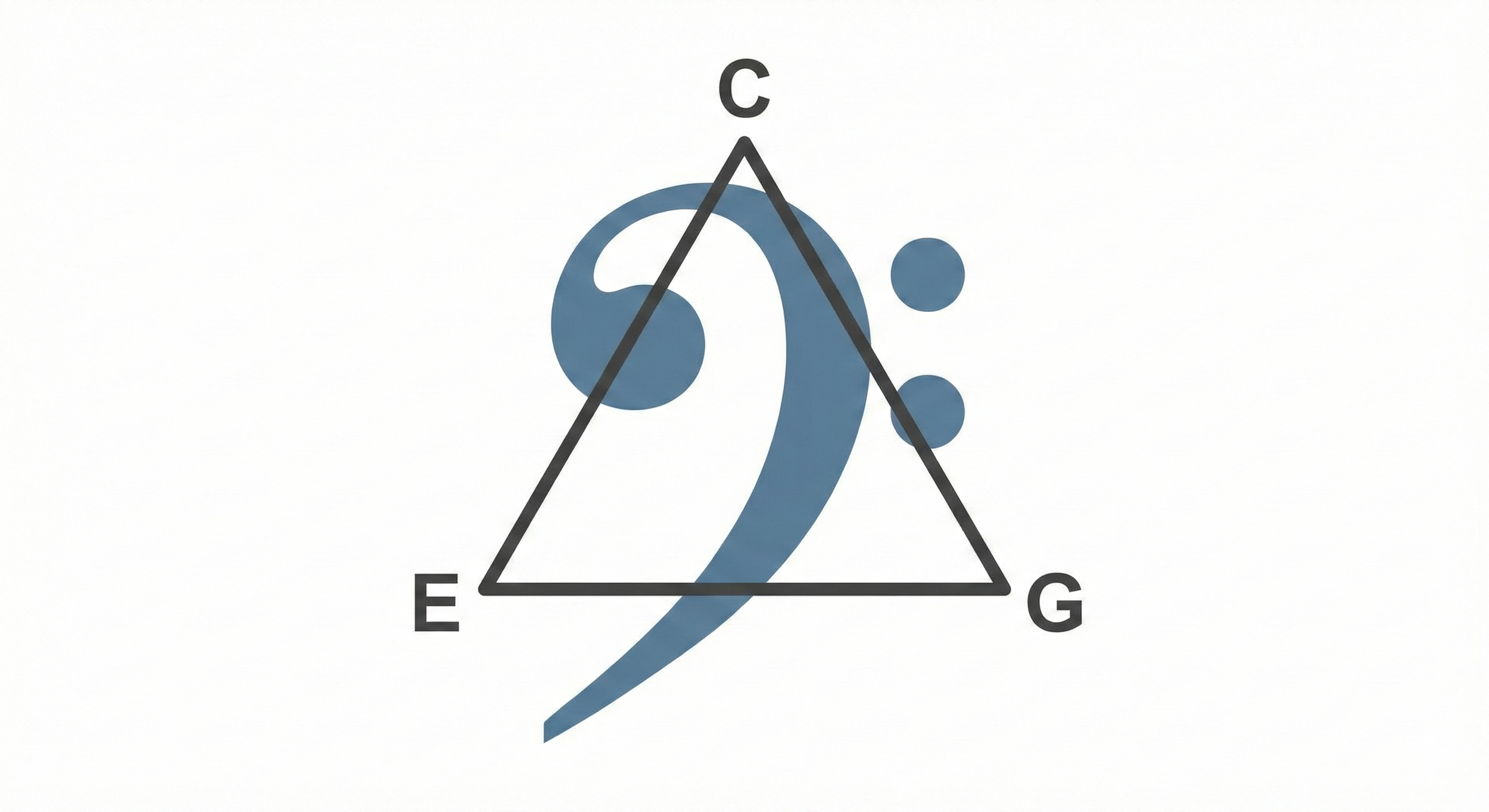
Understanding Triad Cycles: C Major over Db and Bb Bass
Unlock the power of 'Auxiliary Diminished' chords. Learn why playing a C Major triad over a Db bass note creates sophisticated jazz tension.
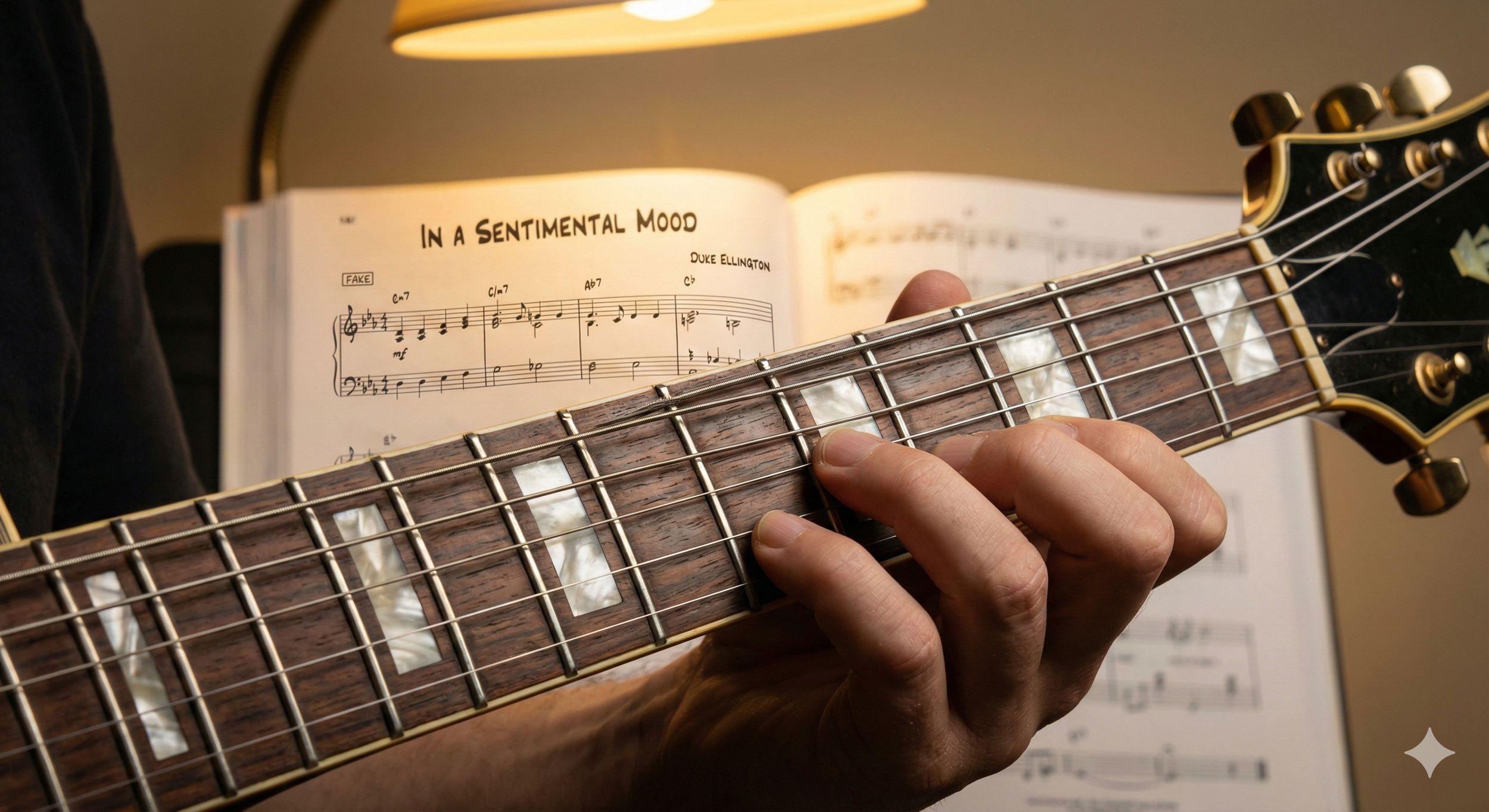
Beyond the Blues Scale: How to Structure Melodic Improvisation
Learn why playing the melody is more effective than relying on the blues scale for songs like 'In A Sentimental Mood'. Discover the three-step framework for developing your own phrasing.
Decoding the Wes Montgomery Sound: Upper Structure Triads meets Drop 2 Voicings
Ready to move beyond basic diatonic boxes? Discover the "Chord over Chord" logic used by legends like Wes Montgomery. We break down how to use Upper Structure Triads and Drop 2 voicings to turn simple shapes into rich, complex textures.

The Pianistic Guitar: Expanding Shell Voicings into Upper Structures
Guitarists often feel limited compared to pianists who can comp and solo simultaneously. The solution? Stop playing the root. By using Shell Voicings and Upper Structures, you can stack arpeggios to create 3D harmonic lines. Discover the "pianistic" approach used by Charlie Parker and Wes Montgomery.

Breaking Muscle Memory: The Real Power of Practicing in 12 Keys
You practice for hours, yet the same old licks pour out when you solo. We call this "Hand Habit." Muscle memory provides safety, but it kills creativity. In this post, we explore painful but effective methods—like strict constraints and 12-key practice—to shatter these boxes and reconnect your ears to the fretboard.

Jazz Ear Training: You Don't Need Perfect Pitch to Hear Changes
Identifying chord changes by ear is one of the biggest hurdles for jazz beginners. You don't need perfect pitch to solve it—you just need to shift your perspective. Discover the "Diatonic Thinking" method that simplifies complex harmony into simple, hearable intervals.
How Many "Real" Songs Are in Your Repertoire? (And the Art of Lay-back)
If a bandleader asked the audience for someone who truly knows one standard—head, comping, solo, and outro—could you raise your hand? This post argues for repertoire first, theory second, and explains why real time feel (like Grant Green’s lay-back) only appears after you’ve fully internalized the song.

How to Internalize Complex Tunes: A Case Study on "What Is This Thing Called Love"
Are your solos sounding like random scale exercises? Discover the "Fly Me to the Moon logic" applied to "Autumn Leaves." This step-by-step process helps you build a melodic skeleton using 3rds and 7ths, ensuring your lines resolve beautifully through the changes every time—before you even add the "fancy stuff."
Make an Impact Today
When you give, you invest in progress, compassion, and a better world for everyone.