
Why Do Jazz Guitar Teachers Make You Play Only Down-Picking First?
Down-picking only, for months or even years, is not old-fashioned discipline for its own sake — it is how you build one consistent attack before you ever add a second direction. Here is why jazz guitar teachers withhold up-picking, and how Wes Montgomery's own technique proves the same point.
es a Jazz Guitarist Actually Do All Day?Wes Montgomery Said He Never Practiced. So What Do
Wes Montgomery said he didn't practice, he played — and for Wes it was true. For the rest of us the honest routine is simpler than you'd guess: transcribe, then learn tunes in layers, forever.

Why Do Wes Montgomery Transcriptions Sound Wrong When You Play Them?
Most jazz guitar transcriptions get the noteheads right and the guitar wrong — wrong positions, wrong voicings, wrong concept. The reliable sources are the recording and the line's underlying logic.

Why Did Wes Montgomery Say No to John Coltrane?
John Coltrane really did invite Wes Montgomery to join his band, and Wes really did decline — saying, with typical humility, that he had nothing to contribute. The full story touches McCoy Tyner's account, the guitar's strange position in jazz, and why the sounds Coltrane's band chased were already living inside Wes's lines.

es Montgomery Write His Own Blues? Four Tunes That Teach the Whole SystemWhy Did W
Wes Montgomery didn't just play the blues — he wrote his own: Cariba, The Thumb, Fried Pies, West Coast Blues. Each tune distills one side of his system — the sound, the line, the voice — and the jazz-waltz West Coast Blues ties them together.
elve Bars, Different Voice: How Wes Montgomery Made the Blues Sound Like HimselfSame Tw
Everyone plays the same twelve bars — the voice is in the phrasing. Wes Montgomery's own blues 'Fried Pies' shows how motivic development turns shared structure into a personal sound, and how you can do the same without copying licks.

How Do You Connect the Changes on a Blues? Wes Montgomery’s Diagonal Line in The Thumb
Connecting the changes on a blues means your line travels with the harmony instead of parking in one position. Wes Montgomery's own blues 'The Thumb' is a masterclass: a riff-and-groove tune whose whole engine is diagonal movement across the fretboard.
Why Does Your Blues Sound Like Practice? Wes Montgomery Built His on Sound, Not Patterns
If your blues solos sound like practice, the missing piece isn't a new lick — it's the sound: the tension between major and minor thirds that makes a line feel like the blues before any 'blue note' is played. Wes Montgomery's own blues, Cariba, is the clearest proof.

The George Benson Answer: Do You Need Jazz to Play Modern R&B Guitar
Modern R&B guitar is jazz wearing new clothes: the vocabulary of today's hottest players traces straight back to George Benson. From Tom Misch sampling Benson's Stella by Starlight intro to Peter Bernstein playing Prince, here is why learning jazz makes you a better R&B player.

From Swing to Odd Meters: How Two-Against-Three Unlocks 5/4 and Metric Modulation
Once you hear swing as two-against-three, odd meters stop being intimidating. The same polyrhythmic pulse lets you play Wes Montgomery tunes in 5/4 and pivot a 3/4 waltz into swinging 4/4 mid-solo.

Chord Melody Guitar: Why Playing the Melody in the Middle of the Neck Sounds More Like Jazz
When you play a jazz standard's melody on the first two strings, it sounds thin. Mid-register melody — the Wes Montgomery territory — sounds like jazz. Here is why, and how to move there.

Swing Rhythm Guitar: What Wes Montgomery’s Thumb Technique Actually Needs
If you've spent any time learning jazz guitar, you've almost certainly heard the same piece of advice: Wes Montgomery played with his thumb.

Wes Montgomery Guitar Technique: The Left-Hand Secret Behind His Swing Feel
There's a particular frustration that advanced jazz guitarists know well: the Wes Montgomery transcription problem. You work out the rhythm notation.

Three-Finger Jazz Guitar Technique and Where Swing Feel Comes From
In jazz guitar, swing feel is generated by the physical movement of the left hand between notes — not by alternating pick direction on the right hand. This post explains the three-finger approach taught in the Functional Diagonal Approach (FDA), why the ring finger and pinky are treated as a single unit, what Wes Montgomery's right-hand technique actually shows, and why the common alternate-picking approach to swing produces a sound that does not swing.
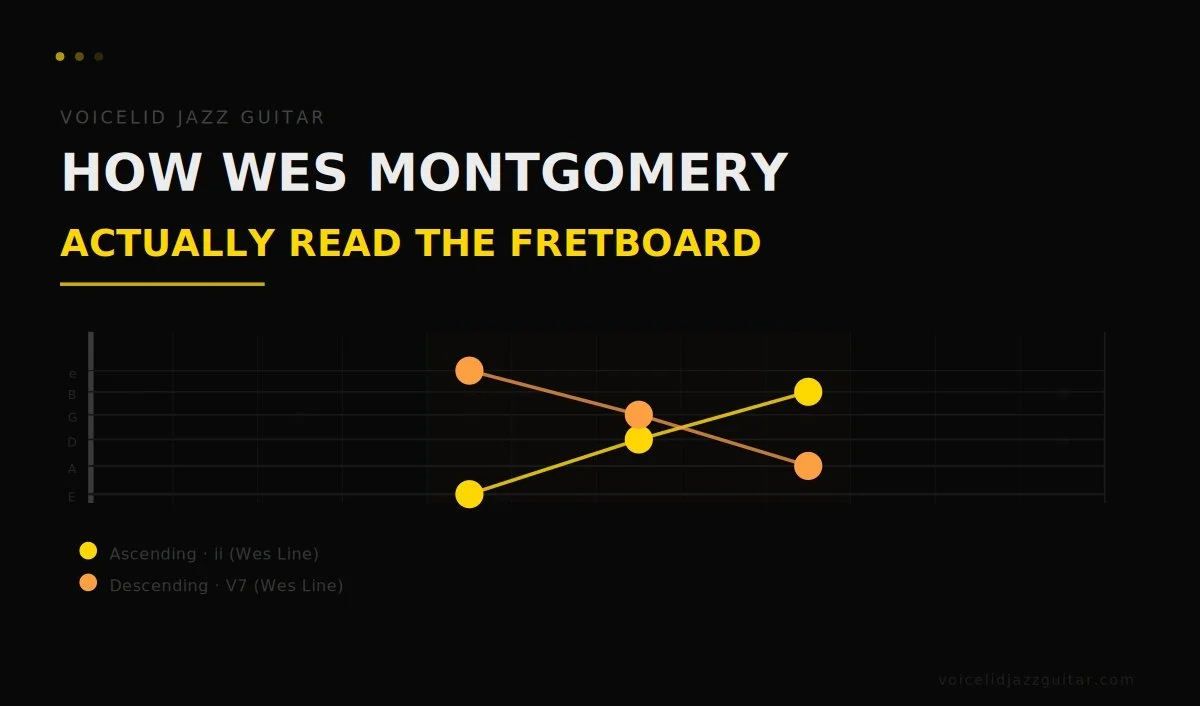
How Wes Montgomery Actually Read the Fretboard
Most players trying to learn from Wes Montgomery start with the octaves. That's the imitation. This is what was actually happening underneath.
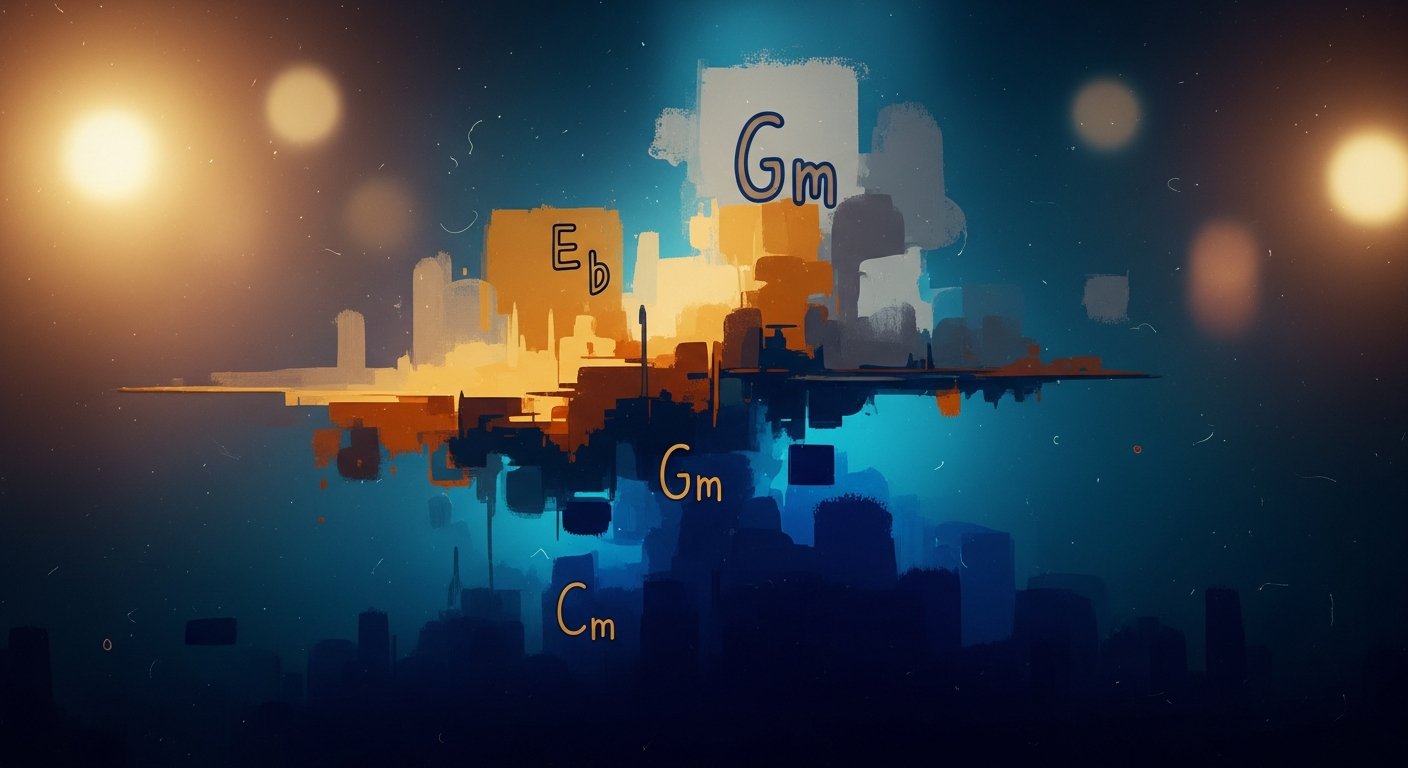
Upper Structure Triads: Stacking Eb and Gm Over Cm in Blue Bossa
There’s a moment in every advanced jazz guitarist’s development when a single chord stops looking like a single chord. A Cm7 is no longer just C–Eb–G–Bb on a page.
The Road You Thought Was Wrong Was Yours All Along — A Weekend Reflection on Identity in Jazz
Modern or traditional? The question feels technical — but it isn't. It's an identity question. This post explores what it really means to find your own sound in jazz, through the stories of Wes Montgomery, Kenny Burrell, and the quiet courage of playing what genuinely resonates with you.
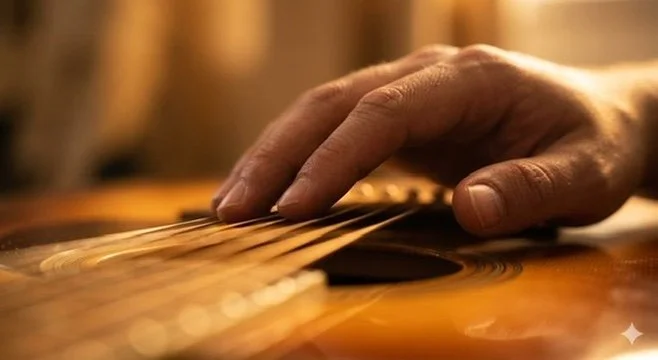
How to Play Like Wes Montgomery — A Beginner's Guide to Thumb Picking
Wes Montgomery didn't choose the thumb — circumstances did. This post breaks down the rest stroke and down stroke fundamentals at the heart of his iconic tone, and explains why beginners should start here before anything else.

Ditch the Scales: Voicing-Centric Improvisation and Upper Structures
Still trying to calculate modes on the fly while soloing? It's time to stop over-analyzing. Discover why advanced jazz guitarists rely on functional voicing connections and Upper Structure Triads instead of rigid scale blocks to create fluid, spontaneous melodic lines.

Beyond Blues: The Power of Genre Transcription and Wes Montgomery Lines
You know your II-V-I progressions, but your solos still sound like pentatonic blues. The problem isn't what you're playing, but how you navigate the fretboard. Discover why vertical scale blocks are holding you back, and how learning the diagonal "Wes Lines" can finally make you sound like an authentic jazz guitarist.