
Shell Voicings Jazz Guitar: The 11-Step Practice That Connects Voicings, Voice Leading, and Melody
Shell voicings are usually taught as 'root, 3rd, 7th — done.' That's the first percent. The real practice that turns shells into voice leading and chord-melody is an 11-step internalization process most players never encounter.

Jazz Guitar Improvisation Tips: How Transcription Connects Everything You've Learned
Shell voicings, drop 2, II–V–I — you've learned the concepts separately. Transcription is what connects them. This guide explains why analyzing real solos (like Benson on Billie's Bounce) reveals how jazz harmonic vocabulary actually works in practice.
Breaking Free from Scale Blocks: A Beginner's Guide to Shell Voicings
If your mind goes blank the moment a jazz standard begins, it’s not a lack of talent—it’s how you are viewing the fretboard. Discover why abandoning linear scale blocks and embracing the structural clarity of "Shell Voicings" is the ultimate secret to fluent, confident jazz improvisation.

The Magic Number 11: Expanding Minor Chord Voicings for Depth and Color
As intermediate players, we often get trapped in "safe" muscle memory, playing the same Cm7 shape we learned on day one. But the secret to a professional, modern sound lies in breaking free. In this lesson, we explore the harmonic safety of the Minor 11th tension—why it creates a beautiful "floating" quality unlike the major 11th—and how to instantly apply it to your playing using shell voicings.
Why Connecting Scale Shapes Won’t Help You Play Jazz Changes
Scales are just the alphabet, but they are not the story. Learn why voice leading and shell voicings are the true key to navigating chord progressions.

Stop Just 'Running': Why Cycles Don't Make You a Player
Practicing cycles of triads and shell voicings builds stamina, but it doesn't teach you how to play the game. Here is the next step.
Escaping the Root Trap: The Art of Guide Tone Mapping for Beginners
Are your jazz chords sounding heavy and amateurish? You might be falling into the "Root Note Trap." Discover why leaving the low notes to the bassist and focusing on the structural power of 3rds and 7ths is the secret to a professional, breathing jazz sound.

Mastering Comping: Abandoning Flash for the Art of Space
Instead of praise for your complex chords, do you hear pleas to "play less"? The harsh reality is that the guitar fights for sonic space. Discover how to fix muddy tone using Shell Voicings and the art of silence.

The Art of Omission: Mastering Shell Voicings and the 1-3-7 Rule for Jazz Guitar Beginners
Struggling to play complex piano voicings on the fretboard? Stop fighting the instrument. Discover why the secret to a pro jazz sound lies in playing fewer notes. We break down the "1-3-7" philosophy and how to master Shell Voicings.

The Pianistic Guitar: Expanding Shell Voicings into Upper Structures
Guitarists often feel limited compared to pianists who can comp and solo simultaneously. The solution? Stop playing the root. By using Shell Voicings and Upper Structures, you can stack arpeggios to create 3D harmonic lines. Discover the "pianistic" approach used by Charlie Parker and Wes Montgomery.

Improvisation Myths: Why Chords Matter More Than Scales (feat. Fly Me to the Moon)
A common frustration among intermediate jazz guitarists is playing the "correct" scales but lacking authentic sound. The harsh truth: Improvisation is based on chords, not scales. Stop fighting the bassist for the root. Learn how to target the 3rds and 7ths to make your solos sing using the golden rule of functional harmony voice leading.

Jazz Guitar Fundamentals: Tone Secrets & Shell Voicing Routine
For guitarists transitioning to jazz, the perfect tone can be elusive. Is it the wood? The amp? The fingers? In this post, I break down why I use .014 gauge strings and Ebony fretboards to achieve a percussive "pop." Plus, I share the "Golden Practice Routine"—navigating Shell Voicings through the Circle of Fifths to map the entire fretboard.
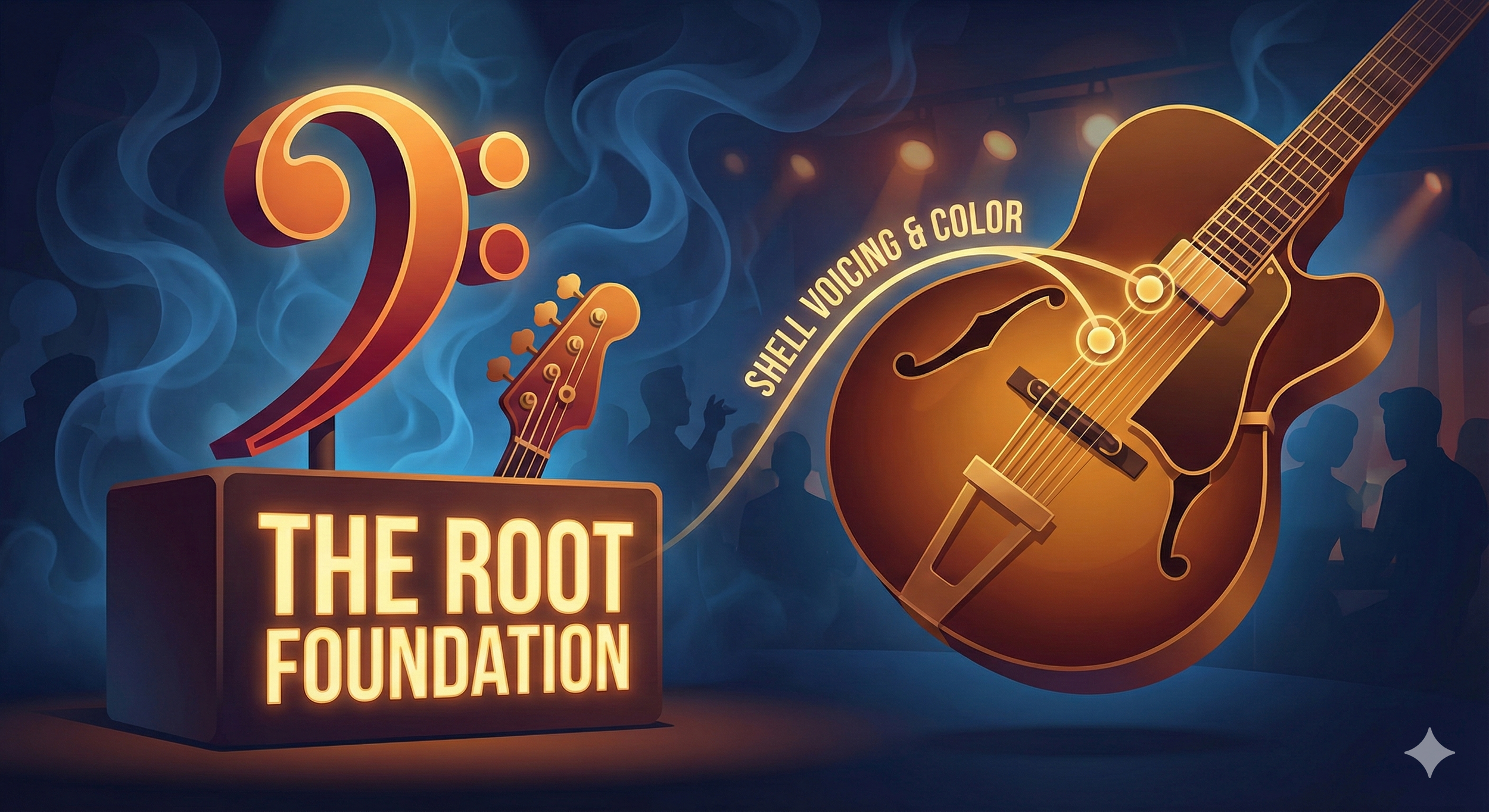
Stop Playing Roots: The Power of Shell Voicings for Beginners
Transitioning to jazz guitar? Your obsession with anchoring on root notes might be muddying the mix. The bass player has the foundation covered. Your job is to define the color. Discover why stripping your chords down to just the 3rds and 7ths—Shell Voicings—is the key to unlocking smooth voice leading and that sophisticated "jazz sound."
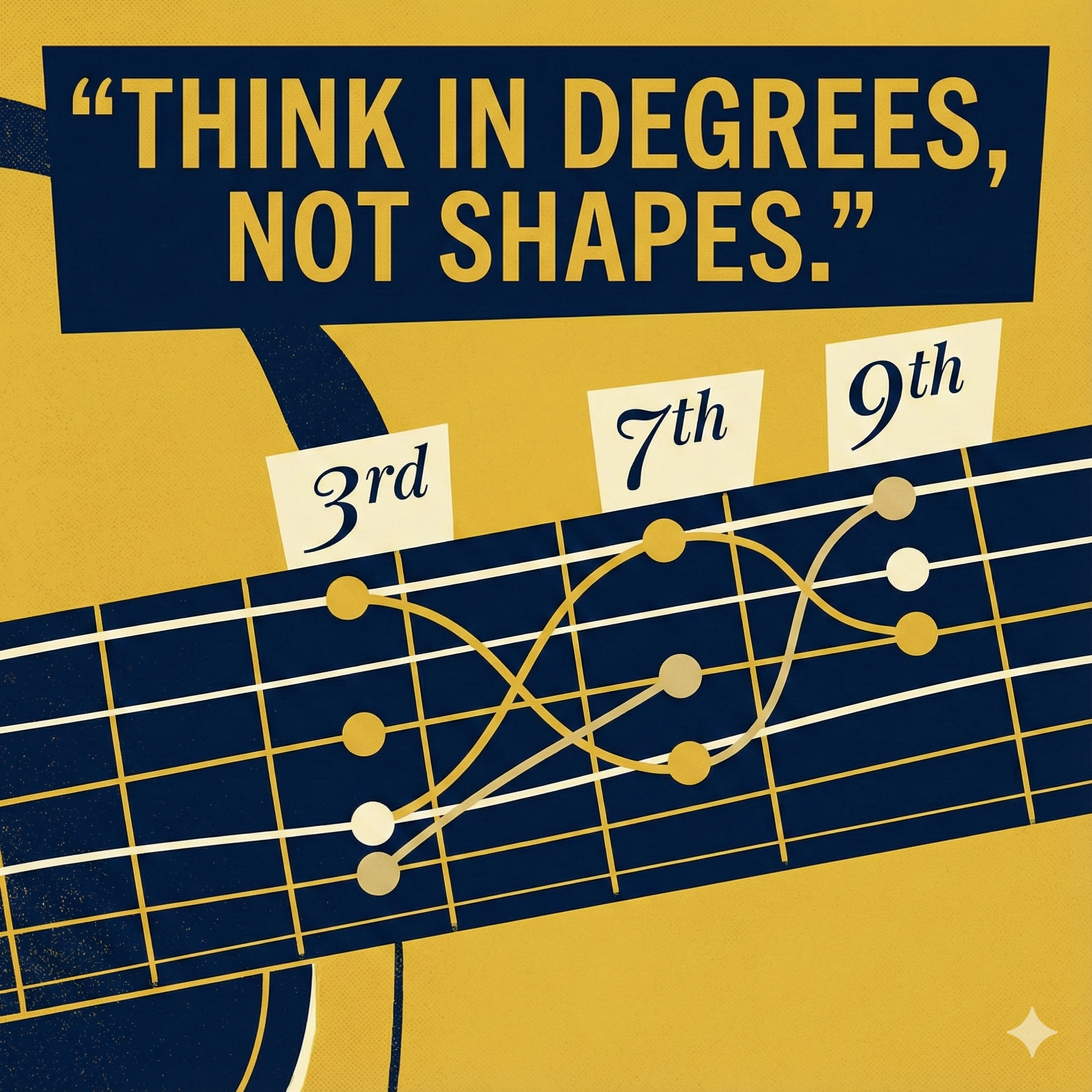
Are You Just Memorizing Shapes? How to Truly Understand the Fretboard with Chord Degrees
Jazz guitar doesn’t have to be an endless memorization game.
By learning to see chords as degrees and functions—rather than shapes—you can finally understand how harmony works across the fretboard and start playing with clarity and intention.
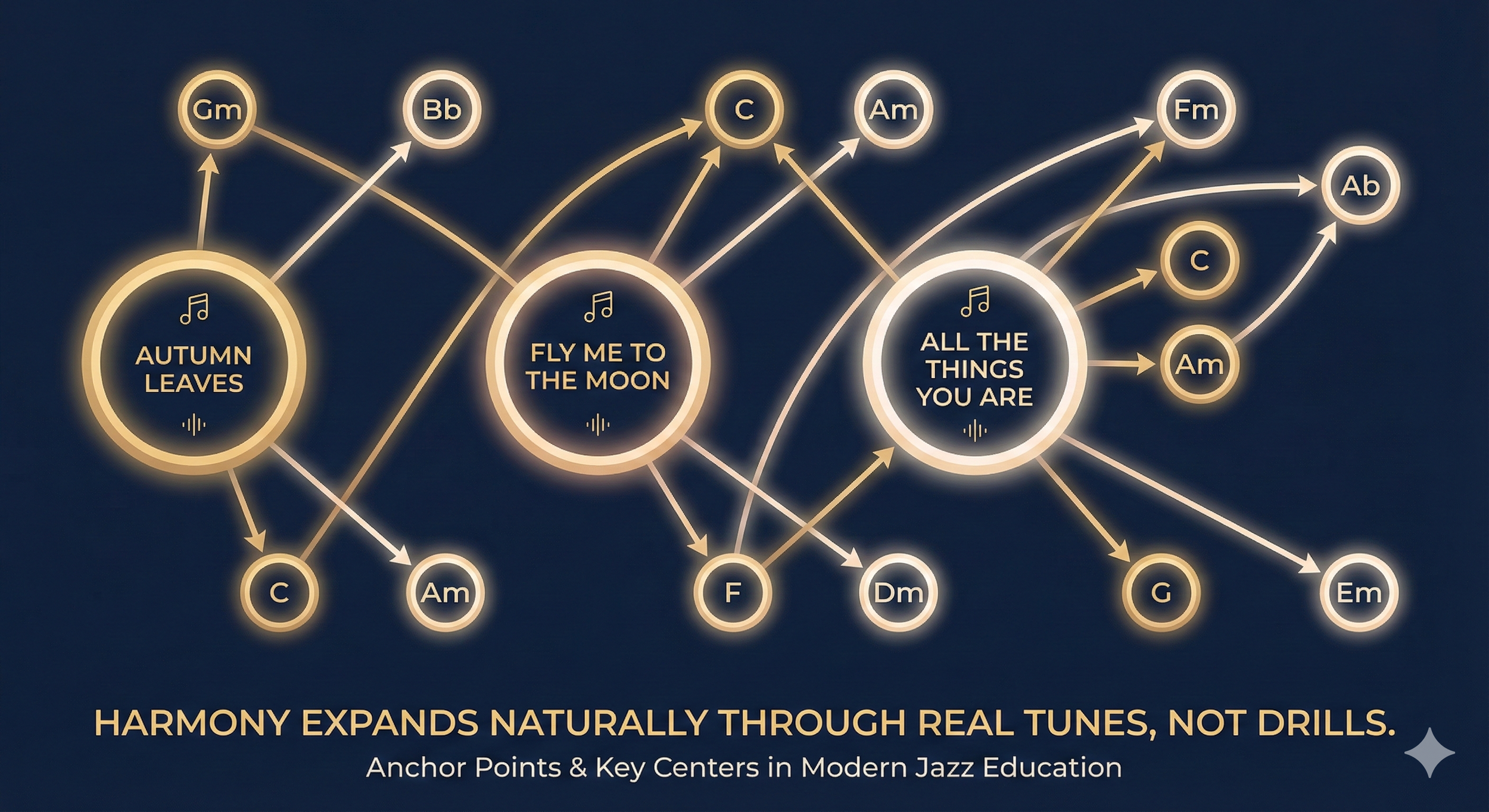
The 12-Key Trap: Why Trying to Conquer Every Key in Order Is Doomed to Fail
Many intermediate players try to master all 12 keys only to get stuck in a cycle of conquering one key and forgetting another. This article explains why isolated “12-key drills” fail—and how a song-based, top-down approach allows you to absorb harmony naturally and permanently through real tunes.