

The Magic Number 11: Expanding Minor Chord Voicings for Depth and Color
As intermediate players, we often get trapped in "safe" muscle memory, playing the same Cm7 shape we learned on day one. But the secret to a professional, modern sound lies in breaking free. In this lesson, we explore the harmonic safety of the Minor 11th tension—why it creates a beautiful "floating" quality unlike the major 11th—and how to instantly apply it to your playing using shell voicings.
Escaping the Root Trap: The Art of Guide Tone Mapping for Beginners
Are your jazz chords sounding heavy and amateurish? You might be falling into the "Root Note Trap." Discover why leaving the low notes to the bassist and focusing on the structural power of 3rds and 7ths is the secret to a professional, breathing jazz sound.

Beyond Theory: Target Notes and Visualizing Sound Colo
In the heat of improvisation, mental calculus is a burden, not a tool. Discover why masters prioritize "Sound Color" over scale names, and learn how to use the Target Note method to bridge the gap between your brain and your ears.
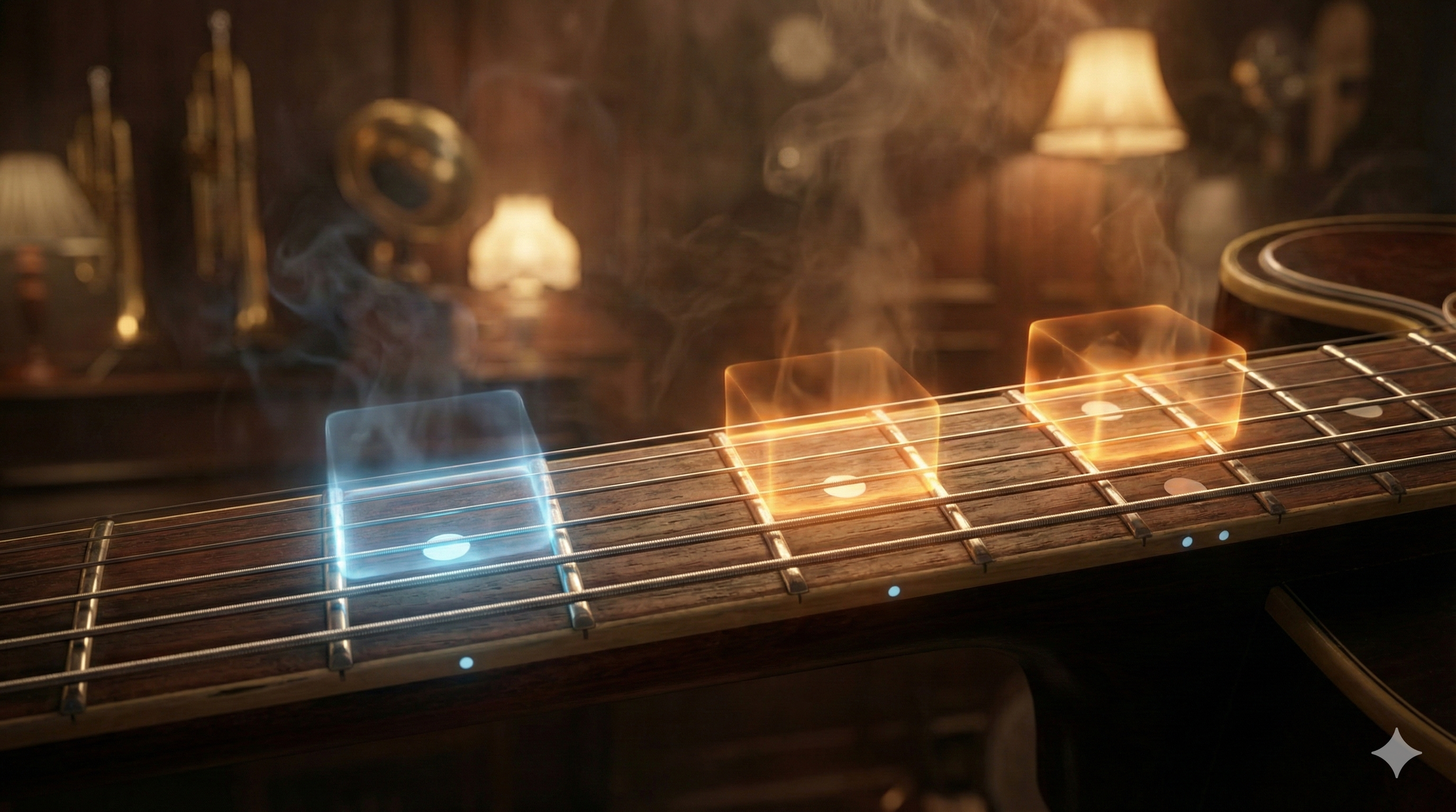
Stop Chasing Upper Structures: The Tonic vs. Non-Tonic Approach
Are you mentally exhausted trying to chase every chord extension in a progression? It’s time to stop doing "abstract math" on the fretboard. Discover why categorizing chords into just two functions—Tonic and Non-Tonic—is the secret to playing smoother, more melodic jazz lines like the masters.

Beyond Scales: Forward Motion, Chromaticism, and Targeting
"Why did he play that natural 4th?" A common question from advancing players. The answer lies in shifting your perspective from static theory to dynamic movement. Discover why there are strictly no "wrong" notes—only notes waiting to resolve—and how to use Forward Motion to liberate your solos from rigid scale patterns.
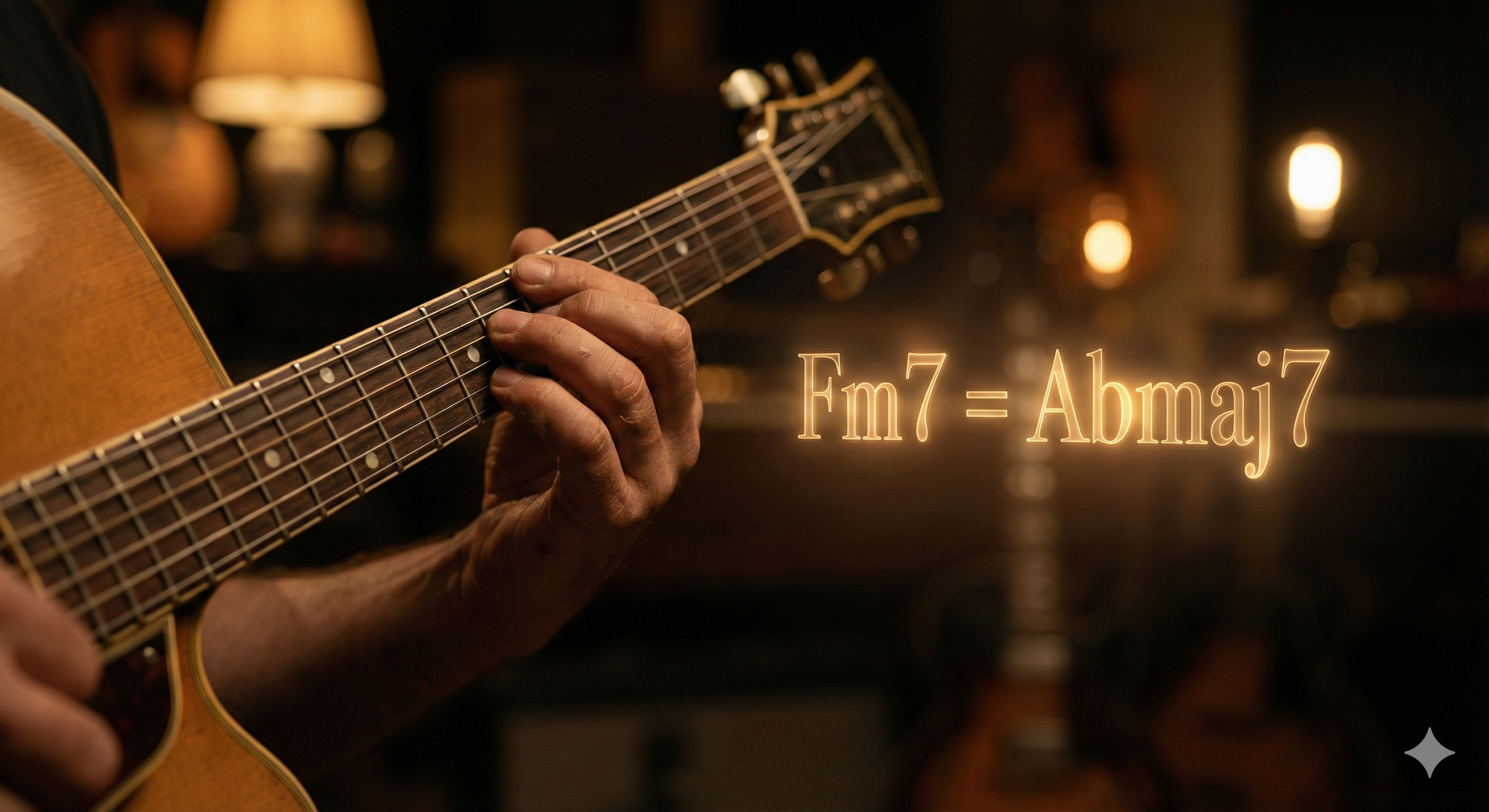
Decoding the "Wes Line": Upper Structures in Fly Me to the Moon
Beginners are often told to play root-based arpeggios, but this approach creates a mechanical, disconnected sound. The secret to that floating, professional jazz quality isn't playing the root—it's playing the Upper Structure. Discover how to transform a simple Fm7 into a lush Abmaj7 sound (the "Wes Line") and navigate the fretboard with the efficiency of a pro.
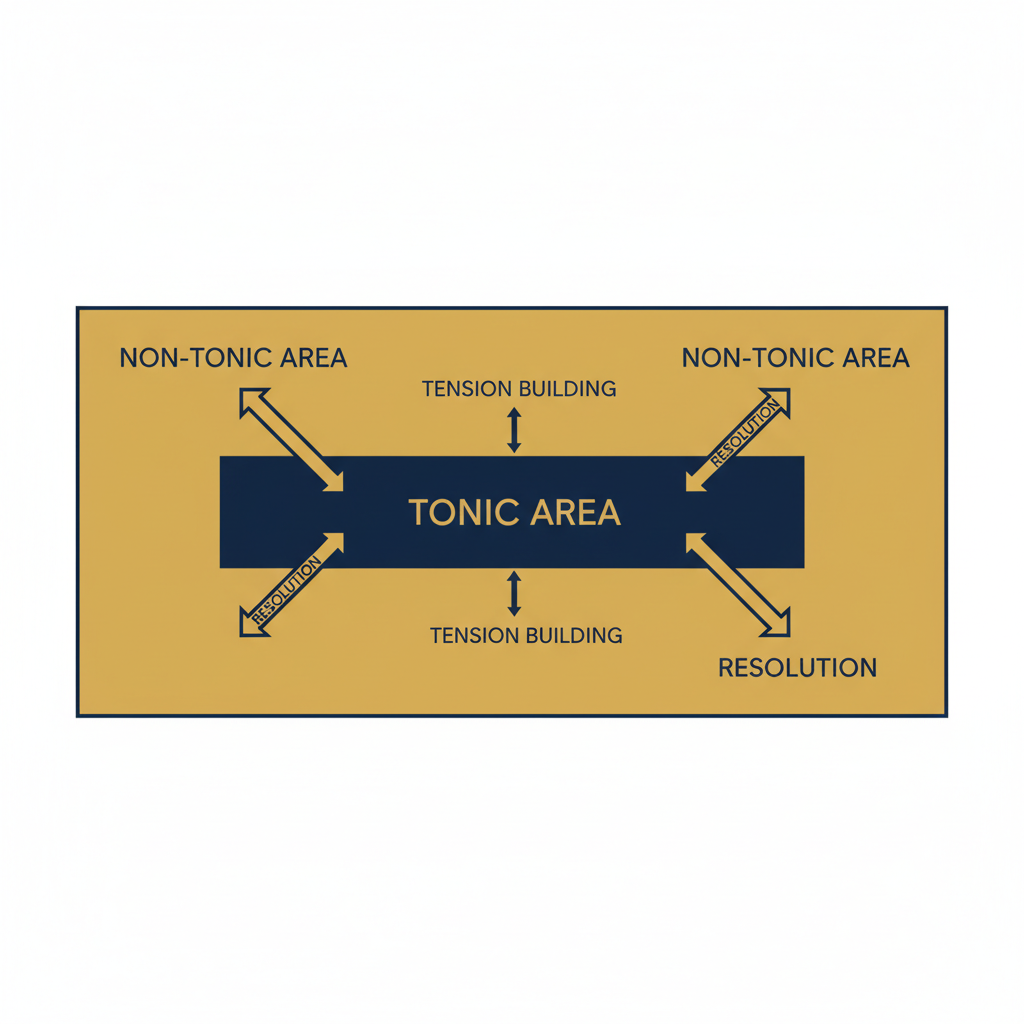
Deconstructing John Scofield's Outside Lines: Chromatic Displacement & Functional Resolution
The 'outside' playing of a master like John Scofield is often misunderstood. It's not a random spray of dissonant notes but rather an artful and calculated act of 'Chromatic Displacement' followed by a 'Functional Resolution.' This advanced concept goes beyond simply shifting a scale up a half-step; it involves temporarily moving an entire harmonic structure into a non-tonic space before flawlessly returning it to the gravitational pull of the tonic center.
Jazz Guitar for Beginners: Stop Sounding Random with 'Form Playing'
Have you ever felt like your jazz guitar solos, despite hitting all the right chord tones, sound disconnected or awkward? You might be practicing scales and arpeggios diligently, yet your playing feels like it’s floating aimlessly on top of the music rather than being part of it.