
The Metamorphosis of Tone: A Comprehensive Guide to Flatwound Strings for Solid Body Guitars
If you are playing the right notes but your sound is too bright and aggressive, the culprit is likely your strings. Changing to Flatwounds is the single most transformative modification for a solid-body guitar. In this post, we explore the physics of the "thud" and provide a buyer's guide to D'Addario, Thomastik-Infeld, and Pyramid strings.

More Than Technique: Finding the "Blues" and the Art of Storytelling
George Benson, arguably the most technically gifted guitarist in history, understood that technique is not the same as "soul." He famously couldn't replicate Grant Green's unique time feel. From the importance of the Blues foundation to the psychoacoustic strategy of tuning slightly sharp (442Hz), learn why playing "music" matters more than playing notes.
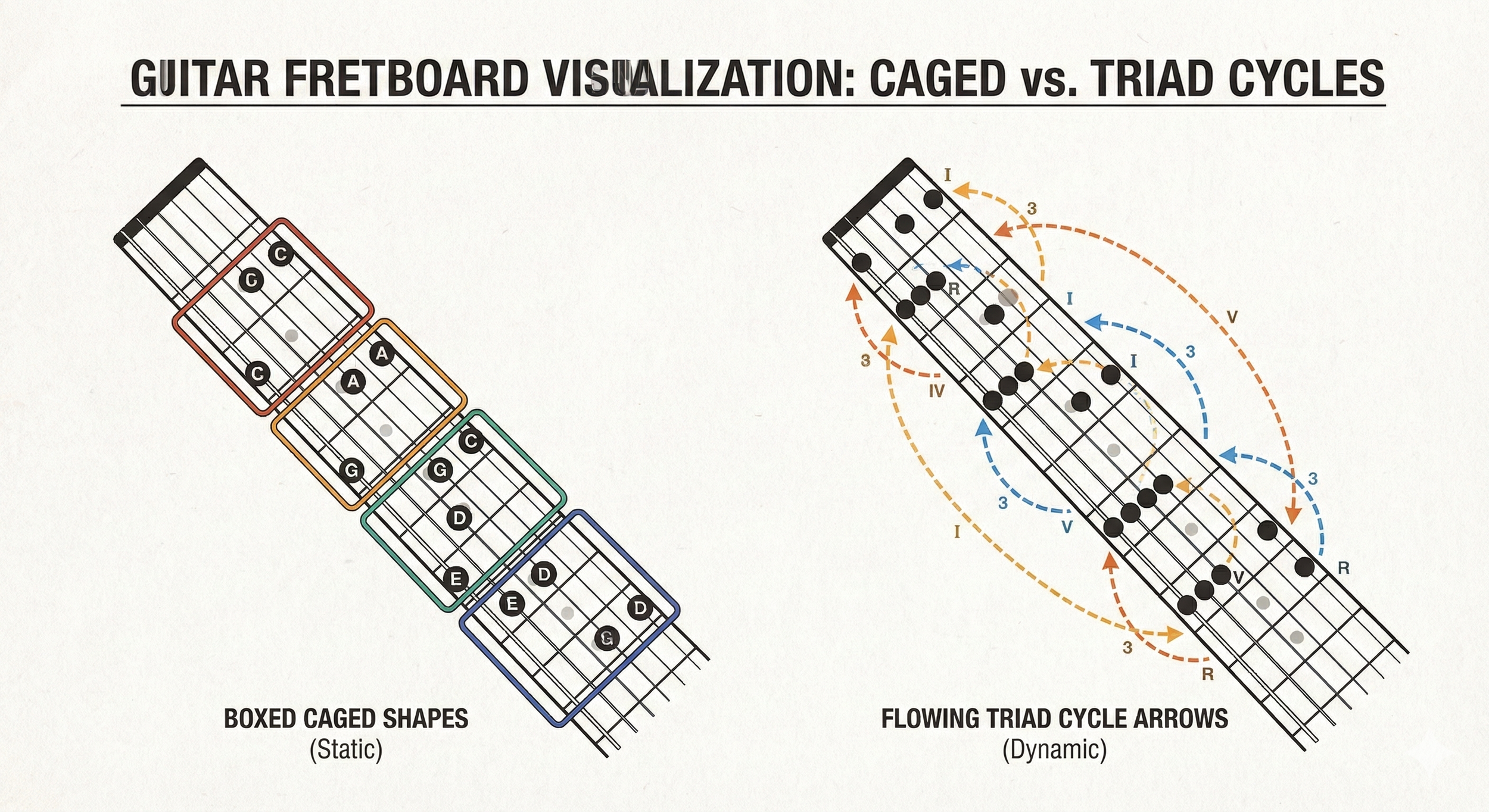
CAGED System vs. Triad Cycles: Which is Better?
The CAGED system is a popular starting point, but it has limits. Learn why practicing triad cycles reveals fretboard areas that CAGED misses.
Why Connecting Scale Shapes Won’t Help You Play Jazz Changes
Scales are just the alphabet, but they are not the story. Learn why voice leading and shell voicings are the true key to navigating chord progressions.

Beyond Bebop: Why J.S. Bach is the Ultimate Jazz Teacher for Guitarists
From George Benson to modern players, the link between Baroque music and Jazz is undeniable. But it’s not just history—it’s practical application. Bach is the ultimate teacher of "Implied Harmony." Learn how studying his works can train you to make a single note carry the weight of an entire chord progression, turning your solo lines into a self-contained orchestra.

Stop Playing Like a Typewriter: The 3-Finger System and Diagonal Phrasing
You’ve memorized the scales, yet your bebop lines still sound like a typewriter—rigid and devoid of swing. The problem is "vertical playing." Discover how legends like Wes Montgomery used the 3-Finger System and diagonal movement to break out of static boxes and make their guitar lines breathe like a saxophone.

Overwhelmed by Extensions? Let the Melody Decide
Should you build a triad off the 3rd, 5th, or 7th? The answer isn't random. The melody dictates your harmony.
The Anatomy of Thick Tone: Decoding the Right Hand of George Benson and Grant Green
You might blame your amp, guitar, or cables for a thin tone, but the real culprit is your right hand. The secret to that thick, punchy sound of legends like George Benson isn't in a pedal—it’s in the physics of how you strike the string. Discover how the "Rest Stroke" drives energy into the guitar body to create maximum fundamental frequency and tone density.
Play Like You Mean It: The Musician’s Mindset and the Power of Consistency
Instead of listening to the music, does your brain turn into a calculator during solos? The "Anxiety of the Empty Bar" kills creativity. Learn why internalizing the melody—not counting—is the secret to never getting lost again, and how adopting the "Long Game" mindset builds true mastery.

Stop Just 'Running': Why Cycles Don't Make You a Player
Practicing cycles of triads and shell voicings builds stamina, but it doesn't teach you how to play the game. Here is the next step.
The Role of Singing and Chromaticism in Jazz Lines
Can you play chromatic lines that aren't strictly arpeggios? Yes, but only if you know where you are landing.

Decoding Bebop: Upper Structure Triads and the Architecture of Modern Jazz
Speed isn't the secret to the Bebop sound—geometry is. Uncover how legends like Charlie Parker and Wes Montgomery used "Harmonic Superimposition" to stack simple shapes into complex, modern jazz lines. Stop playing scales and start building structures.
Beyond Scales: Painting on a Blank Canvas with Motivic Development
You’ve memorized the modes and arpeggios, yet your solos still feel like a random string of notes. The missing link isn't a new scale—it's Motivic Development. Discover how to turn "noodling" into a cohesive musical narrative by treating your improvisation like a conversation.
Stop Memorizing Dots: A Better Way to Practice Voice Leading
Avoid the memorizing fret trap. Learn why voice leading beats dot memorization and how to structure your daily practice.

Diagonal Shapes: The Difference Between Wes Lines and Django Lines
Why play diagonally? Learn how Tonic and Non-Tonic functions determine whether you play a Wes Line or a Django Line.

Escaping the Root Trap: The Art of Guide Tone Mapping for Beginners
Are your jazz chords sounding heavy and amateurish? You might be falling into the "Root Note Trap." Discover why leaving the low notes to the bassist and focusing on the structural power of 3rds and 7ths is the secret to a professional, breathing jazz sound.

Embracing Imperfection: Lessons from a Wedding Performance Disaster
Social media shows us the highlight reels, but real jazz happens in the recovery. From a chaotic wedding performance to the practice room, discover why connection matters more than perfection in this heartwarming Sunday insight.
Wes Montgomery’s Secret to High-Register Arpeggios
Wes Montgomery didn't reinvent the wheel for high notes; he used diagonal displacement. Discover how to reuse shapes for octave lines.
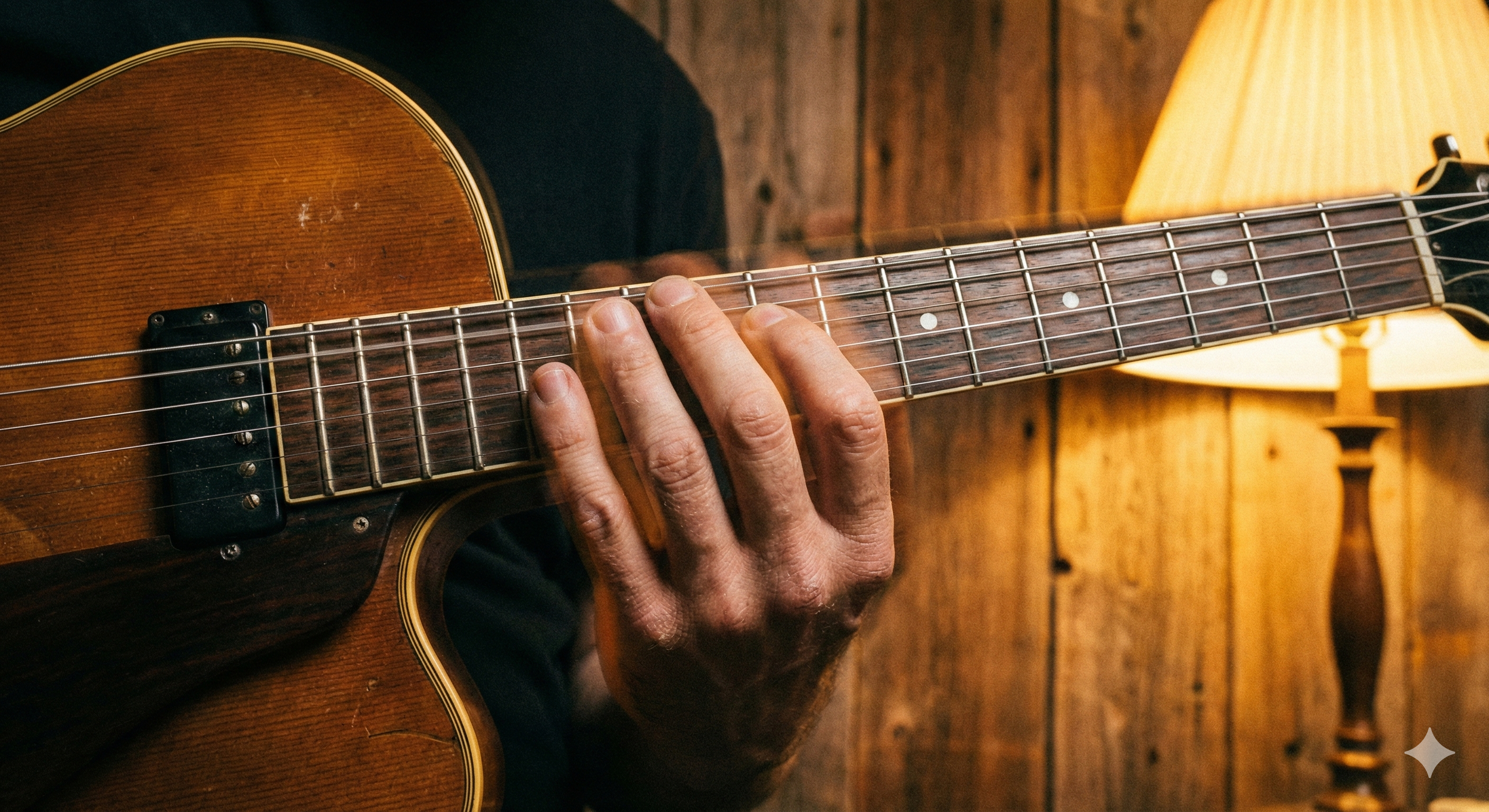
Stop Thinking Static Chords: Use Sliding Intervals for Upper Structures
Upper structures aren't just static shapes; they are movements. Learn how to use sliding intervals to navigate the neck fluidly.

Beyond Theory: Target Notes and Visualizing Sound Colo
In the heat of improvisation, mental calculus is a burden, not a tool. Discover why masters prioritize "Sound Color" over scale names, and learn how to use the Target Note method to bridge the gap between your brain and your ears.
Make an Impact Today
When you give, you invest in progress, compassion, and a better world for everyone.