

The Diminished Major 7th Chord Explained — Advanced Harmony for the Serious Jazz Guitarist
The Diminished Major 7th chord sounds exotic, but it shows up in the opening bars of Stella by Starlight, Someday My Prince Will Come, and How Insensitive. This post unpacks how to identify it, how it functions as a dominant upper structure, and why understanding it unlocks a large portion of the jazz standard repertoire.
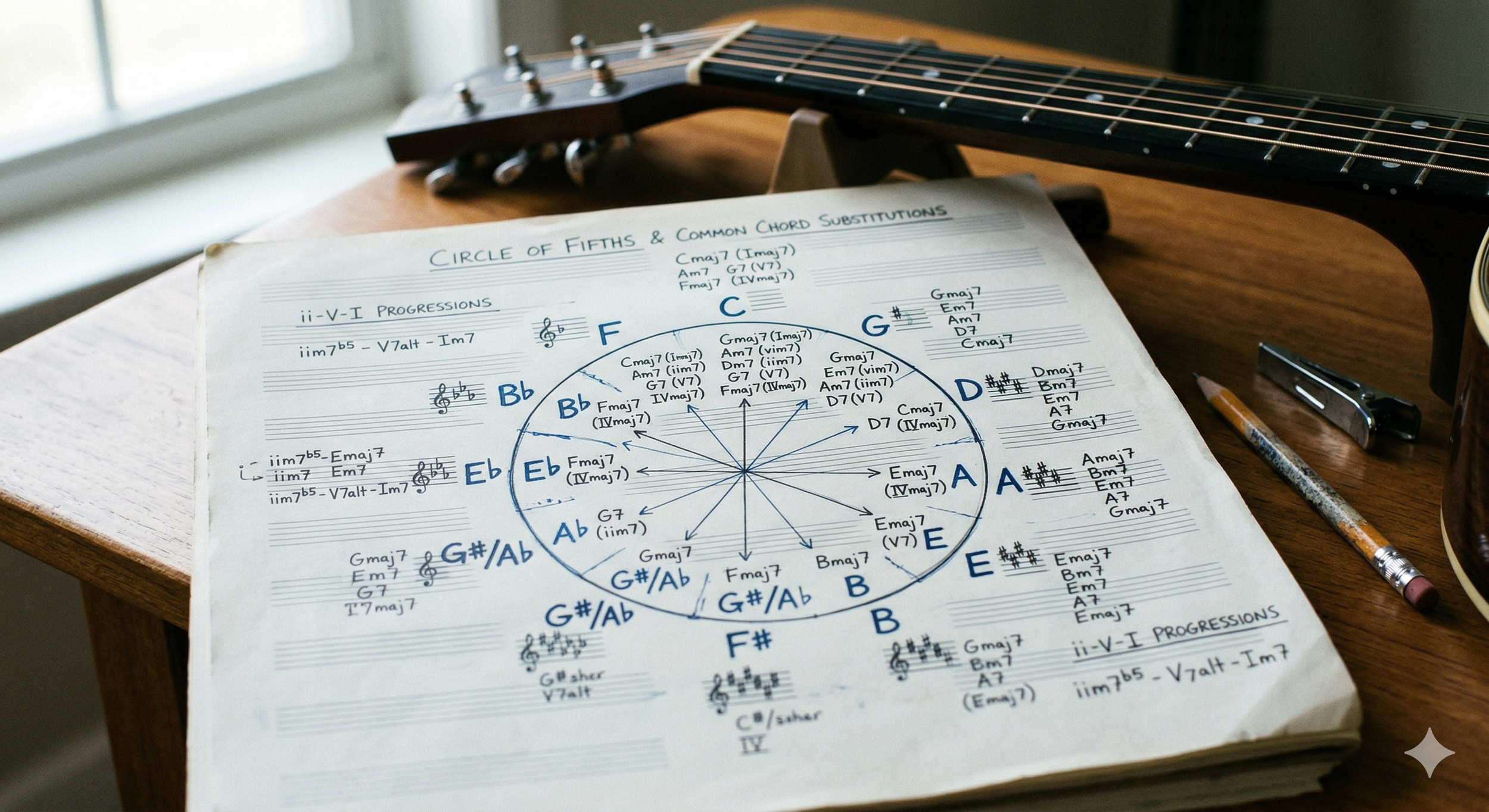
Secondary Dominants and Upper Structure Chords Inside the FDA
Secondary dominants follow a specific rule — circle-of-fifths motion resolving to a diatonic chord — and within the FDA, their upper structure chords are simply Wes Line or Django Line structures sitting a half step above the resolution point. This post explains how every secondary dominant fits into the same binary framework you already know.
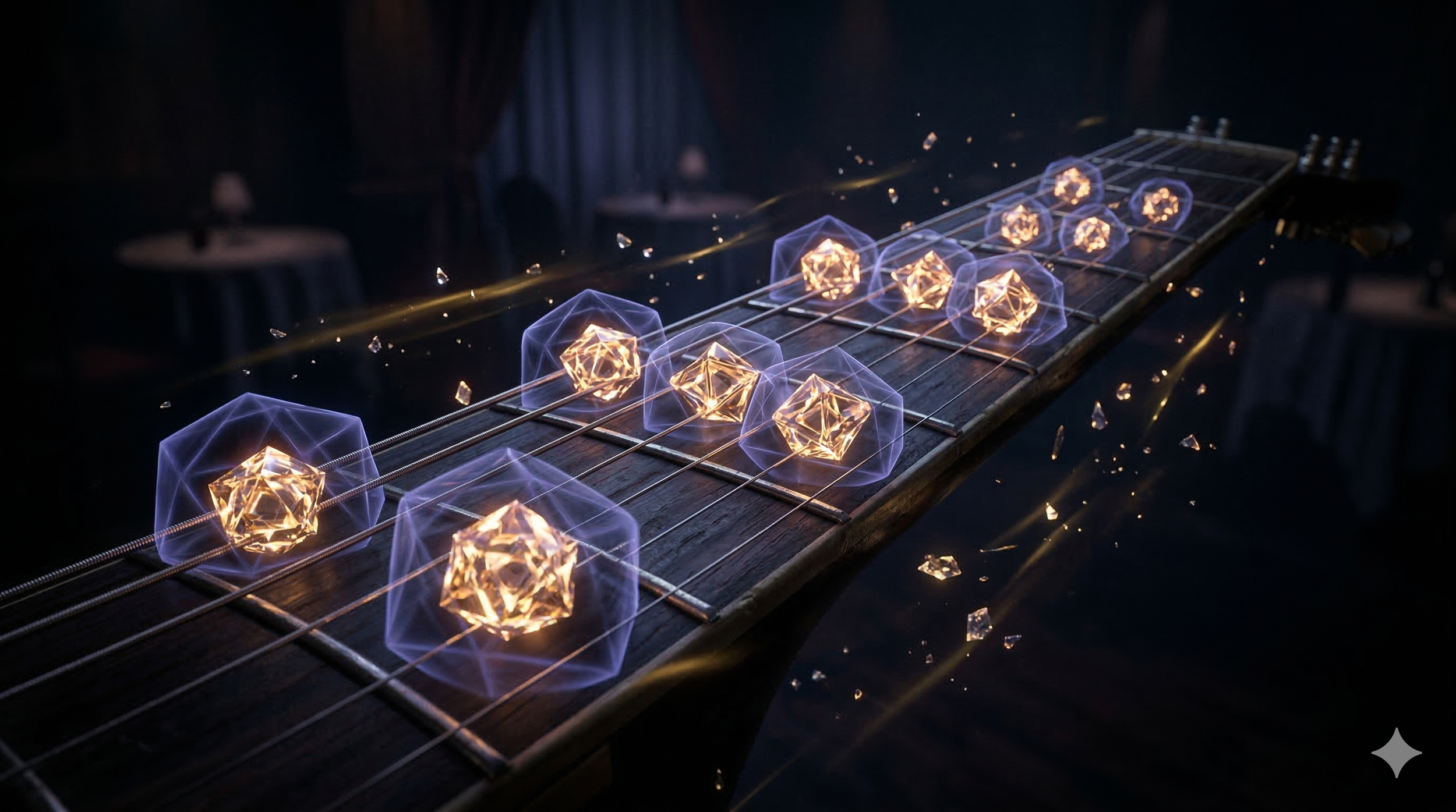
Ditch the Scales: Voicing-Centric Improvisation and Upper Structures
Still trying to calculate modes on the fly while soloing? It's time to stop over-analyzing. Discover why advanced jazz guitarists rely on functional voicing connections and Upper Structure Triads instead of rigid scale blocks to create fluid, spontaneous melodic lines.

Turning Guide Tones and Upper Structures into Melodic Lines
Learn how to transform static guide tones into flowing melodic lines using upper structures. This lesson breaks down the exact fretboard logic used by Charlie Christian and Wes Montgomery.
Overwhelmed by Extensions? Let the Melody Decide
Should you build a triad off the 3rd, 5th, or 7th? The answer isn't random. The melody dictates your harmony.

Stop Thinking Static Chords: Use Sliding Intervals for Upper Structures
Upper structures aren't just static shapes; they are movements. Learn how to use sliding intervals to navigate the neck fluidly.
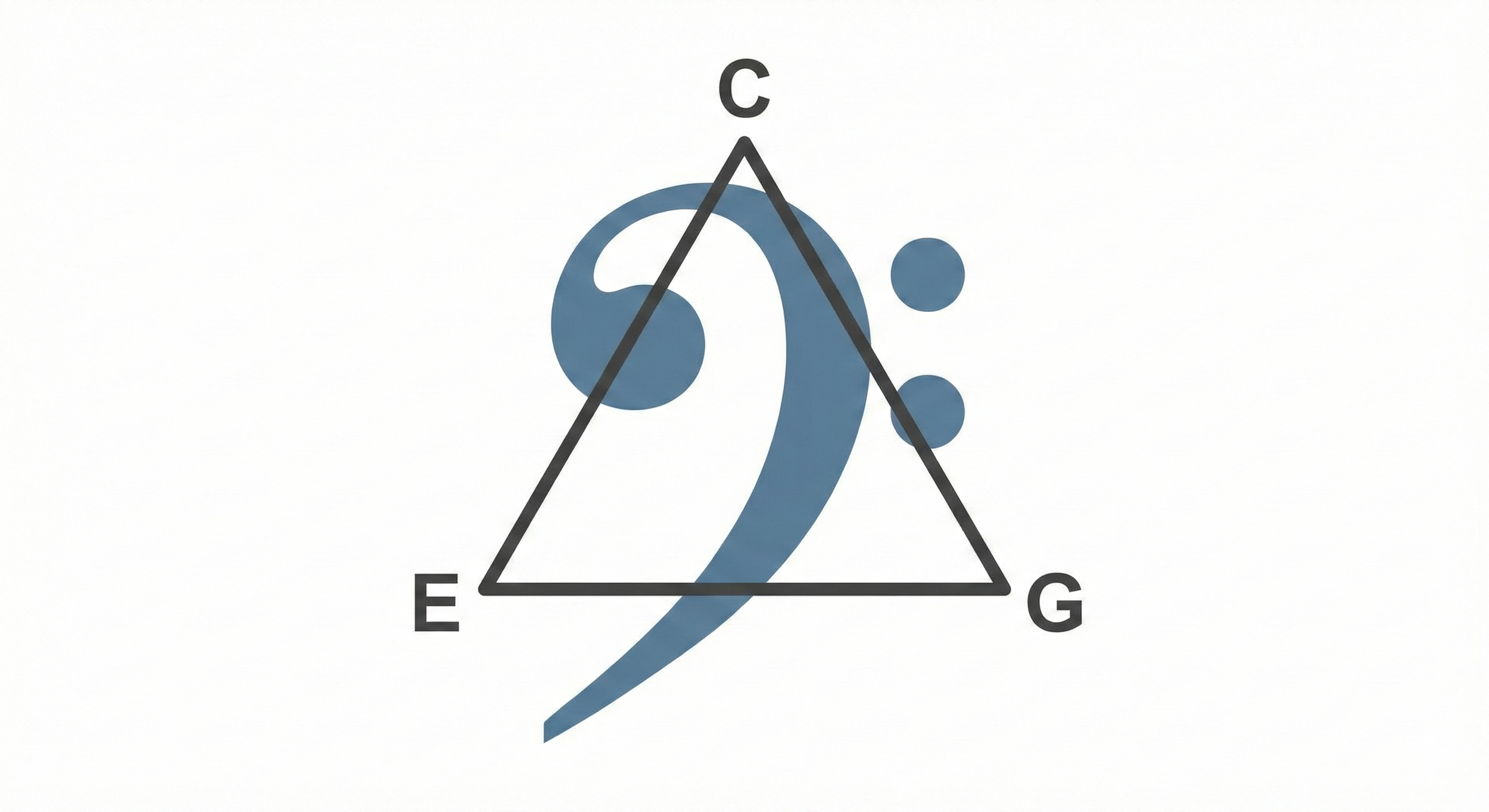
Understanding Triad Cycles: C Major over Db and Bb Bass
Unlock the power of 'Auxiliary Diminished' chords. Learn why playing a C Major triad over a Db bass note creates sophisticated jazz tension.
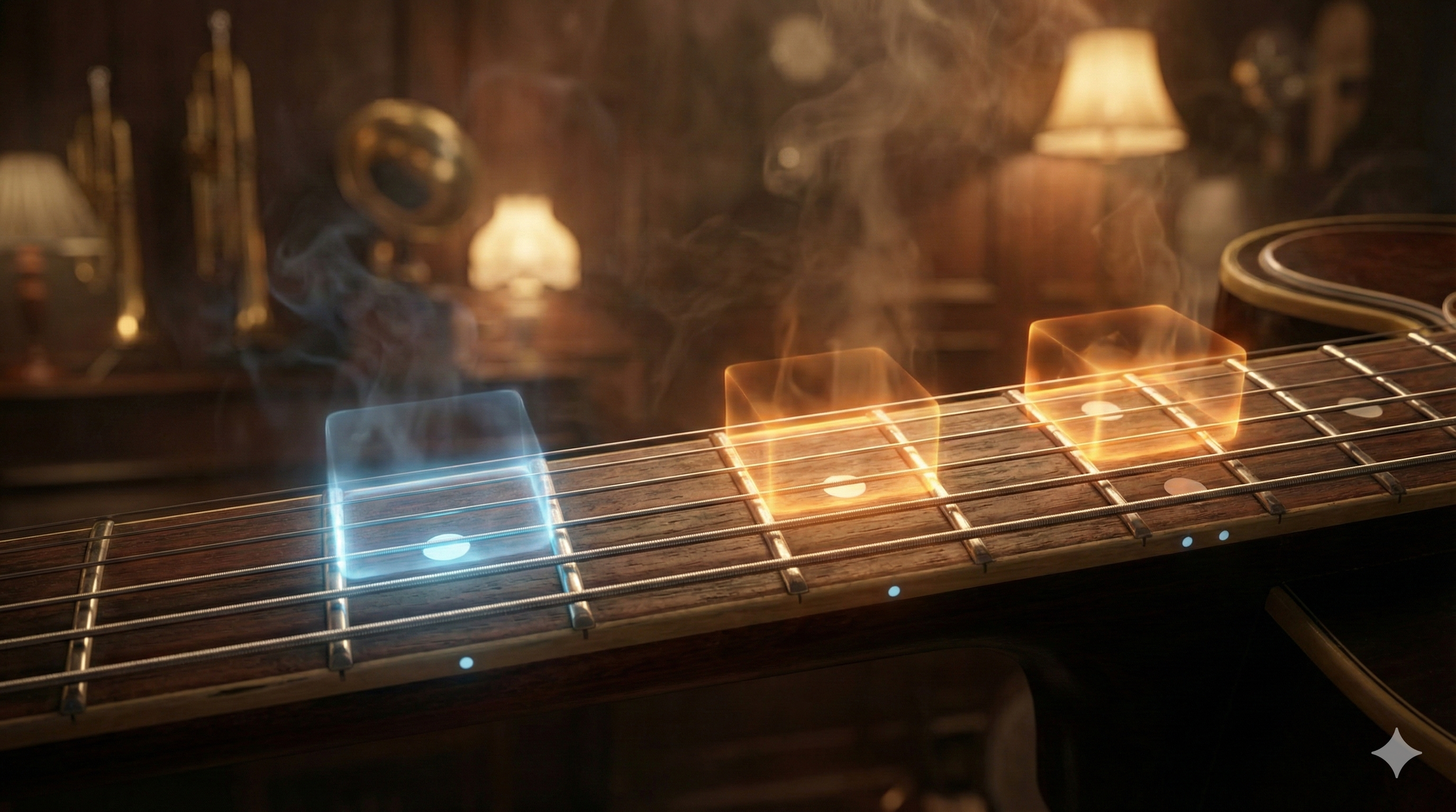
Stop Chasing Upper Structures: The Tonic vs. Non-Tonic Approach
Are you mentally exhausted trying to chase every chord extension in a progression? It’s time to stop doing "abstract math" on the fretboard. Discover why categorizing chords into just two functions—Tonic and Non-Tonic—is the secret to playing smoother, more melodic jazz lines like the masters.
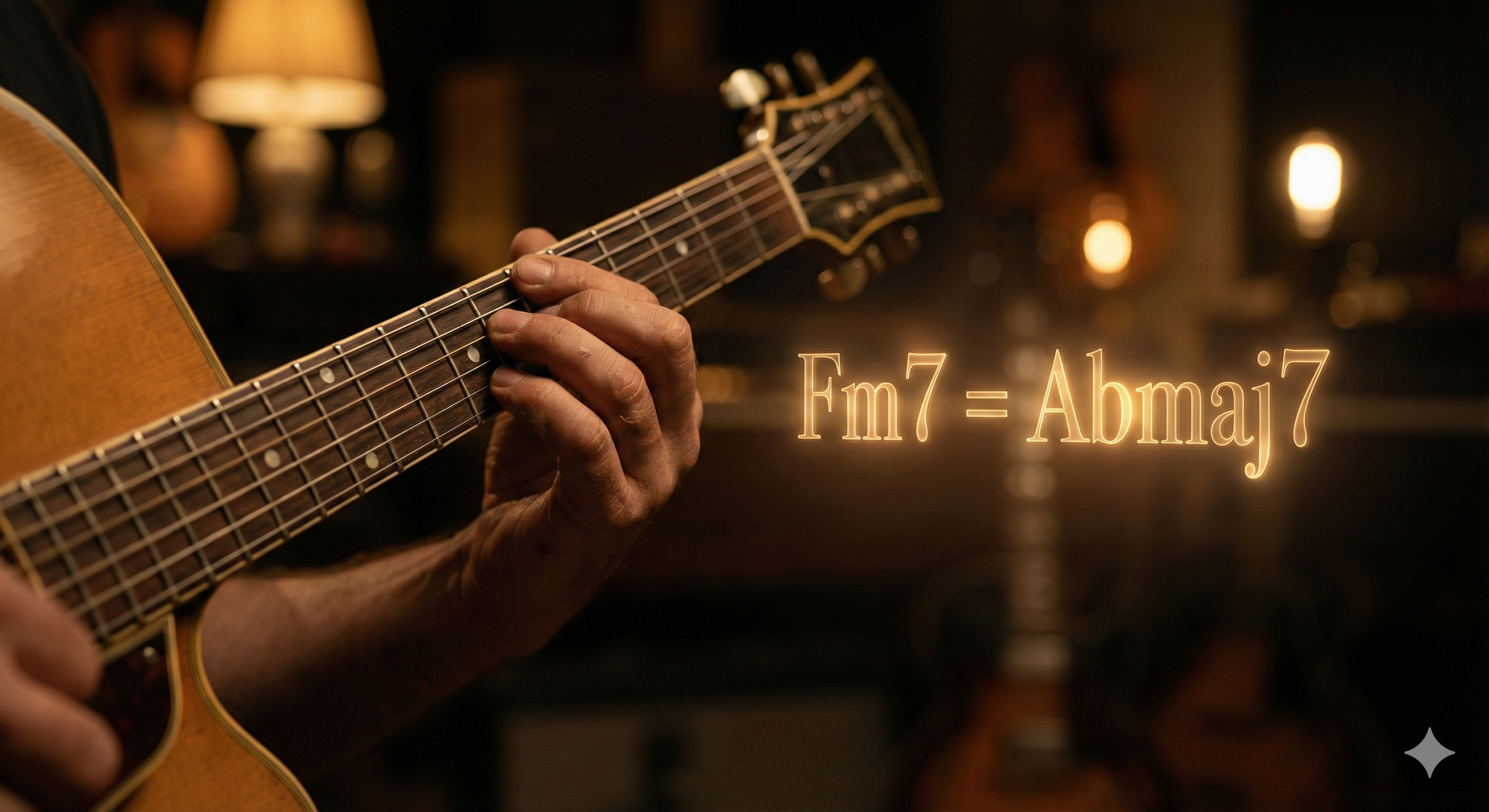
Decoding the "Wes Line": Upper Structures in Fly Me to the Moon
Beginners are often told to play root-based arpeggios, but this approach creates a mechanical, disconnected sound. The secret to that floating, professional jazz quality isn't playing the root—it's playing the Upper Structure. Discover how to transform a simple Fm7 into a lush Abmaj7 sound (the "Wes Line") and navigate the fretboard with the efficiency of a pro.