

Diagonal Shapes: The Difference Between Wes Lines and Django Lines
Why play diagonally? Learn how Tonic and Non-Tonic functions determine whether you play a Wes Line or a Django Line.
Wes Montgomery’s Secret to High-Register Arpeggios
Wes Montgomery didn't reinvent the wheel for high notes; he used diagonal displacement. Discover how to reuse shapes for octave lines.

Stop Thinking Static Chords: Use Sliding Intervals for Upper Structures
Upper structures aren't just static shapes; they are movements. Learn how to use sliding intervals to navigate the neck fluidly.

Jazz Standard Analysis: Who Can I Turn To
We break down strategies for navigating the jazz standard 'Who Can I Turn To,' focusing on melody, upper structures, and key centers.
How to Fix Your Rhythm Between Guide Tones
Connecting guide tones can be rhythmically challenging. Here is a simple permutation exercise to help you fill the gap between the 3rd and 7th.
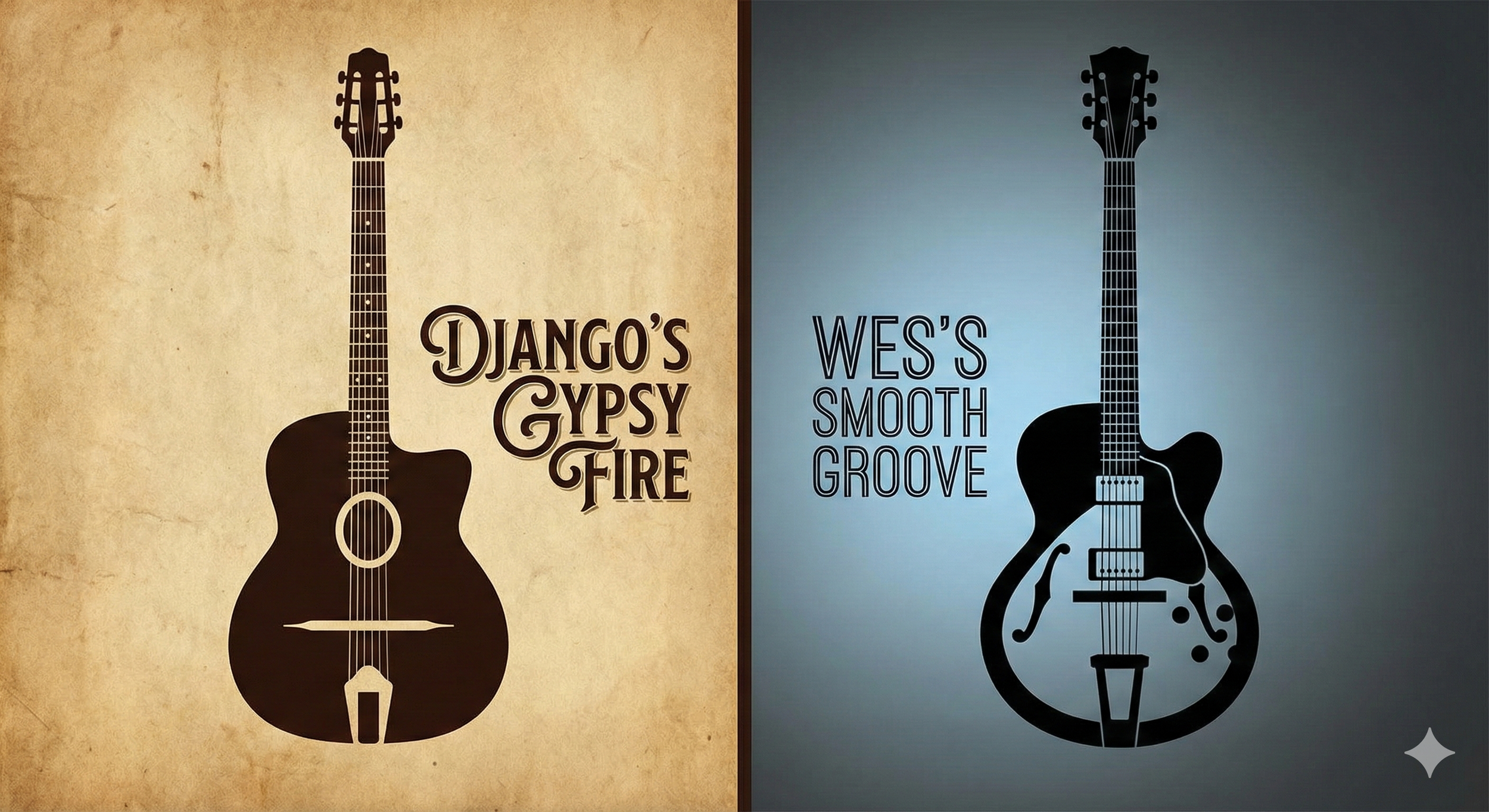
Django Line vs. Wes Line: Understanding the Difference
Ed asks if the Django Line and Wes Line are interchangeable. The answer lies in voice leading and understanding tonic vs. non-tonic function.
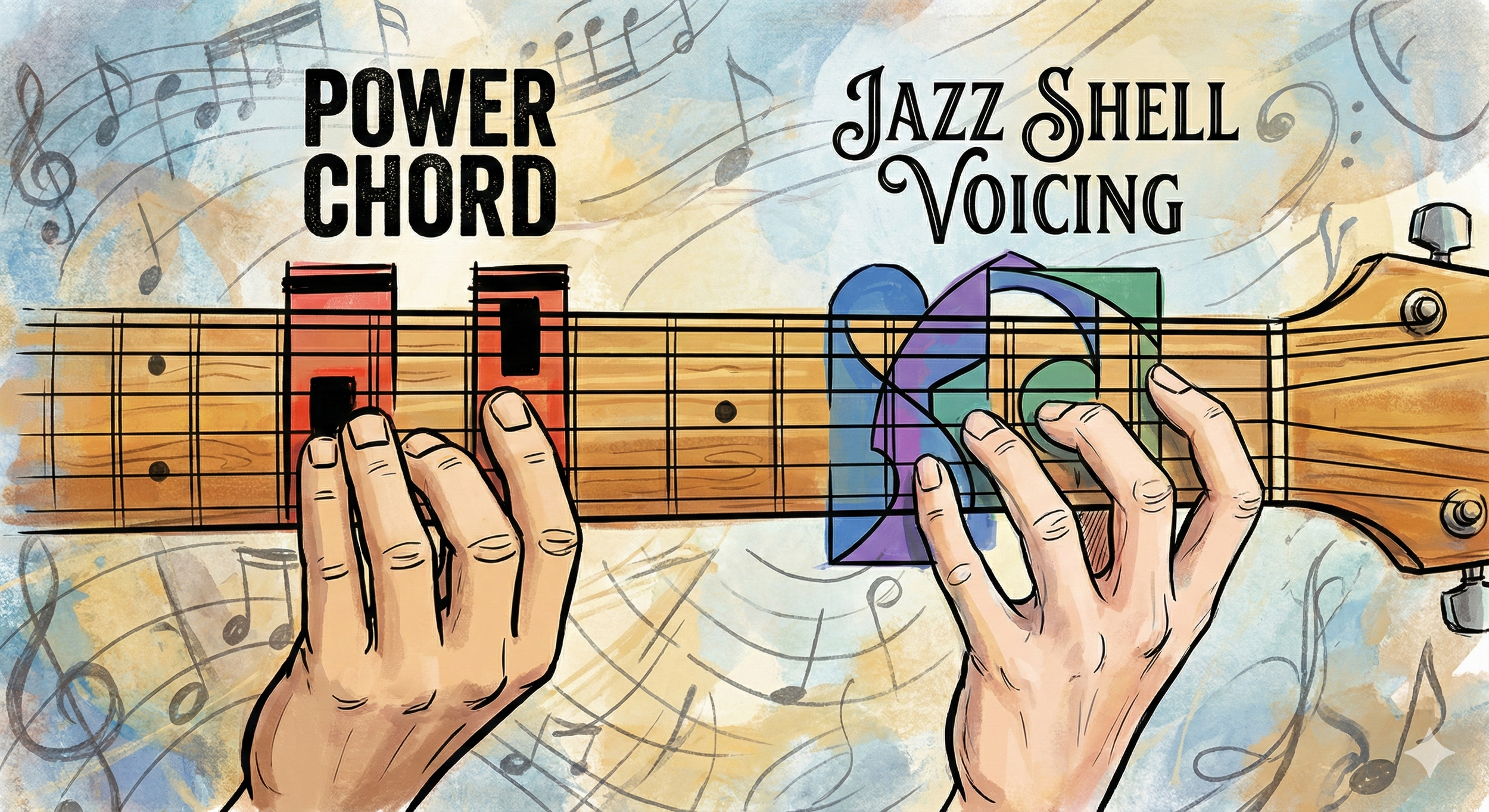
Why Power Chords Can Feel 'Boring' in Jazz
Power chords offer a neutral sound, but they often lack the storytelling ability of jazz harmony. Learn why playing thirds and sevenths creates a more compelling narrative.

Is the IV Chord a New Tonic? Navigating the I to IV Change
When moving from the I chord to the IV chord, does the target become a new tonic? We explore secondary dominants and upper structures to make this transition smooth.
Root & Melody Practice: From Chord Melody to Surfing the Change
Is practicing 'Root and Melody' just chord melody? Learn how to use this technique as a map for improvisation and try the 'Common Tone' exercise.
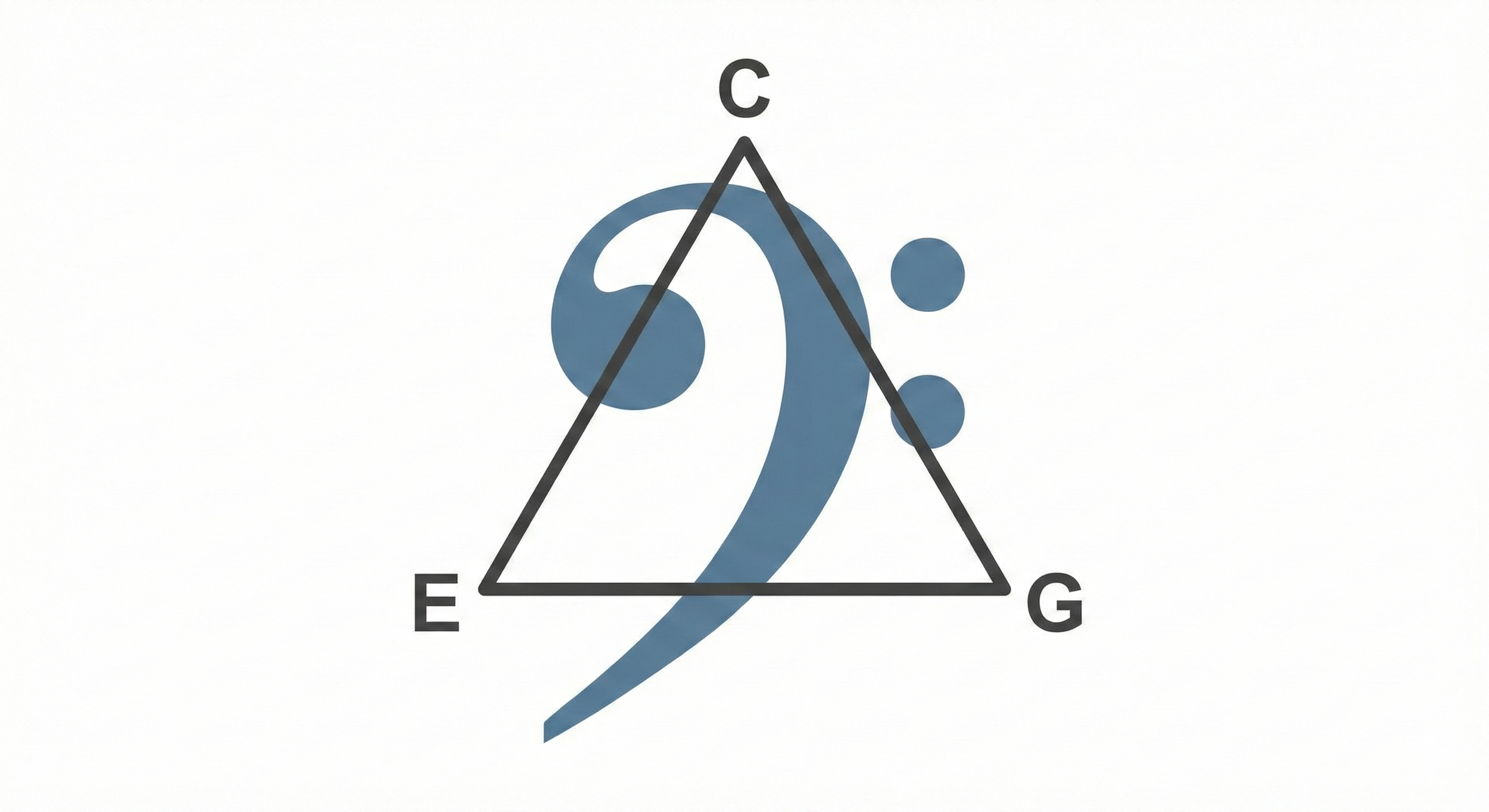
Understanding Triad Cycles: C Major over Db and Bb Bass
Unlock the power of 'Auxiliary Diminished' chords. Learn why playing a C Major triad over a Db bass note creates sophisticated jazz tension.
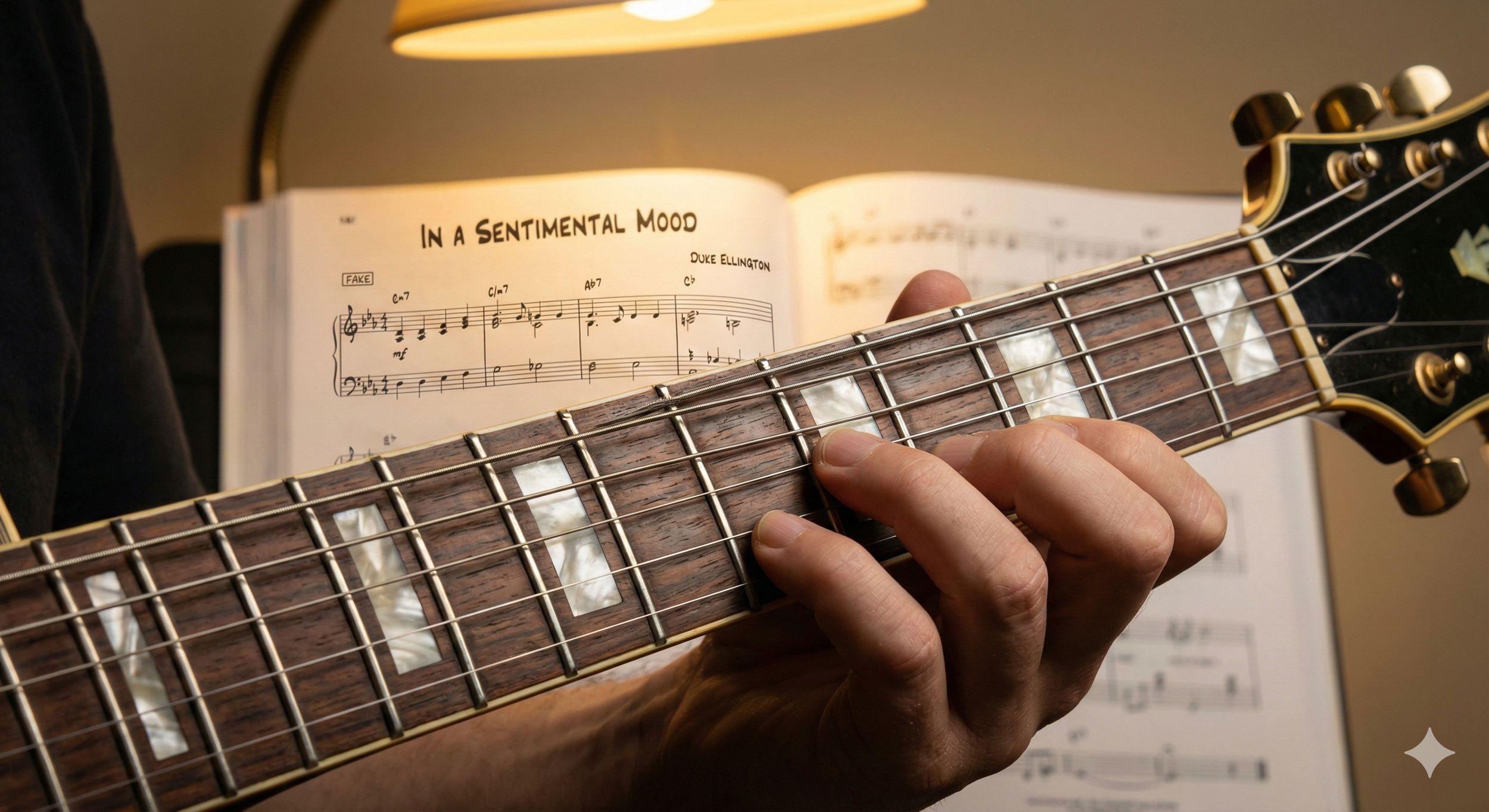
Beyond the Blues Scale: How to Structure Melodic Improvisation
Learn why playing the melody is more effective than relying on the blues scale for songs like 'In A Sentimental Mood'. Discover the three-step framework for developing your own phrasing.

How to Internalize Complex Tunes: A Case Study on "What Is This Thing Called Love"
Are your solos sounding like random scale exercises? Discover the "Fly Me to the Moon logic" applied to "Autumn Leaves." This step-by-step process helps you build a melodic skeleton using 3rds and 7ths, ensuring your lines resolve beautifully through the changes every time—before you even add the "fancy stuff."

A Step-by-Step Process for Composing Melodic Lines on "Autumn Leaves"
Unlike simple circle-of-fifths tunes, "What Is This Thing Called Love" presents a unique challenge: the melody often soars high while standard chords sit low, creating a disconnect. In this case study, we explore the "12th Step"—a method of projecting voicings into the upper register—to create fluid, professional lines that support the melody without jumping frantically around the fretboard.

Stop Chasing Upper Structures: The Tonic vs. Non-Tonic Approach
Are you mentally exhausted trying to chase every chord extension in a progression? It’s time to stop doing "abstract math" on the fretboard. Discover why categorizing chords into just two functions—Tonic and Non-Tonic—is the secret to playing smoother, more melodic jazz lines like the masters.
Why You Should Ignore 'Ridiculous' Drop 2 Inversions
Not all chord inversions are created equal. Discover why finding a 'home base' on the fretboard is better than memorizing impossible shapes.

How to Stop Getting Lost During a Solo
Getting lost in the chord changes is a common fear. The solution isn't counting measures—it's doing what great drummers do.
What Does "Following the Melody Direction" Actually Mean?
Does following the melody mean matching its pitch and register? No. It means understanding the magnetic pull of the Third.

Revealing the Tritone in the Django Line
Where is the tritone hiding in a major 7th shape? See how moving just one note in the Django Line creates perfect dominant voice leading.
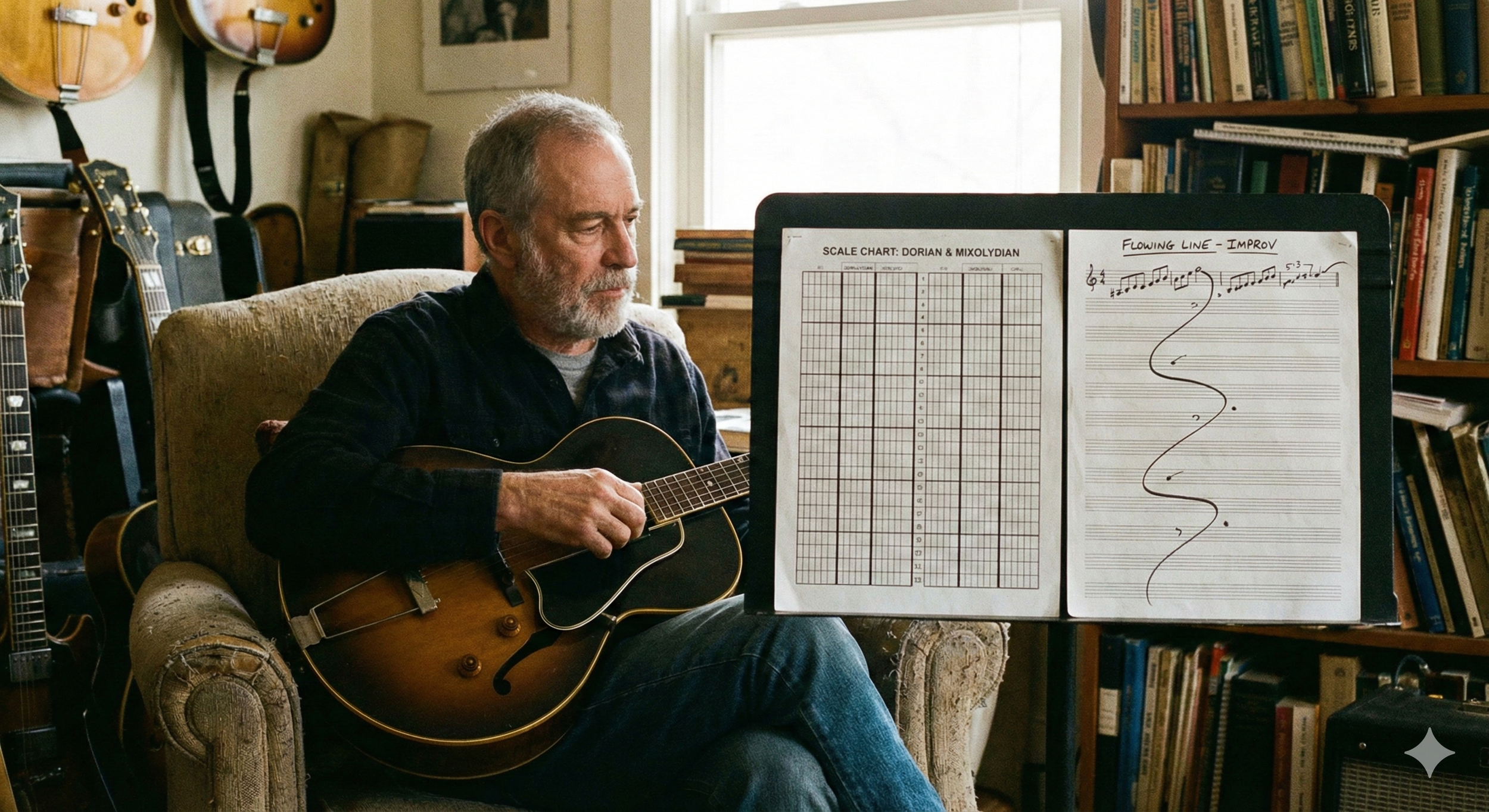
Do You Actually Use Scales When Improvising?
Intermediate players often wonder if pros really think about scales while soloing. The answer reveals the difference between sounding like a student and sounding like a pro.

The Logic Behind Diagonal Scale Fingering
Why wrestle with complex box shapes when the guitar is built for diagonal movement? Learn the simple two-string repeating pattern that simplifies the fretboard.
Make an Impact Today
When you give, you invest in progress, compassion, and a better world for everyone.