

How to Play Jazz Guitar Over Church and Pop Music
When a jazz guitarist plays over church or pop music — songs built on triads rather than seventh-chord harmony — the fastest and most reliable adaptation is the pentatonic block anchored to the melody. This post explains the approach Junewon Choi teaches in the Functional Diagonal Approach (FDA), including why melody must stay in your inner ear throughout the solo and how to listen like the masters who played it before you.
Jazz Guitar Mindset: Why Playing for Family Is Scarier Than the Stage
Stage fright doesn't disappear when you play for family — it intensifies. A jazz guitarist reflects on performing at his grandmother's hundredth birthday, the psychology of playing for people who know your history, and what it means to go all-in on music.
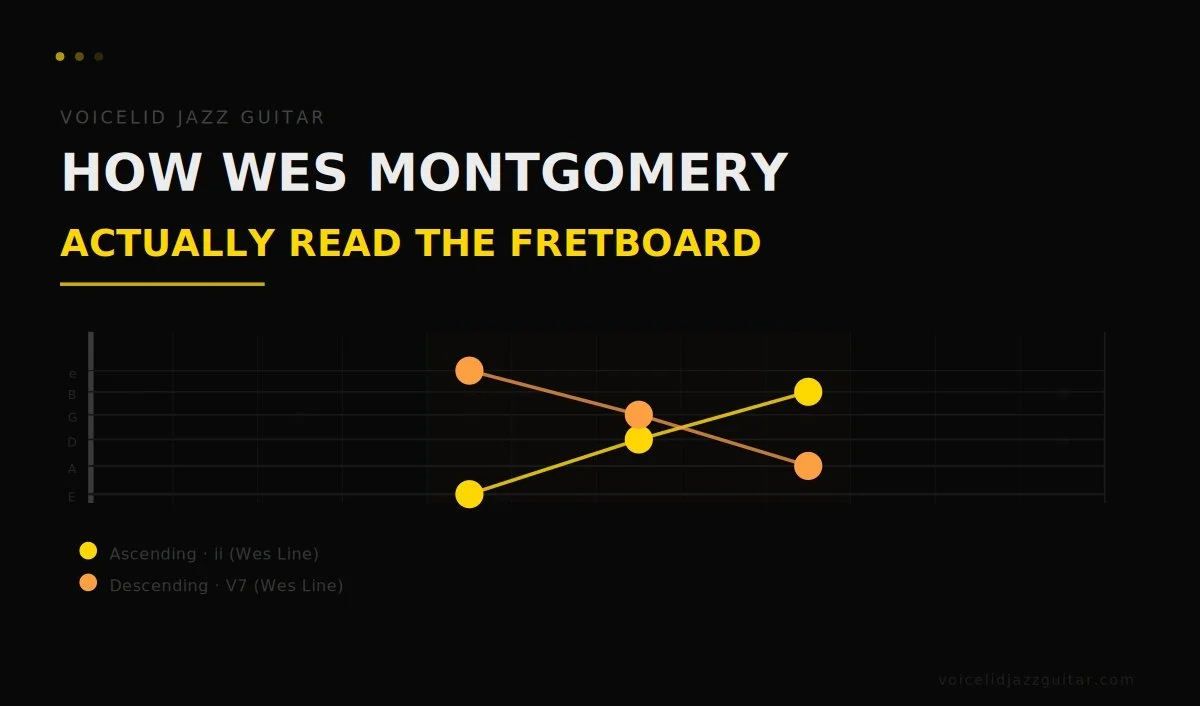
How Wes Montgomery Actually Read the Fretboard
Most players trying to learn from Wes Montgomery start with the octaves. That's the imitation. This is what was actually happening underneath.
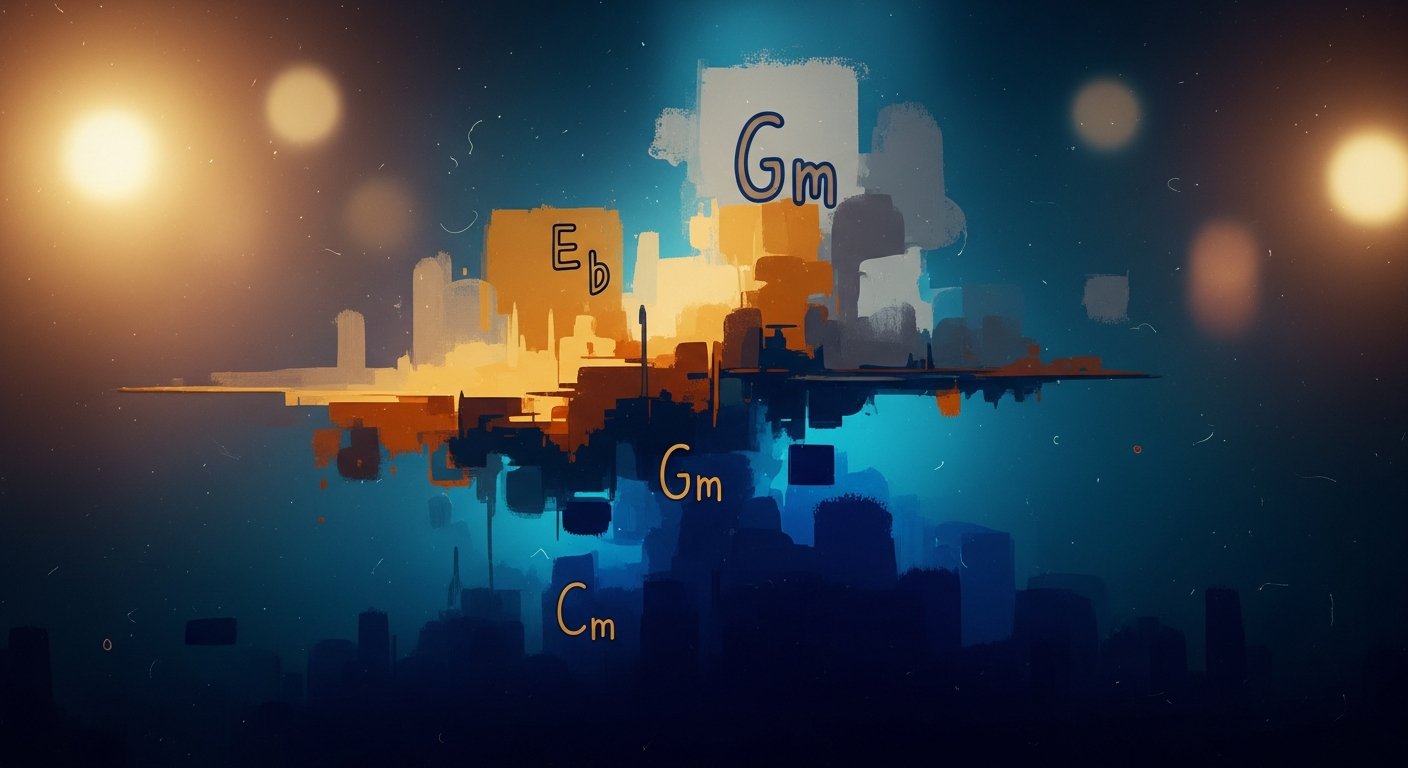
Upper Structure Triads: Stacking Eb and Gm Over Cm in Blue Bossa
There’s a moment in every advanced jazz guitarist’s development when a single chord stops looking like a single chord. A Cm7 is no longer just C–Eb–G–Bb on a page.

Jazz Guitar Upper Structures: Where Advanced Harmony Really Comes From
Upper structures, melodic minor modes, Bird Blues — advanced harmony isn't a separate world. It traces back to specific musicians and recordings. This guide explains where these concepts came from and how to study them the right way.

The Soccer Coach Parable: Why Songs, Not Drills, Build Real Jazz Players
Here’s a thought experiment. Imagine you sign up for soccer lessons.

Jazz Guitar Improvisation Tips: How Transcription Connects Everything You've Learned
Shell voicings, drop 2, II–V–I — you've learned the concepts separately. Transcription is what connects them. This guide explains why analyzing real solos (like Benson on Billie's Bounce) reveals how jazz harmonic vocabulary actually works in practice.
Why Jazz Guitar Isn’t a Scale Problem
Most jazz guitar methods open the same way: a stack of scale diagrams, a list of modes, and the implicit promise that if you can run them all in twelve keys, jazz will start to come out of your fingers.

Jazz Guitar Basics: Your Introduction to Rhythm Changes
Rhythm Changes is the second great harmonic form in jazz — built on the changes of George Gershwin's 'I Got Rhythm.' This beginner's guide explains what it is, why fast-tempo jazz often treats the A sections as one key center, and how to start approaching it with the blues scale.

What a Structured Jazz Guitar Course Actually Looks Like
If you search for "structured jazz guitar course for beginners," you will find a lot of courses that look organized. There are units, modules, week-by-week schedules, neat little checklists.

Chord Melody and Soloing Are the Same Thing
Most jazz guitar players are taught to treat chord melody and soloing as two separate skills. Chord melody is the "arranging" skill — you take a tune, harmonize the melody, and play it as a self-contained statement.
How to Find Jazz Guitar Guide Tones on the Second and Third String
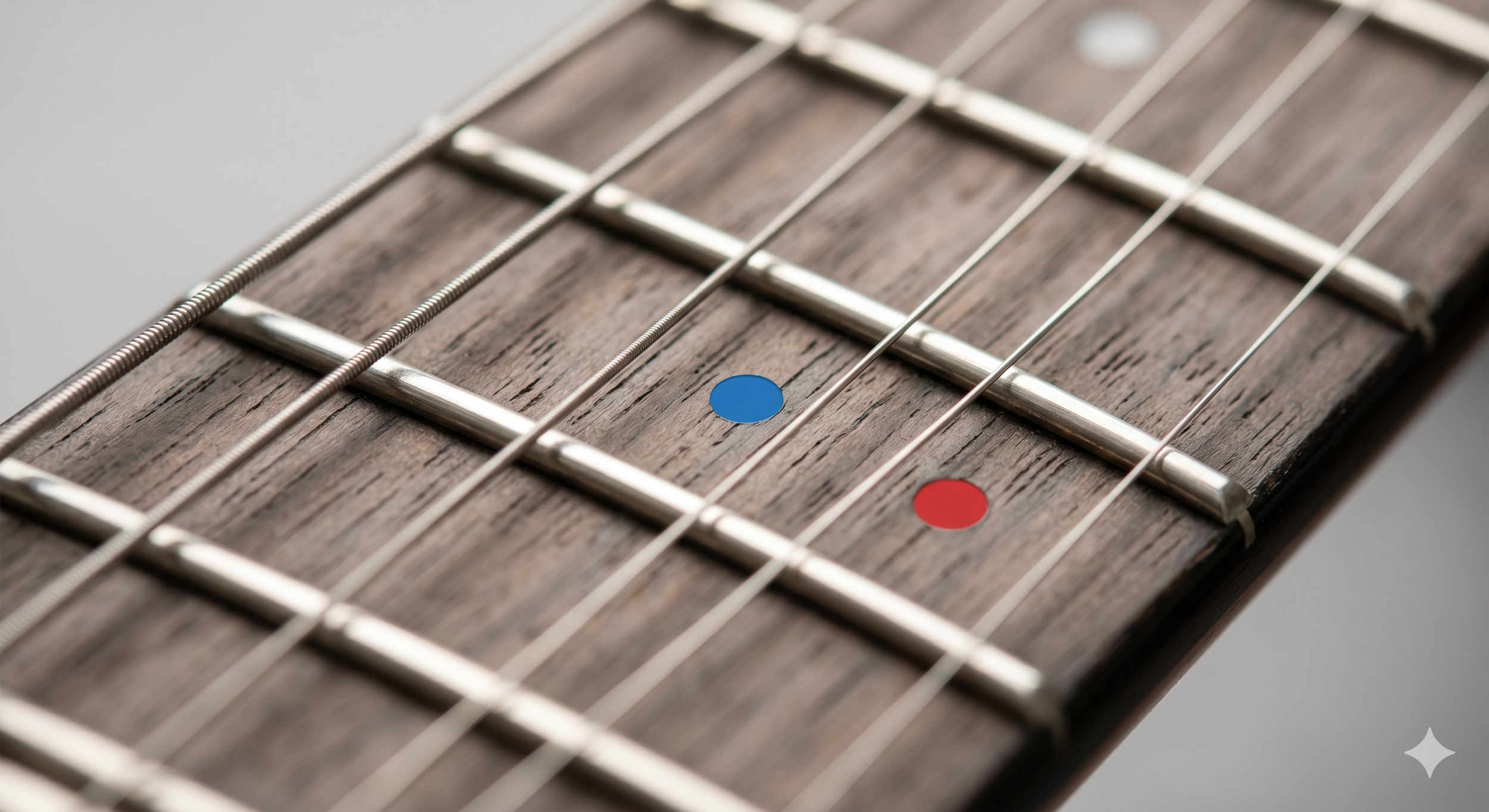
Finding jazz guitar guide tones on the second and third string is a matter of octave displacement: take the guide tone pair you know on the fourth and third string, and move the lower voice up an octave so both notes land on the upper string positions.
Guide Tones and Voice Leading in Church Music With Triad Cycles on Guitar
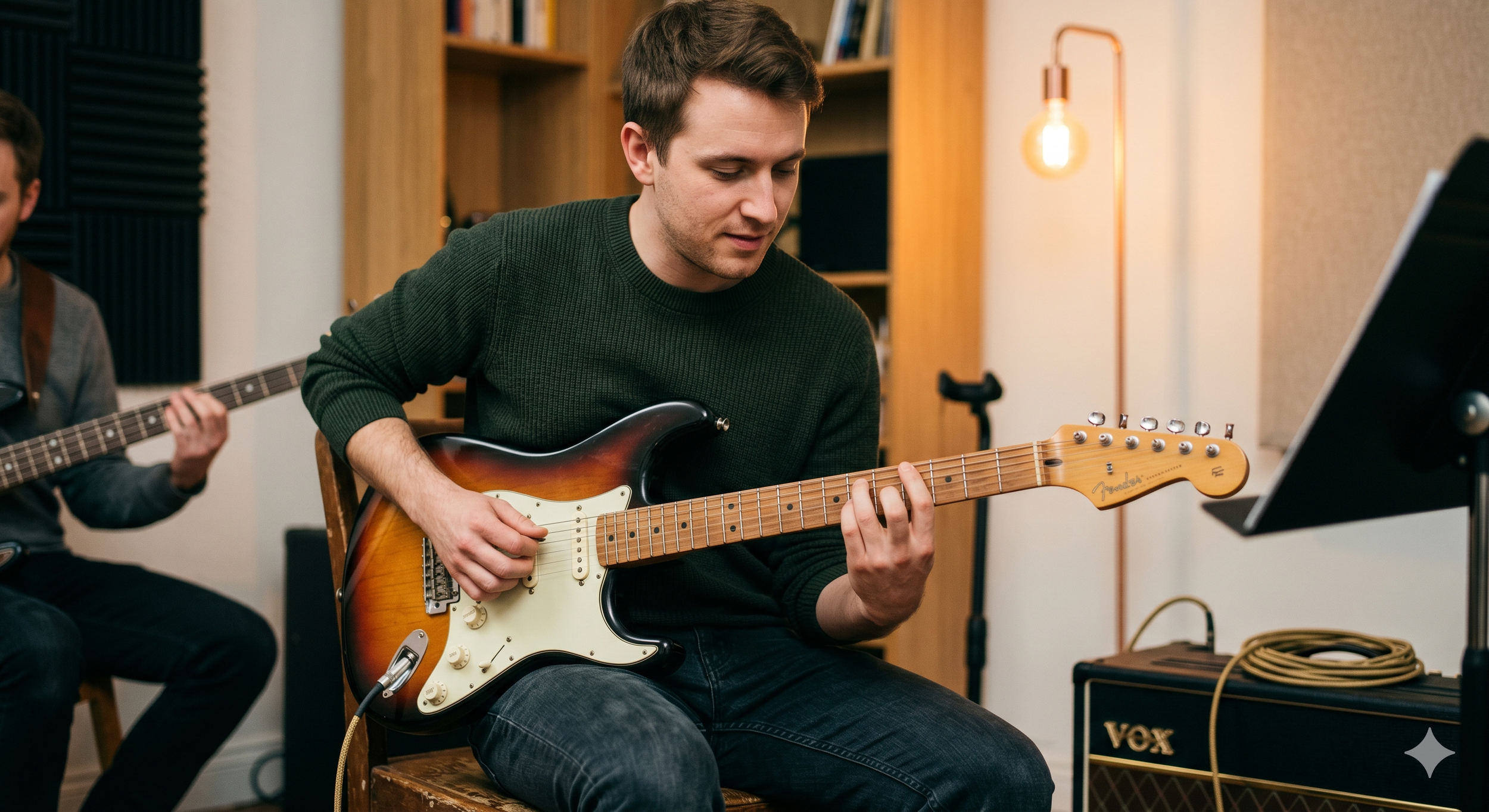
In church music built on 1-4-5 progressions without seventh chords, guide tone voice leading does not directly apply. Triad cycles offer an equivalent structural framework that creates smooth, connected motion across the same changes. This post explains what Junewon Choi demonstrated at the April 4 VLJG Office Hour.
How to Adapt a Familiar Jazz Melody to Harmonic Minor Sound on Guitar
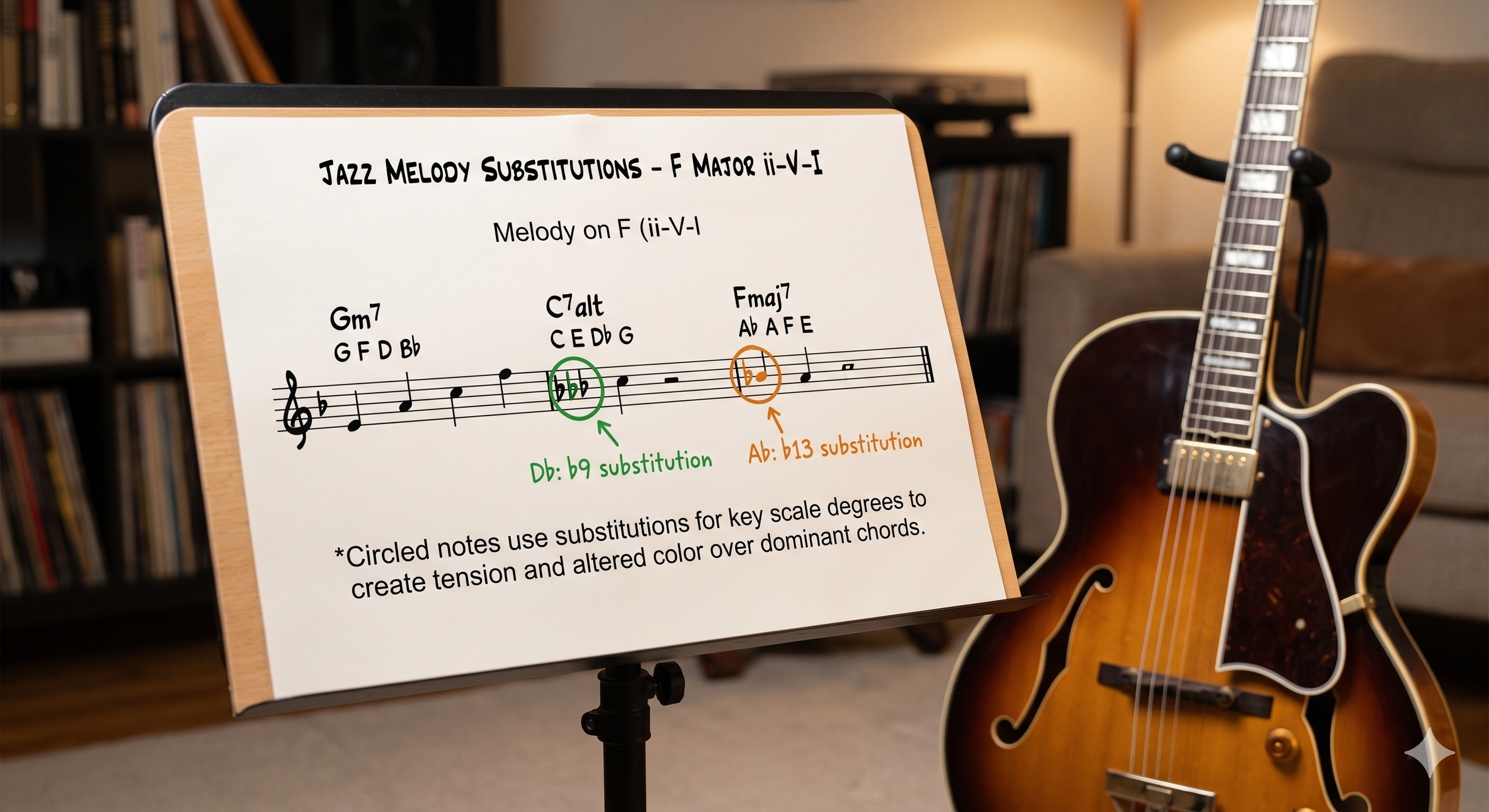
Adapting a familiar jazz melody to harmonic minor sound requires identifying specific scale degrees and substituting them with their harmonic minor equivalents — replacing the major sixth with a flat sixth and the major third with a minor third. This post explains the one-to-one note mapping method Junewon Choi described at the April 4 VLJG Office Hour.

Sparse Jazz Guitar Comping With Shell Voicings: How to Comp Yourself
Creating rhythmically engaging sparse jazz guitar comping requires stripping chords down to their guide tones — the third and seventh of each chord — using shell voicings as the source material. This post explains how shell voicings generate both solo lines and sparse accompaniment, and how to build the sound Junewon Choi demonstrated at the April 4 VLJG Office Hour.

Why the Wes Line Feels Forced Before It Feels Natural
When the Wes Line from the Functional Diagonal Approach (FDA) feels mechanical rather than musical, it is a signal that the ear has not yet internalized the structure. This post explains why that gap is normal, what Junewon Choi teaches about bridging technical vocabulary and personal sound, and what to practice next.
The Road You Thought Was Wrong Was Yours All Along — A Weekend Reflection on Identity in Jazz
Modern or traditional? The question feels technical — but it isn't. It's an identity question. This post explores what it really means to find your own sound in jazz, through the stories of Wes Montgomery, Kenny Burrell, and the quiet courage of playing what genuinely resonates with you.

The Diminished Major 7th Chord Explained — Advanced Harmony for the Serious Jazz Guitarist
The Diminished Major 7th chord sounds exotic, but it shows up in the opening bars of Stella by Starlight, Someday My Prince Will Come, and How Insensitive. This post unpacks how to identify it, how it functions as a dominant upper structure, and why understanding it unlocks a large portion of the jazz standard repertoire.
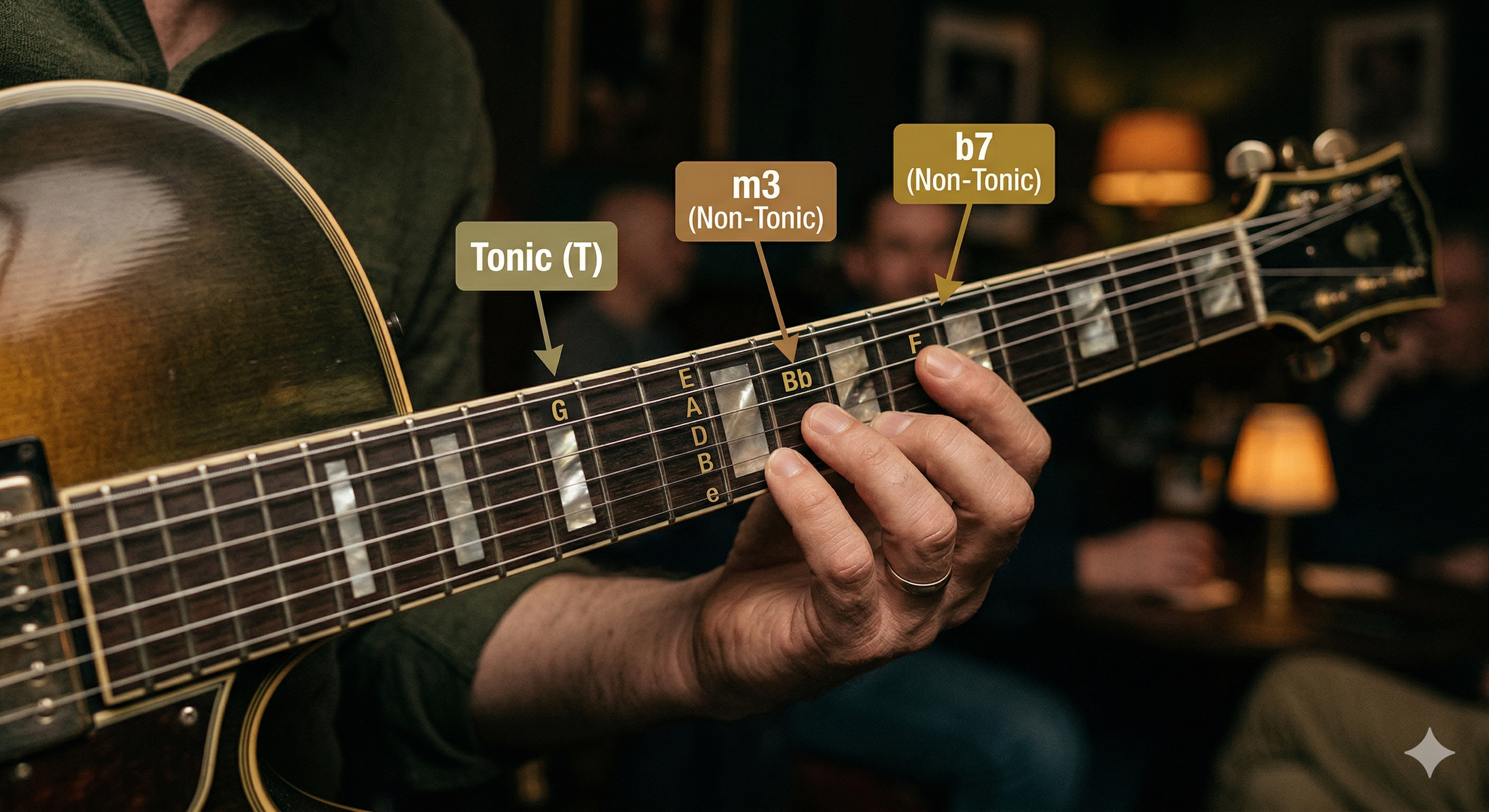
Tonic vs. Non-Tonic in the FDA: Getting the Chord Function Right
Knowing whether a chord is tonic or non-tonic in the FDA determines which diagonal line you use — and getting that wrong means the whole system breaks down. This post clarifies the G minor 7 and E-flat major 7 relationship in the key of B-flat and explains how to apply tonic and non-tonic assignments consistently around the circle of fifths.
How Down Strokes Create Swing — The Intermediate Player's Guide to Groove
Alternate picking is efficient — but it works against jazz swing. This post explains why consistent down strokes are the foundation of authentic groove in the Wes Montgomery tradition, and gives you a simple protocol to rebuild your technique from the ground up.