
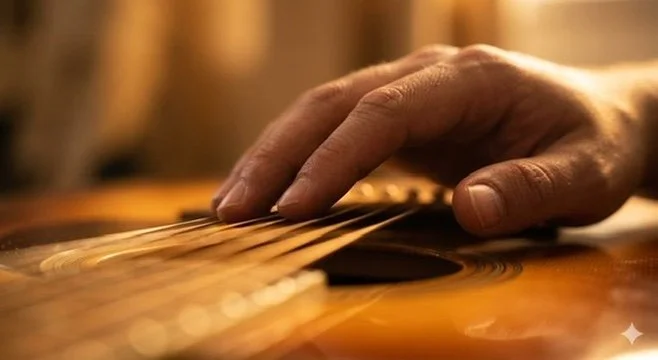
How to Play Like Wes Montgomery — A Beginner's Guide to Thumb Picking
Wes Montgomery didn't choose the thumb — circumstances did. This post breaks down the rest stroke and down stroke fundamentals at the heart of his iconic tone, and explains why beginners should start here before anything else.
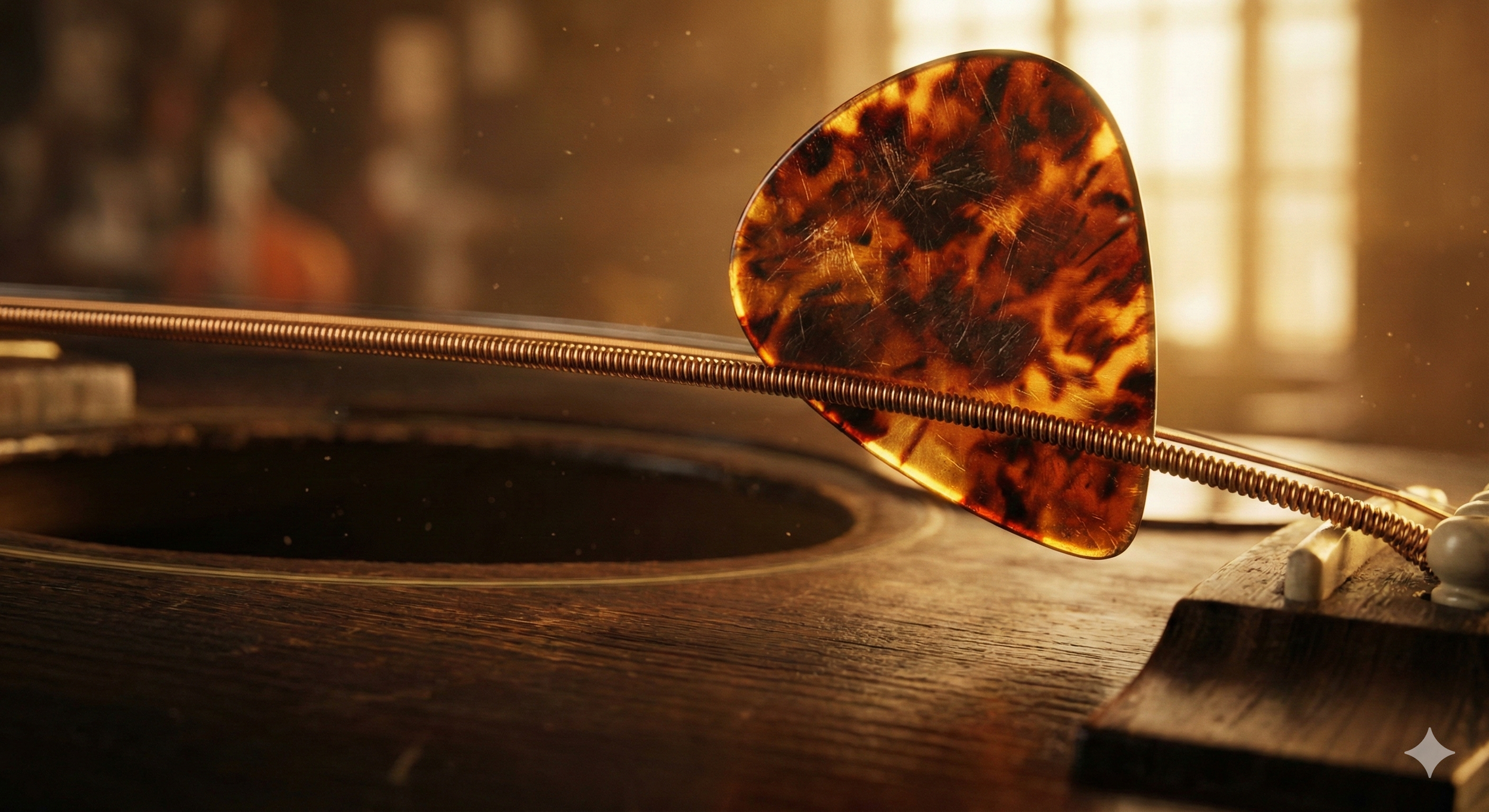
The Anatomy of Thick Tone: Decoding the Right Hand of George Benson and Grant Green
You might blame your amp, guitar, or cables for a thin tone, but the real culprit is your right hand. The secret to that thick, punchy sound of legends like George Benson isn't in a pedal—it’s in the physics of how you strike the string. Discover how the "Rest Stroke" drives energy into the guitar body to create maximum fundamental frequency and tone density.
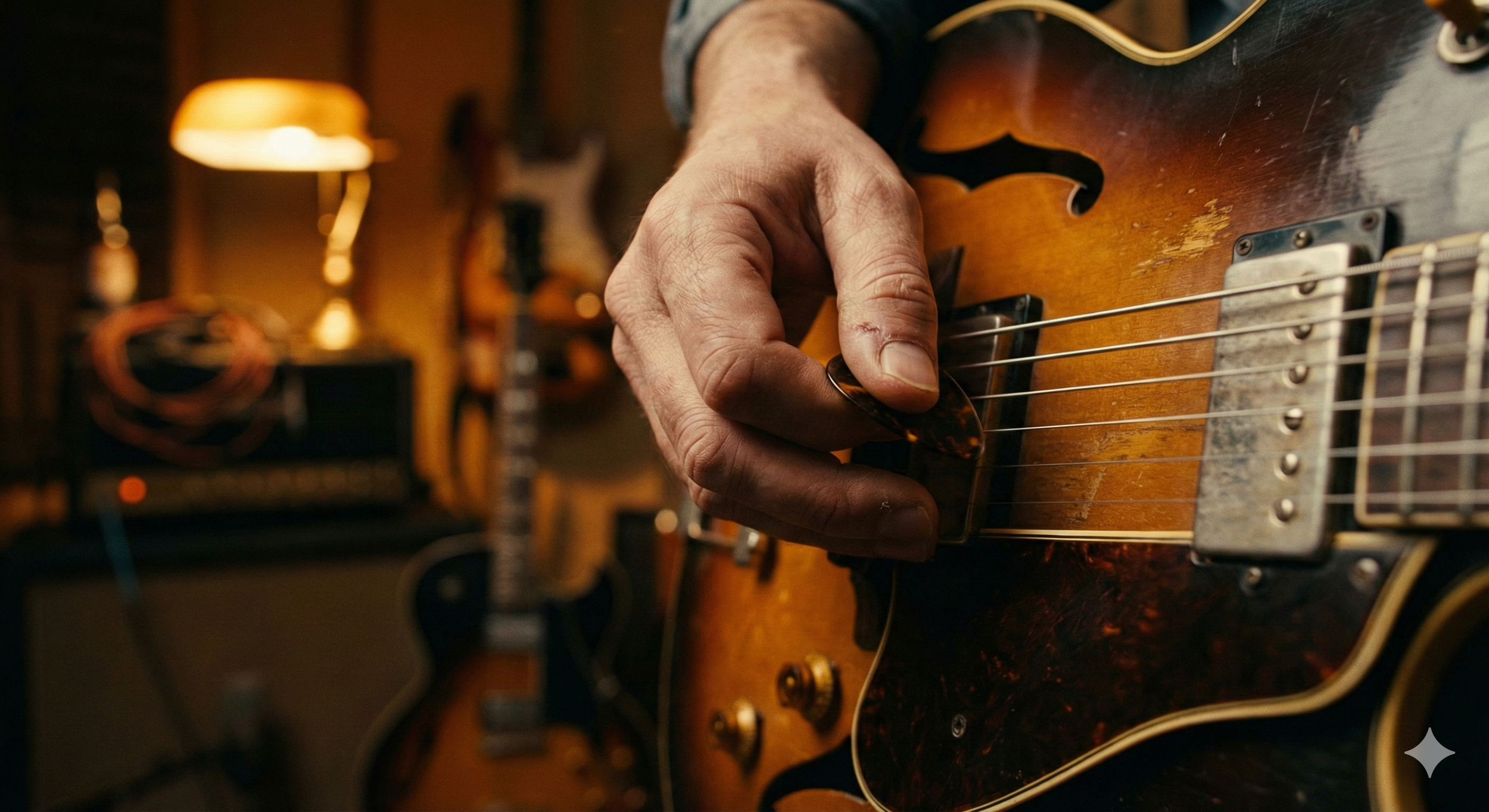
The Physics of Jazz Tone: Pick Thickness and the Rest Stroke
Why doesn't my guitar sound like the records? The answer might be in your fingertips. Discover how pick thickness and the "Rest Stroke" technique can transform your sound from thin to warm and punchy.

Decoding Wes: Upper Structures and Reverse Picking Mechanics
Advanced jazz guitar is not just about speed; it's about harmonic depth and physical mechanics. To truly sound like a pro, one must investigate the logic behind the legends. In this post, we deconstruct the "Db Major over Bb7" superimposition used by Wes Montgomery and analyze the unorthodox "negative angle" picking technique that defines the George Benson sound.

Mastering the George Benson 'Rest Stroke' for Jazz Guitar
For many intermediate jazz guitar players, the quest for the perfect tone can feel like an endless journey of buying new pedals, amps, and guitars. We chase the warmth of Wes Montgomery or the fluid drive of Pat Metheny, but often overlook the most crucial element: the pick. If you're accustomed to alternate picking, the technique of the legendary George Benson offers... a profound opportunity to transform your tone and rhythmic feel.