

Why Memorizing Scale Boxes Won't Make You a Jazz Guitarist
If you’ve searched for “jazz guitar basics” and landed on a guide that tells you to memorize five scale boxes across twelve keys before you do anything else, take a deep breath.
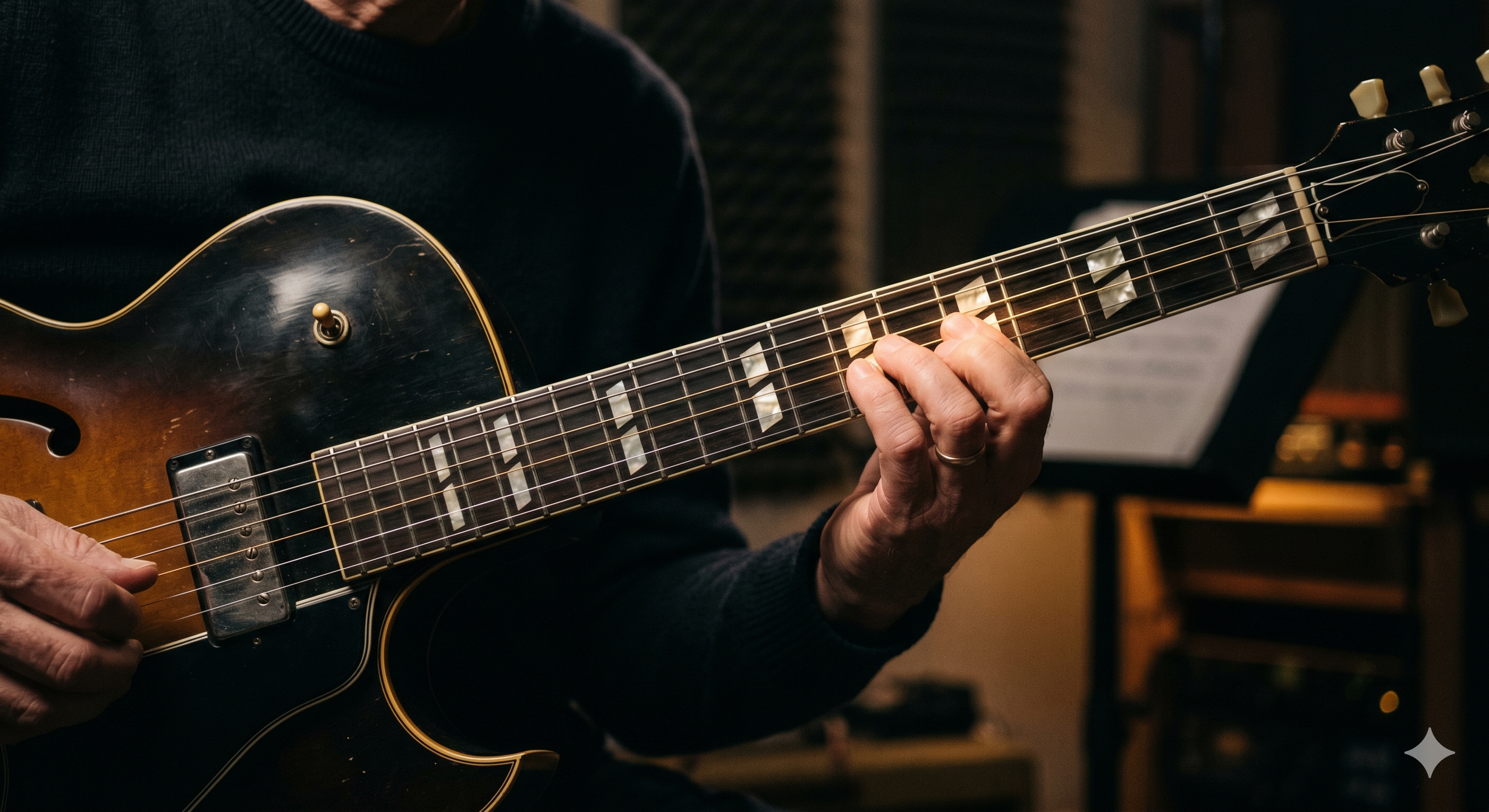
Guide Tones as Fretboard Stepping Stones in Jazz Guitar
Guide tones — the third and seventh of each chord — serve as stable landing points in jazz guitar improvisation, and mapping the diatonic notes that surround each guide tone is a productive way to expand vocabulary without losing harmonic clarity. This post explains what the Functional Diagonal Approach (FDA) requires before that mapping is reliable: the function of the chord must be identified first, because a minor chord functioning as the 2nd, 3rd, or 6th degree of the key will present a different set of surrounding diatonic notes even when the chord shape is identical.
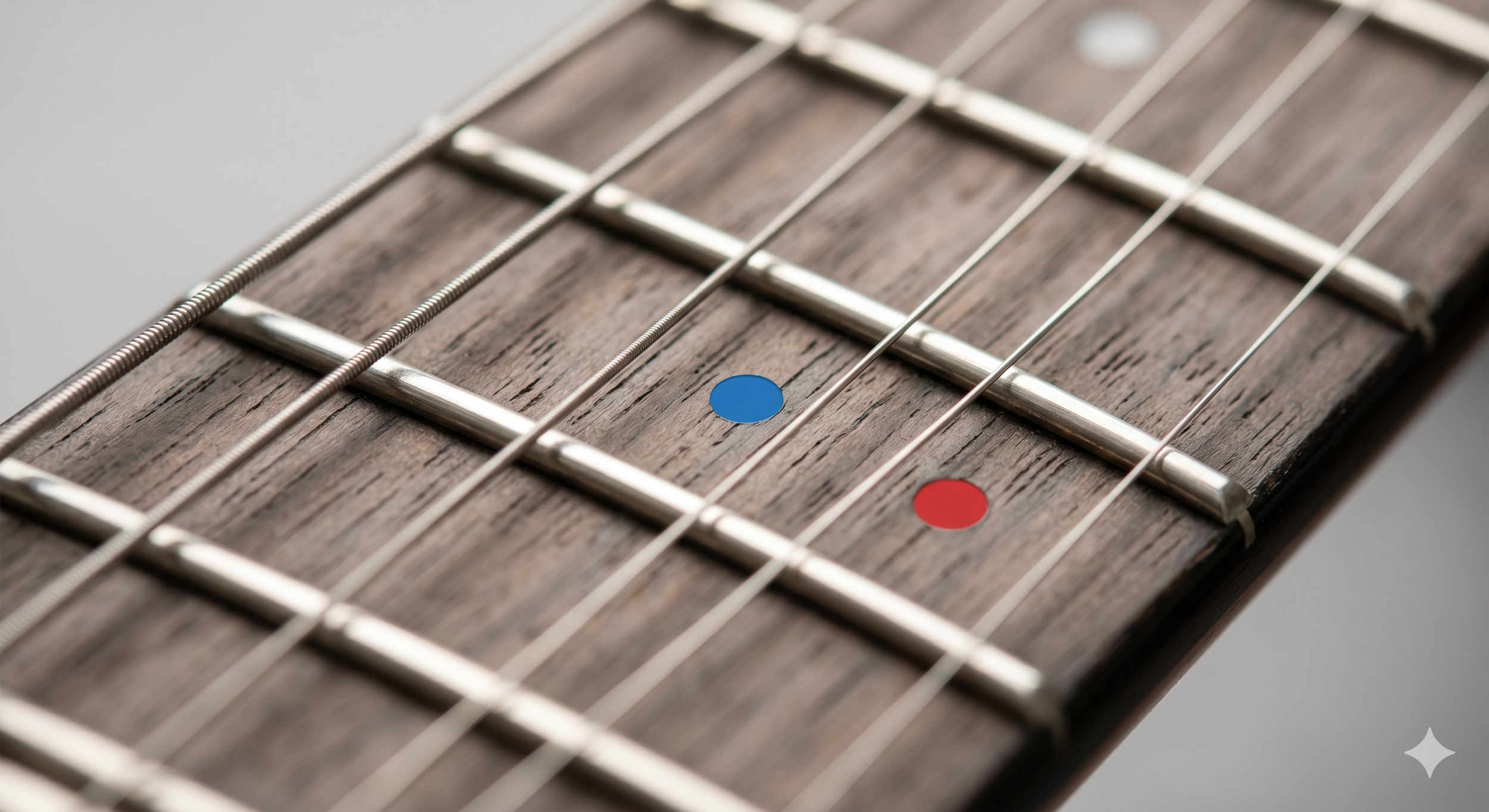
How to Find Jazz Guitar Guide Tones on the Second and Third String
Finding jazz guitar guide tones on the second and third string is a matter of octave displacement: take the guide tone pair you know on the fourth and third string, and move the lower voice up an octave so both notes land on the upper string positions.

Sparse Jazz Guitar Comping With Shell Voicings: How to Comp Yourself
Creating rhythmically engaging sparse jazz guitar comping requires stripping chords down to their guide tones — the third and seventh of each chord — using shell voicings as the source material. This post explains how shell voicings generate both solo lines and sparse accompaniment, and how to build the sound Junewon Choi demonstrated at the April 4 VLJG Office Hour.

Turning Static Scale Patterns into Dynamic Jazz Lines
Knowing your scales and arpeggios isn't enough if you run out of time. Learn to anchor your improvisational lines using guide tones and chord melody shapes.
The Role of Singing and Chromaticism in Jazz Lines
Can you play chromatic lines that aren't strictly arpeggios? Yes, but only if you know where you are landing.
Escaping the Root Trap: The Art of Guide Tone Mapping for Beginners
Are your jazz chords sounding heavy and amateurish? You might be falling into the "Root Note Trap." Discover why leaving the low notes to the bassist and focusing on the structural power of 3rds and 7ths is the secret to a professional, breathing jazz sound.
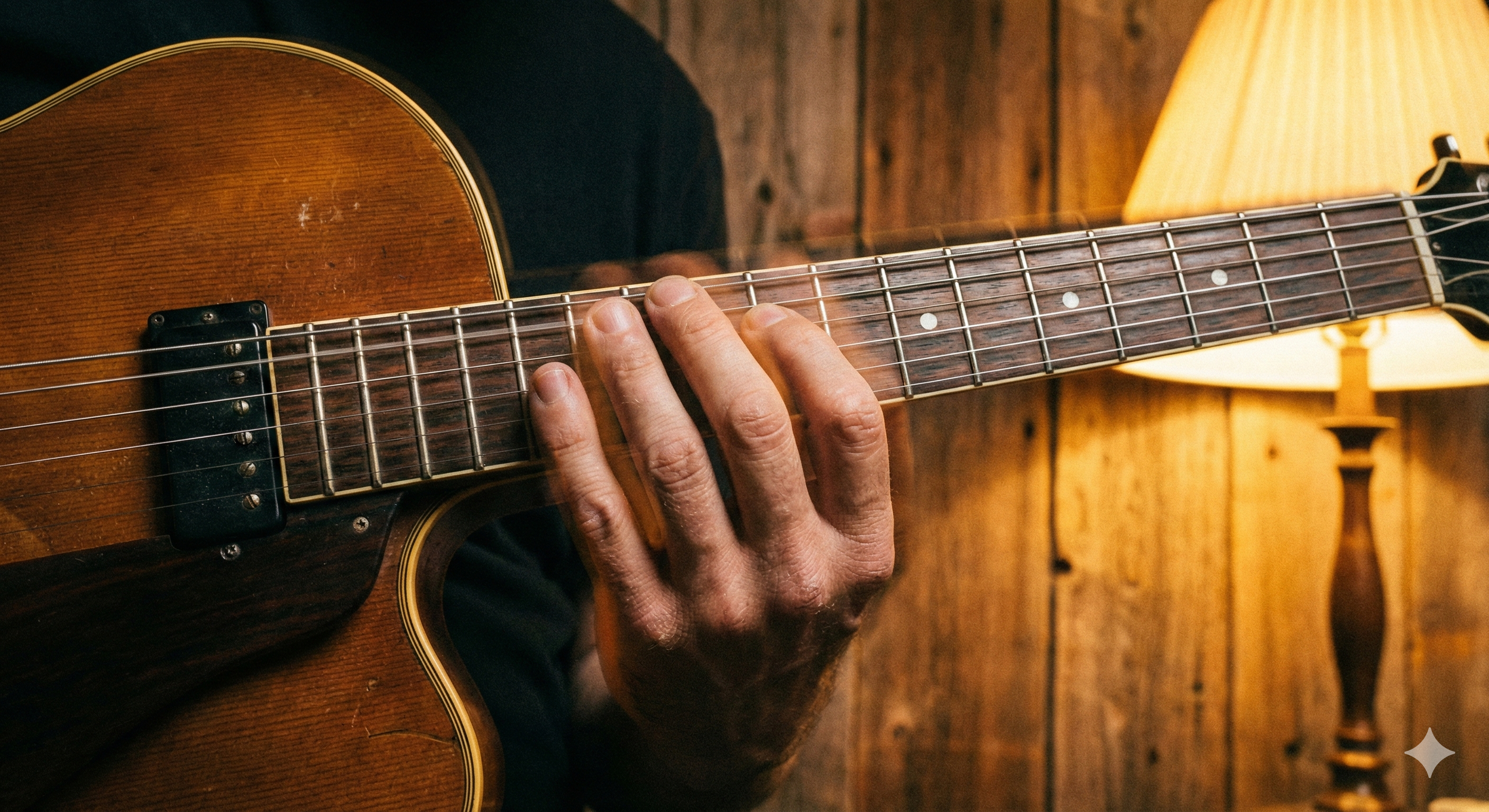
Stop Thinking Static Chords: Use Sliding Intervals for Upper Structures
Upper structures aren't just static shapes; they are movements. Learn how to use sliding intervals to navigate the neck fluidly.
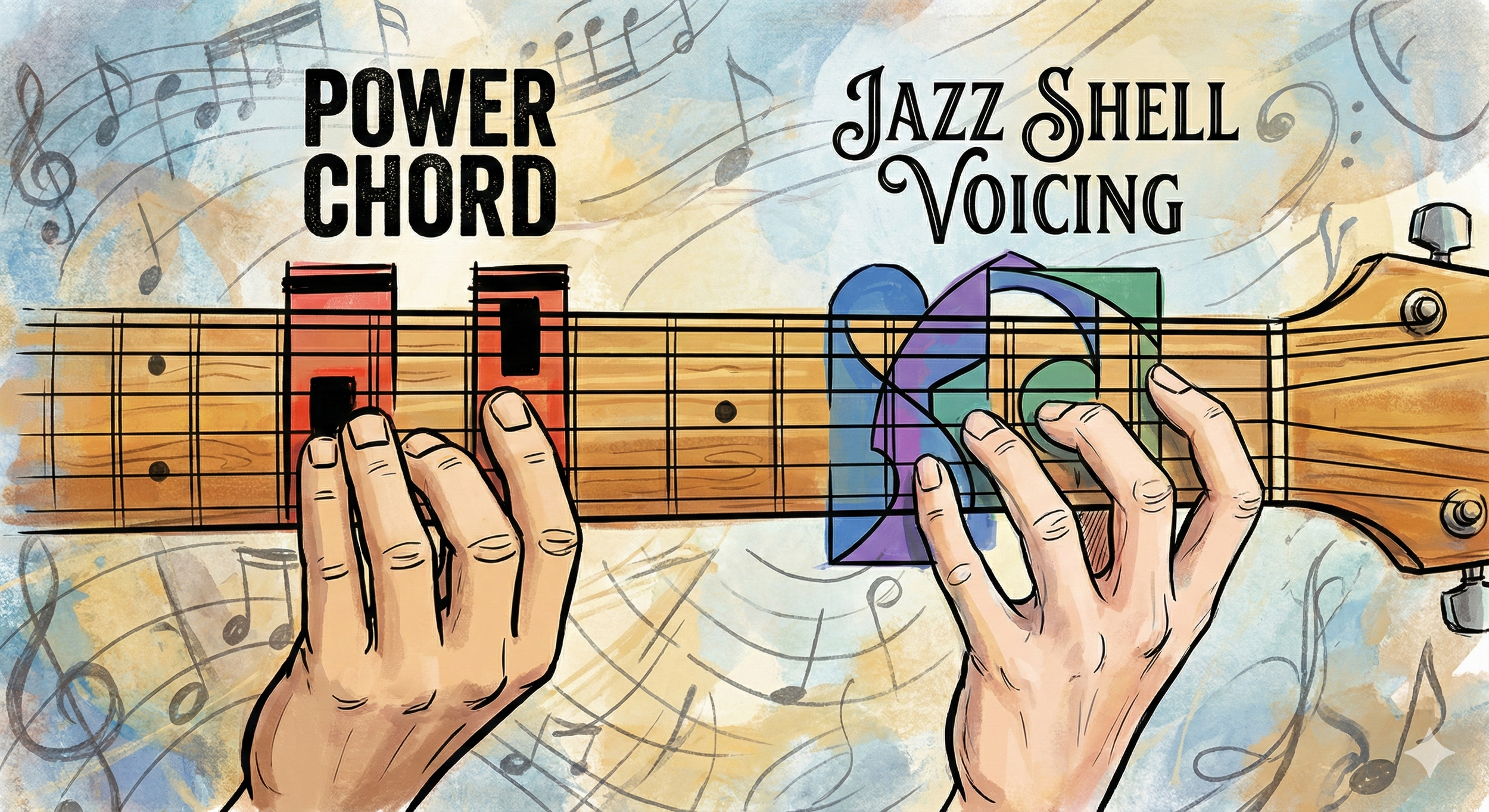
Why Power Chords Can Feel 'Boring' in Jazz
Power chords offer a neutral sound, but they often lack the storytelling ability of jazz harmony. Learn why playing thirds and sevenths creates a more compelling narrative.
Stop Counting Bars: How Melody and Guide Tones Navigate the Changes
Panic strikes when you lose count of the bars. But pros don't count—they sing. Discover how to use Voice Leading and "Melody Authority" to navigate chord changes effortlessly, turning your solos from math equations into music.

The Art of Omission: Mastering Shell Voicings and the 1-3-7 Rule for Jazz Guitar Beginners
Struggling to play complex piano voicings on the fretboard? Stop fighting the instrument. Discover why the secret to a pro jazz sound lies in playing fewer notes. We break down the "1-3-7" philosophy and how to master Shell Voicings.

How to Internalize Complex Tunes: A Case Study on "What Is This Thing Called Love"
Are your solos sounding like random scale exercises? Discover the "Fly Me to the Moon logic" applied to "Autumn Leaves." This step-by-step process helps you build a melodic skeleton using 3rds and 7ths, ensuring your lines resolve beautifully through the changes every time—before you even add the "fancy stuff."

A Step-by-Step Process for Composing Melodic Lines on "Autumn Leaves"
Unlike simple circle-of-fifths tunes, "What Is This Thing Called Love" presents a unique challenge: the melody often soars high while standard chords sit low, creating a disconnect. In this case study, we explore the "12th Step"—a method of projecting voicings into the upper register—to create fluid, professional lines that support the melody without jumping frantically around the fretboard.

Improvisation Myths: Why Chords Matter More Than Scales (feat. Fly Me to the Moon)
A common frustration among intermediate jazz guitarists is playing the "correct" scales but lacking authentic sound. The harsh truth: Improvisation is based on chords, not scales. Stop fighting the bassist for the root. Learn how to target the 3rds and 7ths to make your solos sing using the golden rule of functional harmony voice leading.