

Jazz Guitar Practice Tips: Why Drilling One Tune Will Stop Your Growth
Most serious jazz guitar students hit the same invisible wall: they have one or two tunes they can play deeply, and everything else feels shallow. The reason is not lack of practice. It is the wrong shape of practice — and a borrowed metaphor from a Japanese comic book might be the clearest way to explain why.

Jazz Guitar Upper Structures: Why the Altered Sound Is Just a Half-Step Triad
The altered scale terrifies a lot of advanced jazz guitarists because it looks like a different theory subject. It is not. It is a single upper-structure decision: play the minor triad a half-step above your dominant chord, and you have already produced the entire altered sound. Here is how to wire that into your II–V–I.

Voice Leading Guitar: How to Play Counter-Motion Over Descending Chromatic Changes
When the chords descend chromatically — Dbmaj7, Dbm7, Cm7, Bbm7 — most intermediate players run out of ideas because every voicing wants to slide down too. The professional answer is counter-motion: when the harmony goes down, you take the line up. Here is how that works on the fretboard.
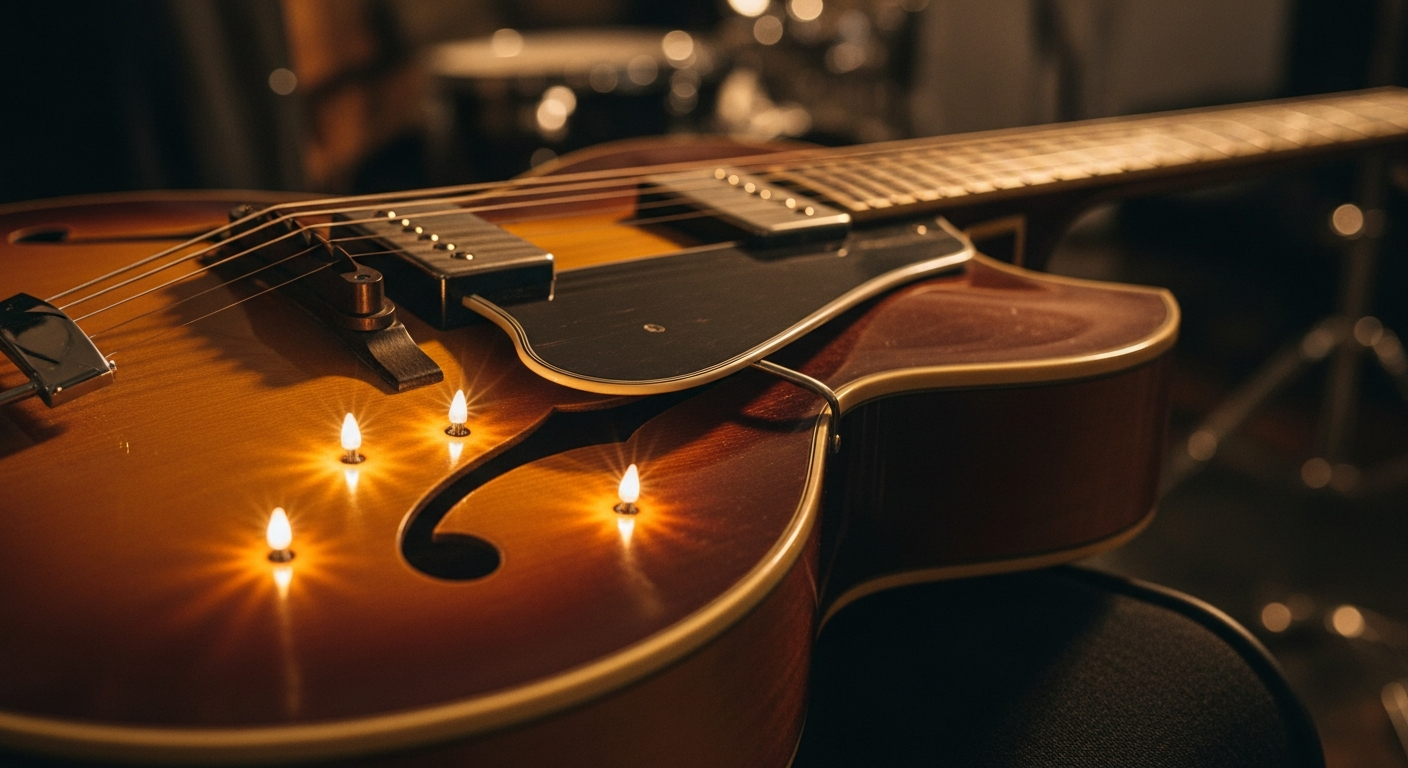
Jazz Guitar Chords for Beginners: Why You Should Drop the 5th First
Most beginners try to play full seventh-chord shapes and get tangled in fingerings. The traditional jazz answer is to drop the 5th and keep only the root, 3rd, and 7th. Here is why that one decision is the cleanest first step into real jazz guitar.

Swing Rhythm Guitar: What Wes Montgomery’s Thumb Technique Actually Needs
If you've spent any time learning jazz guitar, you've almost certainly heard the same piece of advice: Wes Montgomery played with his thumb.

Jazz Guitar Improvisation Tips: A 5-Part System to Master Jazz Blues
Jazz blues is one of the most rewarding areas of jazz guitar — and one of the most poorly approached by intermediate players. The common entry point is a pentatonic scale over a 12-bar form, maybe a blues scale for extra color.

Wes Montgomery Guitar Technique: The Left-Hand Secret Behind His Swing Feel
There's a particular frustration that advanced jazz guitarists know well: the Wes Montgomery transcription problem. You work out the rhythm notation.

Jazz Guitar Mindset: Why Playing the Same Tunes Deeper Beats Learning More Tunes
There's a question I encounter regularly, from students and from people watching live streams: "Don't you play the same tunes every time?" Sometimes, yes.

Why Memorizing Scale Boxes Won't Make You a Jazz Guitarist
If you’ve searched for “jazz guitar basics” and landed on a guide that tells you to memorize five scale boxes across twelve keys before you do anything else, take a deep breath.

Hearing Harmonic Rhythm: How Dominant Function Drives the II–V–I
If you’ve been playing jazz guitar for a few years, you already know what a II–V–I progression looks like. You can name the chords, you can find them on the fretboard, you can probably improvise a passable line over them in a familiar key.
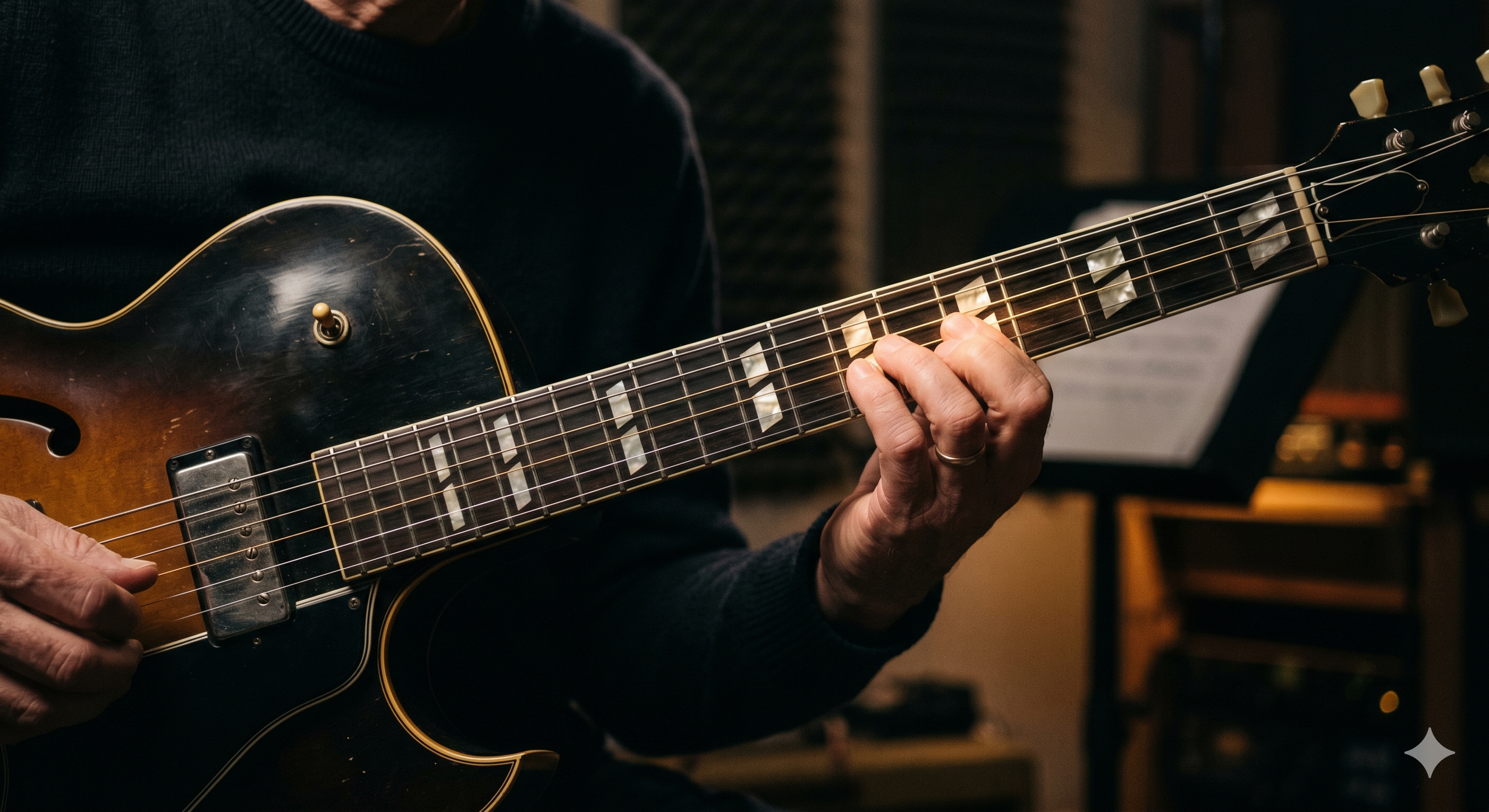
Guide Tones as Fretboard Stepping Stones in Jazz Guitar
Guide tones — the third and seventh of each chord — serve as stable landing points in jazz guitar improvisation, and mapping the diatonic notes that surround each guide tone is a productive way to expand vocabulary without losing harmonic clarity. This post explains what the Functional Diagonal Approach (FDA) requires before that mapping is reliable: the function of the chord must be identified first, because a minor chord functioning as the 2nd, 3rd, or 6th degree of the key will present a different set of surrounding diatonic notes even when the chord shape is identical.

Three-Finger Jazz Guitar Technique and Where Swing Feel Comes From
In jazz guitar, swing feel is generated by the physical movement of the left hand between notes — not by alternating pick direction on the right hand. This post explains the three-finger approach taught in the Functional Diagonal Approach (FDA), why the ring finger and pinky are treated as a single unit, what Wes Montgomery's right-hand technique actually shows, and why the common alternate-picking approach to swing produces a sound that does not swing.
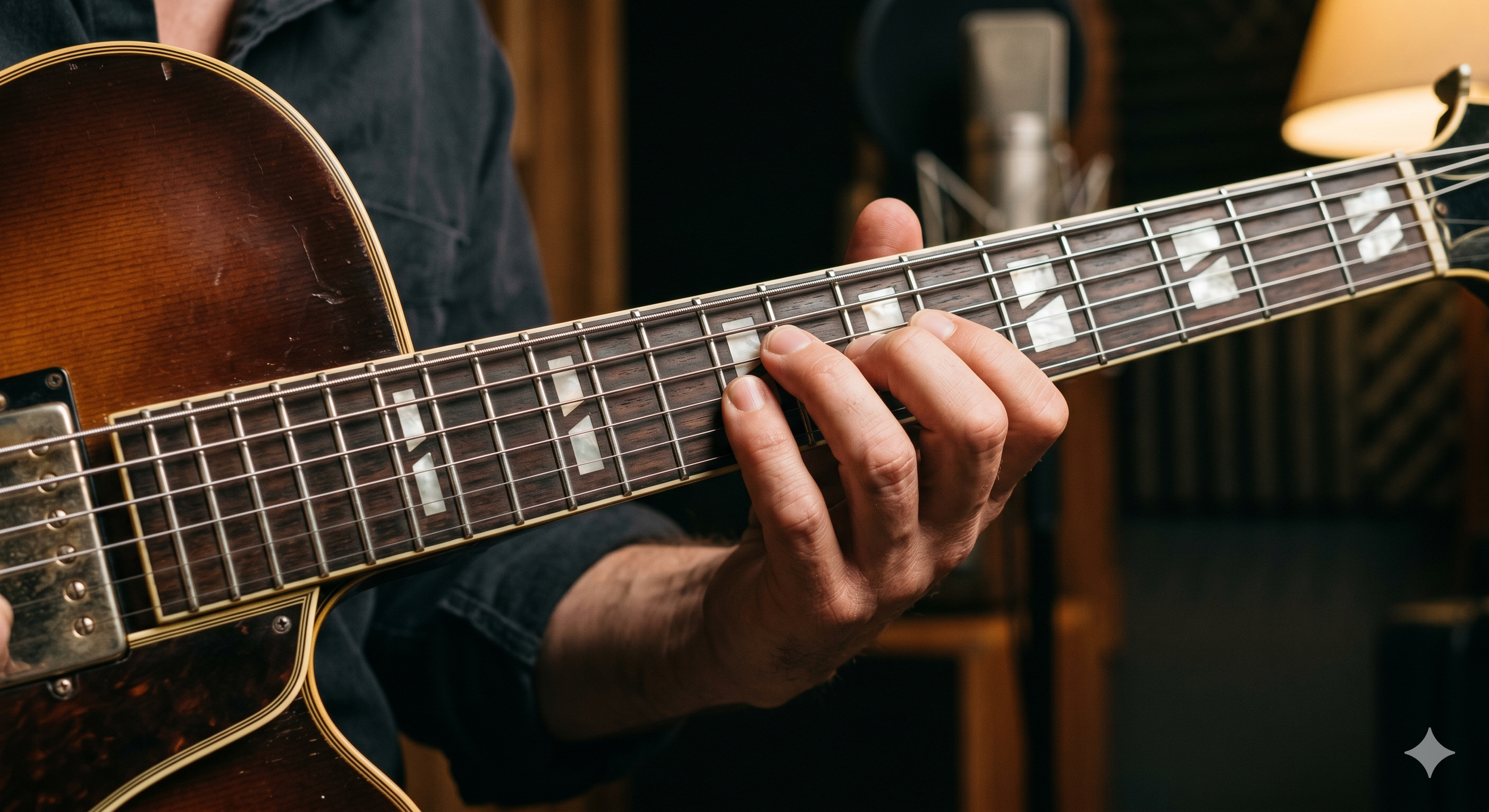
How to Build Rhythmic Vocabulary for Jazz Guitar
Rhythmic vocabulary for jazz guitar is built by listening and singing long before it is built by playing — and it requires a personal musical identity to exist first, before transcription from other players can truly benefit you. This post explains the sequence Junewon Choi teaches in the Functional Diagonal Approach (FDA), including the practice method taught by his teacher Richard Hart, and why big band listening is one of the most direct paths to genuine swing feel.

Why Jazz Guitar Uses the 6th Degree on the One Chord
In bebop and swing jazz, the tonic I chord is almost always treated as a sixth chord, not a major seventh chord — a practice rooted directly in how Charlie Parker and the swing-era players heard and played the one. This post explains the historical and harmonic logic behind this choice, why George Benson's signature I-chord phrase is built around the 6th degree, and what it means for jazz guitar improvisation and the Functional Diagonal Approach (FDA).

How to Play Jazz Guitar Over Church and Pop Music
When a jazz guitarist plays over church or pop music — songs built on triads rather than seventh-chord harmony — the fastest and most reliable adaptation is the pentatonic block anchored to the melody. This post explains the approach Junewon Choi teaches in the Functional Diagonal Approach (FDA), including why melody must stay in your inner ear throughout the solo and how to listen like the masters who played it before you.
Jazz Guitar Mindset: Why Playing for Family Is Scarier Than the Stage
Stage fright doesn't disappear when you play for family — it intensifies. A jazz guitarist reflects on performing at his grandmother's hundredth birthday, the psychology of playing for people who know your history, and what it means to go all-in on music.
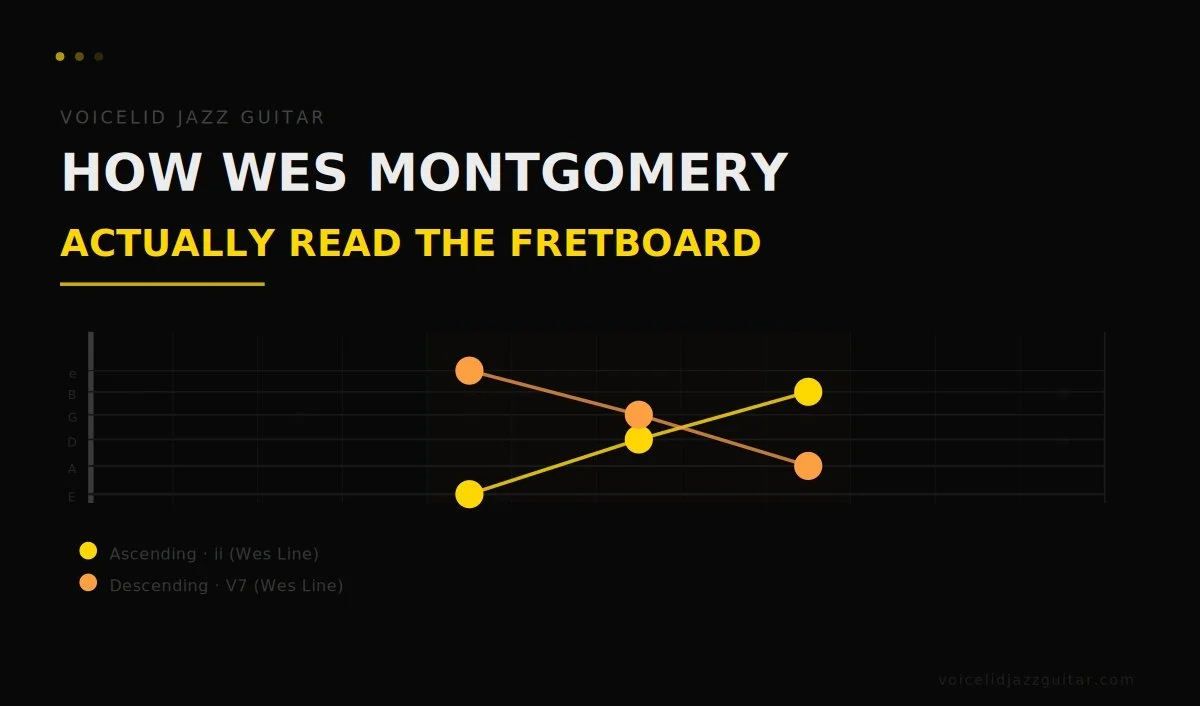
How Wes Montgomery Actually Read the Fretboard
Most players trying to learn from Wes Montgomery start with the octaves. That's the imitation. This is what was actually happening underneath.
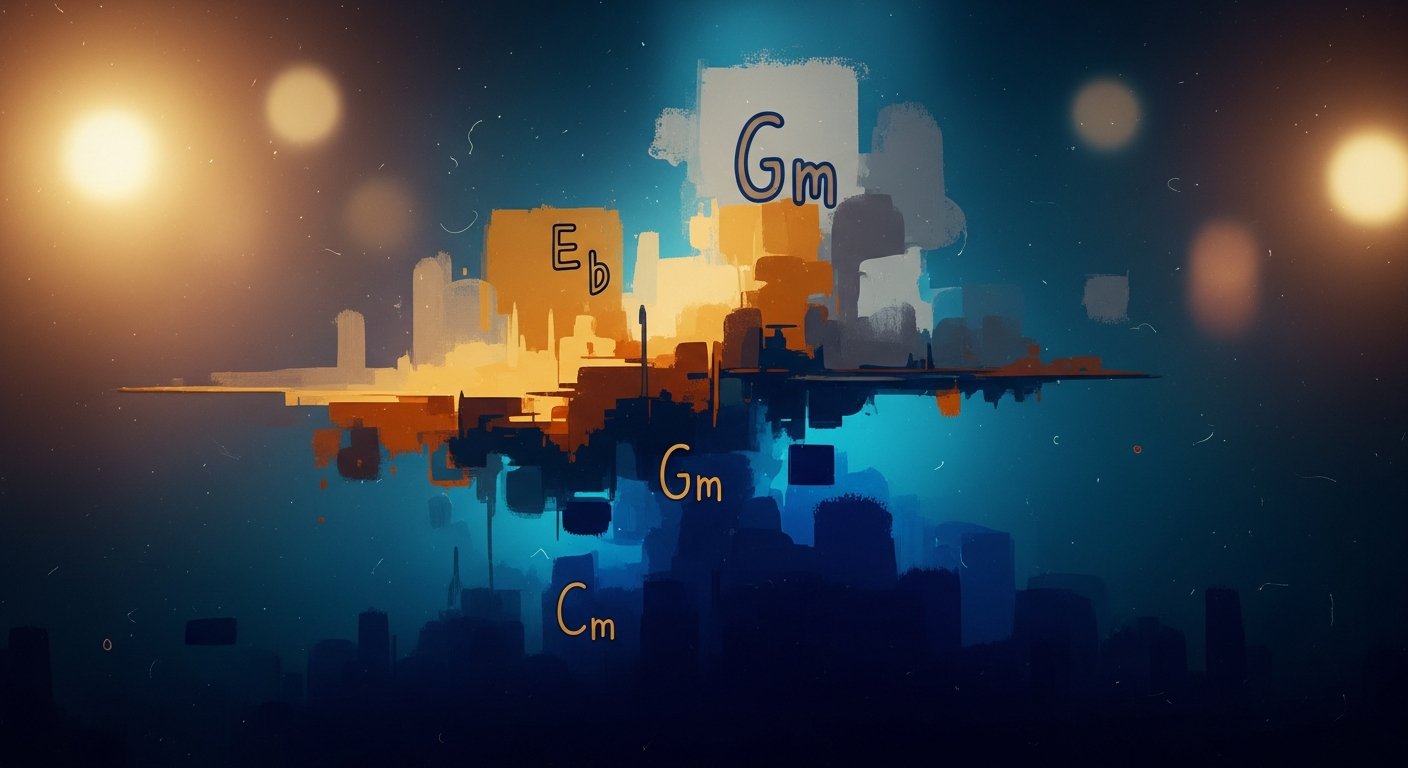
Upper Structure Triads: Stacking Eb and Gm Over Cm in Blue Bossa
There’s a moment in every advanced jazz guitarist’s development when a single chord stops looking like a single chord. A Cm7 is no longer just C–Eb–G–Bb on a page.

Jazz Guitar Upper Structures: Where Advanced Harmony Really Comes From
Upper structures, melodic minor modes, Bird Blues — advanced harmony isn't a separate world. It traces back to specific musicians and recordings. This guide explains where these concepts came from and how to study them the right way.

The Soccer Coach Parable: Why Songs, Not Drills, Build Real Jazz Players
Here’s a thought experiment. Imagine you sign up for soccer lessons.