

Bridging Fretboard Gaps Between Linear Arpeggio Shapes
It is easy to feel stuck when navigating the blank spaces between familiar arpeggio shapes on the guitar neck. Learn how to bridge these fretboard gaps by targeting the third of the chord to create seamless linear connections.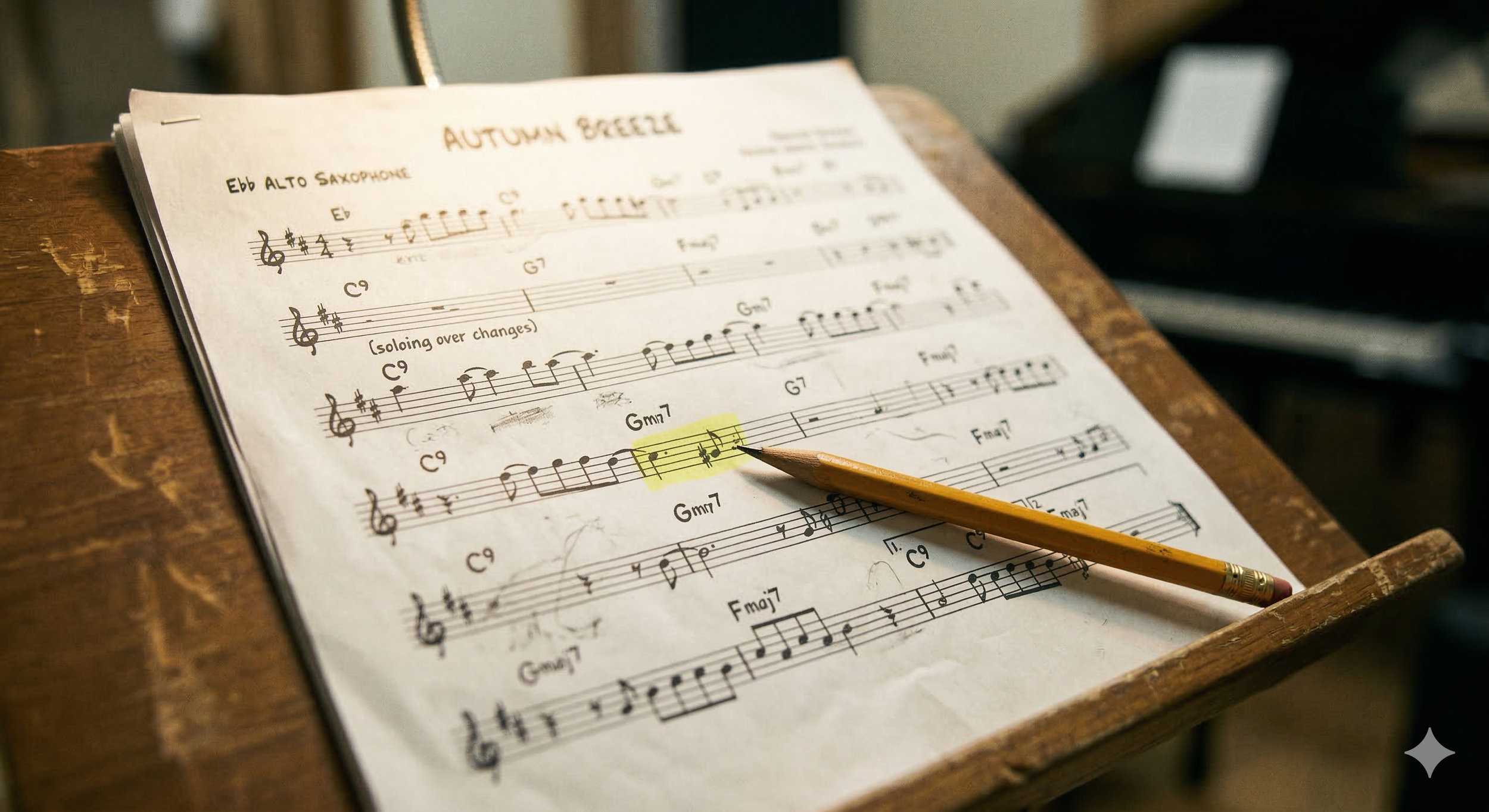
Mapping Tonic and Non-Tonic Movement in Standards
Guide tones provide a built-in roadmap for navigating complex key changes and turnaround sections. See how observing the movement of the fourth degree reveals whether a progression is resolving or building tension.
Comping and Soloing Safely with Drop 2 Voicings
Balancing Drop 2 voicings with single-line soloing can be overwhelming if you do not know where to place them. Find out how to safely comp for yourself or another soloist without muddying the mix.
Turning Guide Tones and Upper Structures into Melodic Lines
Learn how to transform static guide tones into flowing melodic lines using upper structures. This lesson breaks down the exact fretboard logic used by Charlie Christian and Wes Montgomery.
Turning Static Scale Patterns into Dynamic Jazz Lines
Knowing your scales and arpeggios isn't enough if you run out of time. Learn to anchor your improvisational lines using guide tones and chord melody shapes.
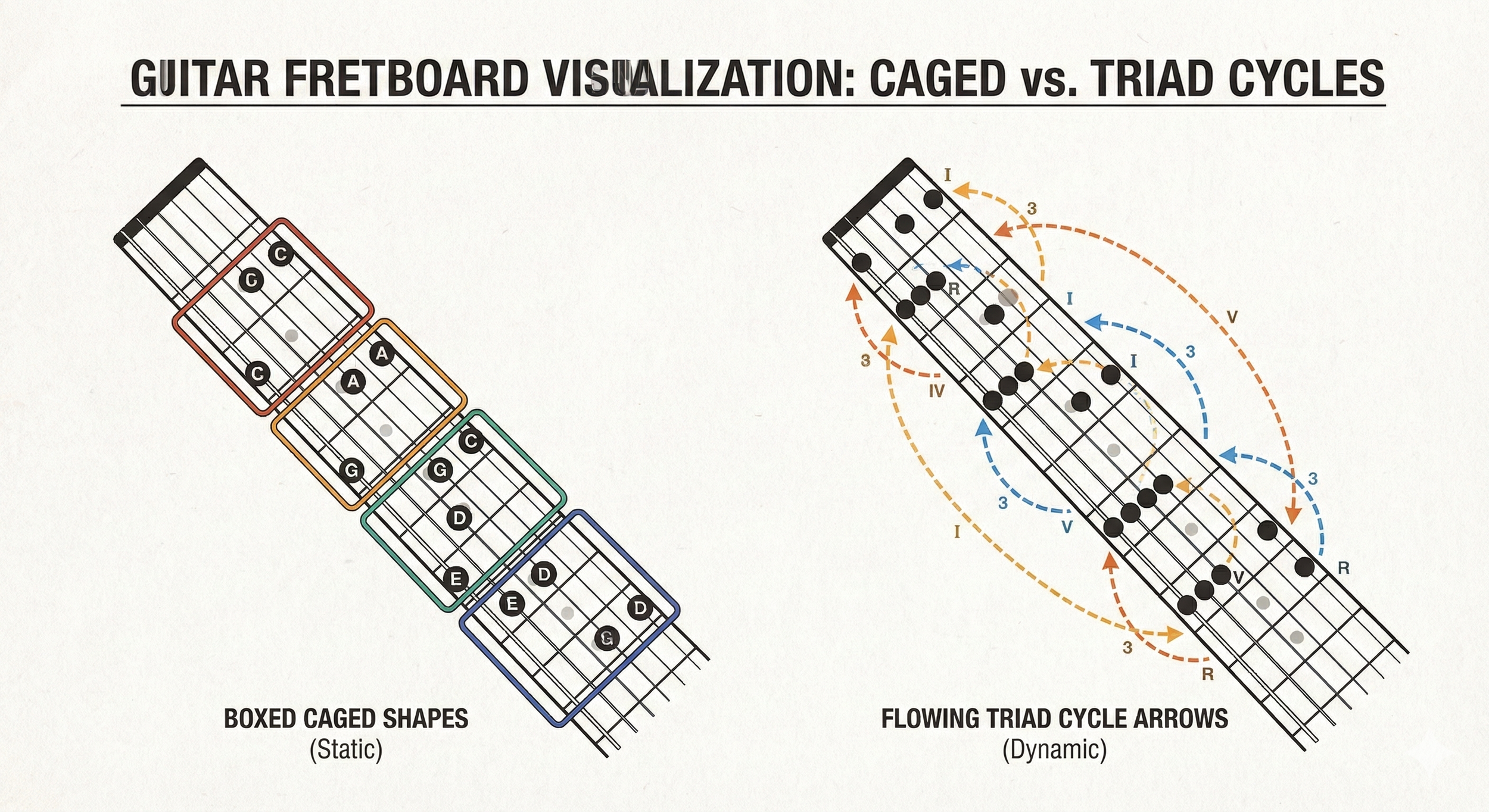
CAGED System vs. Triad Cycles: Which is Better?
The CAGED system is a popular starting point, but it has limits. Learn why practicing triad cycles reveals fretboard areas that CAGED misses.

Why Connecting Scale Shapes Won’t Help You Play Jazz Changes
Scales are just the alphabet, but they are not the story. Learn why voice leading and shell voicings are the true key to navigating chord progressions.

Overwhelmed by Extensions? Let the Melody Decide
Should you build a triad off the 3rd, 5th, or 7th? The answer isn't random. The melody dictates your harmony.

Stop Just 'Running': Why Cycles Don't Make You a Player
Practicing cycles of triads and shell voicings builds stamina, but it doesn't teach you how to play the game. Here is the next step.

The Role of Singing and Chromaticism in Jazz Lines
Can you play chromatic lines that aren't strictly arpeggios? Yes, but only if you know where you are landing.
Stop Memorizing Dots: A Better Way to Practice Voice Leading
Avoid the memorizing fret trap. Learn why voice leading beats dot memorization and how to structure your daily practice.

Diagonal Shapes: The Difference Between Wes Lines and Django Lines
Why play diagonally? Learn how Tonic and Non-Tonic functions determine whether you play a Wes Line or a Django Line.
Wes Montgomery’s Secret to High-Register Arpeggios
Wes Montgomery didn't reinvent the wheel for high notes; he used diagonal displacement. Discover how to reuse shapes for octave lines.

Stop Thinking Static Chords: Use Sliding Intervals for Upper Structures
Upper structures aren't just static shapes; they are movements. Learn how to use sliding intervals to navigate the neck fluidly.

Jazz Standard Analysis: Who Can I Turn To
We break down strategies for navigating the jazz standard 'Who Can I Turn To,' focusing on melody, upper structures, and key centers.
How to Fix Your Rhythm Between Guide Tones
Connecting guide tones can be rhythmically challenging. Here is a simple permutation exercise to help you fill the gap between the 3rd and 7th.
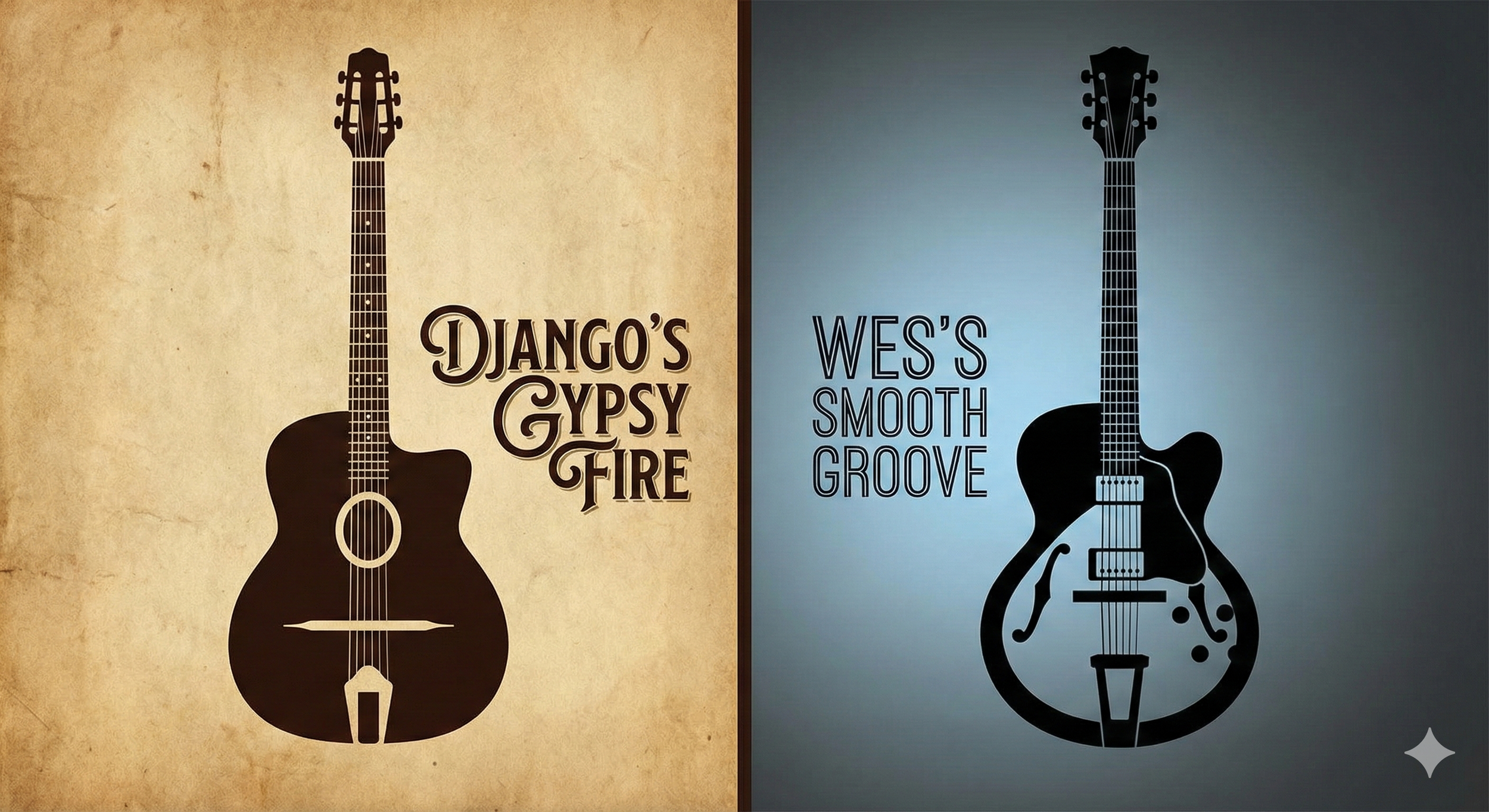
Django Line vs. Wes Line: Understanding the Difference
Ed asks if the Django Line and Wes Line are interchangeable. The answer lies in voice leading and understanding tonic vs. non-tonic function.
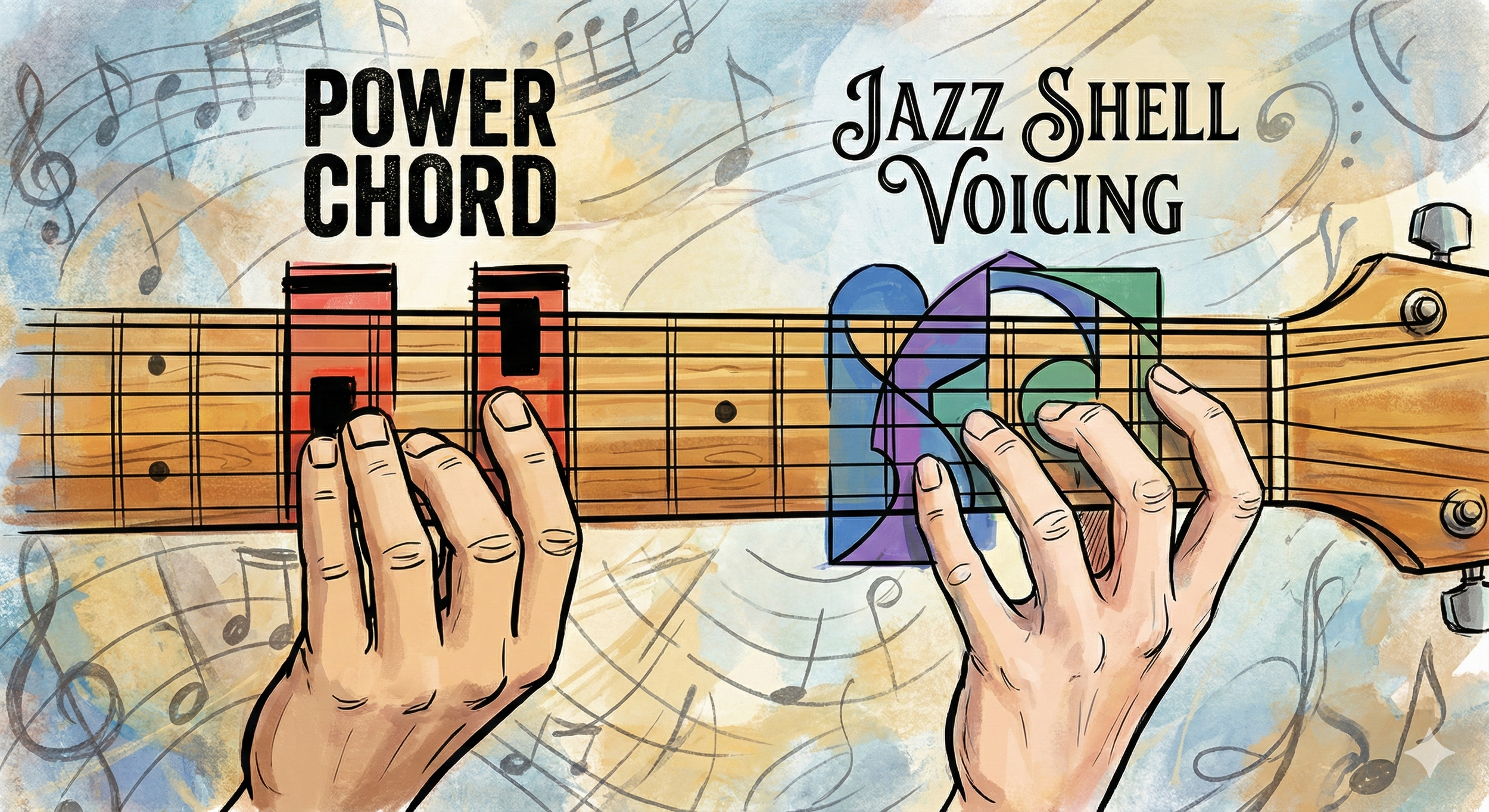
Why Power Chords Can Feel 'Boring' in Jazz
Power chords offer a neutral sound, but they often lack the storytelling ability of jazz harmony. Learn why playing thirds and sevenths creates a more compelling narrative.

Is the IV Chord a New Tonic? Navigating the I to IV Change
When moving from the I chord to the IV chord, does the target become a new tonic? We explore secondary dominants and upper structures to make this transition smooth.
Root & Melody Practice: From Chord Melody to Surfing the Change
Is practicing 'Root and Melody' just chord melody? Learn how to use this technique as a map for improvisation and try the 'Common Tone' exercise.