

How Do You Comp a Jazz Ballad Without Sliding Into Double-Time?
Ballad comping stays grounded when it is built from the harmonized melody. Keep the tune audible on top, leave the roots to the bassist, and let the soloist set the rhythmic agenda.

How Do You Play Chord Melody When the Melody Climbs Too High for Your Chord Shapes?
When a melody note sits too far above your shell voicing, switch to a drop 2 voicing with the melody on top. Using All The Things You Are, here is exactly when to switch, why the guitar melody belongs in the tenor range, and the Joe Pass shape trick.

Voice Leading on Jazz Guitar: Why the Guide Tones Follow the Melody
On jazz guitar, voice leading works because usually only one note moves between chords — and that moving guide tone lines up with the melody. Here's how to see it and practice it on standards.

With Upper-Structure Triads by Harmonizing the MelodyHow to Solo
Upper-structure triads aren't random color — they come from harmonizing the melody first. Lock the tune's melody into a chord-melody, then play the triads that sit on top of each chord to build a solo that still sings.

Chord Melody and Soloing Are the Same Thing
Most jazz guitar players are taught to treat chord melody and soloing as two separate skills. Chord melody is the "arranging" skill — you take a tune, harmonize the melody, and play it as a self-contained statement.

Approaches to Comping and Visualization
Good comping comes from knowing your chord melody. Learn how to visualize lines and voicings together for better accompaniment.
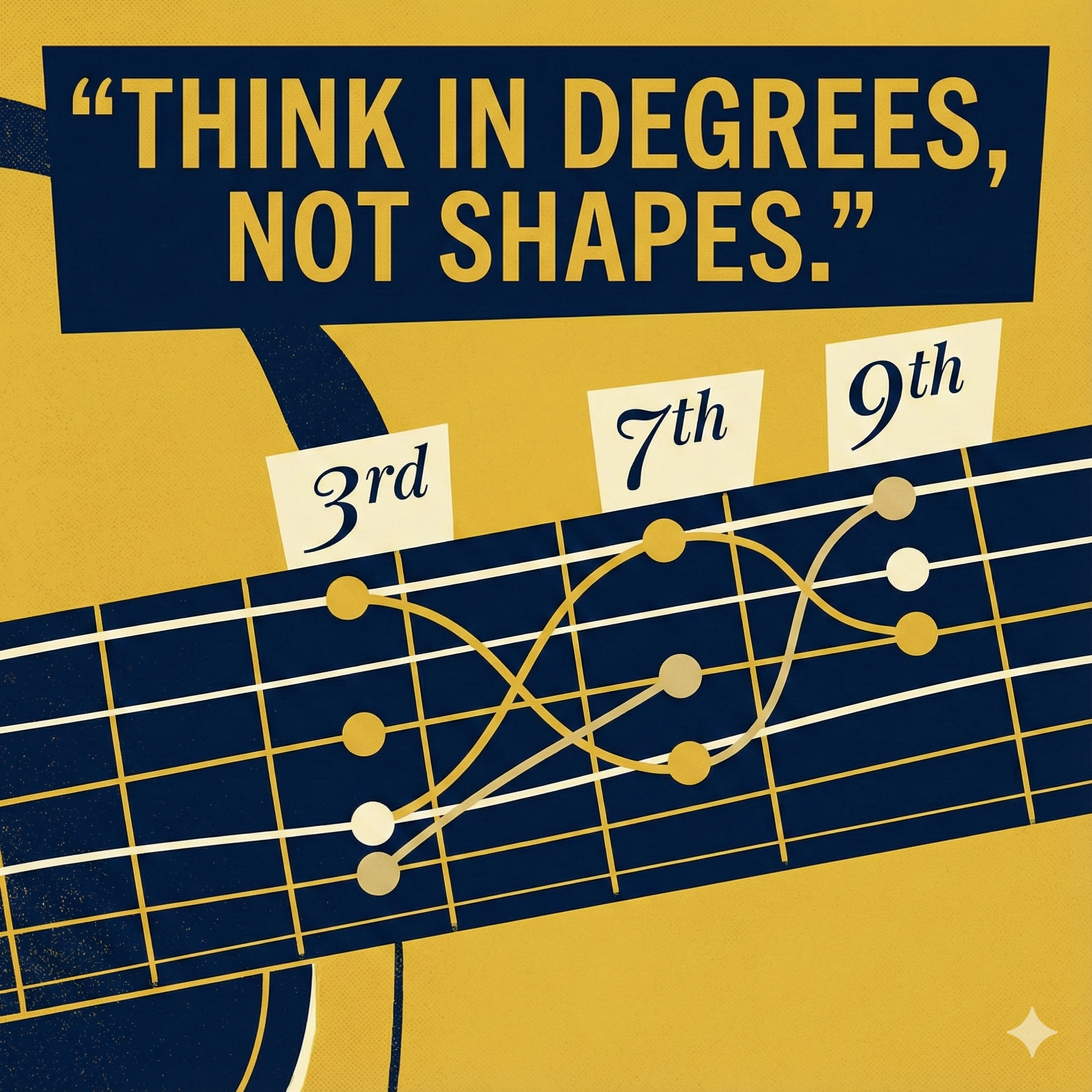
Are You Just Memorizing Shapes? How to Truly Understand the Fretboard with Chord Degrees
Jazz guitar doesn’t have to be an endless memorization game.
By learning to see chords as degrees and functions—rather than shapes—you can finally understand how harmony works across the fretboard and start playing with clarity and intention.

How to Start Self-Taught Jazz Guitar: A 3-Step Method to Master Your First 'Real Book' Tune
Feeling lost when opening the Real Book? Many guitarists jump straight into chords or melodies without truly understanding the tune’s structure. This three-step approach—focusing on melody, bass, and shell voicings—shows how to internalize any jazz standard from the inside out.