

There No ‘George Benson Line’ or ‘Grant Green Line’? Because Wes and Django Are the BaseWhy Is
George Benson and Grant Green don't need their own 'line' — both are built on the Wes Line and Django Line. Learn the one fingering difference and the right-hand habit that separate them.

Jazz Guitar Voice Leading: Soloing Through I’ll Be Seeing You With Guide Tones and the Wes Line
To solo with voice leading on I'll Be Seeing You, treat the Ebmaj7 as a Cm6, choose your fretboard position with the Wes Line, and move guide tones smoothly between chords. The first eight bars and second eight share the same voice-leading shape.
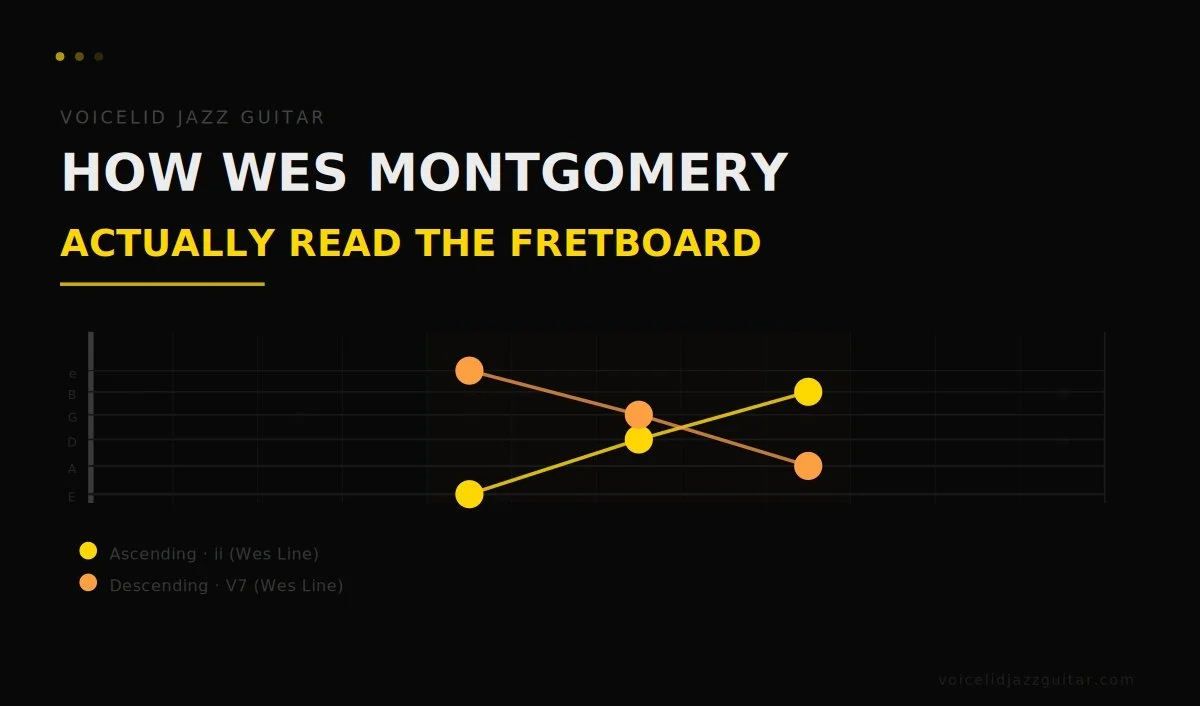
How Wes Montgomery Actually Read the Fretboard
Most players trying to learn from Wes Montgomery start with the octaves. That's the imitation. This is what was actually happening underneath.

Why the Wes Line Feels Forced Before It Feels Natural
When the Wes Line from the Functional Diagonal Approach (FDA) feels mechanical rather than musical, it is a signal that the ear has not yet internalized the structure. This post explains why that gap is normal, what Junewon Choi teaches about bridging technical vocabulary and personal sound, and what to practice next.
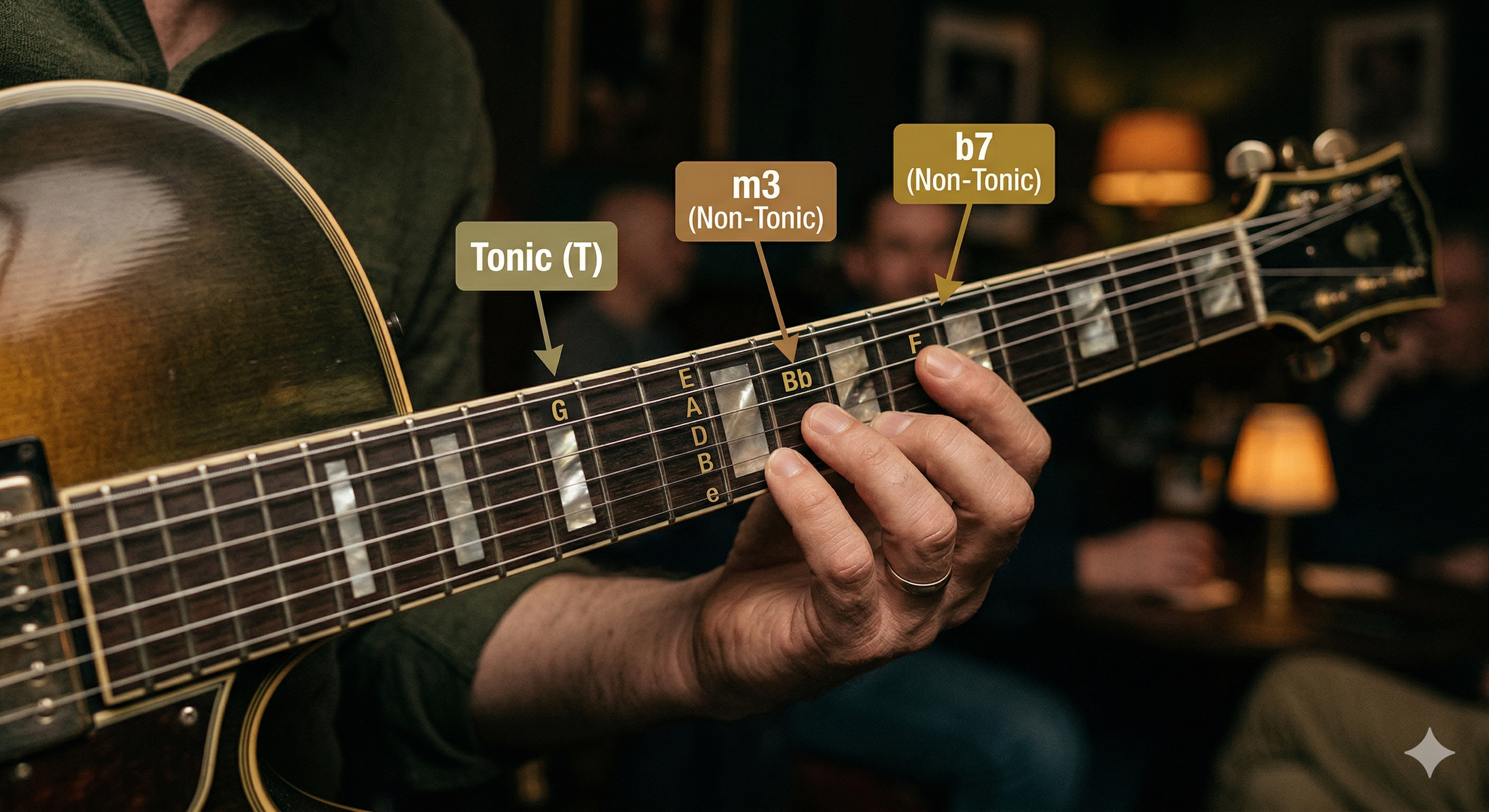
Tonic vs. Non-Tonic in the FDA: Getting the Chord Function Right
Knowing whether a chord is tonic or non-tonic in the FDA determines which diagonal line you use — and getting that wrong means the whole system breaks down. This post clarifies the G minor 7 and E-flat major 7 relationship in the key of B-flat and explains how to apply tonic and non-tonic assignments consistently around the circle of fifths.
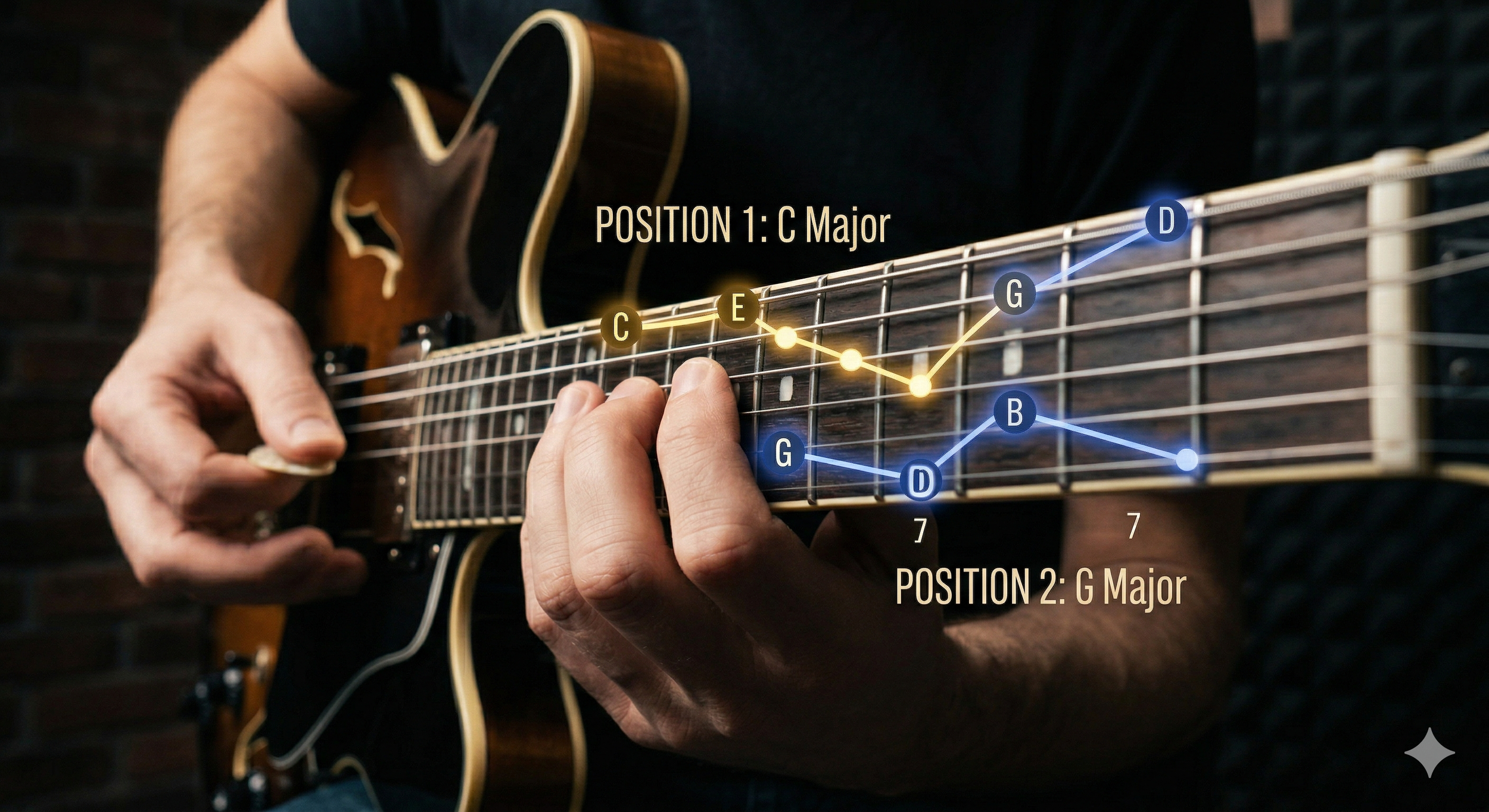
How to Transfer a Jazz Line from the Wes Line to the Django Line
When you find a line that works on the Wes Line, how do you play the same phrase on the Django Line? This post examines how Wes Montgomery extended lines across diagonal structures and what that means for your own fretboard vocabulary.

How to Create Dominant Function Using Django and Wes Lines
Learn to move beyond standard diminished chords and use true dominant functions to push harmony forward. Discover how applying standard Django and Wes Montgomery lines creates powerful tension and resolution.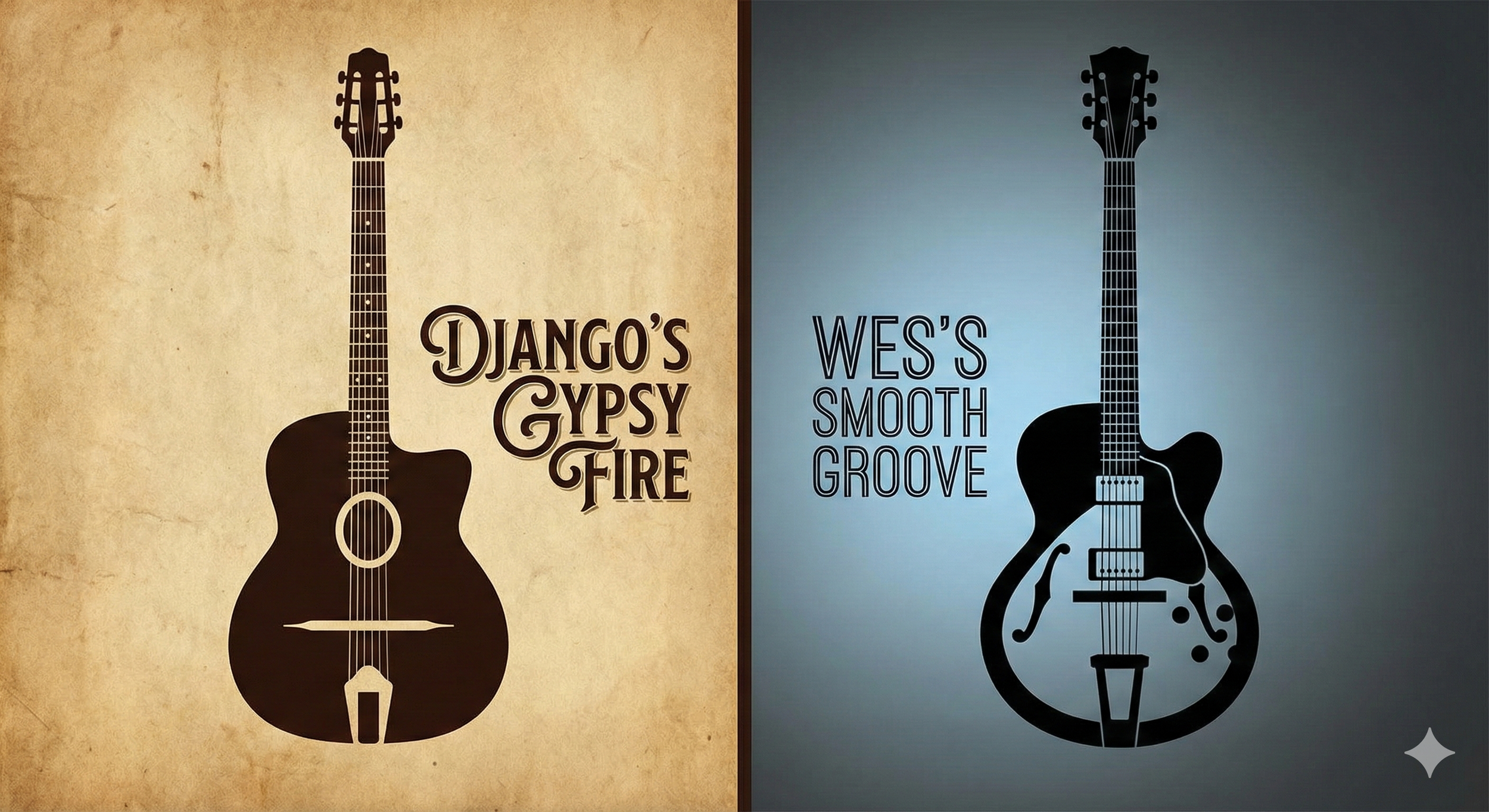
Django Line vs. Wes Line: Understanding the Difference
Ed asks if the Django Line and Wes Line are interchangeable. The answer lies in voice leading and understanding tonic vs. non-tonic function.