
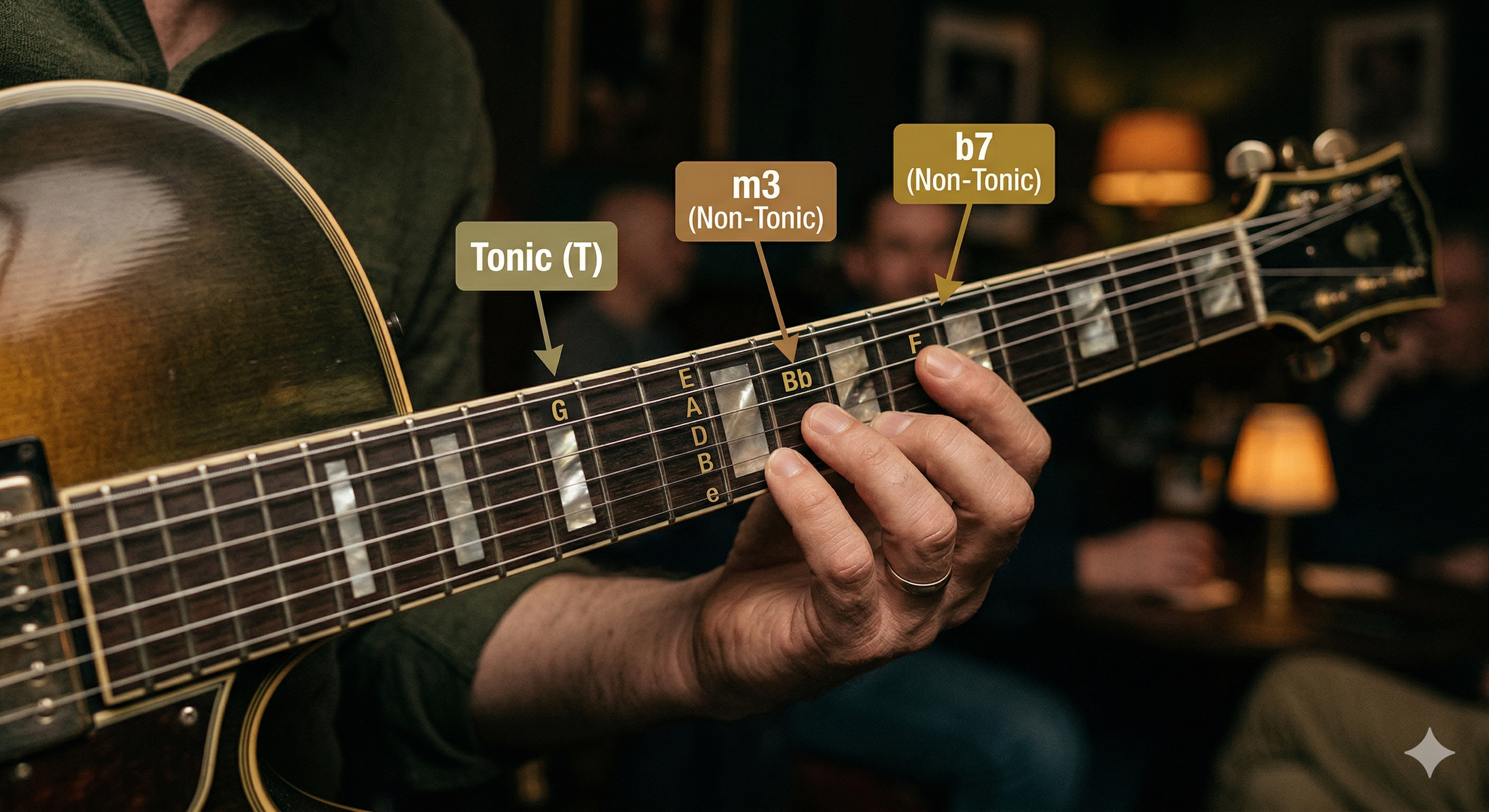
Tonic vs. Non-Tonic in the FDA: Getting the Chord Function Right
Knowing whether a chord is tonic or non-tonic in the FDA determines which diagonal line you use — and getting that wrong means the whole system breaks down. This post clarifies the G minor 7 and E-flat major 7 relationship in the key of B-flat and explains how to apply tonic and non-tonic assignments consistently around the circle of fifths.

Playing Wes Line and Django Line Over Fast 2-5s: Blues for Alice
Fast 2-5 progressions in bebop tunes like Blues for Alice move quickly — but the FDA reduces that complexity to the same half-step voice leading motion you already know, played along the diagonal structures. This post shows how Charlie Parker's melody already contains the answer.
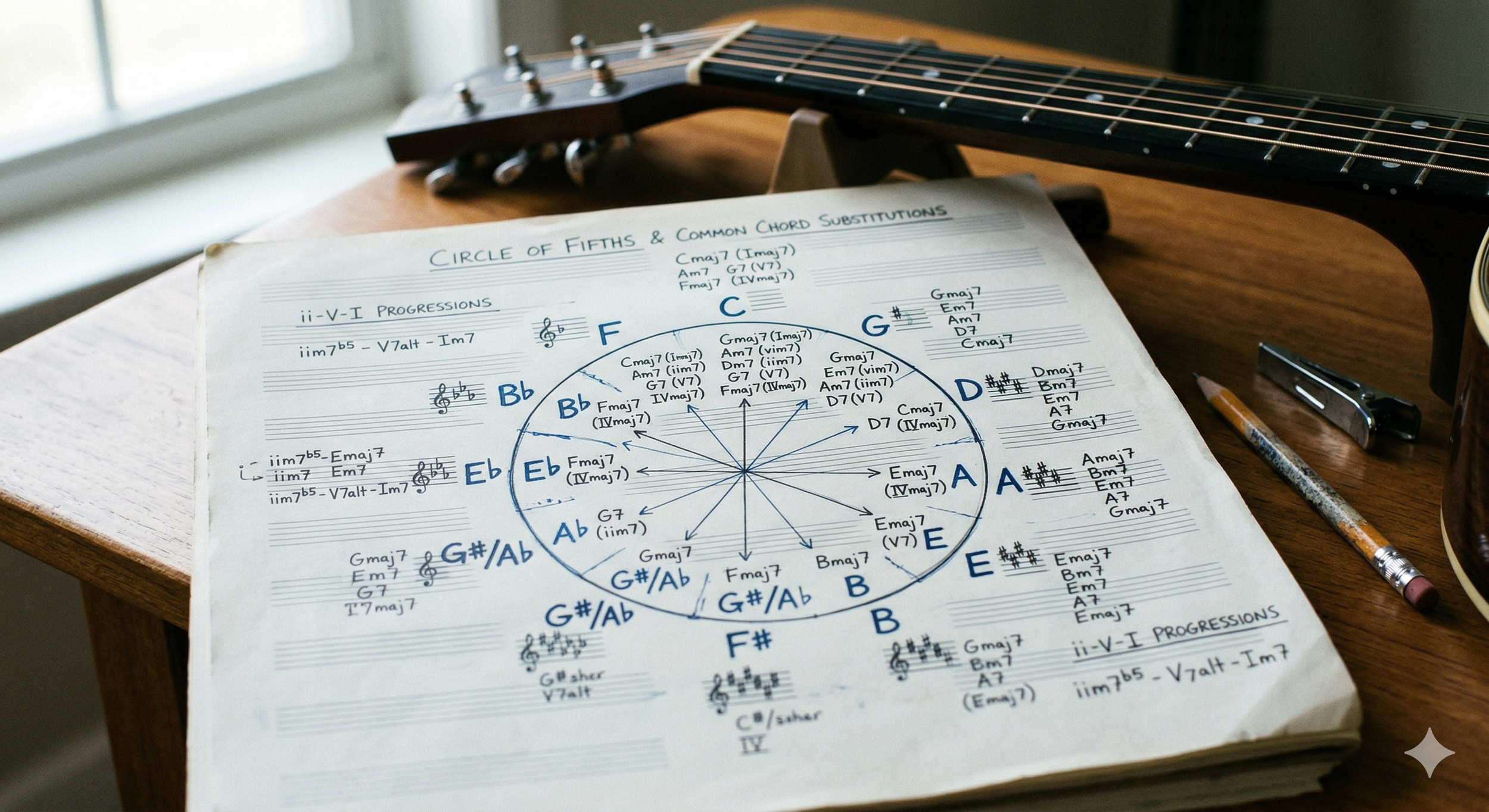
Secondary Dominants and Upper Structure Chords Inside the FDA
Secondary dominants follow a specific rule — circle-of-fifths motion resolving to a diatonic chord — and within the FDA, their upper structure chords are simply Wes Line or Django Line structures sitting a half step above the resolution point. This post explains how every secondary dominant fits into the same binary framework you already know.