
Building a Gig-Ready Repertoire & The Art of Rootless Comping
Moving from Practice Room to Stage
The transition from an intermediate bedroom player to a gig-ready musician is defined by one thing: adaptability in an ensemble. Many students realize that knowing a song alone is different from playing it with a band. The key challenges are building a functional repertoire and mastering the art of comping without clashing. Based on my experience and Q&A sessions, here is how you prepare for the jam session scene.
If you want a structured way to apply this discipline, see How to Build a Jazz Guitar Practice Routine in 10-Minute Blocks.
"Paying Your Dues" through Repertoire
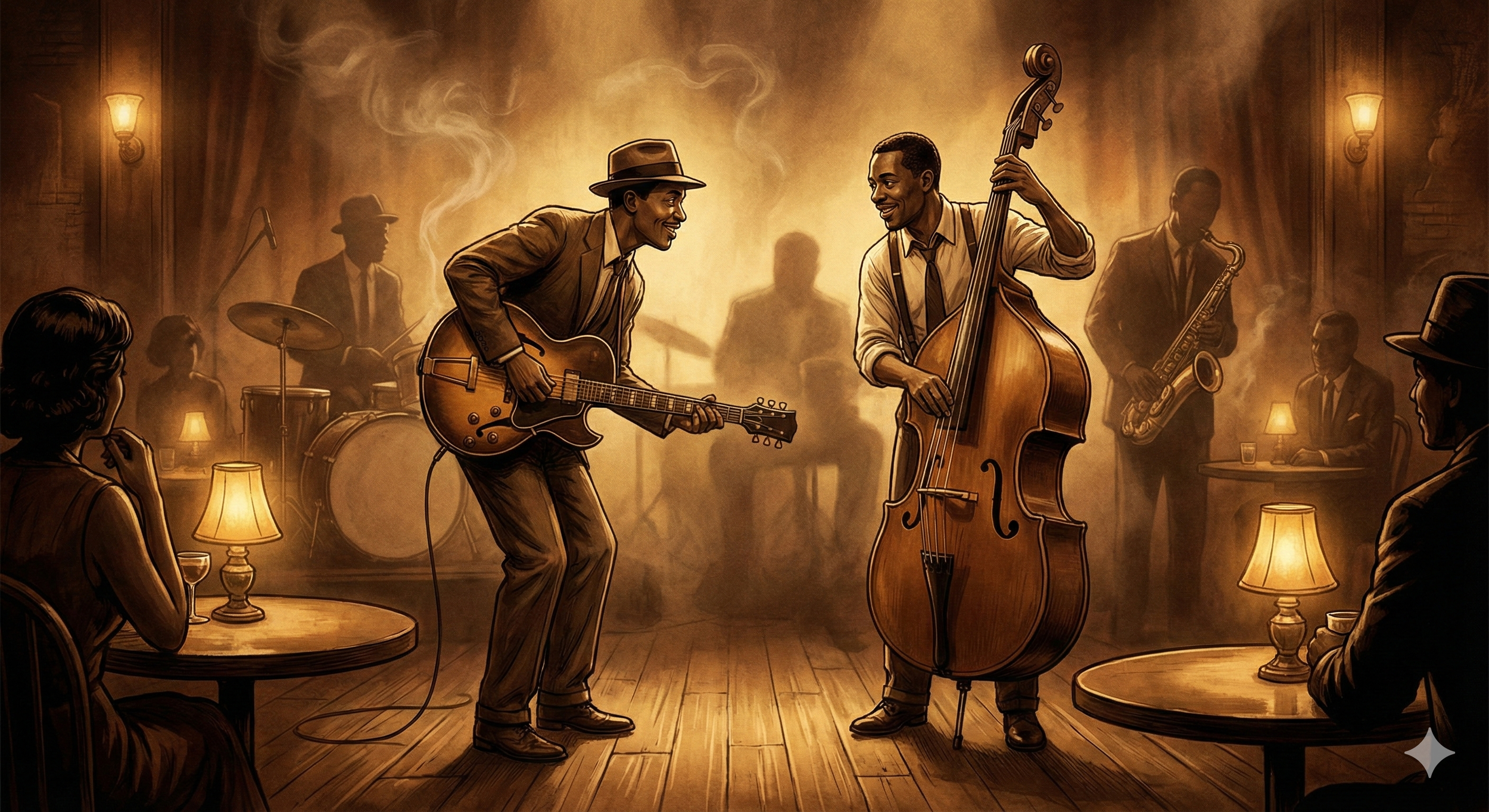
In the jazz world, there is a concept called "paying your dues." It means going out to jam sessions, making mistakes, getting embarrassed, and learning from the experience until you are truly stage-ready. To survive this process, you need a solid repertoire. Knowing a tune doesn't just mean memorizing chords. It means knowing the Melody, Changes, Intro/Endings, and Comping. Start with the Blues in F (e.g., Billie's Bounce, Au Privave). Then expand to essential standards: Stella by Starlight, Round Midnight, All the Things You Are, Body and Soul, and Autumn Leaves. When I learned these, I didn't just learn the chords; I transcribed solos by Wes Montgomery and George Benson for each specific tune. This creates a deep connection between the harmony and the vocabulary of the legends.
The Golden Rule of Comping: Drop the Root
The biggest mistake intermediate guitarists make at jam sessions is playing full barre chords with heavy roots on the 5th and 6th strings. In a band setting, the bassist owns the low end. If you play the root, you are stepping on their frequency range, creating a muddy mix. You must master Rootless Voicings. Apply the Shell Voicing concept but lift your finger off the root. Trust the bassist to define the fundamental. Your job is to provide the color (3rds, 7ths, and tensions). This creates space in the music and professional clarity in the sound.
The Ultimate Goal: "On Spot" Playing
The purpose of building a repertoire is to develop the ability to play music "on the spot." By learning many tunes, you recognize patterns (like II-V-I progressions) that recur across the genre. Eventually, you can navigate a song you've never heard before because you recognize the architectural building blocks from songs you already know.
Building a repertoire is about preparing yourself for conversation with other musicians. Learn the standards deeply, drop the roots in your voicings, and start paying your dues on stage. Visit VoiceLidJazzGuitar.com for full breakdowns of these standards.